The High Castilian Plateau: Wine at the Extremes
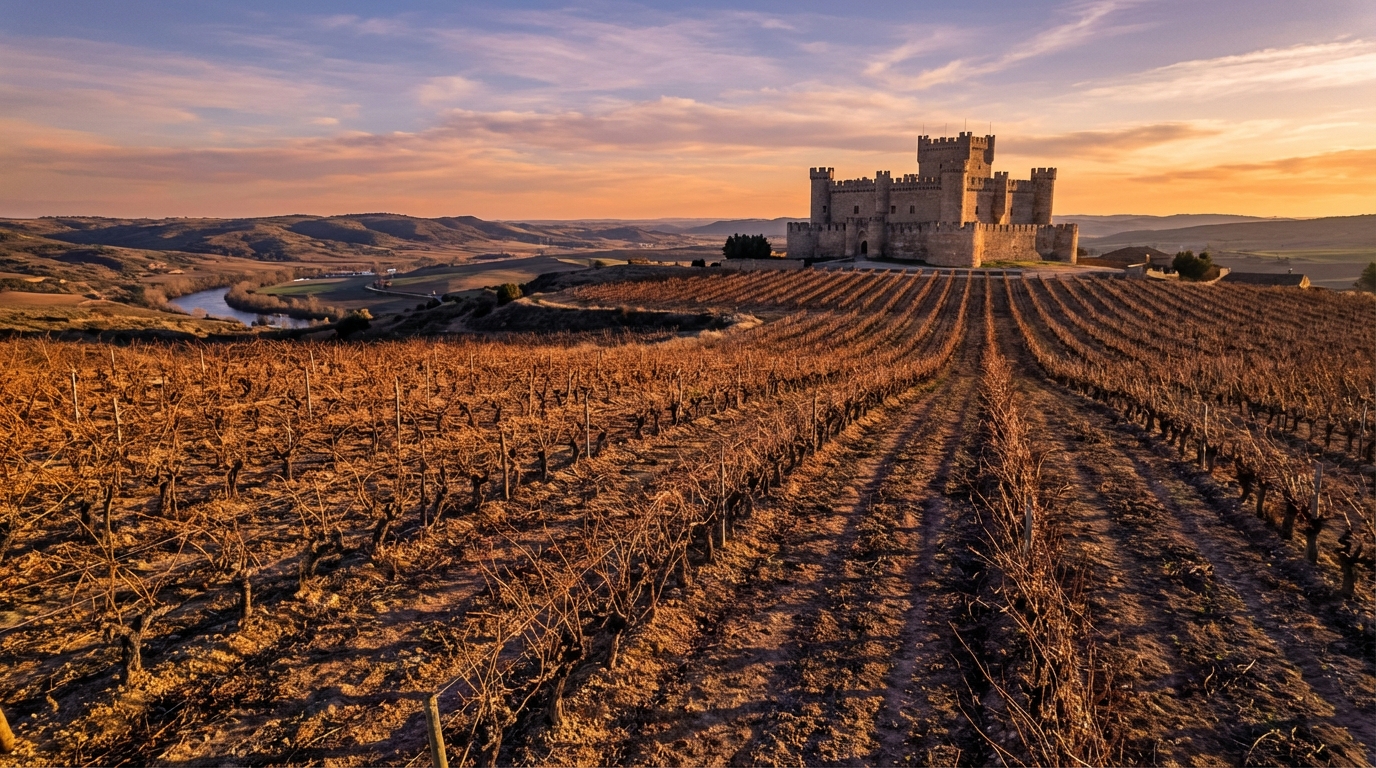
At 700–900 metres above sea level on the vast, treeless Meseta Central of northern Castile, Ribera del Duero is one of the world’s most climatically extreme wine regions. Summer temperatures soar above 40°C (104°F); winter brings frost and temperatures as low as −20°C (−4°F). The frost-free growing season is just 150–170 days — barely enough time to fully ripen thick-skinned Tempranillo. Yet from these brutal conditions emerges one of Spain’s most powerful and age-worthy red wines.
The Duero River — which becomes the Douro in Portugal and flows to the Atlantic at Porto — runs east-west through the heart of the region, its valley providing crucial moderating influence. Vineyards planted on the valley sides benefit from direct sun exposure and the river’s thermal regulation; those on the exposed plateau above are subject to the full extremes of the continental climate.
The continental climate is the defining feature of Ribera del Duero wine character. Extreme diurnal temperature variation during the growing season — days at 35–40°C dropping to 10–15°C at night — preserves acidity in the grapes even as they reach full physiological ripeness, producing wines of extraordinary concentration that nonetheless retain freshness and structure. This is what separates Ribera del Duero from the sometimes softer, more generous wines of Rioja to the north.
Tinto Fino: The Local Tempranillo
The dominant grape of Ribera del Duero is Tinto Fino (or Tinta del País), the local clone of Spain’s signature variety Tempranillo. While genetically the same grape, Tinto Fino has adapted over centuries to the harsh conditions of the Meseta — it produces smaller berries with thicker skins, higher natural acidity, and more pronounced tannin structure than Tempranillo grown in warmer, lower-altitude regions like Rioja.
Tinto Fino grown in Ribera del Duero produces wines of deep ruby-black color, complex aromatic profiles (blackberry, blackcurrant, graphite, dried herbs, tobacco), and firm but polished tannins when the fruit is fully ripe. The wines are typically more structured and age-worthy than Rioja Tempranillo, and less reliant on oak for their character — though oak aging remains an important stylistic tool for many producers.
Cabernet Sauvignon, Merlot, and Malbec are permitted in small percentages in the blend, a legacy of Vega Sicilia’s historical use of these Bordeaux varieties — though the trend among quality-focused producers today is toward higher proportions of Tinto Fino.
DO Regulations: The Classification System
Ribera del Duero wines are classified by aging requirements, similar to Rioja:
Roble (oak): Minimum aging of two months in oak. Entry-level, fruit-forward wines for early drinking. Often the best value introduction to the region.
Crianza: Minimum two years total aging, with at least 12 months in oak. The backbone of the appellation commercially; well-structured wines with moderate aging potential.
Reserva: Minimum three years total aging, with at least 12 months in oak and 12 months in bottle. Wines of significant structure and complexity, capable of 10–15 years of further aging.
Gran Reserva: Minimum five years total aging, with at least 24 months in oak and 24 months in bottle. The top classification, reserved for exceptional vintages; built for long aging.
Vega Sicilia: Spain’s Most Legendary Estate
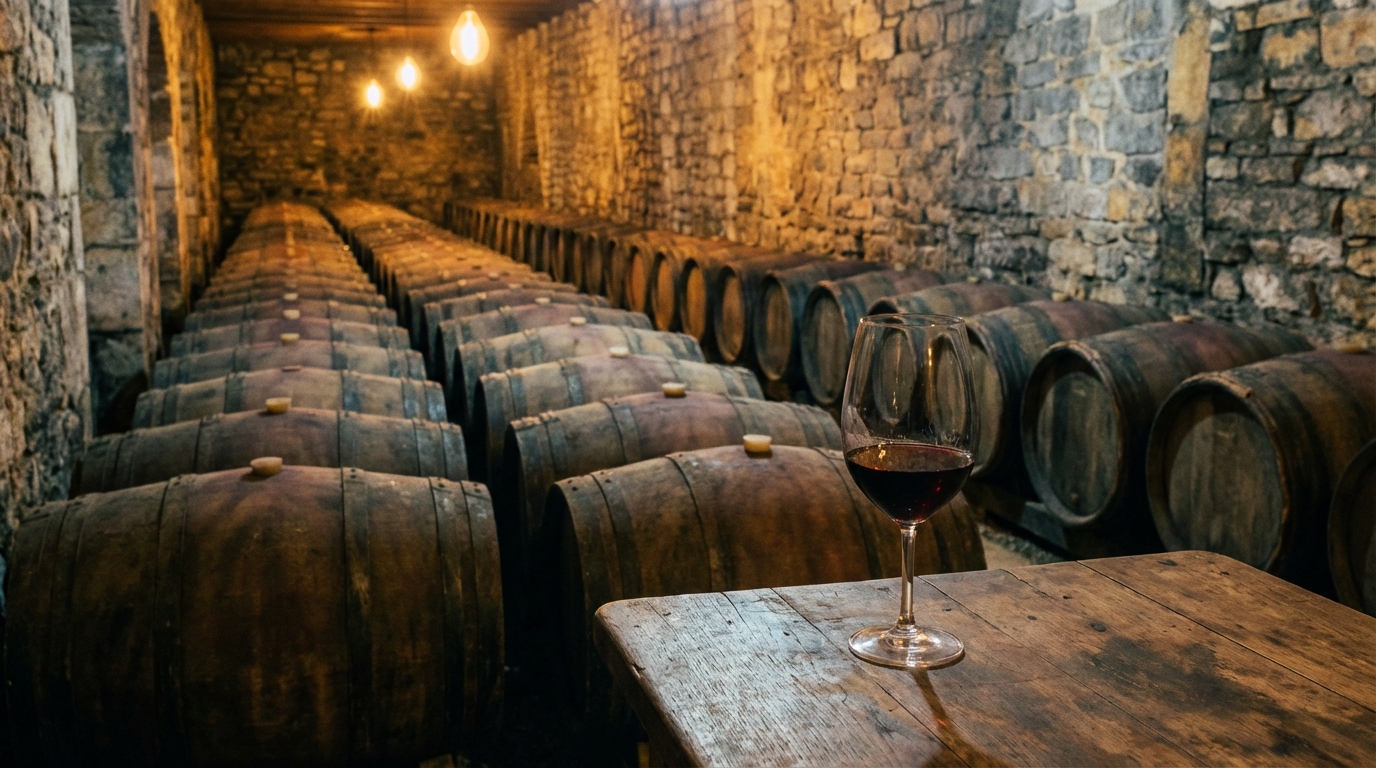
No wine in Spain commands more reverence than Vega Sicilia’s Único. Established in 1864, the estate predates the DO by over a century. Its flagship wine spends 10 or more years aging in large oak vats and new barrique before release, producing a wine of phenomenal complexity and longevity. Único is not released by conventional vintage schedule; wines may emerge 10–15 years after harvest. The estate also produces Valbuena 5º (aged 5 years) and the Alion brand using a more modern Bordeaux-influenced approach.
Alejandro Fernández and the Modern Era
When Alejandro Fernández released the first vintage of Pesquera in 1972, he transformed the region. Working with pure Tinto Fino and no formal winemaking training, Fernández produced wines that astonished the press. When Robert Parker praised Pesquera Reserva in the early 1980s, comparing it to Petrus, Ribera del Duero became an international wine destination almost overnight, catalyzing a wave of new investment through the 1990s and 2000s.
Pingus: Spain’s Greatest Modern Wine
In 1995, Danish-born winemaker Peter Sisseck produced the first vintage of Pingus from ancient-vine Tinto Fino in La Horra. Made in quantities of less than 300 cases, aged in new French oak, and crafted with Bordeaux precision, Pingus immediately received perfect critic scores and became Spain’s most sought-after and expensive wine. Today, farmed biodynamically, it represents the ultimate expression of what Tinto Fino can achieve. The second wine, Flor de Pingus, offers access to Sisseck’s philosophy at a more accessible price.
Top Producers
Vega Sicilia: The legend; Único and Valbuena 5º set the benchmark for Spanish fine wine.
Dominio de Pingus: Peter Sisseck’s biodynamic estate; Pingus is Spain’s most critically acclaimed wine.
Aalto: Founded by Mariano García (ex-Vega Sicilia winemaker); consistently excellent, particularly PS single-vineyard.
Emilio Moro: Family estate with reliable wines at every level; Malleolus de Valderramiro is a standout single-vineyard cuvée.
Protos: Historic cooperative turned quality-focused producer; excellent value across the range.
Abadía Retuerta: Technically outside the DO but outstanding; Selección Especial is a landmark Spanish wine.
Pago de los Capellanes: Concentrated, precise wines; El Picón single-vineyard is among the region’s finest.
Ribera del Duero vs. Rioja: The Essential Comparison
Both regions center on Tempranillo, but the wines are fundamentally different. Ribera del Duero’s higher altitude (700–900m vs. Rioja’s 300–600m) produces greater structure and concentration. Modern Ribera producers rely less on American oak than traditional Rioja, resulting in more fruit-forward, dense wines. Ribera wines are typically fuller-bodied and more tannic, compensated by the excellent natural acidity the continental climate preserves.
Vintage Guide
The continental extremes create significant vintage variation. Greatest recent vintages: 2004, 2010, 2012, 2016, and 2020. Ribera Crianza improves with 3–5 years of cellaring; Reservas benefit from 8–12 years; Gran Reservas from top estates need 15–20 years. Vega Sicilia Único is one of Spain’s longest-lived wines — great vintages can evolve for 30–50 years.


