Beyond "Red with Meat, White with Fish"
Wine and food pairing is often presented as an intimidating discipline, full of rigid rules and sommelier gatekeeping. The truth is both simpler and more interesting: great pairings are built on a handful of fundamental principles that anyone can learn, and the best pairings in the world were often discovered not in laboratories but at dinner tables, through centuries of regional cooking and local winemaking evolving side by side.
The old maxim "red with meat, white with fish" is a reasonable starting point but a terrible finishing point. It ignores the rich, butter-poached lobster that sings with aged white Burgundy, the seared tuna steak that pairs brilliantly with chilled Pinot Noir, and the spicy Thai curry that finds its perfect match in an off-dry Riesling. Great pairing is about understanding why certain combinations work — the underlying mechanics of flavor interaction — and then using that understanding to create your own perfect matches.
“The purpose of pairing wine with food is not to show off. It is to make both the wine and the food more delicious than either would be alone.”
— Madeline Puckette, Wine Folly
The Science of Flavor Bridges
The concept of a flavor bridge is the single most useful idea in wine and food pairing. A flavor bridge is a shared flavor compound, texture, or sensation that connects the wine and the dish, creating harmony rather than conflict.
There are several types of flavor bridges:
Complementary bridges — The wine and food share similar flavors. An oaky Chardonnay with butter-roasted chicken (both rich and buttery). A smoky Syrah with grilled lamb (both smoky and meaty). A honeyed Sauternes with crème brûlée (both sweet and caramelized).
Contrasting bridges — The wine and food have opposing qualities that balance each other. A high-acid Champagne cutting through the richness of fried food. A sweet Riesling cooling the heat of spicy cuisine. A tannic Barolo scrubbing the fat from a rich beef stew.
Congruent bridges — The wine amplifies a quality already present in the food. A mineral Chablis enhancing the briny sweetness of fresh oysters. An earthy Pinot Noir deepening the umami of mushroom risotto.
Understanding these three bridge types gives you a framework for approaching any pairing decision. Ask yourself: Do I want to echo the dish (complementary), balance it (contrasting), or intensify a specific quality (congruent)?
The Five Key Pairing Principles
1. Match Weight and Intensity
This is the most important rule. A delicate wine will be obliterated by a heavy dish, and a powerful wine will overwhelm a subtle one. Think of it as a volume dial — the wine and food should be at roughly the same volume.
| Food Weight | Wine Match | Examples |
|---|---|---|
| Light (salads, raw fish, light vegetables) | Light-bodied whites, rosé, sparkling | Muscadet, Vinho Verde, Provence rosé |
| Medium (chicken, pasta, salmon, pork) | Medium-bodied whites and reds | Burgundy, Chianti, Côtes du Rhône |
| Heavy (braised meats, stews, aged cheese) | Full-bodied reds, rich whites | Barolo, Napa Cabernet, aged white Burgundy |
2. Acid Loves Acid (and Fat)
High-acid wines pair brilliantly with acidic foods (tomato-based dishes, vinaigrettes, citrus sauces) because the acidity in the food makes the wine taste less tart. High-acid wines are also perfect for cutting through fatty, rich, or fried foods — which is why Champagne and fried chicken is a modern classic pairing.
3. Tannin Needs Protein and Fat
Tannins bind to proteins and fats, which is why a tannic Cabernet Sauvignon tastes smooth and velvety with a rare steak but astringent and bitter with a piece of steamed fish. If you are serving a tannic red wine, make sure there is protein or fat on the plate.
4. Sweetness Must Match or Exceed
The wine should always be at least as sweet as the food. A dry wine served with a sweet dish will taste thin, sour, and stripped of fruit. This is why dessert pairings demand sweet wines — and why off-dry wines work so well with savory dishes that have a touch of sweetness (glazed pork, teriyaki, caramelized onions).
5. Salt Is Wine's Best Friend
Salty foods make wines taste less bitter, less tannic, and more fruity. This is why Champagne and potato chips is a genuinely brilliant pairing, and why salty blue cheese with sweet Port is a classic for good reason.
The Classic Pairings: Why They Work
Some pairings have endured for centuries because they are built on near-perfect flavor bridges. Understanding why these work will help you create your own pairings with confidence.
Oysters and Chablis — The briny, mineral quality of fresh oysters is mirrored by the flinty, saline character of Chablis (Chardonnay grown on ancient oyster-shell limestone). The wine's high acidity cuts through the oyster's richness, and the shared marine minerality creates a powerful congruent bridge. Also works with: Muscadet, Champagne Blanc de Blancs, dry Fino Sherry.
Lamb and Red Burgundy — Roast lamb has a delicate, sweet meatiness that pairs perfectly with Pinot Noir's silky texture, red fruit, and earthy undertones. The wine's gentle tannins mesh with the meat's fat without overwhelming it. The pairing is even better with herbs like rosemary and thyme, which echo Pinot Noir's herbal complexity.
Steak and Cabernet Sauvignon — The quintessential complementary pairing. Cabernet's firm tannins bind to the steak's protein and fat, creating a velvety mouthfeel. The wine's dark fruit, cedar, and mineral notes complement the caramelized crust of a well-seared steak. The high iron content in both red meat and Cabernet creates an additional congruent bridge.
Foie Gras and Sauternes — The luscious sweetness and unctuous texture of Sauternes (a botrytized sweet wine from Bordeaux) mirrors the rich, fatty sweetness of foie gras. But it is the wine's piercing acidity that makes the pairing transcendent — it cuts through the fat, refreshing the palate and preventing the dish from feeling cloying.
Pasta with Tomato Sauce and Chianti (Sangiovese) — Both have high acidity and earthy, herbal qualities. The tomato's umami is complemented by Sangiovese's cherry fruit and tannin, and the wine's acidity matches the sauce's tartness. A regional pairing evolved over centuries of Tuscan cooking.
Spicy Asian Cuisine and Off-Dry Riesling — The residual sugar in a German Kabinett or Spätlese Riesling soothes the burning sensation of capsaicin, while the wine's low alcohol avoids amplifying the heat (alcohol intensifies spice perception). The fragrant aromatics of Riesling complement the complex spice profiles of Thai, Vietnamese, and Sichuan cuisine.
The Comprehensive Pairing Table
| Dish Category | Best Wine Pairings | Why It Works |
|---|---|---|
| Raw shellfish (oysters, ceviche) | Chablis, Muscadet, Champagne, Albariño | Mineral-saline bridge; acidity cuts richness |
| Grilled white fish | Sauvignon Blanc, Vermentino, dry rosé | Herbal notes; light body matches delicate flesh |
| Salmon / rich fish | Pinot Noir, white Burgundy, Condrieu | Medium weight matches oily fish; complementary richness |
| Sushi and sashimi | Champagne, dry Riesling, Grüner Veltliner | Delicate flavors; acidity and umami bridge |
| Roast chicken | White Burgundy, Côtes du Rhône, Beaujolais | Versatile dish; medium-bodied wines match |
| Grilled steak | Cabernet Sauvignon, Malbec, Ribera del Duero | Tannin + protein; smoky complementary bridge |
| Lamb | Red Burgundy, Rioja, Châteauneuf-du-Pape | Herbal and earthy bridges; moderate tannin |
| Pork (roasted or grilled) | Pinot Noir, Riesling, Chenin Blanc | Versatile meat; acidity cuts fat |
| Pasta with tomato sauce | Chianti, Barbera, Nero d'Avola | Acidity + acidity; regional harmony |
| Pasta with cream sauce | Chardonnay, Soave, Gavi | Rich wine matches rich sauce |
| Pizza | Lambrusco, Chianti, Zinfandel | Casual food needs friendly wines; acid for tomato |
| Indian curry | Off-dry Riesling, Gewürztraminer, Viognier | Sweetness cools spice; aromatics complement |
| Thai cuisine | Riesling Kabinett, Torrontés, Prosecco | Low alcohol; sugar balances heat; aromatics |
| Hard aged cheese | Cabernet, Barolo, Aged Rioja | Tannin + fat; intense flavors match |
| Soft creamy cheese | Champagne, Burgundy, Beaujolais | Acidity cuts fat; delicate flavors match |
| Blue cheese | Sauternes, Port, Vin Santo | Sweet + salty is a universal flavor bridge |
| Chocolate desserts | Banyuls, Maury, Ruby Port, Brachetto | Sweet + sweet; berry/chocolate complementary bridge |
| Fruit desserts | Moscato d'Asti, late-harvest Riesling | Wine sweetness matches fruit; light and aromatic |
Regional Pairing: What Grows Together Goes Together
One of the most reliable pairing shortcuts is the regional principle: dishes and wines that evolved in the same place tend to pair naturally together. This is not coincidence — it is the result of centuries of co-evolution between local agriculture, cooking traditions, and winemaking.
Tuscany — Chianti with bistecca alla fiorentina, wild boar ragù, ribollita, and pecorino cheese. Sangiovese's acidity and tannin structure evolved alongside the region's olive oil-rich, tomato-based cuisine.
Piedmont — Barolo and Barbaresco with truffle risotto, tajarin pasta with butter and sage, brasato al Barolo (beef braised in Barolo). Nebbiolo's high acidity and tannin are tamed by the rich, fatty dishes of the region.
Burgundy — Red Burgundy with coq au vin, boeuf bourguignon, and Époisses cheese. White Burgundy with escargots in garlic butter, poulet de Bresse, and Comté cheese.
Alsace — Riesling and Gewürztraminer with choucroute garnie, tarte flambée, Munster cheese, and foie gras. The wines' aromatic intensity and balancing acidity complement the rich, Germanic-influenced cuisine.
Spain — Rioja with roast suckling pig and lamb. Albariño with pulpo a la gallega (Galician octopus). Fino Sherry with jamón ibérico and marinated olives.
Japan — Champagne with sushi and sashimi. Sake is the traditional pairing, but Champagne's acidity, subtle yeast character, and delicate bubbles create an equally compelling bridge.
“The greatest wine and food pairings were not invented by sommeliers. They were discovered by grandmothers.”
— Madeline Puckette
Difficult-to-Pair Foods (and How to Handle Them)
Some foods are notoriously hostile to wine. Understanding why helps you navigate these challenges:
Artichokes — Contain cynarin, a compound that makes everything taste sweet after eating them. Pair with high-acid, slightly bitter wines like Sauvignon Blanc or Vermentino to compensate.
Asparagus — Its sulfur compounds can clash with wine, creating metallic or vegetal off-flavors. Grassy Sauvignon Blanc from the Loire (Sancerre, Pouilly-Fumé) is the best match — the shared green, herbaceous quality creates a complementary bridge.
Eggs — The sulfur in eggs and the coating mouthfeel of yolks can mute wine aromas. Champagne or sparkling wine cuts through beautifully. For a fried egg, try a light Beaujolais.
Vinegar and pickled foods — High acidity will make most wines taste flat. Choose wines with equally high acidity — Champagne, Riesling, or Vinho Verde — or skip wine and reach for beer or a cocktail.
Extremely spicy food — High alcohol amplifies heat, and tannin clashes with capsaicin. The solution: low-alcohol, off-dry wines. German Riesling Kabinett (around 8% ABV) is the gold standard. Alternatively, beer or a lassi may be kinder to both your palate and the wine.
Dark chocolate — High-cacao chocolate is bitter, tannic, and intensely flavored. Most wines cannot compete. Look for sweet, fortified wines: Banyuls, Maury, or Tawny Port. A surprising match: dry Champagne, where the wine's yeast notes complement chocolate's complexity.
Pairing for Special Occasions
Dinner Party Strategy — When cooking for guests with varied tastes, choose versatile wines that work across multiple courses. Champagne can carry you from canapés through a first course and even into the main if it is poultry or seafood. Pinot Noir and Barbera are similarly versatile reds that complement a wide range of dishes.
Holiday Feasts — Thanksgiving and Christmas dinners, with their diverse spread of sweet, savory, spicy, and rich dishes, demand wines that can handle complexity. Off-dry Riesling, Beaujolais Cru (Morgon, Fleurie), Pinot Noir, and sparkling wine are your safest bets. Avoid heavily tannic or oaky wines that clash with sweet sides like cranberry sauce and candied yams.
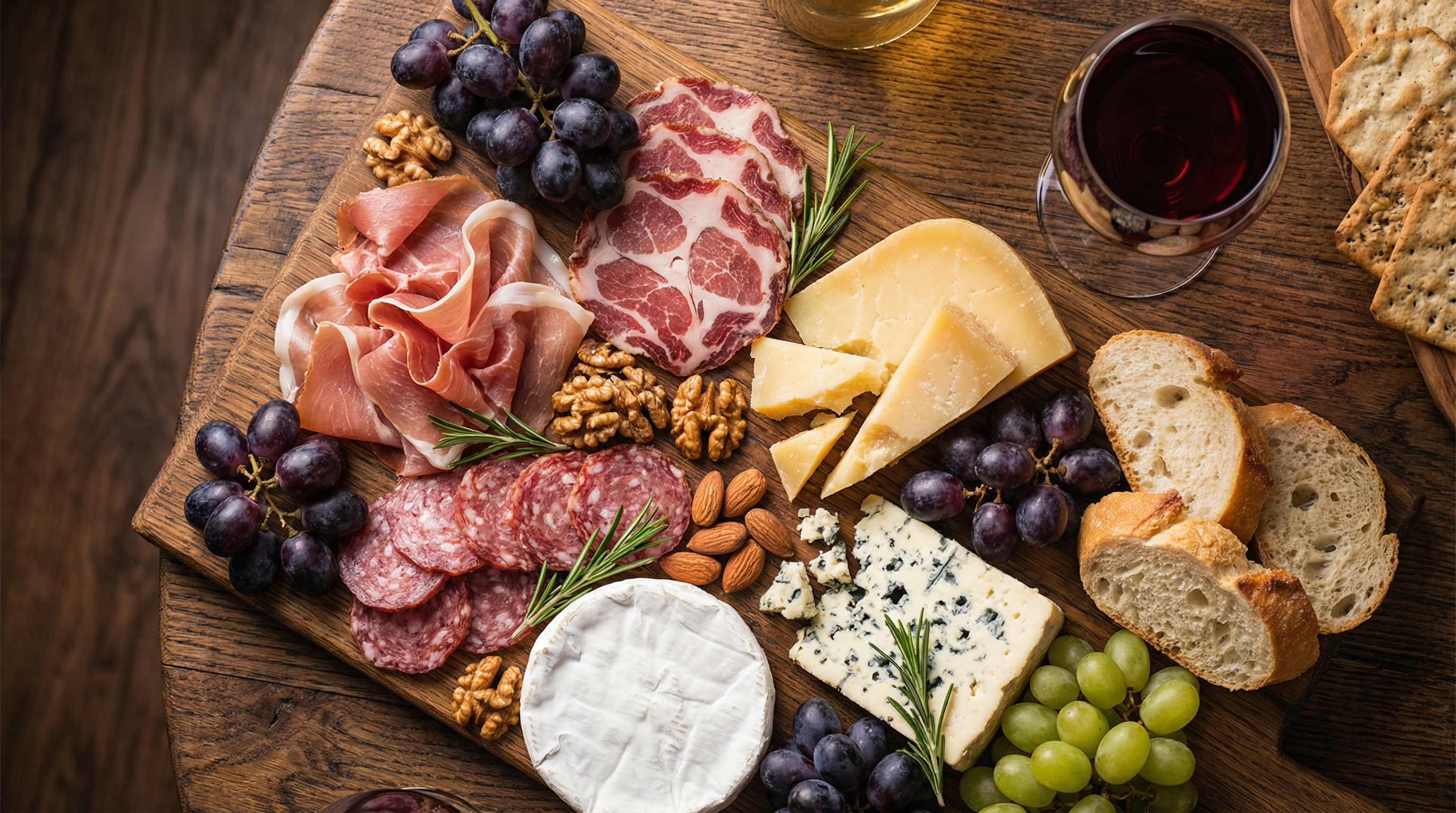
Cheese Course — Despite the romantic notion of red wine and cheese, white wine often pairs better. The acidity and fruit of white wines complement cheese's fat and salt more effectively than red wine's tannins, which can clash with certain cheeses. That said, some classic red pairings endure: aged Comté with Vin Jaune, Parmigiano-Reggiano with Lambrusco, and Roquefort with Sauternes.
For deeper exploration of wine and food pairing, consult Wine Folly's pairing resources and GuildSomm's professional guides.
The Art of the Imperfect Pairing
Finally, a liberating truth: most food and wine combinations are perfectly pleasant, even if they are not "perfect." The difference between a good pairing and a great one is real but subtle — and far less important than the company, the conversation, and the joy of sharing a meal.
The worst thing you can do with wine and food pairing is let anxiety ruin your dinner. Open the bottle you want to drink. Cook the food you want to eat. Pay attention to what happens when they meet in your mouth. Over time, you will develop an intuitive sense of what works — and you will discover your own perfect pairings that no guide ever mentioned.
“Wine is meant to be enjoyed at the table. Not analyzed. Not graded. Enjoyed.”
— Madeline Puckette
That is the heart of wine and food pairing: not perfection, but pleasure.


