Spain: The Sleeping Giant Awakens
Spain possesses more vineyard acreage than any country on earth — roughly 2.4 million acres under vine — yet for decades it was overshadowed by its French and Italian neighbors. That era is decisively over. A new generation of winemakers, armed with modern technique and a fierce respect for indigenous grape varieties, has transformed the Iberian Peninsula into one of the most dynamic and exciting wine-producing nations in the world.
From the oak-aged elegance of Rioja to the oxidative complexity of Sherry, from the slate-hewn power of Priorat to the Atlantic-kissed whites of Rías Baixas, Spain offers a dizzying spectrum of styles, terroirs, and price points. This guide maps the essential regions every wine lover should know, unpacking the grapes, traditions, and producers that define each.
“Spain is no longer just about value. It is about identity. Our wines now speak with confidence about who we are and where we come from.”
— Álvaro Palacios
A Brief History of Spanish Wine
Winemaking on the Iberian Peninsula dates back more than 3,000 years, introduced by Phoenician traders who established coastal colonies along the Mediterranean. The Romans expanded viticulture inland, and by the medieval period, monastic orders — particularly the Cistercians — had established many of the vineyard sites still in use today.
The phylloxera crisis of the late 19th century paradoxically benefited Rioja: as France's vineyards were decimated, Bordeaux négociants crossed the Pyrenees seeking wine, bringing with them the 225-liter barrique and blending philosophies that shaped Rioja's identity for the next century.
The 20th century brought upheaval — civil war, dictatorship, and economic isolation under Franco pushed Spanish wine toward bulk production. It was only after Spain's entry into the European Economic Community in 1986 that investment and modernization truly accelerated. The Denominación de Origen (DO) system was formalized and expanded, foreign investment flowed in, and visionary producers began reclaiming old vineyards and forgotten grapes.
Rioja: The Crown Jewel
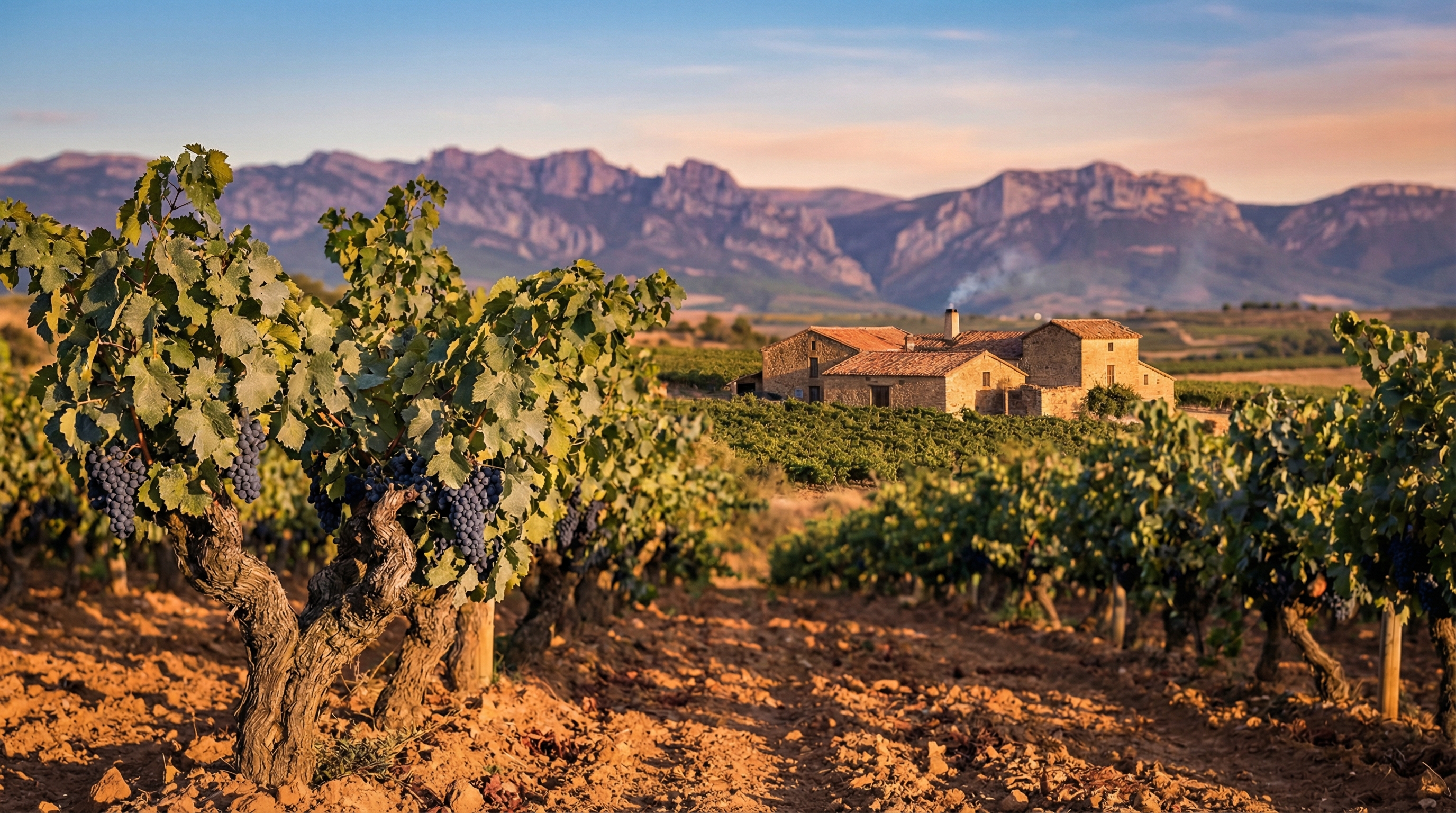
No region is more synonymous with Spanish wine than Rioja, a 150-kilometer stretch along the Ebro River in north-central Spain. With over 65,000 hectares under vine, Rioja is Spain's most prestigious Denominación de Origen Calificada (DOCa) — the highest classification in Spanish wine law, shared only with Priorat.
The Three Sub-Regions
Rioja is divided into three distinct zones, each contributing different characteristics to the region's wines:
Rioja Alavesa lies in the Basque Country north of the Ebro, on chalky clay-limestone soils at elevations of 400–800 meters. The Atlantic influence brings cooler temperatures and higher acidity. Wines here tend to be the most elegant and aromatic of the three zones.
Rioja Alta, to the west, shares some Atlantic influence but with more continental characteristics. The combination of clay, limestone, and alluvial soils at moderate elevations produces wines of structure and longevity. Many of the region's most celebrated bodegas — López de Heredia, La Rioja Alta, CVNE — are based here.
Rioja Oriental (formerly Rioja Baja) is the warmest, driest, and lowest-elevation zone. Mediterranean influence dominates, producing Garnacha-driven wines of richness and power. Long dismissed as a source of blending material, Rioja Oriental is undergoing a quiet renaissance as producers discover its potential for characterful, site-specific wines.
Grapes and Styles
Tempranillo is the undisputed king, typically comprising 60–90% of red blends. It provides structure, acidity, and the capacity to age gracefully in oak. Complementary varieties include Garnacha (adding flesh and warmth), Graciano (aromatic complexity and color), and Mazuelo (Cariñena, contributing tannin and acidity).
The traditional aging classification remains central to Rioja's identity:
| Classification | Minimum Aging | Oak Requirement | Character |
|---|---|---|---|
| Joven | None required | None required | Fresh, fruity, immediate |
| Crianza | 2 years total | 1 year in oak | Balanced fruit and oak |
| Reserva | 3 years total | 1 year in oak | Complex, integrated |
| Gran Reserva | 5 years total | 2 years in oak | Profound, evolved |
In 2017, Rioja introduced Viñedo Singular (single vineyard) and Vino de Zona (zonal) designations, acknowledging the importance of terroir expression alongside the aging hierarchy. This was a watershed moment, signaling Rioja's willingness to evolve.
Essential Producers
- López de Heredia — The cathedral of traditional Rioja. Viña Tondonia Gran Reserva, aged for a decade before release, is one of Spain's most hauntingly beautiful wines.
- Artadi — Led by Juan Carlos López de Lacalle, Artadi left the DOCa in 2015 to pursue a Burgundian model of single-vineyard expression. El Carretil and La Poza de Ballesteros are stunning.
- Contino — A single-estate Rioja owned by CVNE, producing site-specific wines of remarkable consistency.
- Remirez de Ganuza — Fernando Remirez de Ganuza is a perfectionist; his Reserva and Trasnocho are among Rioja's most concentrated wines.
Ribera del Duero: Power and Prestige
Located on the high Meseta Central at 700–1,000 meters elevation, Ribera del Duero is Spain's answer to the question of how much intensity Tempranillo — here called Tinto Fino or Tinta del País — can achieve. The extreme continental climate, with blazing summers and frigid winters, combined with dramatic diurnal temperature shifts of up to 25°C, produces wines of startling concentration and depth.
The Vega Sicilia Legend
The modern history of Ribera del Duero is inseparable from Vega Sicilia, founded in 1864 and long considered Spain's greatest wine estate. Its flagship Único, a blend of Tinto Fino and small amounts of Cabernet Sauvignon aged for a minimum of ten years, regularly ranks among the world's finest wines. The second wine, Valbuena 5°, released after five years of aging, is itself a benchmark.
But Ribera del Duero's true explosion came in the 1980s and 1990s. Alejandro Fernández proved with Pesquera that world-class Tempranillo did not require Vega Sicilia's prices. Peter Sisseck, a Danish winemaker, created Pingus in 1995 — a single-vineyard, old-vine Tempranillo that Robert Parker scored 98–100 points, instantly establishing it as a cult wine and driving international attention to the region.
“Ribera del Duero has the altitude, the old vines, and the extremes of climate to produce wines of extraordinary concentration. The challenge is to harness that power with elegance.”
— Álvaro Palacios
Key Producers to Know
- Vega Sicilia — Único and Valbuena remain the gold standard
- Dominio de Pingus — Peter Sisseck's micro-production masterpiece
- Pesquera — Alejandro Fernández's democratic alternative to Vega Sicilia
- Hacienda Monasterio — Co-created by Peter Sisseck, offering outstanding value
- Emilio Moro — Reliable, expressive Tempranillo at accessible prices
Priorat: The Volcanic Renaissance
Tucked into the rugged mountains southwest of Barcelona, Priorat is one of Spain's smallest and most dramatic wine regions. Just 1,900 hectares of vines cling to impossibly steep terraces of licorella — a distinctive black slate and quartz soil that forces roots deep in search of water and imparts a distinctive mineral character to the wines.
From Ruins to DOCa
Priorat's story is one of the most remarkable comebacks in wine history. Medieval Carthusian monks planted the first vines here in the 12th century, but by the mid-20th century, phylloxera, rural depopulation, and economic neglect had reduced the region to near-abandonment. Fewer than 600 hectares remained.
In 1989, a group of five pioneers — René Barbier, Álvaro Palacios, Daphne Glorian, Carles Pastrana, and José Luis Pérez — arrived with a vision of creating world-class wine from old-vine Garnacha and Cariñena on licorella soils. Their project, often called the "Priorat Renaissance," succeeded beyond all expectations. In 2000, Priorat became only the second region (after Rioja) to receive Spain's highest DOCa classification.
“When I first saw Priorat, I felt I had found my El Dorado. The old Garnacha vines on licorella soils — it was like discovering buried treasure.”
— Álvaro Palacios
The Wines
Priorat reds are dominated by Garnacha (Grenache) and Cariñena (Carignan), often from vines 60–100+ years old. These are wines of extraordinary intensity — deeply colored, powerfully structured, with mineral-driven finishes that can last minutes on the palate. Alcohol levels frequently reach 14.5–16%, but the best wines carry this with poise.
The emerging classification of Vi de Vila (village wines) and Vi de Finca (single-vineyard wines) is adding nuance, allowing consumers to explore terroir differences between villages like Gratallops, Porrera, and Bellmunt del Priorat.
Essential Producers
- Álvaro Palacios — L'Ermita is Priorat's most celebrated wine; Finca Dofí and Les Terrasses offer more accessible entry points
- Clos Mogador — René Barbier's estate produces a single, majestic red blend
- Clos Erasmus — Daphne Glorian's tiny production from ancient vines
- Mas Doix — Outstanding old-vine Garnacha from the village of Poboleda
Rías Baixas: Atlantic Whites
On Spain's lush, rain-soaked northwestern coast, where Galicia meets the Atlantic Ocean, lies Rías Baixas — the source of Spain's most celebrated white wines. This is Albariño country, and the grape has become one of Europe's most fashionable varieties.
The Albariño Grape
Albariño thrives in Rías Baixas' maritime climate, producing wines of vibrant acidity, stone-fruit and citrus character, and a distinctive saline minerality that reflects the region's proximity to the sea. The thick-skinned grape is well-suited to the high humidity and rainfall that would cause rot in thinner-skinned varieties.
Traditional training on pergola (overhead trellising) systems keeps grapes elevated from damp ground, though modern plantings increasingly use vertical shoot positioning for greater efficiency and control.
Sub-Regions
| Sub-Region | Character | Key Feature |
|---|---|---|
| Val do Salnés | Most maritime, highest acidity | Birthplace of modern Albariño |
| O Rosal | Warmer, fuller-bodied | Near Portuguese border |
| Condado do Tea | Most inland, riper fruit | River Miño influence |
| Soutomaior | Smallest, coolest | Mountain influence |
| Ribeira do Ulla | Newest, experimental | Cooler climate focus |
Producers Worth Seeking
- Zárate — Old-vine, terroir-driven Albariño from Val do Salnés. The Balado bottling is magnificent.
- Raúl Pérez (Sketch) — Radical Albariño aged in barrel on the lees, challenging every convention
- Do Ferreiro — Traditional, age-worthy Albariño from some of the region's oldest vines
- Pazo de Señoráns — Benchmark producer; the Selección de Añada is Spain's most age-worthy Albariño
Sherry Country: Jerez and the Sherry Triangle
No discussion of Spanish wine is complete without Sherry — arguably the most misunderstood and undervalued wine on earth. Produced in the "Sherry Triangle" between the Andalusian towns of Jerez de la Frontera, El Puerto de Santa María, and Sanlúcar de Barrameda, Sherry is a fortified wine of astonishing diversity and complexity.
The Solera System
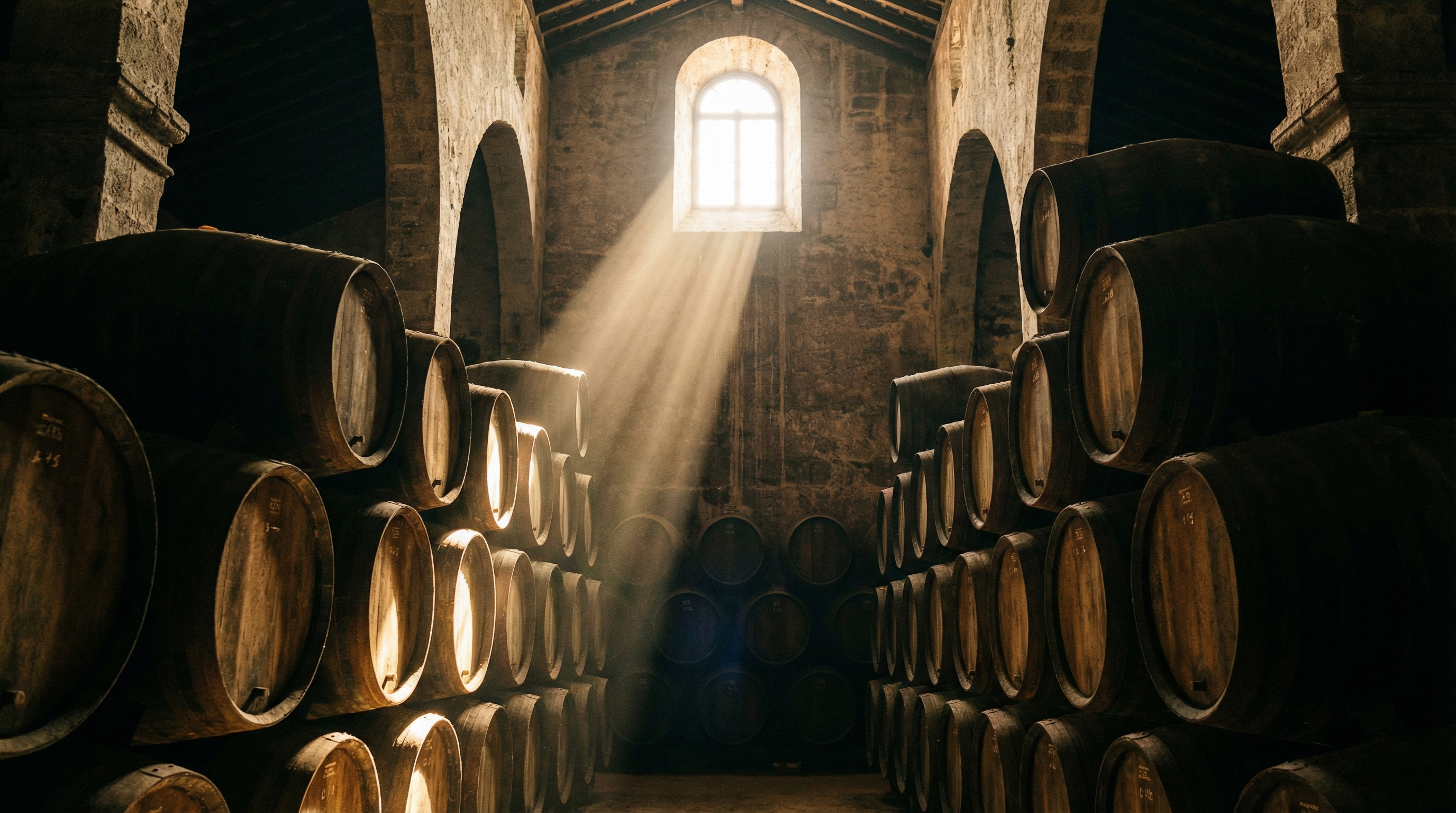
Sherry's uniqueness begins with the solera system, a fractional blending method in which younger wines are gradually introduced into barrels containing older wines. A solera may contain wines spanning decades, even a century, creating layers of complexity impossible to achieve through single-vintage aging.
Sherry Styles
The primary grape is Palomino Fino, which on the chalky white albariza soils of Jerez produces a neutral base wine that is then transformed through biological or oxidative aging:
| Style | Aging | Character | Serving |
|---|---|---|---|
| Fino | Biological (under flor) | Bone-dry, saline, almond | Chilled, with tapas |
| Manzanilla | Biological (Sanlúcar only) | Lightest, most saline | Chilled, with seafood |
| Amontillado | Biological then oxidative | Nutty, complex, amber | Slightly cool, with aged cheese |
| Oloroso | Oxidative | Rich, walnut, dried fruit | Room temp, with stews |
| Palo Cortado | Rare oxidative | Combines Amontillado finesse with Oloroso body | Room temp, contemplative |
| PX (Pedro Ximénez) | Sun-dried grapes | Treacle-sweet, fig, raisin | Dessert, over ice cream |
The Flor Miracle
What makes Fino and Manzanilla unique in the wine world is flor — a film of indigenous yeast (primarily Saccharomyces beticus) that forms naturally on the wine's surface in barrel, protecting it from oxidation while imparting distinctive flavors of bread dough, almonds, and chamomile. Flor thrives in Jerez's specific conditions of humidity, temperature, and the slight fortification to 15–15.5% alcohol.
In Sanlúcar de Barrameda, the proximity of the Atlantic creates cooler, more humid conditions that support thicker, more vigorous flor growth, which is why Manzanilla — essentially Fino made in Sanlúcar — has its own distinct, more saline character.
The Sherry Revival
After decades of declining sales driven by an image problem — cheap, sweet "cream sherry" had tarnished the category — Sherry is experiencing a genuine renaissance. Sommeliers worldwide have embraced dry Sherry as one of the most versatile food wines on earth, and a new generation of producers is releasing single-cask, vintage-dated, and en rama (minimally filtered) bottlings that reveal the full glory of this extraordinary wine.
Producers like Equipo Navazos, Bodegas Tradición, and El Maestro Sierra are leading the charge, alongside historic houses like González Byass (makers of Tio Pepe) and Lustau, which offer superb quality across the style spectrum.
For more on Spain's evolving wine scene, visit the Decanter Spain wine guide or Jancis Robinson's Spanish coverage.
The Spanish Wine Landscape at a Glance
| Region | Key Grapes | Climate | Style | Price Range |
|---|---|---|---|---|
| Rioja | Tempranillo, Garnacha, Graciano | Continental/Atlantic | Elegant, oak-aged reds and whites | $10–$300+ |
| Ribera del Duero | Tinto Fino (Tempranillo) | Extreme continental | Powerful, concentrated reds | $15–$500+ |
| Priorat | Garnacha, Cariñena | Mediterranean/mountain | Intense, mineral-driven reds | $20–$600+ |
| Rías Baixas | Albariño | Maritime Atlantic | Crisp, saline whites | $12–$50 |
| Jerez (Sherry) | Palomino, PX, Moscatel | Hot Mediterranean | Fortified, dry to sweet | $10–$200+ |
| Penedès | Xarel·lo, Macabeo, Parellada | Mediterranean | Cava (sparkling), still whites | $8–$40 |
| Jumilla | Monastrell (Mourvèdre) | Semi-arid continental | Bold, fruit-forward reds | $8–$30 |
| Toro | Tinta de Toro (Tempranillo) | Extreme continental | Massive, powerful reds | $10–$80 |
| Bierzo | Mencía, Godello | Atlantic/continental | Aromatic, elegant reds and whites | $12–$60 |
Conclusion: The Iberian Revolution
Spain stands at a remarkable inflection point. The country's winemakers have the rare advantage of possessing both ancient viticultural heritage and the freedom to innovate without the regulatory rigidity that sometimes constrains their French counterparts. Old-vine Garnacha from Priorat, century-old Tempranillo from Ribera del Duero, indigenous whites from Galicia, and the timeless mysteries of Sherry — Spain's wine portfolio is as deep and diverse as any on earth.
For the adventurous drinker, there has never been a better time to explore Spanish wine. The quality has never been higher, the diversity never broader, and — crucially — the value remains extraordinary. While Bordeaux and Burgundy prices continue their relentless ascent, Spain offers wines of genuine world-class stature at prices that still feel generous. That window will not stay open forever.


