Why Cheese and Wine Are Natural Partners
Few culinary partnerships are as celebrated — or as frequently botched — as cheese and wine. The combination is ancient: shepherds in the Pyrenees have been pairing sheep's milk cheese with local wine for millennia, and Roman banquets featured both as essential courses. Yet most of us default to a random red with whatever cheese is on sale, and wonder why the pairing sometimes falls flat.
The science behind great cheese-wine pairing is straightforward. Fat coats the palate and softens tannins. Salt enhances fruitiness and balances sweetness. Acidity in wine cuts through richness and cleanses the palate for the next bite. When these elements align, the cheese and wine amplify each other. When they clash — bitter tannins meeting pungent washed rind, for instance — the result is unpleasant for both.
Understanding a few core principles will transform your cheese-and-wine game from guesswork into confident, delicious pairing. And the first principle is the simplest: what grows together goes together. Regional pairings have been refined over centuries of shared terroir, and they rarely disappoint.
The Core Principles of Cheese-Wine Harmony
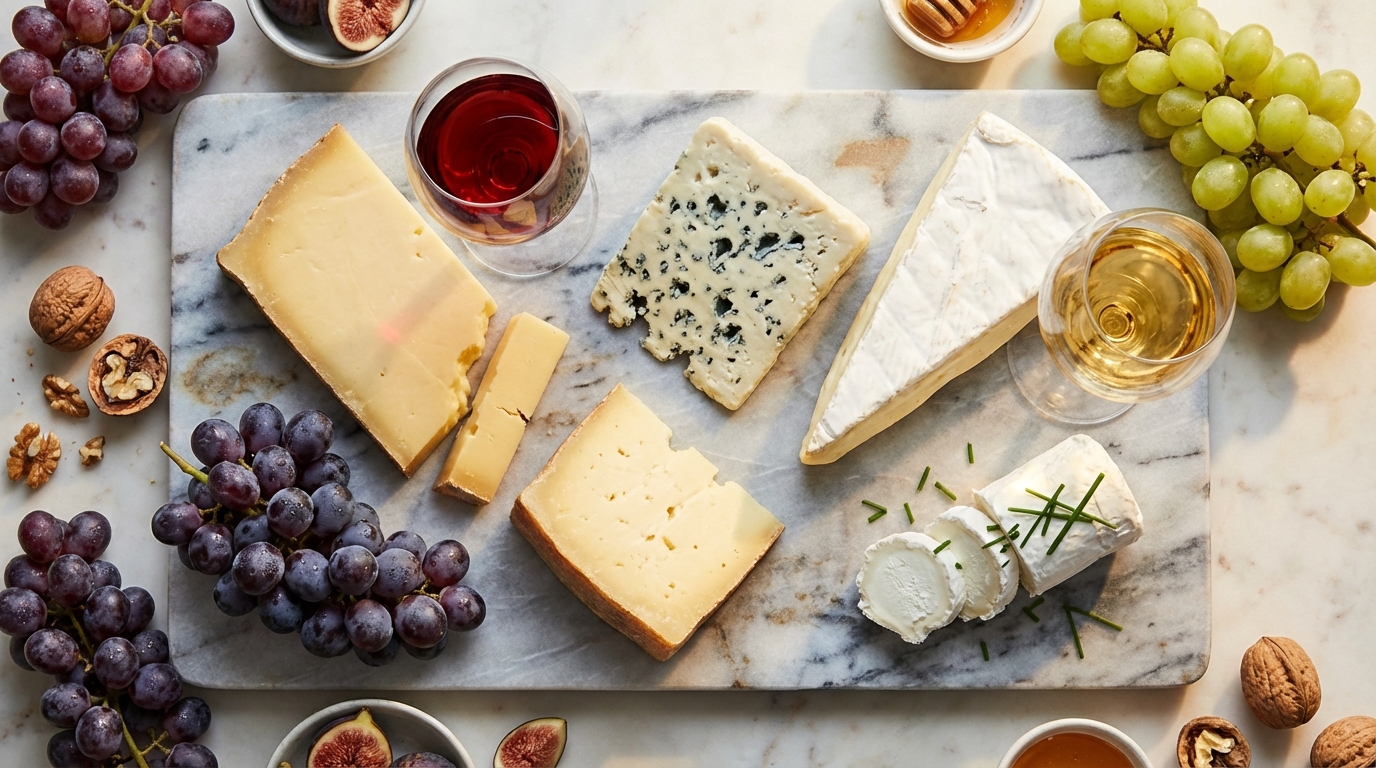
Match intensity to intensity. A delicate fresh chèvre will be overwhelmed by a tannic Barolo. A powerful aged Comté needs a wine with enough structure and flavor to stand alongside it. Think of it as a conversation — both participants should speak at roughly the same volume.
Fat loves acid. The richest cheeses (triple-cream Brie, Brillat-Savarin, Époisses) call for wines with bright acidity to cut through the butterfat. Champagne with Brie is a classic for exactly this reason — the bubbles and acidity slice through the cream, resetting your palate with every sip.
Salt loves sweet. This is perhaps the most important principle, and the one most people get wrong. Salty blue cheeses don't want big red wines — they want sweetness. The Roquefort and Sauternes pairing exists because the salt in the cheese amplifies the wine's fruit, while the sweetness tempers the cheese's pungency. It's a revelation.
Tannin and cheese are not always friends. High-tannin reds (young Cabernet Sauvignon, Nebbiolo, Tannat) can taste metallic and bitter when paired with many cheeses. The proteins in cheese react with tannins to create a chalky, astringent sensation. If you insist on red wine with cheese, choose low-tannin options: Pinot Noir, Gamay, Grenache, or aged Tempranillo where the tannins have softened.
The Complete Pairing Guide by Cheese Type
| Cheese Type | Examples | Best Wine Pairings | Why It Works |
|---|---|---|---|
| Fresh | Mozzarella, Ricotta, Burrata, Chèvre | Sauvignon Blanc, Pinot Grigio, Rosé, Prosecco | Light wines match delicate flavors; acidity complements lactic tang |
| Soft-ripened | Brie, Camembert, Brillat-Savarin | Champagne, Chardonnay, Pinot Noir, Beaujolais | Bubbles/acidity cut butterfat; low tannin avoids bitterness |
| Semi-hard | Gruyère, Comté, Gouda, Manchego, Cheddar | Chardonnay, Chenin Blanc, Rioja, Côtes du Rhône | Medium body matches medium intensity; nutty notes echo oak |
| Hard | Parmigiano-Reggiano, Pecorino, aged Gouda | Chianti, Barolo, Lambrusco, Amarone, Vin Jaune | Concentrated flavors need powerful wines; salt tames tannin |
| Blue | Roquefort, Stilton, Gorgonzola, Fourme d'Ambert | Sauternes, Port, late-harvest Riesling, Vin Santo | Salt + sweet = magic; sweetness balances intensity |
| Washed rind | Époisses, Munster, Taleggio, Reblochon | Gewurztraminer, Alsace Pinot Gris, Amarone, Meursault | Aromatic wines match pungent cheese; richness meets richness |
The Classic Combinations Every Wine Lover Should Know
Roquefort and Sauternes — The king of pairings. The salty, crumbly, blue-veined sheep's milk cheese from the caves of Roquefort-sur-Soulzon meets the honeyed, botrytized sweetness of Bordeaux's greatest dessert wine. Each bite of cheese makes the wine taste more fruity; each sip of wine makes the cheese taste more creamy. This pairing has been documented since at least the 18th century and remains unimproved upon.
Comté and Vin Jaune — A Jura masterpiece. Aged Comté (look for 18+ months) develops nutty, caramelized flavors that mirror the oxidative, walnut-and-curry-leaf character of Vin Jaune. Both come from the same region, both are products of time and patience, and together they create something greater than either alone. If you can't find Vin Jaune, an aged Savagnin or even a good Fino Sherry makes an excellent substitute.
Parmigiano-Reggiano and Lambrusco — Italy's answer to the pairing question. The salty, crystalline crunch of 36-month Parmigiano finds its perfect foil in the frothy, slightly sweet, refreshingly acidic sparkle of Lambrusco. This isn't fancy; it's what families in Emilia-Romagna have eaten for generations. The bubbles clean the palate, the fruit sweetness counters the salt, and both share a regional terroir. Simple perfection.
Stilton and Vintage Port — A British classic. The dense, blue-veined intensity of Stilton meets the sweet, concentrated warmth of vintage Port. The sweetness tames the blue cheese's bite, while the cheese's salt and fat give the Port's heavy sweetness a landing strip. Tawny Port works beautifully too, adding nutty complexity that echoes the cheese's aged depth.
Brie and Champagne — The Parisian aperitif. Ripe, oozing Brie de Meaux (the real thing, not the pasteurized supermarket version) with a glass of Blanc de Blancs Champagne. The wine's acidity and mousse cut through the triple-cream richness, while the cheese's mild, mushroomy flavor doesn't compete with the wine's delicate toasty notes. This pairing is the definition of elegant simplicity.
Common Mistakes and How to Avoid Them
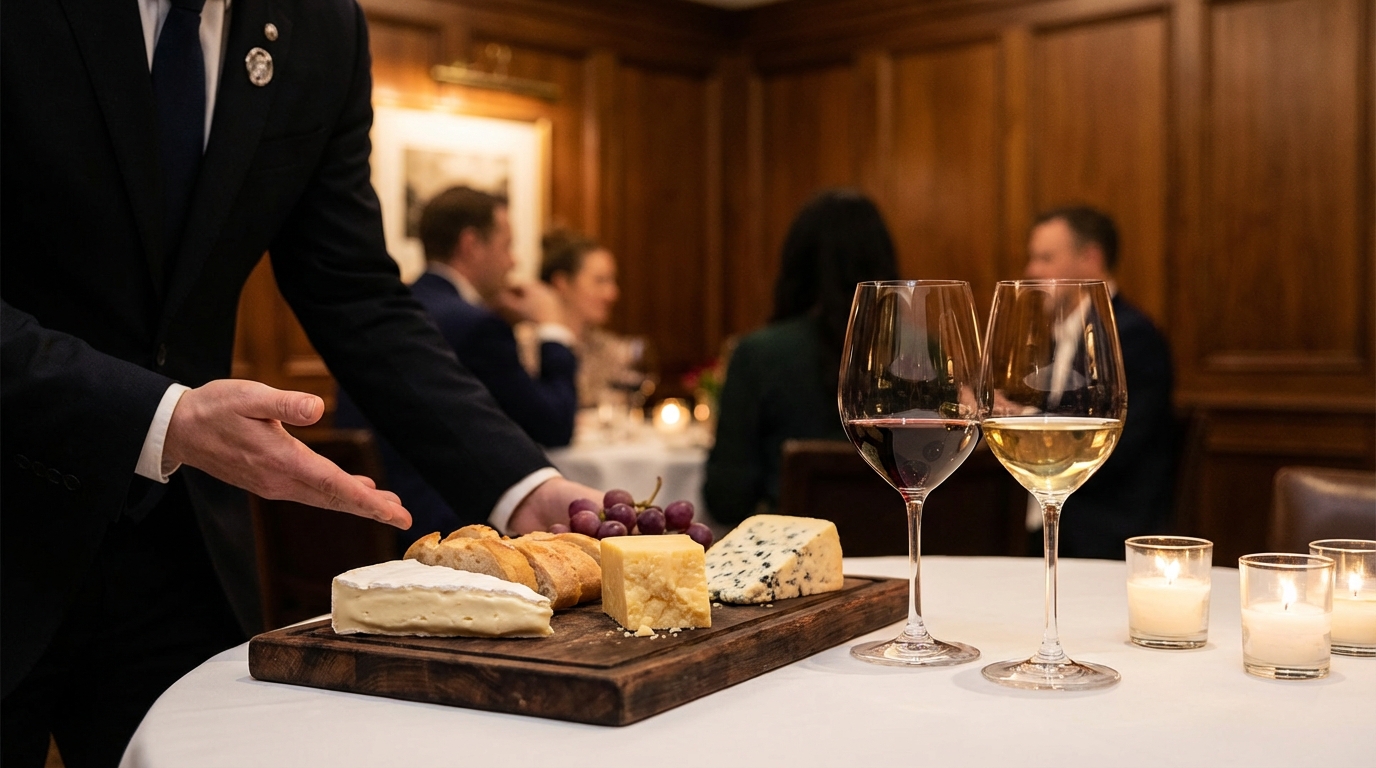
Mistake #1: Pairing tannic reds with soft cheese. A young Cabernet Sauvignon with Brie is a disaster. The tannins clash with the casein proteins, producing a metallic, bitter taste that ruins both. If you want red with soft cheese, choose Pinot Noir or Gamay — both are low in tannin and high in acidity.
Mistake #2: Serving cheese too cold. Cheese straight from the refrigerator tastes muted and waxy. Remove cheese at least 30-45 minutes before serving to let the fats soften and the flavors bloom. A properly tempered Époisses is a completely different experience from a cold one.
Mistake #3: Ignoring the rind. Some rinds (Brie, Camembert) add earthy complexity to the pairing. Others (wax-coated Gouda, plastic wrap) are not meant to be eaten. Washed rinds (Époisses, Munster) are intensely flavored and may clash with delicate wines. When pairing, taste the cheese both with and without the rind to see which works better with your wine.
Mistake #4: Too many cheeses at once. A cheese board with 8 varieties makes wine pairing nearly impossible. For a pairing dinner, limit yourself to 3-4 cheeses of varying styles, and serve them in order from mildest to strongest, with a different wine for each. Quality over quantity.
Mistake #5: Assuming red wine is always better. This is the biggest myth in cheese pairing. White wines — especially those with good acidity, residual sweetness, or aromatic intensity — are almost always better partners for cheese than red wines. The French rarely drink red wine with cheese; they reach for white Burgundy, Alsace whites, or sweet wines.
Building the Perfect Cheese Board for Wine
A thoughtfully composed cheese board should offer variety in texture, intensity, and milk type, while remaining wine-friendly. Here's a template that works beautifully with wine:
The Fresh element — A young goat cheese or burrata. Light, tangy, palate-cleansing. Pair with your lightest wine.
The Creamy element — A ripe Brie de Meaux, Saint-André, or Délice de Bourgogne. Rich and buttery. Champagne or Chardonnay territory.
The Firm element — Aged Comté, Gruyère, or Manchego. Nutty and savory. This is where aged whites or medium reds shine.
The Bold element — A wedge of Roquefort, Stilton, or aged Gorgonzola. Intense and salty. Save your sweetest wine for this.
Accompany with fig jam (a bridge between cheese and wine), toasted walnuts (echoing nutty cheese flavors), sliced pear (freshness), and a quality baguette or cracker as a neutral base. Honey is spectacular with blue cheese and tangy goat cheese alike.
The Wine-First Approach
Sometimes you've already opened the wine and need to find a cheese to match. Here's the reverse lookup:
Champagne or sparkling wine → Almost anything, but especially Brie, Gruyère, and Parmigiano.
Crisp white (Sauvignon Blanc, Albariño) → Fresh goat cheese, feta, mozzarella.
Rich white (Chardonnay, Viognier) → Comté, Gruyère, mild Cheddar, Reblochon.
Light red (Pinot Noir, Gamay) → Brie, Camembert, Époisses, mild washed rinds.
Full red (Cabernet, Syrah) → Aged Cheddar, aged Gouda, Manchego (hard, salty cheeses tame tannins).
Sweet wine (Sauternes, Port, late harvest) → Blue cheeses, aged Comté, Stilton.
The art of cheese and wine pairing is not about memorizing rules — it's about understanding why certain combinations work and applying those principles with your own palate as the final judge. Open a bottle, unwrap some cheese, and experiment. The worst that can happen is you eat cheese and drink wine, which is never really a bad outcome.


