Wine Is Just Fermented Grape Juice (Seriously)
Let's start with the most liberating truth in wine: there is no wrong way to enjoy it. If you like a $9 Merlot with pizza, that's a great wine. If you prefer your Chardonnay ice-cold with extra ice cubes, that works too. The entire wine establishment — the scores, the tasting notes, the sometimes insufferable vocabulary — exists to serve your enjoyment, not to gatekeep it.
That said, a little knowledge goes a long way. Understanding the basics of grape varieties, how to read a label, and what to expect at different price points transforms wine shopping from an anxiety-inducing guessing game into an enjoyable exploration. You don't need to become an expert. You just need enough confidence to trust your own palate and make choices that consistently land on wines you actually enjoy.
This guide is for absolute beginners — the person standing in a wine shop, staring at 500 bottles, feeling completely lost. By the end, you'll have a framework for choosing wine that works every time, whether you're buying for a Tuesday dinner or a special occasion.
Know Your Grapes: The Big Six
Wine comes from grapes, and different grape varieties produce wildly different wines. You don't need to memorize hundreds of varieties. Start with these six — they account for the vast majority of wines you'll encounter, and understanding their basic personalities gives you a reliable roadmap.
| Grape | Color | Flavor Profile | Body | When to Drink | Good Starter Bottle ($) |
|---|---|---|---|---|---|
| Cabernet Sauvignon | Red | Black currant, cedar, dark chocolate, tobacco | Full | With steak, lamb, aged cheese | $12-20 (Chile or California) |
| Merlot | Red | Plum, cherry, soft tannins, vanilla | Medium-Full | With pasta, roast chicken, burgers | $10-18 (Chile, Washington State) |
| Pinot Noir | Red | Cherry, strawberry, earthy, silky | Light-Medium | With salmon, mushrooms, duck | $12-25 (Oregon, Burgundy) |
| Chardonnay | White | Apple, citrus, butter (if oaked), vanilla | Medium-Full | With chicken, seafood, creamy pasta | $10-18 (California, Burgundy) |
| Sauvignon Blanc | White | Grapefruit, lime, herbs, crisp and zingy | Light-Medium | With salad, goat cheese, sushi | $10-16 (New Zealand, Loire) |
| Riesling | White | Peach, lime, floral, sweet or dry | Light | With spicy food, Asian cuisine, solo | $10-18 (Germany, Alsace) |
Cabernet Sauvignon is the heavyweight — bold, structured, and tannic. It's the grape behind Bordeaux's greatest reds and Napa Valley's most expensive wines. If you like strong flavors and big, rich food, this is your grape.
Pinot Noir is the opposite — light, delicate, and endlessly nuanced. It's the grape of Burgundy, and it makes some of the most expensive wines in the world, but excellent affordable Pinot Noir exists from Oregon, New Zealand, and Chile. If you prefer subtlety over power, start here.
Chardonnay is the chameleon. It can be crisp and mineral (unoaked, like Chablis) or rich and buttery (oaked, like many California versions). If you've "tried Chardonnay and didn't like it," you probably had one style — try the other.
How to Navigate a Wine Shop Without Panic
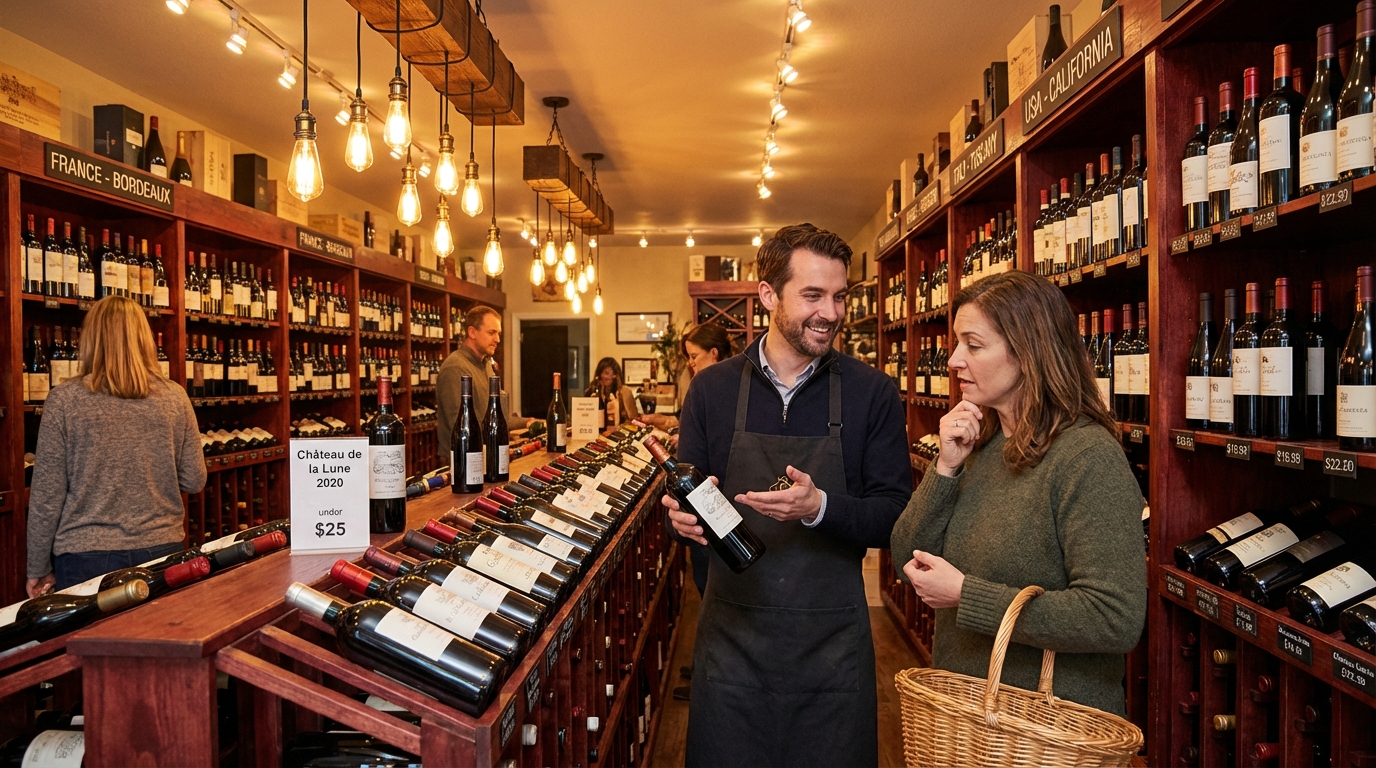
Wine shops can feel intimidating, but they're actually one of the best resources available to you. Independent wine shops (not supermarkets) employ people who genuinely love wine and want to help you find something great. Here's how to use them effectively:
Tell them what you're eating. "I'm making grilled chicken tonight" gives a knowledgeable shop person everything they need. They'll steer you toward wines that complement the dish — something with enough weight to match the char but enough freshness to not overwhelm the chicken.
Give a price range. There is zero shame in saying "I want something under $15." Some of the world's best everyday wines live in the $10-20 range. A good shop person will respect your budget and find you something excellent within it.
Describe what you liked before. Even vague descriptions help: "I had a really smooth red wine at a restaurant last month" gives clues. If you remember any details — the grape, the region, even the label color — that helps narrow things down.
Don't be afraid to say you're new. Wine shop people love helping beginners. You're their favorite customer, because you're genuinely curious and open to suggestions. They're not going to judge you.
The Price vs. Quality Reality
Here's what most wine guides won't tell you: the relationship between price and quality is logarithmic, not linear. Going from $8 to $15 represents a massive quality jump. Going from $15 to $30 is a noticeable improvement. Going from $30 to $60 is often marginal. Going from $60 to $200 is frequently about rarity and prestige, not taste.
The sweet spot for everyday drinking wine is $12-20. In this range, you get wines from serious producers who care about quality, made from properly ripened grapes, aged appropriately, and bottled with attention. Below $8, corners are being cut somewhere (excess sugar, artificial flavoring agents, industrial production). Above $25, you're entering enthusiast territory where the wines are more complex and age-worthy, but not necessarily more "enjoyable" on a Tuesday night.
Some of the world's best value wines come from regions that lack the marketing budgets of Bordeaux or Napa: Portugal (incredible reds for $8-15), Southern France (Languedoc, Minervois, Corbières), Spain (Jumilla, Calatayud), Argentina (Malbec), and Chile (Carmenère, Cabernet). These regions produce wines that punch well above their price point.
Serving Wine: The Basics That Actually Matter
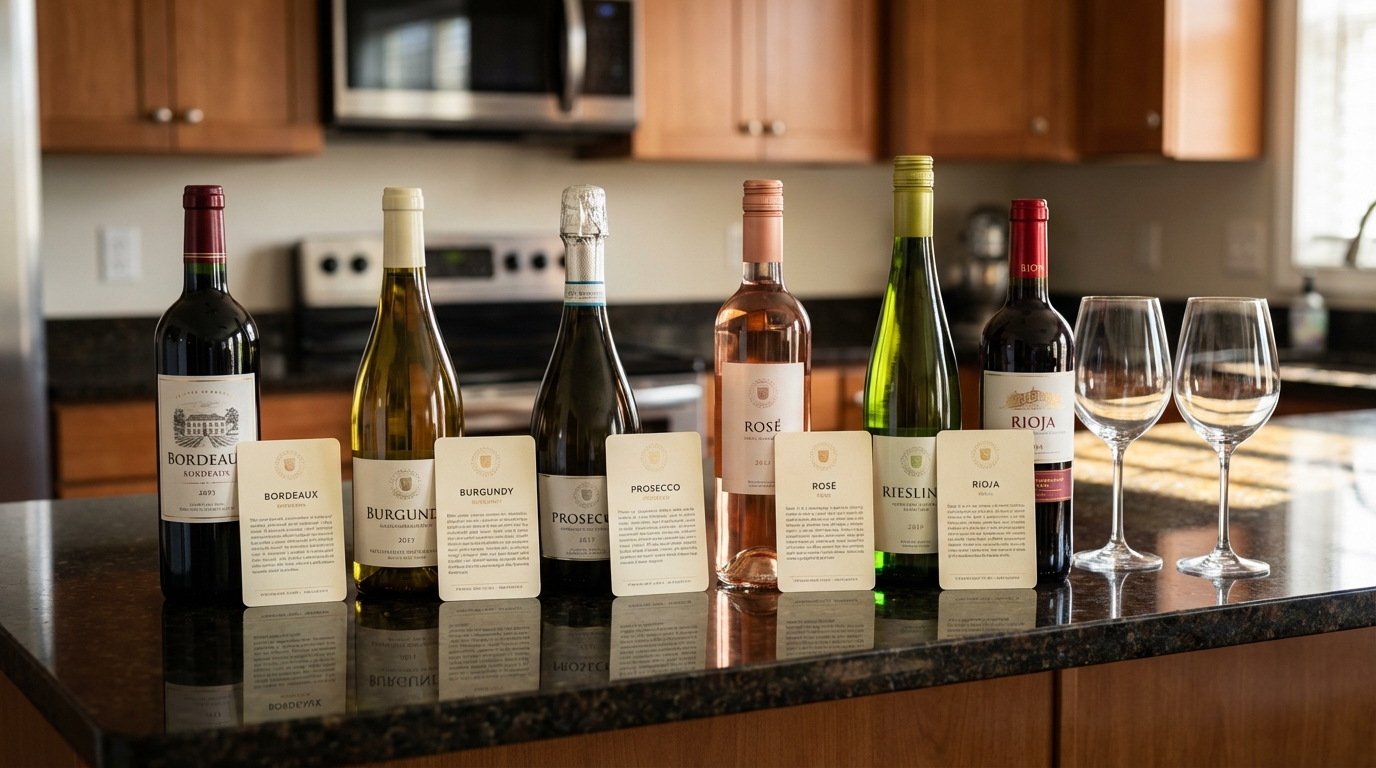
You don't need fancy equipment to serve wine well. But a few simple practices make a genuine difference.
Temperature matters more than anything. Most people serve red wine too warm and white wine too cold. Red wine should be at cool room temperature — around 16-18°C (60-65°F), not the 22°C of a heated living room. If your red tastes flat and alcoholic, it's too warm — 15 minutes in the fridge fixes it. White wine should be cold but not frigid — 8-12°C (46-54°F). Straight from the fridge is slightly too cold; let it sit for 5-10 minutes or hold the glass to warm it.
Open the bottle 15-30 minutes before serving — even for white wine. This brief exposure to air softens harsh edges and allows the wine to "wake up." For young, tannic reds (Cabernet, Syrah, Barolo), you can even pour the wine into a pitcher or decanter for 30 minutes. You'll be amazed at the difference.
Any clean glass works, but if you want to invest, get a set of universal wine glasses — tulip-shaped with a moderately wide bowl. They work for both red and white wine and are all you'll ever need unless you become a serious collector. Avoid tiny glasses (the wine can't breathe) and balloon-shaped glasses (too wide, the aromas dissipate).
Fill the glass only one-third to halfway. This leaves room for swirling (which releases aromas) and ensures the wine doesn't warm up in the glass before you finish it. It also looks more elegant and makes you look like you know what you're doing.
Building Your First Wine Collection
You don't need a cellar or a wine fridge to start collecting. A cool, dark corner of a closet works perfectly for wines you plan to drink within 6-12 months. Keep bottles on their sides (to keep the cork moist) and away from heat sources, vibration, and direct sunlight.
Start with a mixed case of 12 bottles that covers different styles:
- 2 bottles of everyday red (Côtes du Rhône, Malbec, or Merlot)
- 2 bottles of everyday white (Sauvignon Blanc or Pinot Grigio)
- 2 bottles of "step up" red (a Rioja Crianza, a Chianti Classico, or a Sonoma Pinot Noir)
- 2 bottles of "step up" white (a Burgundy Chardonnay, a German Riesling, or a white Rhône)
- 1 bottle of sparkling (Crémant d'Alsace or Cava — excellent quality at a fraction of Champagne prices)
- 1 bottle of rosé (Provence or Spanish rosado)
- 2 bottles that your wine shop recommends (something you'd never pick on your own)
Those last two bottles are important. Every wine lover's story includes a bottle that surprised them — a grape they'd never heard of, a region they couldn't find on a map, a style they thought they'd hate. Staying curious is the single best investment you can make in your wine journey.
Wine at Restaurants: Confidence Without the Show
Restaurant wine lists can trigger instant anxiety. Here's the secret: the sommelier is your friend, and they are not going to judge you. Their job is to make you happy, and they'd much rather help you find a great $40 bottle than watch you blindly point at a $90 one.
When the sommelier presents the bottle and pours a taste, you're checking for one thing only: is the wine faulty? You're looking for cork taint (a musty, wet cardboard smell) or oxidation (a brown color and flat, vinegary taste). You are not deciding whether you "like" the wine — you already ordered it. If it smells and looks normal, nod and say it's fine. That's it. The ritual is a quality check, not an audition.
The best value on most wine lists lives in the second-cheapest tier ($35-55 at most restaurants) and in regions you might not immediately recognize. That Chilean Carmenère or Sicilian Nero d'Avola is probably a better wine for the money than the name-brand Napa Cabernet three price tiers above it.
By the glass is great for exploration but poor value compared to a bottle. If two or more people at the table are drinking wine, a bottle almost always costs less per glass and gives you a consistent experience across the meal.
The Only Rule That Matters
Wine has been overcomplicated by an industry that sometimes benefits from making newcomers feel inadequate. Don't fall for it. The entire purpose of wine is enjoyment — sensory pleasure, social connection, cultural exploration, and the simple happiness of a good glass with good food.
Trust your palate. If you taste a wine that experts rave about and you don't like it, that's perfectly fine. If you love a wine that critics dismiss, that's perfectly fine too. Your taste will evolve naturally as you try more wines, visit more regions, and build a frame of reference. There's no shortcut and no wrong path.
Start with what you enjoy. Stay curious. Ask questions. Be willing to spend a few extra dollars on occasion to taste something unfamiliar. The wine world is enormous, diverse, and welcoming to anyone willing to take the first sip. Welcome aboard.


