The Rise of Pink
There was a time, not so long ago, when ordering rosé in a serious restaurant was an act of quiet rebellion. Sommeliers would raise an eyebrow. Fellow diners would glance sideways. Rosé was dismissed as a frivolous wine — neither red enough to be taken seriously nor white enough to be refreshing, occupying an awkward middle ground that the wine establishment regarded with undisguised condescension. White Zinfandel, that saccharine-sweet pink wine from California that dominated the American market in the 1980s and 1990s, had poisoned the well for an entire category.
How things have changed. Rosé is now the fastest-growing wine category in the world. In France, rosé consumption has surpassed white wine, accounting for over 30% of all still wine purchased. In the United States, rosé sales have increased by more than 50% since 2020. Provence, the spiritual homeland of dry rosé, exports record quantities year after year, its pale, shimmering bottles now as synonymous with summer as sunscreen and sandals.
But rosé is far more than a seasonal indulgence. It is one of the oldest and most diverse categories in wine, encompassing everything from the bone-dry, mineral-driven Provence classics to the deep, powerful rosés of Tavel, from the copper-hued Cerasuolo d'Abruzzo to the delicate Spanish rosados of Navarra. Understanding rosé — how it is made, where it comes from, and what to look for — unlocks one of wine's greatest pleasures: a category that is simultaneously the most food-friendly, the most versatile, and, bottle for bottle, among the best values available.
“Rosé is not a compromise between red and white. It is its own universe — one that encompasses more styles, more terroirs, and more pure drinking pleasure than either red or white wine alone.”
— Sacha Lichine, founder of Château d'Esclans and Whispering Angel
How Rosé Gets Its Color: Production Methods
The color of rosé comes from grape skins. All grape juice (with rare exceptions) is clear — it is contact with the pigment-rich skins that imparts color. The method used to achieve that contact, and its duration, determines the style of the finished wine.
Method 1: Direct Press (Pressurage Direct)
The grapes are harvested and immediately pressed, with the juice spending only minutes to a few hours in contact with the skins before being separated and fermented like a white wine. This produces the palest rosés — the delicate, barely-there pink of Provence.
Character: Pale salmon or "oeil de perdrix" (partridge eye) color. Delicate aromas of white flowers, citrus, and stone fruit. Crisp, dry, and mineral on the palate. Light-bodied with bright acidity.
Where used: Provence (the majority of production), Loire Valley, parts of Languedoc.
Method 2: Short Maceration (Macération Courte)
Crushed grapes are left in contact with their skins for a controlled period — typically 2 to 20 hours — before the juice is drained off ("bled") and fermented separately. The longer the maceration, the deeper the color and more intense the flavor.
Character: Ranges from light pink to medium salmon-coral. More aromatic intensity — red berries, melon, and sometimes herbs. Fuller body than direct-press rosés, with more texture on the palate.
Where used: Southern Rhône (Tavel), Spain, Italy, California, most New World rosé.
Method 3: Saignée (Bleeding)
This is a byproduct of red winemaking rather than a dedicated rosé production method. After crushing red grapes, a portion of the juice is "bled off" (saignée) from the tank after 6 to 48 hours of skin contact. This serves a dual purpose: it concentrates the remaining red wine (by reducing the juice-to-skin ratio) and produces a rosé from the drained juice.
Character: Deeper color — medium pink to light cherry. More vinous, with riper fruit character (strawberry, raspberry, cherry). Fuller body and sometimes a hint of tannin. Can taste closer to a light red wine than a traditional rosé.
Where used: Bordeaux, Napa Valley, some Rhône producers, Argentina (from Malbec).
Method 4: Blending (Rarely Used for Still Rosé)
Mixing red and white wine to create rosé is prohibited in most European appellations for still wines. The major exception is rosé Champagne, where blending still red wine (usually from Bouzy or Ambonnay) with white base wine is the standard method.
Character: Varies enormously depending on the base wines. Rosé Champagne made by blending tends to show red berry fruit prominently, with a vinous quality distinct from rosé Champagne made by saignée.
Production Methods Comparison
| Method | Skin Contact | Typical Color | Body | Complexity | Best Examples |
|---|---|---|---|---|---|
| Direct Press | Minutes-2 hours | Very pale pink | Light | Delicate, mineral | Provence (Domaines Ott, Tempier) |
| Short Maceration | 2-20 hours | Light to medium pink | Medium | Aromatic, fruity | Tavel, Navarra, Bandol |
| Saignée | 6-48 hours | Medium to deep pink | Fuller | Vinous, structured | Bordeaux rosé, some Napa |
| Blending | N/A (blend) | Varies | Varies | Fruity, vinous | Rosé Champagne |
The Great Rosé Regions
Provence: The Undisputed Capital
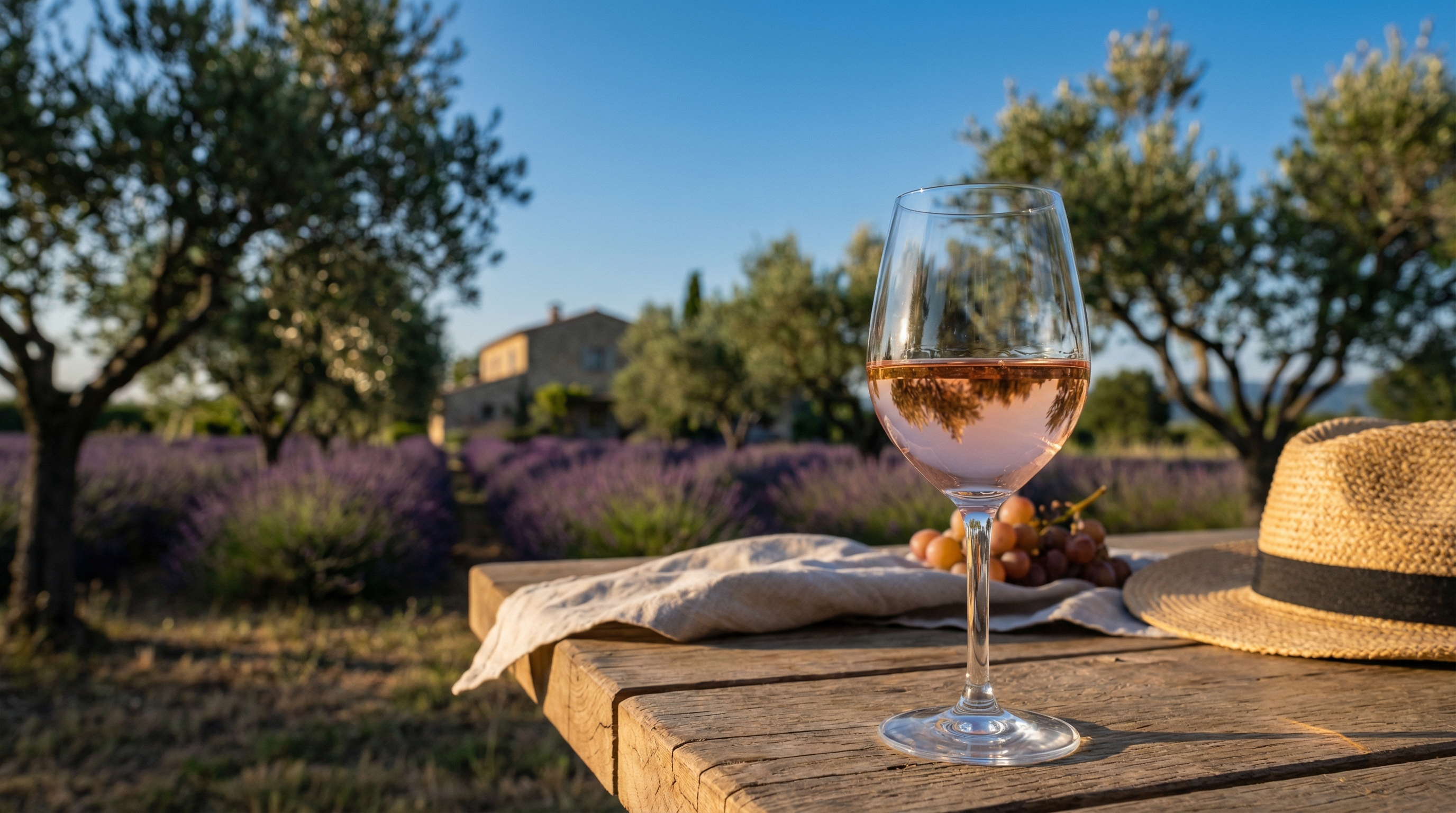
Provence, in southeastern France, produces more rosé than any other French region — over 88% of its total output is pink. The region's three main appellations for rosé are:
- Côtes de Provence — The largest and most variable. The best wines come from specific terroirs like La Londe, Fréjus, Sainte-Victoire, and Pierrefeu. Grenache, Cinsault, and Syrah are the primary grapes, often with Mourvèdre, Tibouren, and Rolle (Vermentino).
- Coteaux d'Aix-en-Provence — Slightly inland, warmer, producing rounder, more fruit-forward rosés.
- Bandol — Provence's most serious rosé appellation. Mourvèdre-based wines with remarkable depth, structure, and aging potential (3-5 years, sometimes more). Domaine Tempier sets the benchmark.
The Provence Wine Council (CIVP) has done more than any other organization to elevate rosé's global reputation, positioning Provence rosé as the definitive expression of the category.
The Provence style has become so influential that it has essentially defined modern rosé: pale, dry, aromatic, and refreshing. Producers worldwide now aspire to the Provence aesthetic — that impossibly pale, shimmering pink that looks like liquid rose quartz in the glass.
“In Provence, rosé is not a summer wine. It is the wine we drink with everything, all year round. It is our red, our white, and our everyday companion at the table.”
— François Millo, former director of the CIVP
Tavel: The Exception That Proves the Rule
While Provence champions delicacy, Tavel — a small appellation in the southern Rhône — makes a powerful counter-argument. Tavel is the only French appellation dedicated exclusively to rosé, and its wines are the polar opposite of Provence's pale aesthetic. Deep copper-salmon in color, full-bodied, and structured, Tavel rosé is built for food — particularly the rich, herbed cuisine of southern France.
Made primarily from Grenache with Cinsault, Mourvèdre, and Syrah, Tavel rosé can age for several years, developing complex notes of dried herbs, orange peel, and spice. Louis XIV reportedly declared it the finest wine in France, and while that claim is apocryphal, it speaks to Tavel's historic reputation.
Spain: Rosado
Spain has a proud rosado tradition, particularly in Navarra, where Garnacha (Grenache) has been vinified as rosé for centuries. Navarra rosados are typically deeper in color than Provence rosés, with more exuberant fruit character — strawberry, watermelon, and cherry — and a round, generous palate.
In Rioja, rosado is traditional but often overlooked. The best examples, made from Garnacha and Tempranillo, offer remarkable value and a style distinct from both Provence and Navarra.
Italy: Rosato and Cerasuolo
Italy's rosé tradition is ancient and varied:
- Cerasuolo d'Abruzzo — Made from Montepulciano grapes in the Abruzzo region. Deep cherry-pink, full-bodied, and intensely fruity. One of Italy's most distinctive rosés.
- Chiaretto di Bardolino — From the shores of Lake Garda in Veneto. Pale, delicate, mineral — Italy's answer to Provence.
- Salento Rosato — From Puglia, made from Negroamaro. Deep pink, generous, often with a slight bitter-almond finish that pairs brilliantly with Mediterranean cuisine.
- Cerasuolo di Vittoria — Despite the name, this is actually a light red wine from Sicily, not a rosé. Do not confuse it with Cerasuolo d'Abruzzo.
The New World
California has embraced rosé with characteristic enthusiasm. Producers like Lorenza, Scribe, and Domaine de la Côte make serious, terroir-driven rosés, while brands like Summer Water and Yes Way Rosé target the lifestyle market.
South Africa produces outstanding rosé from Pinotage, Cinsault, and Mourvèdre, with Mullineux and The Drift Farm leading the charge.
Australia's rosé revolution is led by producers in cooler regions — Turkey Flat's iconic Barossa rosé from Grenache has been made since 1994, long before rosé was fashionable.
Understanding Rosé Color
One of the most common misconceptions about rosé is that darker equals sweeter. In reality, color has nothing to do with sweetness and everything to do with grape variety and production method. A very dark rosé can be bone-dry, and a very pale one can be off-dry.
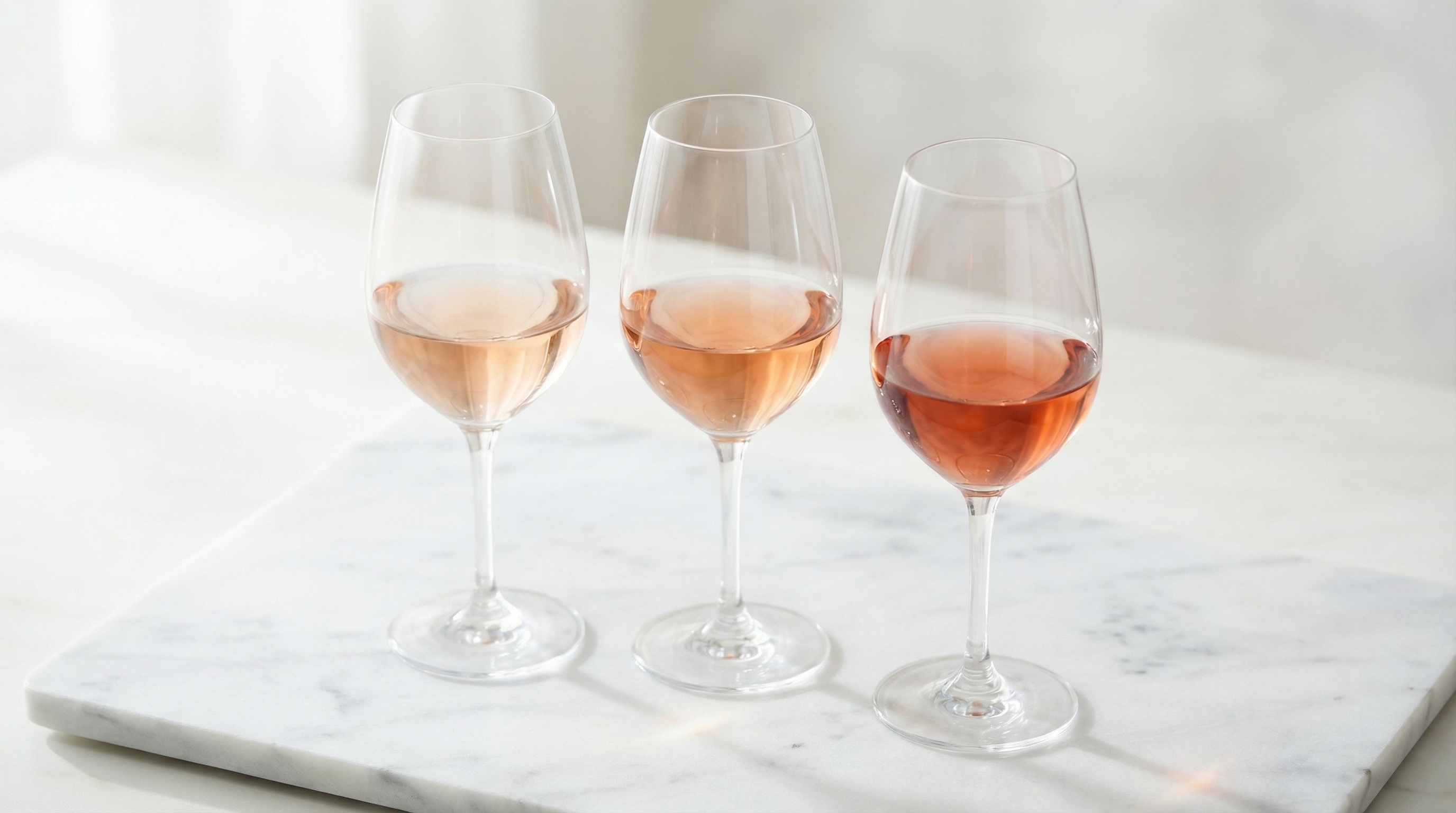
The color spectrum:
- Near-clear / Vin Gris: Barely tinted, with a grayish-pink hue. Made from very brief skin contact or light-skinned grapes. Examples: Vin Gris de Cigare (Bonny Doon), some Pinot Noir rosé.
- Pale salmon / Oeil de Perdrix: The classic Provence shade. Delicate pink with orange or copper highlights.
- Pink / Rose petal: Medium intensity. The classic color for many New World rosés and Spanish rosados.
- Coral / Salmon: Warmer, deeper pink with orange tones. Common in Tavel and some Italian rosatos.
- Cherry / Deep pink: Approaching light red territory. Typical of saignée-method rosés and some Cerasuolo d'Abruzzo.
Pairing Rosé with Food
Rosé's superpower is its extraordinary versatility at the table. Its combination of fruit, acidity, and moderate body allows it to bridge gaps that pure red or white wines cannot.
Classic Pairings
- Mediterranean cuisine: Rosé's natural habitat. Grilled fish, ratatouille, tapenade, bouillabaisse, Niçoise salad, pissaladière.
- Charcuterie and cheese: Prosciutto, saucisson, terrines, and soft cheeses like chèvre and burrata.
- Sushi and sashimi: Dry rosé, served cold, is an outstanding and underrated sushi companion. The clean acidity and subtle fruit complement raw fish beautifully.
- Spicy food: Thai curries, Mexican cuisine, Indian dishes — rosé's fruit and acidity cool the palate without competing with complex spice profiles.
- Grilled meats: Fuller rosés (Tavel, saignée-style, Bandol) handle grilled lamb, merguez sausages, and barbecued chicken with ease.
- Pizza and pasta: Light tomato-based pasta, Margherita pizza, and simple pasta salads are rosé's comfort-food sweet spot.
The Rosé "Problem Solver"
When the table has ordered a chaotic mix of dishes — steak for one person, fish for another, a salad for a third — rosé is the peacemaker. Its balanced profile can accompany nearly any dish without clashing, making it the ideal wine for diverse group dining, tapas-style meals, or any occasion where a single wine must serve many purposes.
Buying Rosé: What to Look For
Freshness Is Everything
Unlike most red wines, rosé does not improve with age. Buy the current vintage (or the most recent available) and drink it within the year. A 2025 rosé opened in summer 2026 is ideal. A 2023 rosé opened in 2026 will likely be tired, flat, and past its prime.
Read the Back Label
Look for:
- Vintage date: Always buy the newest available.
- Alcohol level: 12-13.5% is typical for quality dry rosé. Above 14% may indicate an overripe, flabby wine.
- Sugar content: If listed, look for less than 4 g/L for dry rosé. Many commercial rosés contain 6-10 g/L of residual sugar — pleasant if that is your preference, but not the classic dry style.
- Production method: Some producers specify direct press or saignée, which helps set expectations for style and body.
Price Guide
| Price Range | What to Expect |
|---|---|
| Under $10 | Simple, fruity, often slightly sweet. Fine for casual drinking. |
| $10-$18 | The sweet spot for quality. Many excellent Provence, Spanish, and Italian rosés. |
| $18-$30 | Premium single-estate wines. Bandol, top Provence, fine Italian rosato. |
| $30-$50 | Icon rosés: Château d'Esclans Garrus, Domaines Ott, Clos Cibonne. |
| $50+ | Ultra-premium and Champagne rosé. Diminishing returns for still rosé; fair for top Champagne. |
Making the Most of Rosé
Serving temperature: 8-12°C (46-54°F). Most people serve rosé too cold, which mutes its aromas. Take the bottle from the fridge 10 minutes before pouring, or use an ice bucket for 20 minutes rather than hours in the refrigerator.
Glassware: A standard white wine glass works well. Avoid large Burgundy bowls (too much surface area accelerates warming) and narrow flutes (which restrict aroma release).
Storage after opening: Rosé is more perishable than red wine once opened. Reseal and refrigerate, and consume within 2-3 days. A vacuum pump or inert gas system extends this to 4-5 days.
Rosé Champagne: The Ultimate Expression
Rosé Champagne deserves special mention as one of wine's most luxurious and misunderstood categories. Made either by blending still red wine into white Champagne (assemblage) or by brief skin contact during primary fermentation (saignée), rosé Champagne combines the complexity of fine Champagne with the red-fruit character and visual beauty of rosé.
The best rosé Champagnes — Billecart-Salmon Brut Rosé, Laurent-Perrier Cuvée Rosé, Krug Rosé, and Dom Pérignon Rosé — are among the world's greatest sparkling wines. They pair magnificently with smoked salmon, roast duck, soft cheeses, and even chocolate-based desserts.
Final Thoughts
Rosé's triumph is a victory for pleasure over pretension. After decades of snobbery and dismissal, the wine world has finally acknowledged what Mediterranean cultures have always known: there is nothing simple, frivolous, or lesser about a great glass of pink wine. Rosé is not a wine to be taken lightly — but it is a wine to be enjoyed lightly, with food, with friends, and with the simple, unapologetic satisfaction that comes from drinking something perfectly suited to the moment.
Whether you choose a gossamer-pale Provence classic, a structured Bandol with years of evolution ahead, or a deep, soulful Tavel that rewrites everything you thought you knew about pink wine, rosé offers a world of discovery that is as broad, as varied, and as deeply satisfying as wine itself.


