Why Wine Storage Matters More Than You Think
You have just spent $80 on a beautiful bottle of Barolo that the merchant told you needs another five years in the cellar. You bring it home, stand it upright on your kitchen counter near the window, and wait. Five years later, you pull the cork with anticipation — and pour a glass of brown, oxidized, vinegar-laced liquid that bears no resemblance to what the wine should have become. What happened?
Poor storage happened. And it is the single most common way that good wine is ruined before it ever reaches a glass. The tragedy is that proper wine storage is neither complicated nor prohibitively expensive, but the consequences of getting it wrong are absolute and irreversible.
Wine is a living thing. It is a complex chemical system containing hundreds of organic compounds — acids, sugars, phenolics, tannins, esters, and aldehydes — that interact continuously. Under proper conditions, these interactions produce the magical transformation we call aging: primary fruit flavors evolve into secondary and tertiary notes of earth, leather, truffle, and dried flowers. Harsh tannins soften and integrate. The wine becomes more than the sum of its parts. Under poor conditions, those same chemical reactions run amok — oxidation accelerates, volatile acidity spikes, the cork dries out and fails, and the wine dies.
“Wine is one of the most complex beverages on earth, and one of the most fragile. The difference between a perfectly stored bottle and a ruined one is not a matter of degree — it is the difference between a masterpiece and a disaster.”
— Hugh Johnson, wine writer
The Five Pillars of Wine Storage
Every wine storage solution, from a $50 styrofoam shipping container to a $500,000 custom cellar, must address the same five environmental factors. Fail on any one of them and you risk damaging your wine.
1. Temperature
Temperature is the single most critical factor in wine storage. It affects the rate of every chemical reaction occurring inside the bottle.
The ideal range: 10-15°C (50-59°F), with 12-13°C (54-55°F) considered the sweet spot. This is the temperature found in the underground caves and cellars of France's great wine regions — not by coincidence, but because centuries of trial and error proved it optimal.
Why temperature matters so much:
- Too warm (above 21°C / 70°F): Chemical reactions accelerate dramatically. For every 10°C increase, reaction rates roughly double. A wine stored at 25°C ages approximately twice as fast as one stored at 15°C — and not in a good way. Heat-damaged wine develops "cooked" or "stewed" flavors, loses freshness, and can push the cork out of the bottle as liquid expands.
- Too cold (below 4°C / 40°F): Wine can freeze, expanding and potentially cracking the bottle or pushing out the cork. Even without freezing, extremely cold temperatures slow maturation so dramatically that the wine may never develop properly.
- Temperature fluctuation: This is arguably more damaging than consistent warmth. As wine heats and cools, it expands and contracts, pumping air in and out past the cork. A kitchen that fluctuates between 18°C and 28°C with the seasons will destroy wine faster than a consistently warm closet at 22°C.
2. Humidity
Humidity affects the cork — and the cork is the guardian of the wine.
The ideal range: 60-70% relative humidity. Some experts accept a broader range of 50-80%.
| Humidity Level | Effect on Wine |
|---|---|
| Below 50% | Corks dry out, shrink, and allow air ingress. Labels may crack and peel. |
| 50-60% | Acceptable for medium-term storage (1-5 years). Monitor corks periodically. |
| 60-70% | Ideal. Corks remain supple and airtight. Labels stay intact. |
| 70-80% | Still acceptable, but watch for mold on labels and capsules (cosmetic only; harmless to wine). |
| Above 80% | Risk of mold growth on corks and labels. Can damage cardboard boxes. May attract insects. |
Practical note: If you store wine under screw cap or glass closure, humidity is irrelevant to the seal — those closures are impervious to environmental conditions. However, most fine wines intended for aging still use natural cork, making humidity a genuine concern.
3. Light
Light, particularly ultraviolet (UV) radiation, is an enemy of wine. UV rays catalyze chemical reactions that produce sulfur-containing compounds with intensely unpleasant aromas — a phenomenon known as "light strike" or goût de lumière (taste of light).
- Direct sunlight is devastating. Even a few weeks of direct sun exposure can cause permanent damage.
- Fluorescent lighting emits significant UV radiation and should be avoided in wine storage areas.
- LED lighting is the best option for cellar illumination — it produces virtually no UV and minimal heat.
- Dark-colored glass bottles (green, brown, amber) offer partial UV protection. Clear glass bottles (common for rosé and some whites) provide almost none.
This is why traditional cellars are underground and windowless. If your storage area has windows, block them completely or store wine in closed, opaque cabinets.
4. Vibration
Vibration disturbs the slow, subtle chemical processes that create complexity during aging. It can also stir up sediment in older wines, preventing it from settling naturally.
Sources to avoid:
- Refrigerator compressors (standard kitchen fridges vibrate constantly)
- Washing machines and dryers
- Heavy foot traffic
- Nearby construction or road traffic
- Stereo speakers and subwoofers
Professional wine refrigerators use thermoelectric cooling or low-vibration compressors specifically to minimize this risk. A dedicated wine storage area should be as far as possible from sources of vibration.
5. Bottle Position
Bottles sealed with natural cork should be stored horizontally. This keeps the cork in contact with the wine, preventing it from drying out and shrinking. A dried-out cork allows air to enter the bottle, leading to premature oxidation.
Exceptions:
- Screw-cap wines can be stored in any position.
- Sparkling wines generate enough internal pressure (6 atmospheres in Champagne) to keep the cork moist even when stored upright, though horizontal is still preferred for long-term aging.
- Fortified wines (Port, Madeira, Sherry) with high alcohol can actually damage corks if stored horizontally for very long periods, as the alcohol degrades the cork material. Store them slightly angled or upright.
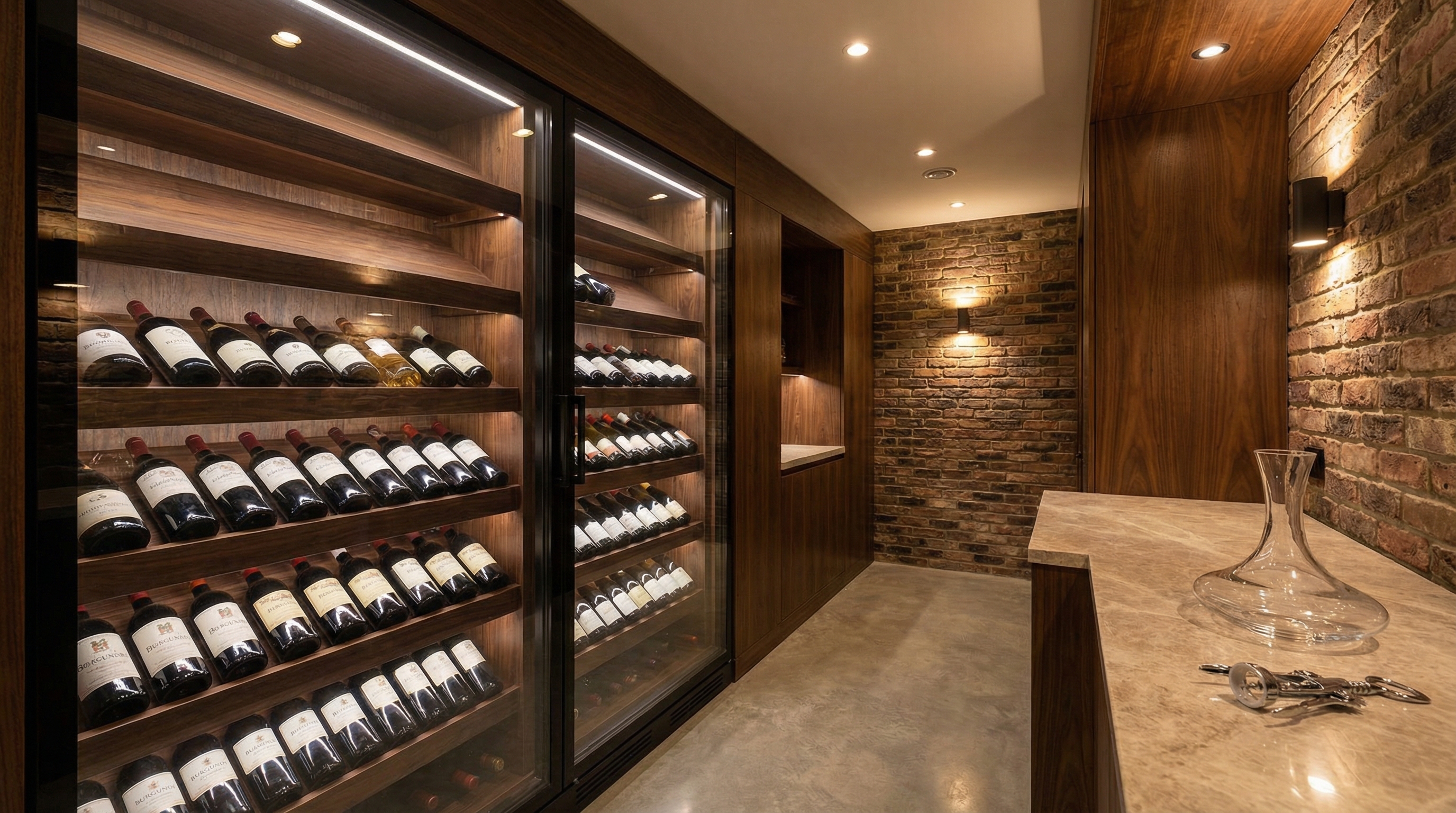
Storage Solutions Compared
Not everyone has the space or budget for a dedicated underground cellar. Here is an honest comparison of the most common storage options, from least to most expensive.
A Closet or Cupboard
Cost: Free (you already have one) Suitable for: Short-term storage (weeks to months) of everyday wines
Choose an interior closet — one that does not share a wall with an oven, water heater, or exterior wall that receives direct sun. The middle of your home tends to have the most stable temperature. A ground-floor closet is better than an upstairs one (heat rises). Lay bottles on their sides on a shelf or in a cardboard wine box.
Limitations: No temperature control, no humidity control, limited capacity. Not suitable for wines you intend to age more than 6-12 months.
A Standard Kitchen Refrigerator
Cost: Free (you already have one) Suitable for: Chilling white, rosé, and sparkling wines for service (hours to days)
Your kitchen fridge runs at 2-4°C (36-40°F) — far too cold for long-term storage. It also vibrates continuously from the compressor and has extremely low humidity (refrigeration dehumidifies air), which will dry out corks within weeks. Use it for short-term chilling only.
“A kitchen refrigerator is designed to preserve food, not wine. The temperature is too low, the humidity is too low, the vibration is constant, and the odors from other foods can penetrate corks. Treat it as a tool for chilling, never for storage.”
— Hugh Johnson
A Wine Refrigerator (Wine Fridge)
Cost: $200-$3,000 depending on capacity and quality Suitable for: Medium to long-term storage (months to years) for collections of 20-300 bottles
| Feature | Budget ($200-$500) | Mid-Range ($500-$1,500) | Premium ($1,500-$3,000+) |
|---|---|---|---|
| Capacity | 20-50 bottles | 50-150 bottles | 100-300 bottles |
| Cooling | Thermoelectric | Compressor (low-vibe) | Compressor (ultra-quiet) |
| Temp Zones | Single | Dual | Dual or triple |
| Humidity Control | None | Basic | Active, adjustable |
| UV Protection | Tinted glass | Tinted glass | Solid door or UV glass |
| Vibration | Very low | Low | Minimal |
| Noise | Silent | Quiet | Quiet |
Recommended brands: EuroCave (the gold standard, French-made), Liebherr (German engineering, excellent reliability), Transtherm (French, outstanding humidity control), and Le Cache (American, furniture-quality cabinets with CellarPro cooling).
A Dedicated Wine Cellar
Cost: $5,000-$100,000+ depending on size, construction, and cooling system Suitable for: Serious collectors with 300+ bottles and wines intended for long-term aging (5-30+ years)
A purpose-built cellar remains the gold standard. The key components:
- Insulation: R-19 minimum on walls, R-30 on ceiling. Use closed-cell spray foam, not fiberglass batts (which absorb moisture).
- Vapor barrier: Essential on the warm side of the insulation to prevent condensation within the walls.
- Cooling unit: Self-contained, through-wall units (CellarPro, WhisperKOOL, Wine Guardian) are the most common. Ducted split systems are quieter and more powerful for larger cellars.
- Flooring: Stone, tile, or sealed concrete. Avoid carpet (mold risk).
- Racking: Redwood and mahogany are traditional. Metal racking is more space-efficient. Avoid pine (resin odor) and cedar (aromatic compounds).
- Door: Insulated, with a proper weather seal. A standard interior door leaks enormous amounts of conditioned air.
Off-Site Professional Storage
Cost: $15-$30 per case per year Suitable for: Collectors who lack space for a cellar, or for high-value wines requiring documented provenance
Professional wine storage facilities maintain ideal conditions and provide insurance. Many also offer integrated inventory management and can ship wines to you on demand. This is the preferred solution for investment-grade wines, where documented storage history (provenance) directly affects resale value.
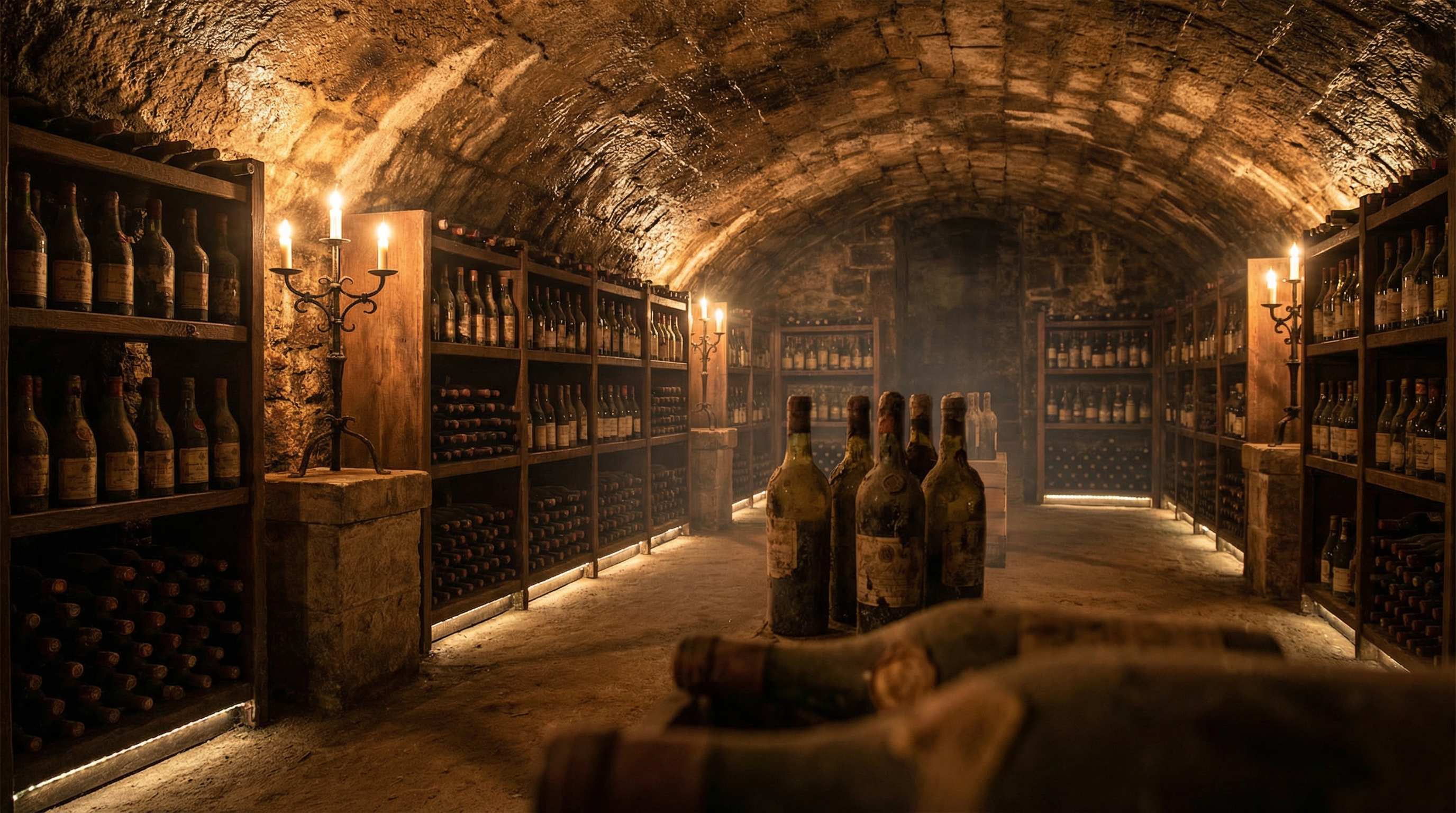
Reputable options: Wine Storage by Domaine (multiple US locations), London City Bond (UK), and Octavian Vaults (UK, underground stone mines maintaining naturally perfect conditions).
Common Wine Storage Mistakes
Over years of consulting with collectors and visiting home cellars, certain mistakes appear with depressing regularity. Here are the most common — and how to avoid them.
Mistake 1: Storing Wine on Top of the Refrigerator
This is perhaps the single worst place in your home to store wine. The top of a refrigerator is warm (heat rises from the compressor and condenser), vibrates constantly, and is typically exposed to kitchen lighting. A bottle stored here for even a few weeks during summer can be irreparably damaged.
Mistake 2: The Garage "Cellar"
Garages in most climates experience extreme temperature swings — often below freezing in winter and above 38°C (100°F) in summer. Unless your garage is fully insulated, temperature-controlled, and protected from light, it is one of the worst storage environments imaginable.
Mistake 3: Trusting the "Drink By" Date Too Literally
Many wine labels and apps suggest drinking windows, but these assume proper storage. A wine that should drink beautifully at 10 years old may be ruined at 5 years if poorly stored, or still improving at 15 years if cellared perfectly. Storage conditions are at least as important as the wine's inherent quality in determining how it ages.
Mistake 4: Ignoring Ullage
Ullage is the air space between the wine and the cork. In a young wine, the fill level should be in the neck of the bottle. Over decades, some ullage naturally increases as tiny amounts of wine evaporate through the cork. But rapidly increasing ullage in a relatively young wine indicates a failed cork or storage problem. Check your cellar periodically and drink any bottles showing premature ullage before they deteriorate further.
Mistake 5: Storing Wine Near Strong Odors
Cork is semi-permeable, and strong odors can penetrate into the wine over time. Do not store wine near cleaning products, paint, chemicals, onions, or other strongly aromatic materials. This is another reason kitchen storage is suboptimal — cooking odors permeate the environment.
Which Wines Are Worth Aging?
Not every wine benefits from aging. In fact, the vast majority of wines produced today are designed to be consumed within one to three years of release. Investing in proper storage only makes sense if you are storing wines that will actually improve with time.
Wines that typically reward aging (5-20+ years):
- Red Bordeaux (classified growths and serious crus bourgeois)
- Burgundy (Premier and Grand Cru, from good vintages)
- Barolo and Barbaresco
- Top Napa Valley and Sonoma Cabernet Sauvignon
- Northern Rhône Syrah (Hermitage, Côte-Rôtie, Cornas)
- Riesling from Alsace, Germany, and Australia (dry and sweet)
- Vintage Champagne and Prestige Cuvées
- Vintage Port (vintage dated and single quinta)
- Sauternes and other botrytized dessert wines
- Premium Spanish reds (Rioja Gran Reserva, Ribera del Duero, Priorat)
Wines to drink young (within 1-3 years):
- Most white wines under $20
- Most rosé wines
- Beaujolais Nouveau and simple Beaujolais Villages
- Prosecco and most non-vintage sparkling wines
- Inexpensive Pinot Grigio, Sauvignon Blanc, and Albariño
- Light, fruity reds (basic Côtes du Rhône, simple Merlot blends)
Building Your Wine Inventory System
As your collection grows beyond a few dozen bottles, you need a system to track what you have, where it is stored, and when to drink it. Otherwise, wines get lost, forgotten, and opened past their prime.
Digital options:
- CellarTracker — The most comprehensive free option. Over 100 million reviews from collectors worldwide, with detailed tasting notes, drinking windows, and community pricing data. Highly recommended.
- Vivino — Better for purchasing guidance than cellar management, but its scanning feature is convenient.
- InVintory — A premium option with a physical tagging system that helps locate bottles in your cellar.
Analog options: A simple spreadsheet or notebook tracking wine name, vintage, quantity, purchase date, purchase price, storage location (row/column in your rack), and intended drinking window. Low-tech but effective.
Quick Reference: Temperature Guide by Wine Type
| Wine Type | Serving Temperature | Storage Temperature | Notes |
|---|---|---|---|
| Sparkling (Champagne, Cava) | 6-8°C (43-46°F) | 10-13°C (50-55°F) | Serve coldest; remove from fridge 5 min before pouring |
| Light White (Sauvignon Blanc, Pinot Grigio) | 8-10°C (46-50°F) | 10-13°C (50-55°F) | Too cold kills aroma; let warm slightly after pouring |
| Rich White (Chardonnay, Viognier) | 10-13°C (50-55°F) | 10-13°C (50-55°F) | Serve at cellar temperature or slightly below |
| Rosé | 8-12°C (46-54°F) | 10-13°C (50-55°F) | Lighter rosés cooler; darker, fuller rosés warmer |
| Light Red (Pinot Noir, Gamay) | 14-16°C (57-61°F) | 12-13°C (54-55°F) | Slightly cool; a brief chill improves many Pinot Noirs |
| Full Red (Cabernet, Barolo, Syrah) | 16-18°C (61-65°F) | 12-13°C (54-55°F) | "Room temperature" means 18°C, not 22°C |
| Dessert Wine (Sauternes, Port) | 10-14°C (50-57°F) | 12-13°C (54-55°F) | Serve slightly cool to balance sweetness |
Final Thoughts
Proper wine storage is not about luxury or obsession — it is about respect. Respect for the work of the grower who tended the vines, the winemaker who crafted the wine, and your own investment of money and anticipation. A well-stored bottle of wine is a promise kept: the promise that when you finally pull the cork, years or decades after purchase, you will experience exactly what the winemaker intended.
The good news is that achieving proper storage need not be complicated or ruinously expensive. A quality wine refrigerator in the $500-$1,000 range, placed in a cool, dark corner of your home, will protect 50-100 bottles perfectly for years. For larger collections or wines destined for decades of aging, a dedicated cellar or professional storage facility is a worthwhile investment — one that will pay dividends every time you open a bottle that has aged with grace.
Start with the basics: stable cool temperature, horizontal position, darkness, stillness, and moderate humidity. Get those five factors right, and your wine will reward your patience generously.


