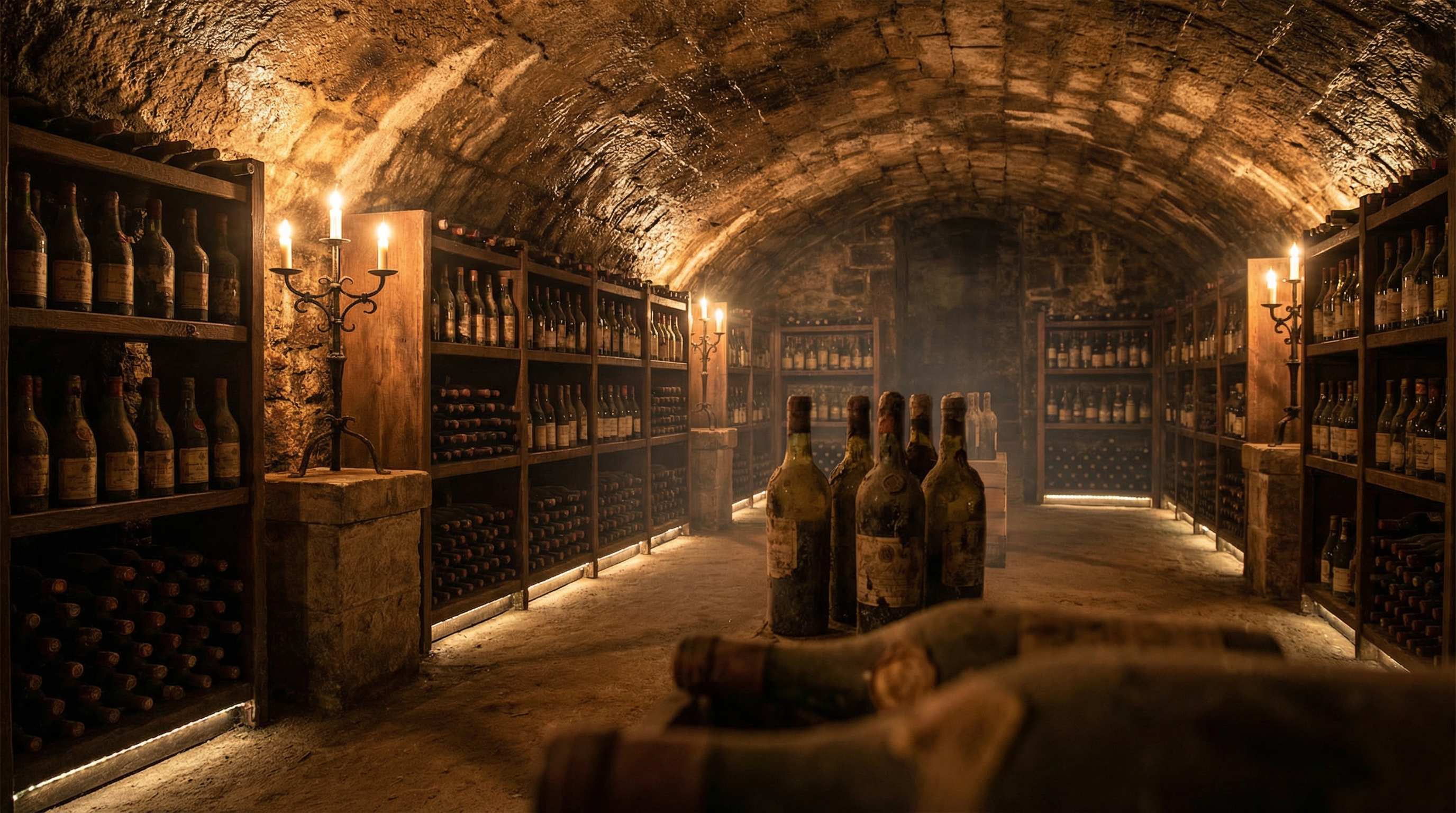
Why Wine Storage Matters
Wine is a living product. Even after bottling, it continues to evolve — and the conditions in which it is stored profoundly affect how it develops. A great bottle stored poorly can be ruined within months, while a properly cellared wine can improve and delight for decades. Whether you own a single case or a thousand bottles, understanding storage fundamentals is essential.
The Five Enemies of Wine
1. Temperature (Too High) Heat is wine's worst enemy. Temperatures above 24°C (75°F) cause wine to age prematurely, losing freshness, fruit character, and complexity. Extreme heat can "cook" wine, producing stewed, flat flavors and pushing corks out of bottles. Conversely, temperatures below 4°C (40°F) can freeze wine, expanding the liquid and potentially cracking the bottle or pushing the cork.
The ideal storage temperature: 12-14°C (54-57°F). Consistency is even more important than the exact number — temperature fluctuations cause the wine to expand and contract, potentially compromising the cork seal.
2. Temperature Fluctuation A steady 15°C is better than a temperature that swings between 10°C and 20°C. Rapid or frequent fluctuations are particularly damaging. Seasonal shifts of a few degrees are acceptable; daily swings are not.
3. Light UV light degrades wine by triggering chemical reactions that produce off-flavors — a condition known as "lightstrike." This is why most wine bottles are made of dark glass. Store wine in darkness, or at minimum, away from direct sunlight and fluorescent lighting.
4. Humidity Ideal humidity is 60-80%. Too low, and corks can dry out, shrink, and let air in (causing oxidation). Too high, and mold can develop on labels and cartons (though this typically doesn't affect the wine itself). Most natural cellars maintain appropriate humidity naturally.
5. Vibration Constant vibration (from machinery, heavy traffic, or even a poorly balanced refrigerator compressor) can disturb wine's natural sedimentation process and potentially accelerate unwanted chemical reactions. Keep wine away from washing machines, dryers, and heavy-traffic areas.
Storage Options
The Wine Fridge (Wine Cooler) For most wine lovers, a dedicated wine fridge is the best investment. Modern units offer:
- Precise temperature control (usually adjustable 5-20°C)
- Dual-zone models allow different temperatures for reds and whites
- UV-protective glass doors
- Vibration-dampening compressors
- Humidity-controlled environments
Capacities range from 6 bottles (countertop) to 300+ bottles (full-size units). Budget €200-500 for a quality 30-50 bottle unit. Brands like EuroCave, Liebherr, and Climadiff are well-regarded.
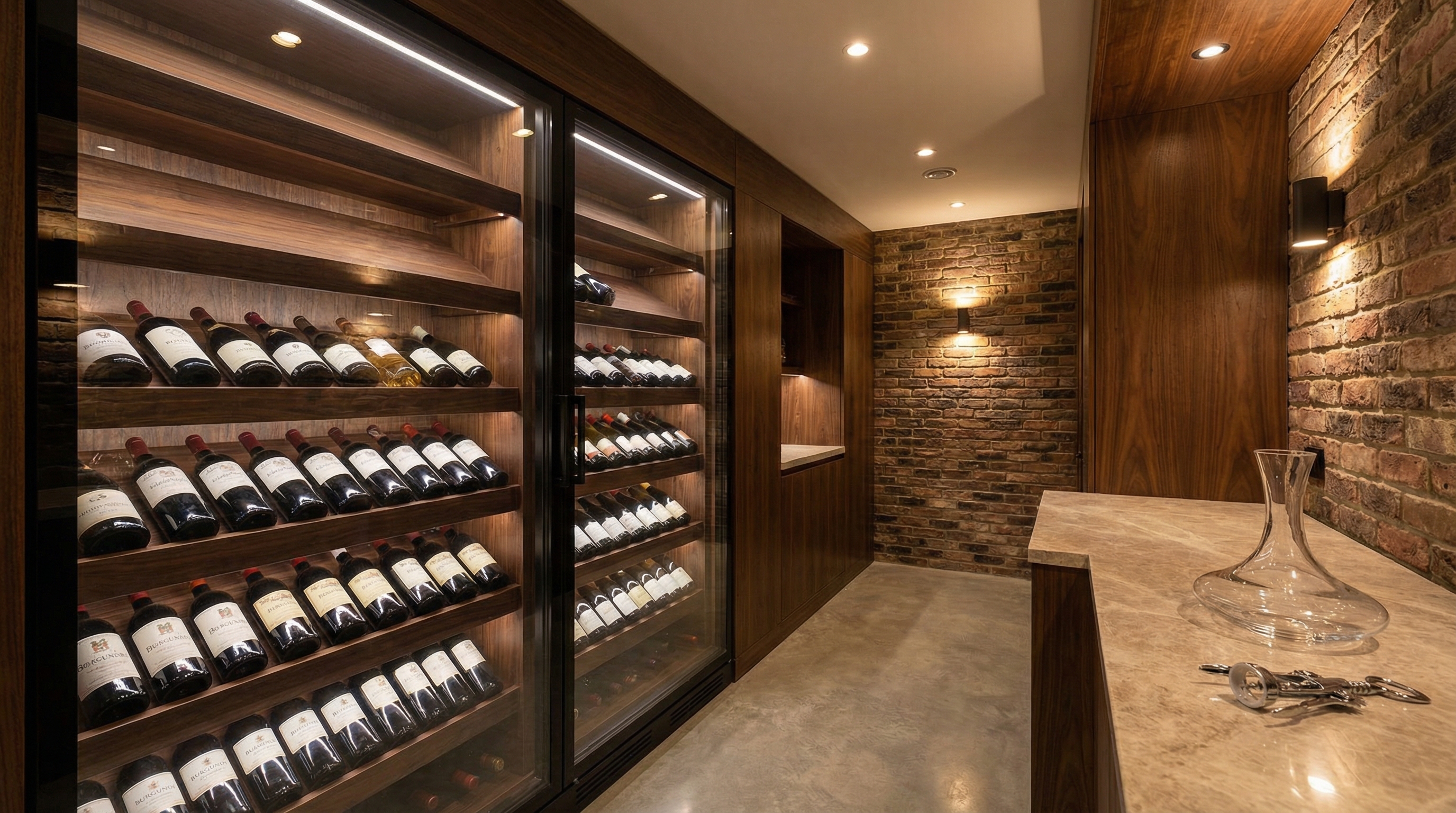
The Home Cellar If you are serious about wine storage, a dedicated cellar — whether a converted basement, an under-stair space, or a purpose-built wine room — is the gold standard. Key requirements:
- Insulated walls, ceiling, and floor
- A cooling unit designed for wine cellars (not a standard AC unit)
- Vapor barrier to control humidity
- No windows (or blacked-out windows)
- Racking systems (wood, metal, or modular)
Professional Storage For valuable collections, professional storage facilities offer climate-controlled, insured warehousing with full inventory management. Costs typically run €8-15 per case per year. This is essential for wines being held for investment or long-term aging.
Which Wines to Age (and For How Long)
Not all wines benefit from aging. In fact, the vast majority of wines produced worldwide are designed to be consumed within 1-3 years of release.
Wines that age well:
- Red Bordeaux (top châteaux) — 10-50+ years
- Red Burgundy (Grand Cru, Premier Cru) — 10-40 years
- Barolo and Barbaresco — 10-40 years
- Vintage Champagne — 10-30 years
- German Riesling (Spätlese and above) — 10-50 years
- Vintage Port — 20-80+ years
- Top Napa Cabernet — 10-30 years
- Brunello di Montalcino — 10-30 years
- Sauternes and other sweet wines — 20-100+ years
Wines to drink young (1-3 years):
- Most rosé wines
- Prosecco and most sparkling wines (except vintage Champagne)
- Sauvignon Blanc (most examples)
- Beaujolais Nouveau
- Vinho Verde
- Most wines under €15
Serving Temperatures by Wine Type
Proper serving temperature dramatically affects how a wine tastes. Most people serve red wines too warm and white wines too cold.
| Wine Style | Ideal Temperature |
|---|---|
| Sparkling wine / Champagne | 6-8°C (43-46°F) |
| Light-bodied whites (Riesling, Pinot Grigio) | 8-10°C (46-50°F) |
| Full-bodied whites (Chardonnay, Viognier) | 10-12°C (50-54°F) |
| Rosé | 8-10°C (46-50°F) |
| Light-bodied reds (Beaujolais, Pinot Noir) | 12-14°C (54-57°F) |
| Medium-bodied reds (Chianti, Rioja) | 14-16°C (57-61°F) |
| Full-bodied reds (Cabernet, Barolo, Syrah) | 16-18°C (61-64°F) |
| Fortified wines (Port, Sherry) | Depends on style |
Preserving Opened Bottles
Once opened, wine is exposed to oxygen and begins to deteriorate. Methods to extend its life:
- Recork and refrigerate — The simplest method. Works for 1-3 days for most wines. Even reds benefit from refrigeration after opening.
- Vacuum pump (e.g., Vacu Vin) — Removes air from the bottle. Extends life by 2-4 days. Affordable and effective.
- Inert gas systems (e.g., Coravin) — Argon gas replaces the wine extracted, preventing oxidation. The Coravin system allows you to pour without removing the cork — the wine can last months or years. Essential for expensive bottles.
- Half-bottle transfer — Pour leftover wine into a smaller bottle to reduce air exposure. Simple and effective.
Pro Tips
- Store bottles on their side — Keeps the cork moist and prevents it from drying out (screw-cap bottles can be stored upright)
- Keep a cellar log — Track what you have and when to drink it
- Don't store wine in the kitchen — Heat from cooking and temperature fluctuations make kitchens terrible storage locations
- Invest in a good thermometer — Monitor your storage conditions regularly
“Şarap yaşayan bir varlıktır.”
— Robert Mondavi