The Road Less Poured
The first time I drove up the Silverado Trail on a quiet Tuesday in November, the fog was still burning off the valley floor. The tourist-season crowds had thinned, the harvest bins had been emptied, and the grapevines were turning gold and crimson along the hillsides. I had an appointment at a winery that did not appear in any guidebook — a husband-and-wife operation producing 400 cases of Cabernet Sauvignon from a two-acre parcel on Howell Mountain. The tasting took place in their living room, the winemaker still had grape stains on his hands, and the wine was extraordinary. That morning crystallized something I had long suspected: the soul of Napa Valley does not live in its famous tasting rooms with their $100 pour fees and reservation-only policies. It lives in places like this — small, personal, deeply committed to craft.
Napa Valley's reputation as America's premier wine region is well earned. The combination of a Mediterranean climate, diverse soils, and extraordinary topographic variation — from the cool, fog-swept Carneros marshlands in the south to the rugged volcanic slopes of Mount Veeder and Diamond Mountain in the north — creates growing conditions that rival anywhere on Earth for Cabernet Sauvignon. But the valley's commercial success has brought challenges. Land prices have soared past $400,000 per acre for prime vineyard land. Tasting room experiences increasingly resemble luxury retail more than agricultural hospitality. And the conversation about Napa has narrowed to a handful of iconic names and stratospheric price points that bear little relation to the broader reality of the region.
This guide is about the broader reality — the winemakers, sub-AVAs, and bottles that deserve your attention even if they will never appear on a Michelin-starred wine list or command four-figure auction prices.
Understanding Napa's Sub-AVAs
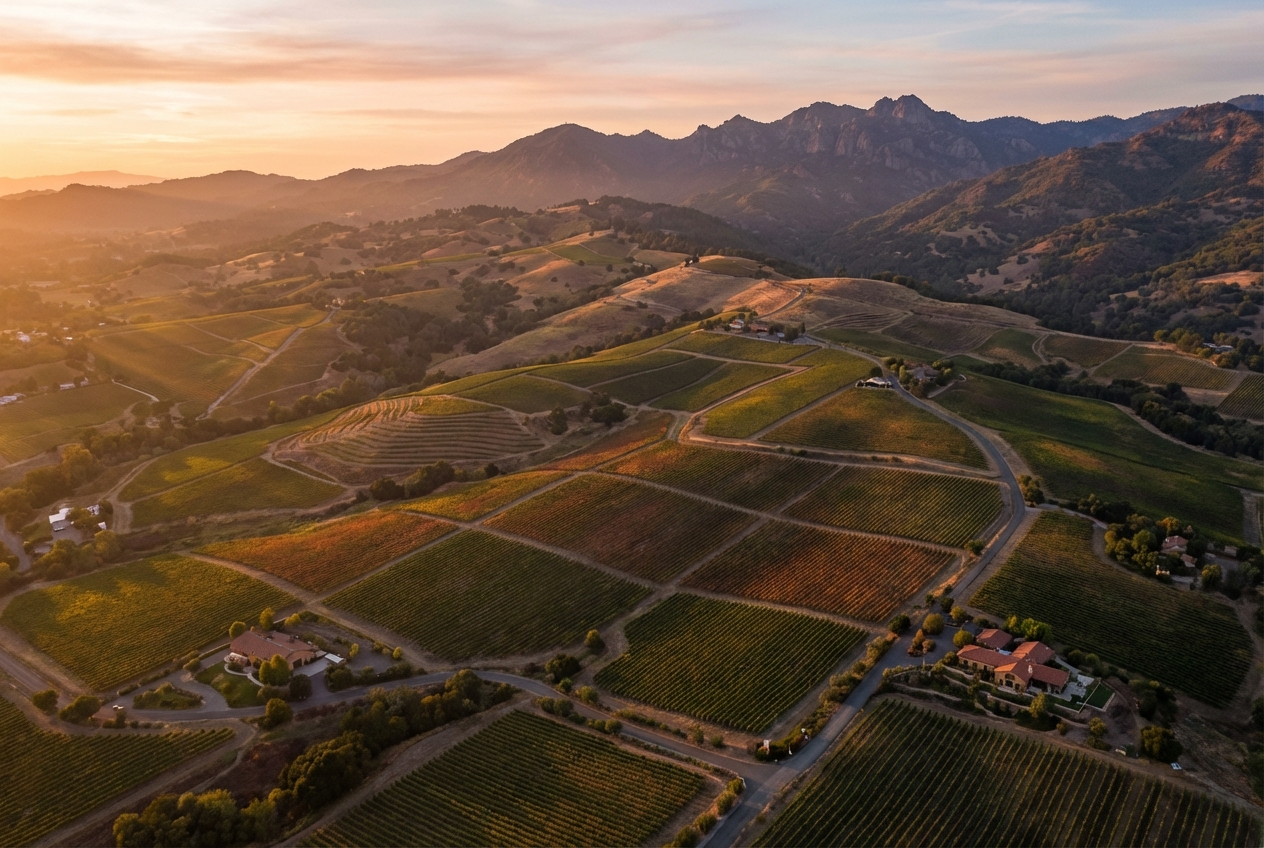
Napa Valley is a single AVA (American Viticultural Area) roughly 30 miles long and, at its widest, about five miles across. But within this compact geography lie 16 distinct sub-AVAs, each with meaningfully different growing conditions. Understanding these sub-regions is the key to finding wines with genuine distinctiveness, as opposed to the homogenized "Napa Valley Cabernet" style that can blur into a wall of ripe, oaky sameness.
Mountain AVAs produce wines of particular intensity and character. The higher elevation means cooler nights, more direct sunlight, and volcanic or rocky soils that stress vines and limit yields. The result is smaller berries with thicker skins, yielding wines of extraordinary concentration, mineral complexity, and firm but fine-grained tannins.
- Howell Mountain (1,400–2,200 feet elevation) — The first sub-AVA designated in Napa, Howell Mountain sits above the fog line on the eastern side of the valley. The volcanic soils, principally weathered tufa and ash, produce Cabernets of remarkable density and longevity. Dunn Vineyards, founded by Randy Dunn in 1979, remains the benchmark: austere, structured wines that routinely require a decade of cellaring. Other standouts include Cade Estate, Ladera, and the extraordinary single-vineyard wines from Robert Craig.
- Spring Mountain District — On the western side, above St. Helena, Spring Mountain offers a slightly cooler, wetter climate than the eastern mountains. The wines combine mountain intensity with a particular floral elegance. Pride Mountain Vineyards, whose property straddles the Napa-Sonoma county line, produces outstanding Cabernet and Merlot. Barnett Vineyards and Smith-Madrone are also well worth seeking out.
- Diamond Mountain District — A tiny AVA in the Mayacamas range known for its volcanic red soils and powerful, dark-fruited Cabernets. Diamond Creek Vineyards, which pioneered single-vineyard designations in the 1960s by bottling three distinct cuvées from a single property, is a must-taste for anyone interested in terroir expression. Von Strasser and Constant produce similarly compelling wines.
- Mount Veeder — The coolest and foggiest of the mountain AVAs, Mount Veeder produces wines of notable restraint and herbal complexity compared to the valley floor's exuberance. Hess Collection and Mayacamas Vineyards (founded in 1889) are the flagships. Mount Veeder wines often develop a distinctive sage and wild herb character that gives them a savory, almost European personality.
“The whole idea of the Napa Valley, what it's all about, is not growing rich or famous. It's about producing something that enriches the culture.”
— Robert Mondavi
Valley floor sub-AVAs are where most of Napa's production occurs, on the deep alluvial soils washed down from the surrounding mountains over millennia:
- Rutherford — Famous for "Rutherford Dust," an elusive minerality-meets-earthiness that defines the best wines from this benchland. Frog's Leap, run by the irrepressible John Williams, combines biodynamic farming with a refreshingly approachable style. Quintessa, from the Huneeus family, offers a biodynamic estate wine of exceptional elegance.
- Oakville — Home to iconic vineyards (To Kalon, most famously), but also smaller producers like Dalla Valle and Plumpjack who craft wines with both power and finesse.
- St. Helena — The historic heart of Napa winemaking. Spottswoode, a family estate producing Cabernet of impeccable balance since 1982, is a personal favorite.
- Calistoga — The warmest sub-AVA, at the valley's northern end. Chateau Montelena (of 1976 Judgment of Paris fame) remains the standard-bearer, but nearby Araujo Estate (now Eisele Vineyard) produces one of California's most singular wines from its volcanic benchland site.
The Hidden Producers You Need to Know
The following wineries represent what I consider the most exciting under-the-radar producers in Napa Valley today. None of them produce more than 5,000 cases, several produce fewer than 500, and all of them prioritize vineyard expression over winemaking manipulation.
Matthiasson — Steve Matthiasson is a viticulturist-turned-winemaker whose wines reflect a European sensibility rare in Napa. His white blend — primarily Sauvignon Blanc, Sémillon, and Ribolla Gialla — is one of the most original white wines in California. His Cabernets are restrained, balanced, and built for the dinner table rather than the tasting room. If you can find the Napa Valley Village wines (priced around $30–40), buy them by the case.
Kongsgaard — John Kongsgaard has quietly become one of Napa's most revered winemakers, producing tiny quantities of Chardonnay and Cabernet from his Atlas Peak property. The Chardonnay, fermented with wild yeasts in a combination of new and seasoned oak, achieves a richness and complexity that evokes the finest Burgundy. Allocation-only and worth every effort to obtain.
Corison — Cathy Corison has been making elegant, age-worthy Cabernet Sauvignon from her Kronos Vineyard in St. Helena since 1987. In an era when Napa Cabernet trended ever riper and more extracted, Corison held firm to a style emphasizing balance, moderate alcohol, and pure fruit expression. These are some of the most graceful wines in the valley, routinely drinking beautifully at 15 to 20 years of age.
Mayacamas Vineyards — Perched at 2,000 feet on Mount Veeder, Mayacamas has been producing wine since 1889. After a period of inconsistency, the estate was revitalized under new ownership in 2013, with winemaker Braiden Albrecht crafting mountain Cabernets of stunning purity and focus. The 2013 and subsequent vintages represent a triumphant return to form.
Larkmead Vineyards — One of Napa's oldest continuously operating wineries (established 1895), Larkmead flies under the radar despite producing exceptional Cabernet, Sauvignon Blanc, and a Tocai Friulano that is arguably unique in California. Winemaker Dan Petroski brings a minimalist, terroir-driven philosophy to every wine.
Smith-Madrone — Stuart and Charles Smith have been farming Spring Mountain since 1971, producing Riesling, Chardonnay, and Cabernet Sauvignon of remarkable purity. Their Riesling, grown at 1,700 feet elevation, is one of the finest in the state — bone-dry, intensely mineral, and a revelation for anyone who thinks Napa only does Cabernet.
A Guide to Napa Sub-AVA Styles
| Sub-AVA | Elevation | Key Soil Types | Signature Style | Value Picks |
|---|---|---|---|---|
| Howell Mountain | 1,400–2,200 ft | Volcanic tufa, ash | Dense, tannic, long-lived | Cade, Ladera |
| Spring Mountain | 400–2,600 ft | Volcanic, rocky clay | Intense yet floral | Smith-Madrone, Barnett |
| Diamond Mountain | 400–2,200 ft | Volcanic red iron | Powerful, dark-fruited | Von Strasser |
| Mount Veeder | 500–2,677 ft | Sandstone, shale | Restrained, herbal | Hess Collection |
| Rutherford | 150–500 ft | Alluvial gravel, loam | Dusty, earthy mid-palate | Frog's Leap, Quintessa |
| Oakville | 130–500 ft | Gravel, clay loam | Structured, complex | Dalla Valle |
| St. Helena | 150–400 ft | Alluvial, volcanic | Balanced, classic | Spottswoode |
| Calistoga | 300–1,200 ft | Volcanic, alluvial fans | Rich, warm, generous | Chateau Montelena |
| Carneros | Sea level–400 ft | Clay, shallow topsoil | Cool-climate Pinot, Chardonnay | Bouchaine, Saintsbury |
Tasting Strategies for the Savvy Visitor
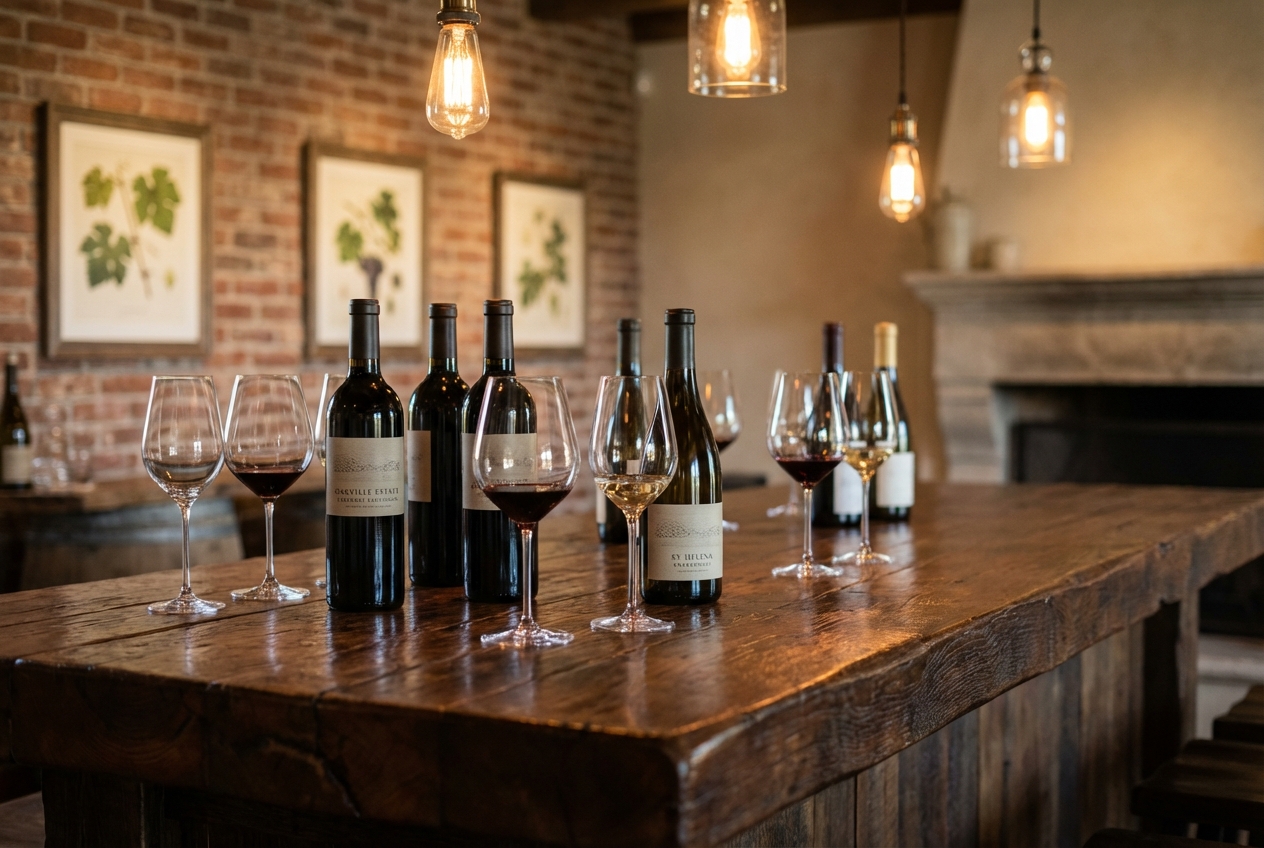
Visiting Napa Valley without a plan can be expensive and disappointing — a parade of overcrowded tasting rooms, $75 pour fees, and palate-numbing Cabernet after Cabernet. Here are strategies for a more rewarding experience:
Go midweek, go off-season. The valley is a fundamentally different place on a Wednesday in February than a Saturday in June. Winemakers are more available, tasting rooms are less crowded, and the experience feels more intimate. November through March — after harvest but before the spring rush — is ideal.
Book appointments at small producers. Most wineries producing under 1,000 cases are by-appointment-only, which is actually an advantage: you will often taste with the winemaker or owner, and the experience is personal and educational rather than transactional. Use platforms like CellarPass or contact wineries directly via their websites.
Limit yourself to three visits per day. More than that and palate fatigue sets in. Choose one morning visit, break for lunch (Farmstead at Long Meadow Ranch and Archetype in St. Helena are excellent), and schedule one or two afternoon tastings.
Diversify your itinerary. Resist the temptation to taste only Cabernet Sauvignon. Napa produces superb Chardonnay (Kongsgaard, Stony Hill), Sauvignon Blanc (Cakebread, Honig), Merlot (Duckhorn, Paloma), and even Syrah (Pax, Kongsgaard). Seeking variety will give you a much richer understanding of the valley.
Napa's Evolving Identity
The Napa Valley I first visited in the early 2000s was a region intoxicated with its own success — literally and figuratively. Wines were getting bigger, riper, and more extracted. Alcohol levels crept above 15 percent. Oak usage was heavy. Critics rewarded power with high scores, and high scores drove prices upward in a self-reinforcing cycle.
That era has not entirely passed, but a counter-movement is well underway. A new generation of winemakers — many of them trained in Burgundy or the Rhône — is pursuing balance, restraint, and site specificity. Alcohol levels are coming down. Whole-cluster fermentation, concrete eggs, and larger-format oak are replacing the new-barrel-heavy regimes of the 1990s and 2000s. More producers are farming organically or biodynamically.
This shift is partly philosophical and partly practical. Climate change is real in Napa — the devastating wildfires of 2017 and 2020 scarred the community and forced a reckoning with environmental fragility. Sustainable viticulture is no longer a niche marketing proposition but an existential necessity.
For the wine drinker, this evolution is unambiguously positive. The range of styles available from Napa Valley today is broader and more interesting than at any point in its history. You can find Cabernets of crushing power and ethereal delicacy, Chardonnays that evoke Meursault and others that celebrate California sunshine, and an increasingly adventurous array of Italian and Rhône varieties that testify to the valley's extraordinary versatility.
The big names will always command attention — and often, rightfully so. But the hidden gems are where Napa's future is being written, one small lot at a time.
For comprehensive maps and current AVA information, consult the Napa Valley Vintners official website. For current reviews and pricing, Vinous provides detailed coverage of the region.
“Wine to me is passion. It's family and friends. It's warmth of heart and generosity of spirit. Wine is art. It's culture. It's the essence of civilization and the art of living.”
— Robert Mondavi


