Wine Travel at Its Finest
Wine tourism has undergone a quiet revolution. Gone are the days when a winery visit meant a rushed tasting at a counter and a gift-shop exit. Today's wine regions offer immersive, multi-sensory experiences — from harvest-season grape picking and blending workshops to Michelin-starred restaurant pairings and luxury vineyard accommodations. The world's great wine destinations have become full-fledged travel experiences, combining culture, gastronomy, landscape, and, of course, extraordinary wine.
For 2026, we have selected ten wine regions that offer something exceptional — whether it is a destination at the peak of its powers, a rising star about to break through, or a classic region reinventing itself for a new generation of visitors.
“Wine travel is not about ticking off famous estates. It is about slowing down and letting a place reveal itself through its wines, its food, and its people.”
— Andrew Harper, travel writer
1. Champagne, France
Best time to visit: September–October (harvest) or May–June (spring) Budget: $$$$ Why 2026: The opening of new tasting experiences by grower producers, combined with Reims' expanding restaurant scene, makes this the year to go beyond the grandes maisons.
Champagne in harvest season is magical. The vineyards blaze gold against grey autumn skies, and the villages bustle with the energy of vendange. But even outside harvest, Champagne rewards visitors with extraordinary cellar tours — the chalk caves beneath Épernay and Reims, some extending for kilometers underground, are unlike anything else in the wine world. Do not miss the opportunity to visit a small grower-producer like Pierre Gimonnet or Laherte Frères alongside the grand houses. The contrast is illuminating.
Where to stay: Royal Champagne Hotel & Spa near Épernay — perched above the vineyards with panoramic views. Must-visit: The newly expanded cellars at Ruinart, the oldest Champagne house (founded 1729), now featuring a stunning contemporary art installation underground.
2. Willamette Valley, Oregon, USA
Best time to visit: June–September Budget: $$$ Why 2026: Oregon's Pinot Noir revolution continues to gather momentum, with new single-vineyard bottlings and sub-AVA designations adding depth and specificity.
The Willamette Valley has quietly become one of the world's premier Pinot Noir regions, producing wines of elegance, complexity, and terroir expression that rival Burgundy at a fraction of the price. The valley's 700+ wineries range from tiny garagistes to world-class estates like Domaine Drouhin, Eyrie Vineyards, and Cristom. The food scene — farm-to-table dining, artisan cheese, and the bounty of the Pacific Northwest — is exceptional.
Where to stay: The Allison Inn & Spa in Newberg, surrounded by vineyards. Must-visit: Eyrie Vineyards, the pioneer that planted Oregon's first Pinot Noir vines in 1965.
3. Piedmont, Italy
Best time to visit: October–November (truffle season) or April–May (spring) Budget: $$$–$$$$ Why 2026: The exceptional 2022 vintage is being released throughout the year, and truffle season makes autumn visits unforgettable.
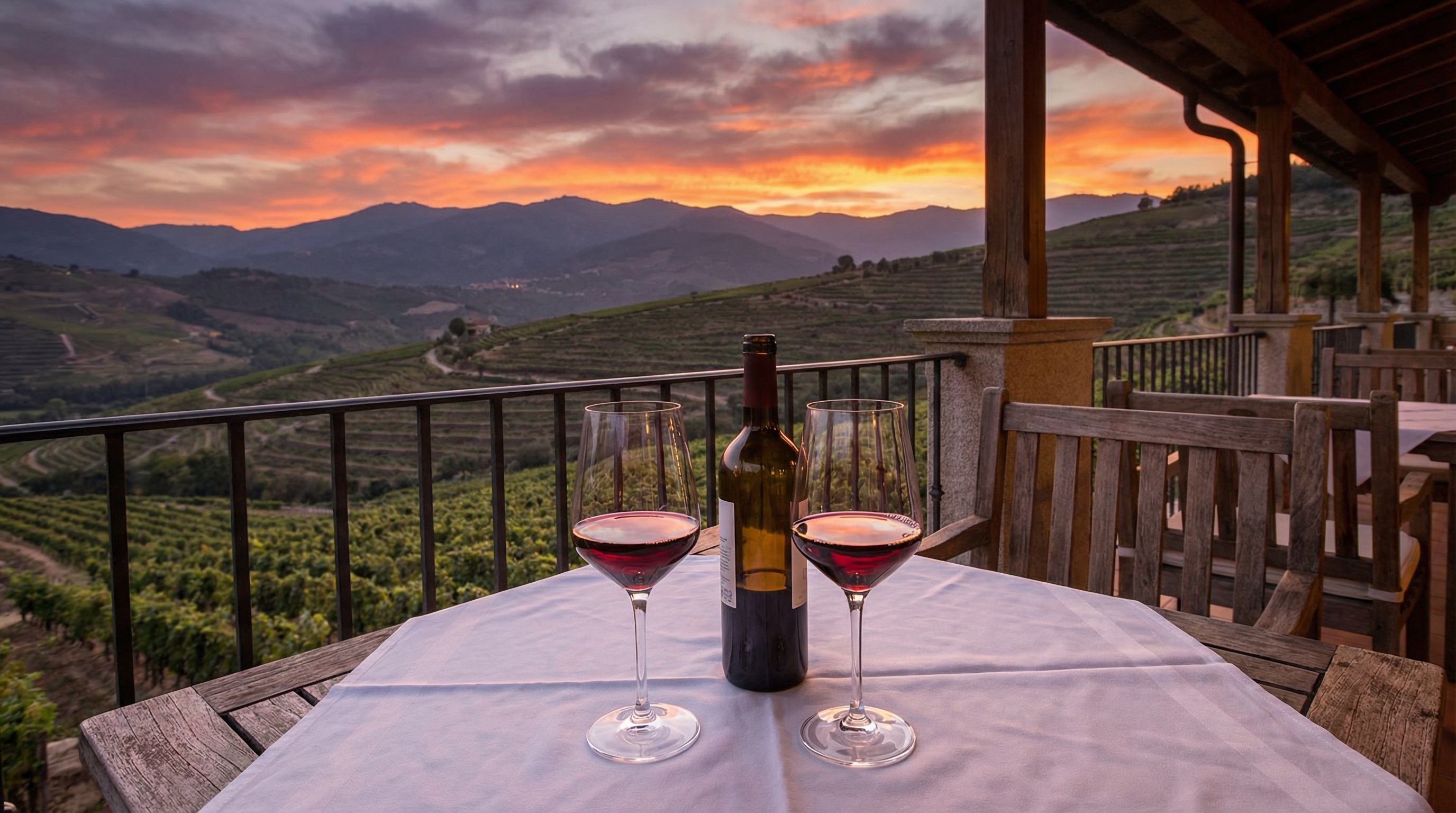
Piedmont is Italy at its most seductive. The Langhe hills — home to Barolo and Barbaresco — unfold in waves of vine-covered ridges, medieval hilltop villages, and Michelin-starred restaurants that would justify the trip even without the wine. But the wine is transcendent. Nebbiolo, the great grape of Piedmont, produces wines of haunting perfume, fierce tannin, and extraordinary aging potential. Pair a glass of Barolo with hand-rolled tajarin pasta and freshly shaved white truffle, and you may never want to leave.
Where to stay: Casa di Langa, a sustainable luxury resort with vineyard views. Must-visit: The Barolo wine museum (WiMu) in the castle of Barolo village, and a cellar visit at Giacomo Conterno or G.D. Vajra.
4. Douro Valley, Portugal
Best time to visit: September–October (harvest) or March–May (spring) Budget: $$ Why 2026: The Douro is increasingly recognized not just for Port but for world-class dry red and white wines, and it remains one of Europe's best-value destinations.
The Douro Valley is one of the world's most dramatic wine landscapes — steep, terraced vineyards carved into schist hillsides along the winding Douro River. Designated a UNESCO World Heritage Site, the valley has been producing wine for over 2,000 years. While Port remains the region's most famous product, a new generation of winemakers is producing dry red and white wines of remarkable quality and character. A river cruise from Porto to the Douro is one of wine travel's great experiences.
Where to stay: Six Senses Douro Valley — a converted 19th-century manor house with spa and vineyard activities. Must-visit: Quinta do Noval for vintage Port tasting, and Niepoort for cutting-edge dry wines.
5. Stellenbosch, South Africa
Best time to visit: November–March (southern hemisphere summer) Budget: $$ Why 2026: South Africa's wine quality revolution is reaching a crescendo, with old-vine wines and cool-climate regions gaining international recognition.
Stellenbosch and its surrounding regions — Swartland, Franschhoek, Elgin, and Hemel-en-Aarde — represent one of the wine world's most dynamic and exciting scenes. The diversity is staggering: Chenin Blanc from century-old bush vines, Syrah from windswept granite slopes, Bordeaux-style blends from Stellenbosch's warm valley floors. Add in the spectacular mountain scenery, world-class restaurants, and exchange rates favorable to international visitors, and South Africa offers arguably the best value in wine travel today.
Where to stay: Delaire Graff Lodge in Stellenbosch — art, wine, and views. Must-visit: Mullineux in Swartland for old-vine Chenin Blanc and Syrah.
6. Etna, Sicily, Italy
Best time to visit: May–June or September–October Budget: $$–$$$ Why 2026: Etna continues its meteoric rise as one of Italy's most exciting wine regions, with new producers and single-contrada bottlings adding complexity to the story.
Winemaking on the slopes of an active volcano might sound like a niche pursuit, but Etna has become one of the most talked-about wine regions in the world. The combination of extreme altitude (vineyards up to 1,000 meters), ancient volcanic soils, and indigenous grape varieties — Nerello Mascalese for reds, Carricante for whites — produces wines of startling elegance and mineral purity. Often compared to Burgundy for their transparency and terroir expression, Etna's wines are unlike anything else in Italy.
Where to stay: Monaci delle Terre Nere, a boutique hotel amid lava-stone vineyards. Must-visit: Passopisciaro (owned by Andrea Franchetti's estate) and Benanti, one of Etna's pioneering producers.
7. Mendoza, Argentina
Best time to visit: March–April (harvest) or September–October (spring) Budget: $$ Why 2026: High-altitude viticulture in Mendoza's Uco Valley is producing some of South America's most refined wines, and the food scene continues to evolve.
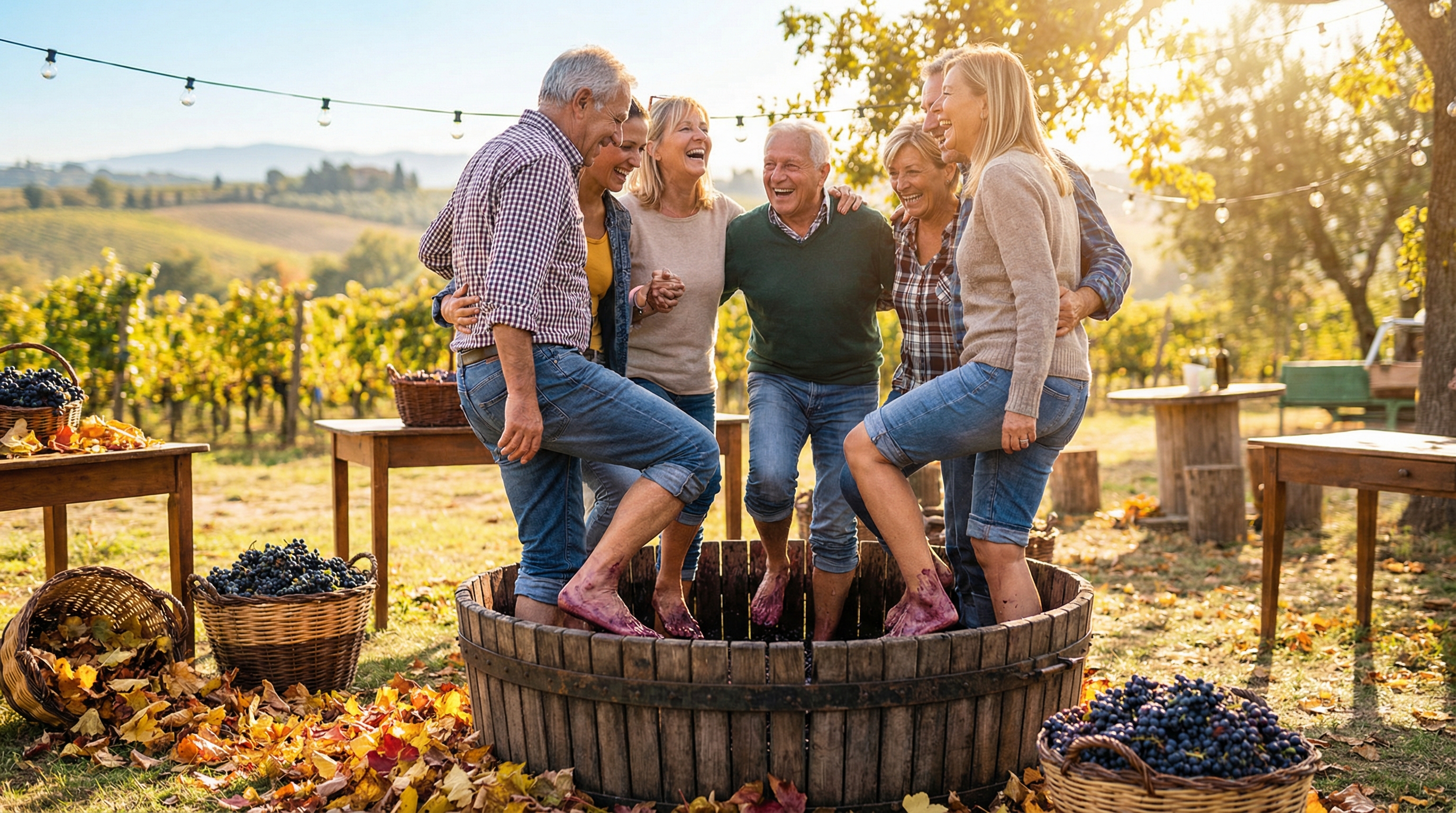
Mendoza is South America's undisputed wine capital, and it has never been more exciting. While Malbec remains the flagship grape, the real story is the exploration of altitude, terroir, and diversity. Vineyards in the Uco Valley now reach above 1,500 meters, producing wines of remarkable freshness and complexity. Cabernet Franc, Semillón, and even Pinot Noir are thriving alongside Malbec, and the winemaking has never been more ambitious or refined. The asado culture and the dramatic Andean backdrop make every visit unforgettable.
Where to stay: The Vines Resort & Spa in the Uco Valley — each suite comes with its own private vineyard plot. Must-visit: Catena Zapata for their landmark Adrianna Vineyard wines, and Zuccardi in the Valle de Uco.
8. Mosel, Germany
Best time to visit: June–September or late October (autumn color) Budget: $$–$$$ Why 2026: German Riesling is experiencing a critical reappraisal, and the Mosel — the most visually dramatic wine region in Germany — is the perfect place to discover why.
The Mosel River carves a serpentine path through steep slate hillsides, creating some of the most extreme vineyard sites in the world. Vines cling to gradients of 60 degrees or more, requiring all work to be done by hand. The effort is rewarded with Riesling of extraordinary purity, finesse, and aging potential — wines that range from whisper-light Kabinett (as low as 7.5% alcohol) to lusciously sweet Trockenbeerenauslese. The charming riverside towns of Bernkastel-Kues, Piesport, and Cochem add storybook charm.
Where to stay: Hotel & Weinhaus Zum Löwen in Bernkastel-Kues. Must-visit: Weingut Joh. Jos. Prüm and Egon Müller, two of the world's most celebrated Riesling producers.
9. Walla Walla Valley, Washington State, USA
Best time to visit: June–October Budget: $$–$$$ Why 2026: Walla Walla has matured from a frontier wine region into a sophisticated destination with new luxury accommodations and a thriving culinary scene.
Walla Walla is one of American wine's great success stories — a remote eastern Washington valley that has transformed itself into a world-class wine destination in barely two decades. The combination of hot days, cool nights, ancient basalt soils, and passionate winemakers produces Cabernet Sauvignon, Syrah, and Merlot of exceptional depth and character. The town itself has evolved in parallel, with excellent restaurants, boutique hotels, and a walkable downtown tasting-room scene.
Where to stay: The Eritage Resort, a new luxury property set among vineyards. Must-visit: Leonetti Cellar (the valley's pioneer), L'Ecole No. 41, and Cayuse Vineyards for biodynamic wines.
10. Swartland, South Africa
Best time to visit: November–March Budget: $–$$ Why 2026: The revolution that began a decade ago has matured — Swartland now produces some of the southern hemisphere's most exciting wines while retaining an indie, counter-cultural spirit.
Swartland is to South African wine what the natural wine movement is to France — a radical rethinking of what is possible. Located north of Cape Town, this warm, dry region was historically dismissed as bulk-wine country. Then a group of maverick winemakers — Eben Sadie, Chris and Andrea Mullineux, David Sadie, Adi Badenhorst — arrived and recognized the potential of Swartland's ancient bush-vine Chenin Blanc, Cinsault, and Grenache. Today, the Swartland Independent Producers association champions minimal-intervention winemaking, old vines, and dryland farming. The wines are thrilling, the atmosphere is unpretentious, and the prices remain remarkably fair.
Where to stay: Riebeek Valley accommodation in the charming town of Riebeek Kasteel. Must-visit: Sadie Family Wines for the legendary Columella and Palladius, and A.A. Badenhorst for a wonderfully eccentric cellar experience.
Planning Your Trip
| Region | Best Season | Budget Level | Highlights |
|---|---|---|---|
| Champagne | Sep–Oct, May–Jun | $$$$ | Cellar tours, harvest, gastronomy |
| Willamette Valley | Jun–Sep | $$$ | Pinot Noir, farm-to-table dining |
| Piedmont | Oct–Nov, Apr–May | $$$–$$$$ | Truffles, Barolo, medieval villages |
| Douro Valley | Sep–Oct, Mar–May | $$ | River cruises, Port, UNESCO landscape |
| Stellenbosch | Nov–Mar | $$ | Diversity, value, mountain scenery |
| Etna | May–Jun, Sep–Oct | $$–$$$ | Volcanic terroir, Sicilian cuisine |
| Mendoza | Mar–Apr, Sep–Oct | $$ | Altitude, Malbec, Andean views |
| Mosel | Jun–Sep, Oct | $$–$$$ | Steep vineyards, Riesling, river charm |
| Walla Walla | Jun–Oct | $$–$$$ | Syrah, Cabernet, frontier spirit |
| Swartland | Nov–Mar | $–$$ | Old vines, natural wine, value |
“The best wine trips are the ones where you arrive with a plan and leave with stories you never expected.”
— Jancis Robinson
For further travel inspiration and booking resources, visit Wine Enthusiast's travel section and Decanter's travel guides.
A Final Word
The beauty of wine travel is that it rewards every level of knowledge and experience. Whether you are a seasoned collector visiting Champagne's chalk caves for the third time or a curious beginner tasting your first Malbec in Mendoza with the Andes towering above, the combination of great wine, beautiful landscapes, and warm hospitality creates memories that last far longer than any bottle. Start planning, book your tickets, and raise a glass to the journey ahead.


