Portugal: A Wine World Unto Itself
Portugal occupies a unique position in the world of wine: a small country — roughly the size of Indiana — with an extraordinary diversity of native grape varieties found nowhere else on earth in significant commercial production. While Spain, its Iberian neighbor, shares some varieties, Portugal’s principal grapes — Touriga Nacional, Trincadeira, Castelão, Arinto, Antão Vaz, Alvarinho, Loureiro — are genuinely its own, shaped by centuries of isolation and distinct cultivation traditions.
For decades, Portugal’s international wine identity was almost entirely defined by Port (from the Douro Valley) and Madeira (from the Atlantic island). These fortified wines were exported globally and remained Portugal’s primary wine export. The country’s table wines — even excellent ones — were largely consumed domestically and ignored by international markets.
That changed dramatically from the 1990s onward, when a new generation of winemakers, drawing on Portugal’s extraordinary native grape diversity and increasingly sophisticated cellar practices, began producing dry table wines of international standing. Today, Portugal is one of the most exciting and dynamic wine countries in the world — a place where ancient varieties, ancient terroirs, and contemporary winemaking ambition are producing results that demand global attention.
Vinho Verde: The Green Wine of the Atlantic Coast
Portugal’s most exported wine category is also one of its most misunderstood. Vinho Verde — literally “green wine” — does not refer to the color of the wine (most is white) but to its youth: verde means young, fresh, and vital in Portuguese wine culture.
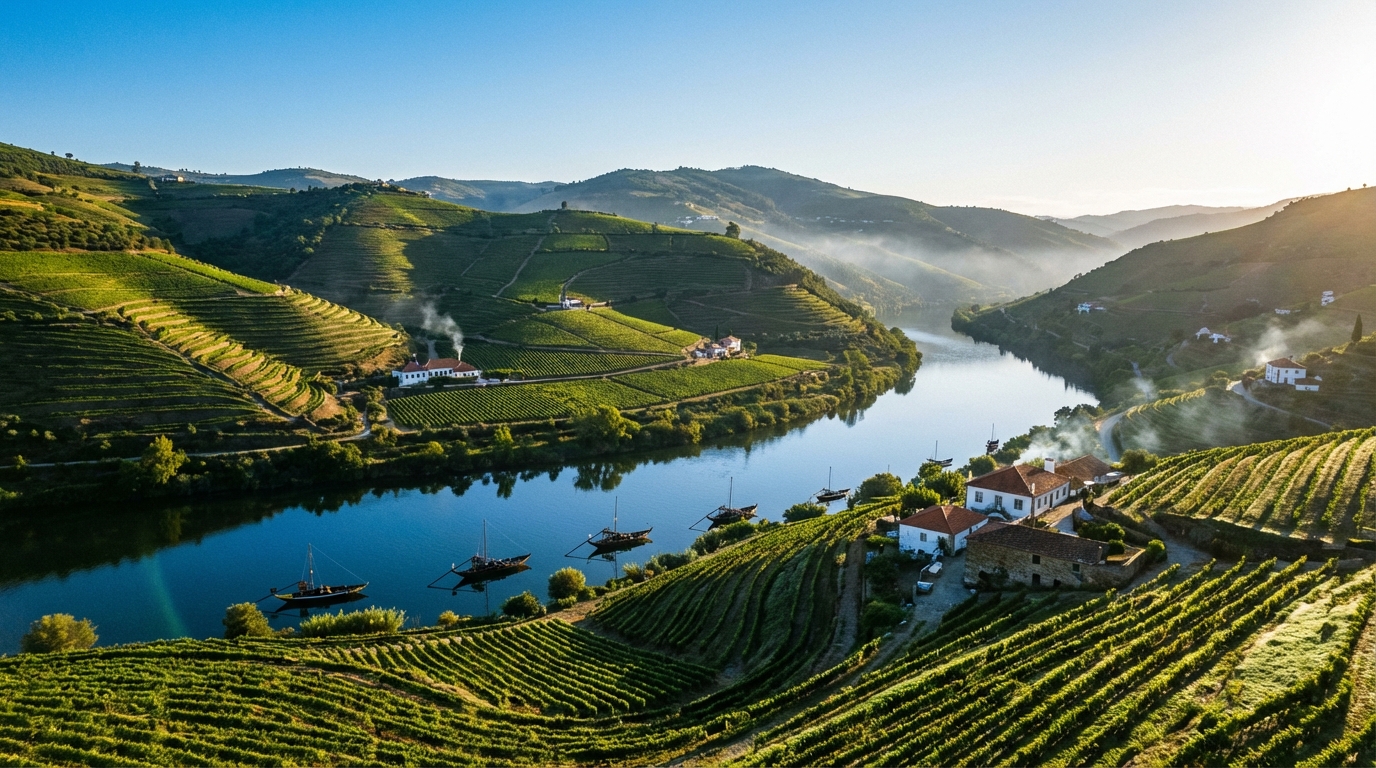
The Vinho Verde DOC covers the entire Minho region in northwestern Portugal, hugging the Atlantic coast and sharing a border with Galicia, Spain. This is one of Europe’s wettest wine regions: Atlantic moisture produces lush green vegetation (hence the landscape’s name), abundant rainfall, and the risk of fungal disease that requires careful canopy management. Vineyards are traditionally trained high on pergolas (the ramada or latada system) to allow air circulation and prevent rot.
Varieties of Vinho Verde
Alvarinho (Albariño in Spain): The noblest variety in Vinho Verde, grown primarily in the Monção e Melgaço sub-region on the Minho River. Alvarinho produces wine of the highest complexity within the DOC: aromatic (stone fruit, citrus blossom, ginger), full-bodied for Vinho Verde, and capable of real aging potential in top examples. Anselmo Mendes is the reference producer for Alvarinho.
Loureiro: The most widely planted white grape in Vinho Verde proper (outside Monção), producing floral, lime-driven wines of great freshness and delicacy.
Arinto (also called Pederlã in Vinho Verde): High-acid variety producing crisp, mineral wines with significant aging potential in the right hands.
Alentejo: Cork, Sun, and Rich Reds
South of Lisbon, the vast, sun-baked plains of Alentejo are one of Portugal’s most important wine regions and the country’s definitive source of full-bodied, approachable red wines. Alentejo’s gently rolling landscape — dominated by cork oak forests (montado), olive groves, and vine plantings — looks more like a scene from Andalusia than the Atlantic wine country of the Minho.
Portugal produces over half of the world’s cork, and much of it comes from Alentejo’s ancient cork oak trees. The region’s wine culture is inseparable from its cork industry: the same estates that produce wine often harvest cork from their oak trees in the same season.
The climate is continental Mediterranean — hot, dry summers (temperatures regularly exceed 40°C) and cool winters. Irrigation is permitted and often necessary. The soils range from granite in the north to schist and limestone in the central plains to clay and limestone in the south, producing a range of wine styles across the eight Alentejo sub-DOCs.
Alentejo Red Wine Varieties
Touriga Nacional: Portugal’s most celebrated red grape. In Alentejo it produces wines of dark color, intense violet and blackberry fruit, and powerful tannin.
Trincadeira: One of Alentejo’s most important native reds, producing wines of deep color, earthy complexity, and spice.
Aragonez (Tempranillo in Alentejo): Well-adapted to the warm plains, producing softer, more accessible wines.
Antão Vaz: Alentejo’s most important white variety, producing full-bodied whites with stone fruit characters.
Esporão is the reference point for Alentejo wine globally — a large modern estate producing wines across the quality spectrum. Its collaboration with Australian winemaker David Baverstock in the 1990s transformed the estate. José Maria da Fonseca is another essential Alentejo producer.
The Douro Valley: Beyond Port
The Douro Valley — Europe’s first delimited wine region, established in 1756 — is synonymous worldwide with Port. But the same grapes that produce Port also produce magnificent dry table wines. The Douro’s dry reds — blended from Touriga Nacional, Touriga Franca, Tinta Roriz, Tinta Barroca, and Tinta Cão — combine extraordinary concentration and complexity with savory, mineral characters from the schist bedrock.
Dirk Niepoort is the figure most associated with the Douro table wine revolution. His Redoma and Batuta demonstrated in the 1990s that Douro dry wines could be world-class. Quinta do Crasto produces consistently excellent single-vineyard Reserva Old Vines from pre-phylloxera field-blended parcels. Chryseia (Prats and Symington joint venture) brings Bordeaux precision to Douro fruit with outstanding results.
Dão: Granite, Touriga Nacional, and Cool Elegance
Enclosed within a ring of mountain ranges in north-central Portugal, the Dão region produces wines of remarkable elegance. The granite soils and altitude (400–800m) create a cooler microclimate where grapes ripen slowly and retain high natural acidity. Touriga Nacional here is less massive than in the Douro — more aromatic, refined, and floral. Encruzado is Dão’s principal white grape: complex, hazelnut-scented, and capable of excellent aging.
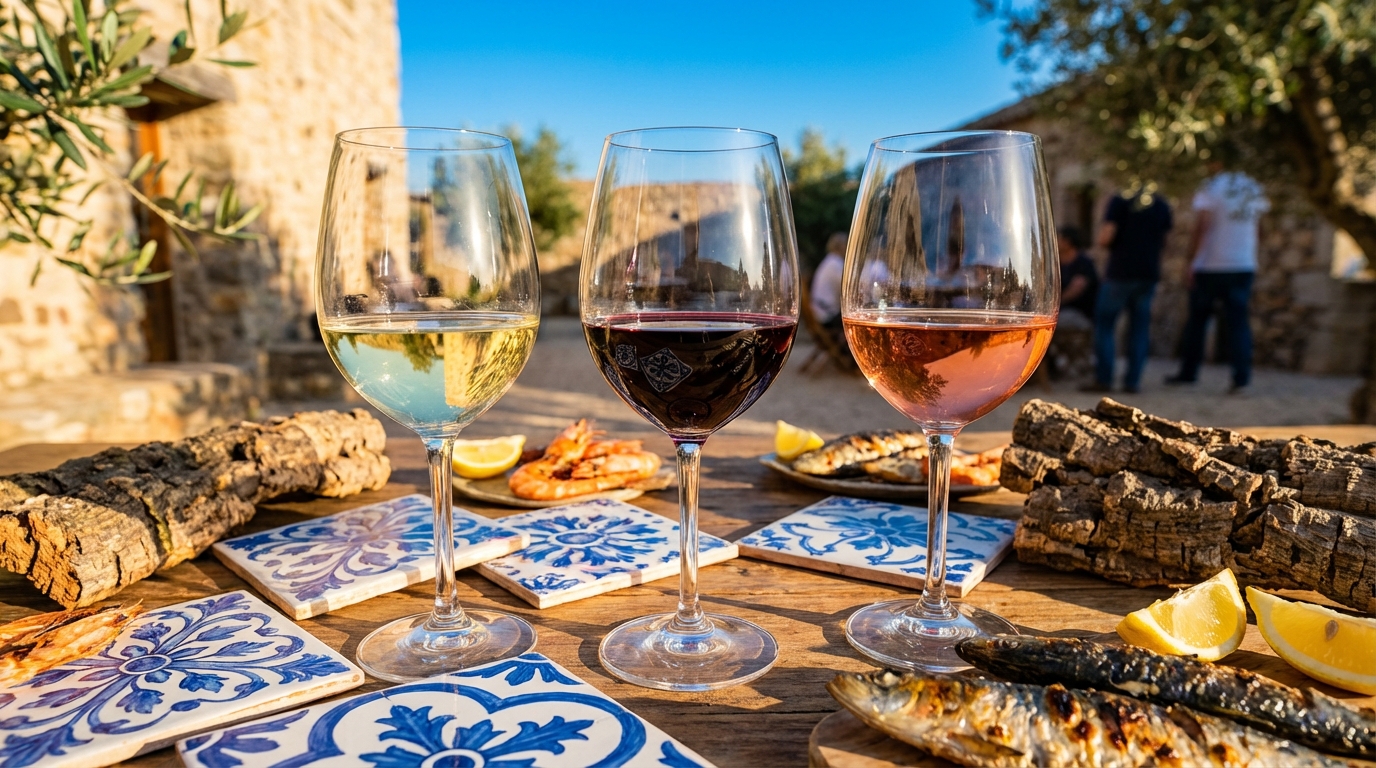
Key producers: Quinta dos Carvalhais, Niepoort (Dócil label), and Casa da Passarella (biodynamic, remarkable precision).
Lisboa, Setúbal, and Atlantic Influence
The wine regions near Lisbon benefit from Atlantic Ocean proximity that moderates temperatures. The Setúbal Peninsula is home to José Maria da Fonseca (est. 1834), producing the celebrated Periquita (Castelão) and the extraordinary Moscatel de Setúbal — one of the world’s great fortified Muscats.
Portugal’s Regulatory System
Portugal’s wine law uses DOC (Denominação de Origem Controlada) as the top appellation category, equivalent to France’s AOC. DOP (EU-harmonized term) appears interchangeably. The 17 DOC regions include Vinho Verde, Douro, Dão, Bairrada, Alentejo, and Lisboa. Below DOC sit Vinho Regional designations, which allow greater flexibility — many innovative producers work under VR to escape DOC variety restrictions.
Key Producers Reference
Quinta do Crasto (Douro): Outstanding Douro dry reds; Reserva Old Vines is a benchmark.
Dirk Niepoort (Douro/Dão/multiple): Portugal’s most internationally celebrated producer.
Herdade do Esporão (Alentejo): Reference estate for modern Alentejo wine.
José Maria da Fonseca (Setúbal/Alentejo): Historic estate; Periquita and Moscatel de Setúbal are essential.
Anselmo Mendes (Vinho Verde): The reference producer for Alvarinho.
Quinta de Soalheiro (Vinho Verde): Exceptional organic Alvarinho; one of Portugal’s finest whites.


