The Wine Map Redrawn
For centuries, the global wine landscape was dominated by a familiar cast: France, Italy, Spain, and Germany in Europe; California, Australia, and Chile in the New World. These established regions commanded attention, prestige, and market share, while winemaking elsewhere remained marginal, unknown, or dismissed as a curiosity.
That era is ending. Climate change, cultural rediscovery, technological advancement, and a new generation of adventurous consumers are combining to reshape the global wine map in ways that would have seemed unthinkable a generation ago. From the 8,000-year-old winemaking traditions of Georgia to the chalk-soil sparkling wines of southern England, from the high-altitude vineyards of China's Ningxia to the ancient terroirs of Lebanon's Bekaa Valley, the most exciting stories in wine today are being written in unexpected places.
“The old wine world is not disappearing — but the new frontiers are where the energy, the innovation, and the most compelling stories are found. The 21st century wine map looks nothing like the 20th century's.”
— Tim Atkin MW
This guide explores the emerging regions that every serious wine lover should be watching — the places where the next great chapter of wine is being written.
Georgia: Where It All Began
It is fitting to begin with the world's oldest wine-producing country. Archaeological evidence from the Republic of Georgia — including 8,000-year-old clay vessels containing grape residue — establishes the South Caucasus as the cradle of viticulture. And after decades of Soviet-era neglect, Georgian wine is experiencing a remarkable renaissance.
Qvevri: The Ancient Method
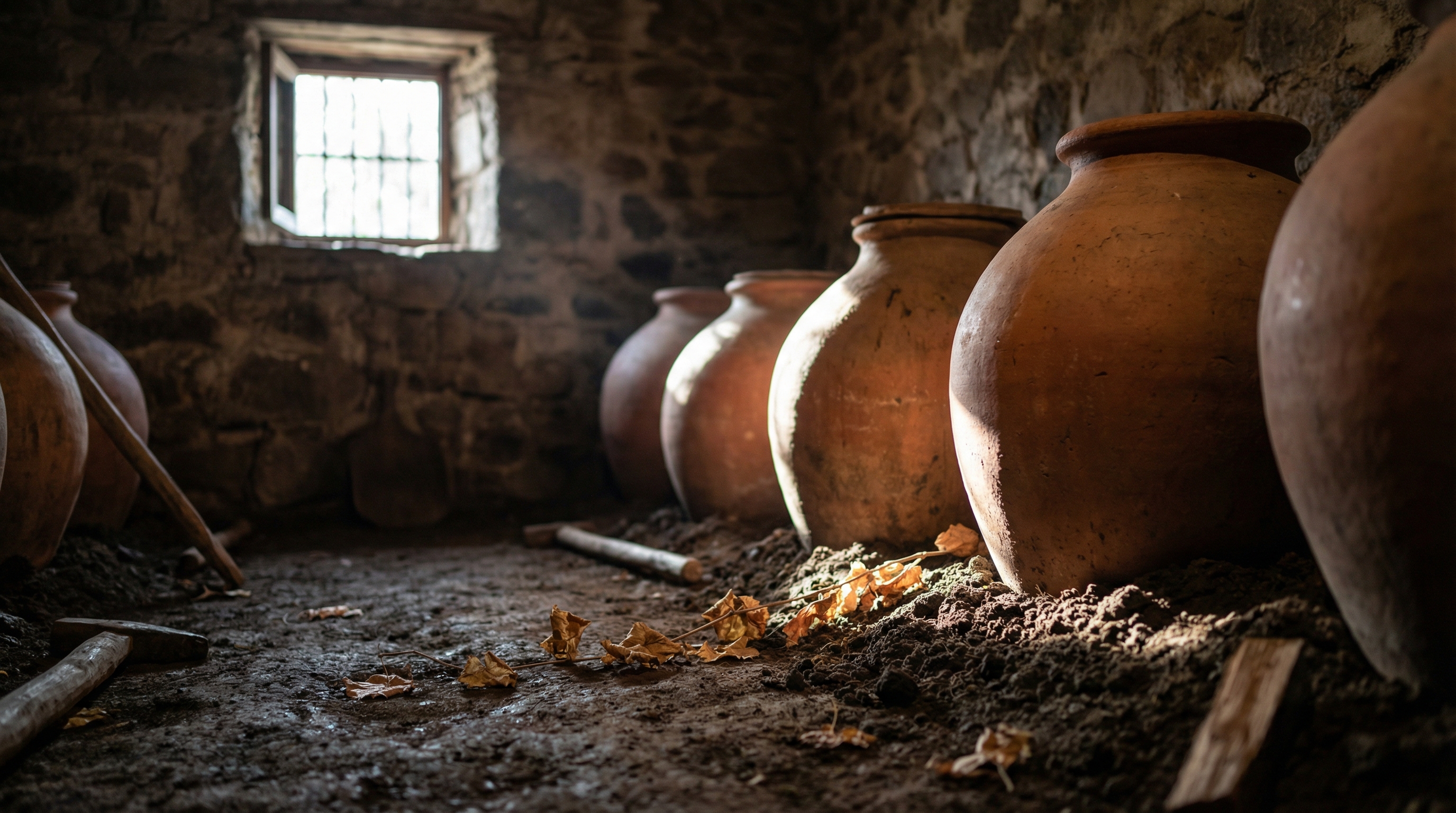
Georgia's most distinctive contribution to wine is the qvevri (also spelled kvevri) — large, egg-shaped clay vessels buried underground in which grapes are fermented and aged, often with extended skin contact for both red and white varieties. This method, recognized by UNESCO as an Intangible Cultural Heritage, produces amber wines (orange wines) of extraordinary textural richness, tannic grip, and aromatic complexity.
The process is deceptively simple: grapes — often including stems, skins, and seeds — are placed in the qvevri, which is then sealed with a stone lid and beeswax. Natural yeasts drive fermentation, and the wine rests on its skins for months, extracting phenolic compounds that give amber wines their distinctive character.
Key Grapes and Regions
Georgia boasts over 525 indigenous grape varieties — one of the richest viticultural gene pools on earth. The most important include:
- Saperavi — Georgia's great red grape, producing deeply colored, tannic wines with dark fruit and earthy complexity. Capable of significant aging.
- Rkatsiteli — The most widely planted white grape, used for both conventional white wines and extended-skin-contact amber wines.
- Mtsvane — Often blended with Rkatsiteli for amber wines; delicate, floral, and herbal.
- Kisi — Aromatic, honeyed, and increasingly fashionable for varietal bottlings.
Kakheti, in eastern Georgia, is the heartland of both qvevri winemaking and the country's wine industry, producing roughly 70% of the nation's wine. The sub-regions of Tsinandali, Mukuzani, and Kindzmarauli have established appellations.
Producers to Watch
- Pheasant's Tears — Founded by American painter John Wurdeman, this Signaghi-based winery has done more than any other to bring Georgian wine to international attention.
- Iago's Wine — Iago Bitarishvili's tiny production of qvevri Chinuri from Kartli is hauntingly beautiful.
- Lapati Wines — Traditional qvevri methods, stunning Saperavi and Rkatsiteli.
England: Sparkling Ambitions
Perhaps no emerging wine region has generated more excitement in recent years than southern England, where chalk soils, a warming climate, and serious investment have created a sparkling wine industry that is genuinely challenging Champagne.
The Chalk Connection
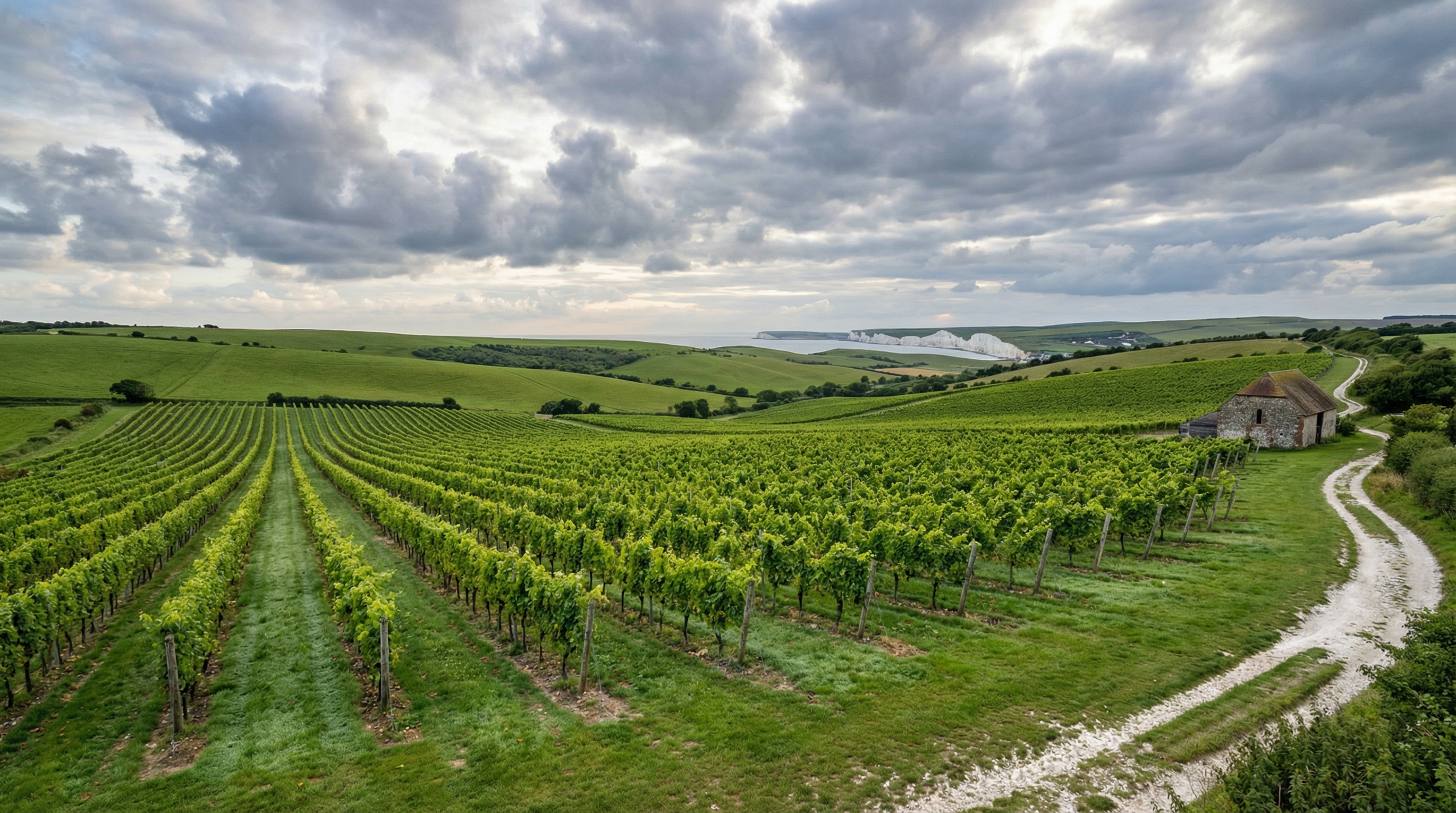
The geological link is direct: the chalk belt that underlies Champagne continues beneath the English Channel and resurfaces in the North and South Downs of Sussex, Kent, Hampshire, and Surrey. The same Cretaceous chalk that gives Champagne its minerality and aging potential provides identical terroir characteristics in England — a fact that has not gone unnoticed by Champagne houses themselves. Taittinger established its Domaine Evremond in Kent in 2017, and Vranken-Pommery followed with an English venture.
Climate Change as Catalyst
England's wine industry is a direct beneficiary of a warming climate. Average temperatures in southern England have risen by approximately 1°C since the 1960s, extending the growing season and allowing varieties like Chardonnay, Pinot Noir, and Pinot Meunier — the classic Champagne trio — to ripen reliably. What was once a marginal, hobbyist endeavor has become a professionally managed industry with over 900 vineyards and 200+ wineries.
Producers Leading the Way
- Nyetimber — The benchmark English sparkling house. Their Blanc de Blancs and Classic Cuvée regularly outperform mid-range Champagne in blind tastings.
- Ridgeview — Family-owned estate in Sussex producing consistently excellent sparkling wine. Bloomsbury is the flagship.
- Gusbourne — Kent-based producer with a focus on vintage-dated, single-estate sparkling wines of remarkable precision.
- Wiston Estate — South Downs chalk-soil wines of exceptional quality.
- Hattingley Valley — Hampshire producer making both its own wines and contract wines for other estates.
“English sparkling wine is not trying to be Champagne. It is something new — wines of extraordinary freshness, precision, and purity that reflect a unique terroir. The best English wines are world-class by any measure.”
— Tim Atkin MW
China: The Sleeping Giant Stirs
China's wine industry is one of the world's most rapidly evolving — and most misunderstood. With approximately 785,000 hectares under vine (the third-largest vineyard area globally, behind Spain and France), China is a major wine-producing nation. But the vast majority of this production is table grapes or low-quality wine for domestic consumption. The quality segment is small but growing fast.
Ningxia: China's Napa Valley
The Ningxia Hui Autonomous Region in north-central China has emerged as the country's most promising fine wine region. Located at the eastern edge of the Helan Mountains at elevations of 1,100–1,500 meters, Ningxia benefits from intense sunlight, dramatic diurnal temperature variation, and well-drained sandy-gravel soils.
The catch: winters are brutally cold (-20°C or lower), requiring vines to be buried underground each autumn and unearthed each spring — an enormously labor-intensive process that adds significantly to production costs.
Despite these challenges, Ningxia's Cabernet Sauvignon, Cabernet Franc, and Marselan (a Cabernet-Grenache cross) are increasingly impressive. In international blind tastings, wines from Ao Yun (LVMH's venture in Yunnan), Helan Qingxue (whose Jia Bei Lan won a Decanter World Wine Award gold medal), and Silver Heights have demonstrated genuine quality.
Producers to Know
- Ao Yun — LVMH's prestige project in Yunnan province, at 2,200–2,600 meters altitude. Bordeaux-style blends of remarkable ambition.
- Helan Qingxue — The winery that put Ningxia on the map internationally.
- Silver Heights — Emma Gao's family estate in Ningxia, producing increasingly refined wines.
- Grace Vineyard — Pioneer quality producer in Shanxi province.
Lebanon: The Bekaa Valley
The Bekaa Valley, situated between the Lebanon and Anti-Lebanon mountain ranges at 900–1,100 meters elevation, has been producing wine for at least 5,000 years — the Phoenicians were among the ancient world's most prolific wine traders. Despite decades of political instability, Lebanon's wine industry has not only survived but is producing increasingly compelling wines.
The Terroir
The Bekaa's high altitude, Mediterranean climate (hot, dry summers and cold winters), and limestone-clay soils create conditions remarkably similar to parts of southern France and Spain. The region receives very little rainfall during the growing season, and most vineyards are dry-farmed.
Key Producers
- Château Musar — Founded in 1930 by Gaston Hochar and made famous by his son Serge, who continued producing wine throughout the Lebanese Civil War. The red — a unique blend of Cabernet Sauvignon, Cinsault, and Carignan — is one of the world's most distinctive and age-worthy wines.
- Château Kefraya — Large estate producing a range of styles, including the impressive Comte de M.
- Château Ksara — Lebanon's oldest winery (founded 1857 by Jesuit monks), producing reliable, well-crafted wines across a broad range.
- Domaine des Tourelles — Historic estate experiencing a quality renaissance under the Issa family.
Croatia: Adriatic Treasures
Croatia's wine industry is emerging from the shadow of its tourism boom, revealing a country of remarkable viticultural diversity and indigenous grape wealth. With over 130 native varieties spread across coastal, island, and continental zones, Croatia offers discoveries at every turn.
Key Regions and Grapes
Istria — Croatia's northwestern peninsula produces excellent whites from Malvazija Istarska (Malvasia) — aromatic, textured wines that range from fresh and mineral to rich and oak-aged. The region also produces outstanding Teran (a variant of Refosco), yielding deeply colored, earthy reds.
Dalmatia — The dramatic Adriatic coast and islands are home to Plavac Mali, Croatia's most important red grape and a genetic offspring of Zinfandel (Tribidrag/Crljenak Kaštelanski). The best Plavac Mali — from the Dingač and Postup appellations on the Pelješac Peninsula — produces wines of extraordinary power and complexity.
Slavonia & the Danube — Continental Croatia produces crisp whites from Graševina (Welschriesling) and increasingly impressive Pinot Noir and Frankovka (Blaufränkisch).
Producers to Watch
- Cattunar (Istria) — Exceptional Malvazija and Teran
- Saints Hills (Pelješac) — Michel Rolland-consulted Plavac Mali of real ambition
- Bibich (North Dalmatia) — Innovative producer working with Debit, Plavina, and other rarities
- Krauthaker (Slavonia) — Croatia's finest Graševina producer
Emerging Regions at a Glance
| Region | Country | Key Varieties | Style | Why Watch? |
|---|---|---|---|---|
| Kakheti | Georgia | Saperavi, Rkatsiteli | Amber wines, qvevri method | 8,000-year tradition, UNESCO heritage |
| Sussex/Kent | England | Chardonnay, Pinot Noir | Sparkling | Chalk soils, Champagne quality |
| Ningxia | China | Cabernet Sauvignon, Marselan | Bordeaux-style reds | Massive investment, rapid improvement |
| Bekaa Valley | Lebanon | Cabernet, Cinsault, Carignan | Complex, age-worthy reds | Ancient heritage, unique blends |
| Istria/Dalmatia | Croatia | Malvazija, Plavac Mali | Diverse: white to powerful red | 130+ indigenous varieties |
| Etna | Italy (Sicily) | Nerello Mascalese, Carricante | Elegant, volcanic, mineral | Volcanic terroir, Burgundian comparisons |
| Swartland | South Africa | Chenin Blanc, Syrah, Cinsault | Old-vine, natural, characterful | Revolution in quality and style |
| Jura | France | Savagnin, Trousseau, Poulsard | Oxidative, vin jaune, unique | Rediscovery of forgotten styles |
| Canary Islands | Spain | Listán Negro, Listán Blanco | Volcanic, pre-phylloxera | Ancient vines, unique terroir |
| Slovenia | Slovenia | Rebula, Zelen, Pinela | Skin-contact, orange wines | Natural wine movement, Collio connection |
Broader Trends Driving the Shift
Climate Change
Rising temperatures are making previously marginal regions viable while challenging established ones. Southern England, Scandinavia, and northern Germany are experiencing longer, warmer growing seasons. Meanwhile, traditional warm-climate regions are being forced to adapt — planting at higher altitudes, shifting to heat-resistant varieties, or adjusting viticultural practices.
The Indigenous Variety Revival
Consumers and producers alike are turning away from the "international variety" model (Cabernet, Merlot, Chardonnay everywhere) toward indigenous, local grapes. This trend benefits emerging regions enormously, as many possess unique grape varieties found nowhere else — Georgia's 525 varieties, Croatia's 130, Portugal's 250, and Greece's 300+ represent an almost inexhaustible frontier of discovery.
Natural and Minimal-Intervention Wine
The natural wine movement has been a powerful engine for emerging regions. Georgian qvevri wines, Slovenian skin-contact whites, Jura oxidative styles, and Canary Island volcanic wines all align with the natural wine ethos of minimal intervention and traditional methods. Sommeliers and wine bars in major cities have embraced these wines enthusiastically, creating commercial channels that did not exist a decade ago.
Investment and Expertise
Global capital and winemaking talent are flowing to emerging regions as never before. LVMH in China (Ao Yun) and India (planned ventures), Champagne houses in England, South African-trained winemakers returning to build domestic industries, and European consultants advising in places like Georgia, Turkey, and Brazil — this cross-pollination of investment and expertise is accelerating quality improvements across the developing wine world.
For more on global wine trends, visit Decanter's world wine coverage and Jancis Robinson's Purple Pages.
What This Means for Wine Lovers
The practical implications of the expanding wine map are thrilling for consumers. More diversity means more choice, more competition, and — crucially — more value. While Burgundy and Bordeaux prices continue their relentless climb, wines of genuine character and quality from Georgia, Croatia, Lebanon, and England offer compelling alternatives at a fraction of the cost.
More importantly, these emerging regions offer novelty — the excitement of encountering a grape variety, a winemaking technique, or a flavor profile you have never experienced before. In a world where it is easy to become jaded by the familiar, a glass of Georgian amber Rkatsiteli, a Croatian Plavac Mali from sun-baked Adriatic terraces, or an English sparkling wine from Cretaceous chalk can reignite the sense of wonder that drew us to wine in the first place.
Conclusion: A Bigger, More Interesting World
The wine world of 2026 is larger, more diverse, and more exciting than at any point in history. The traditional powerhouses — France, Italy, Spain, California — remain essential, but they are no longer the whole story. The margins of the wine map are expanding, and the wines being produced on those margins are increasingly impossible to ignore.
For the adventurous drinker, this is a golden age. The price of entry is low, the rewards are high, and the only risk is the pleasurable one of discovering something extraordinary in an unexpected bottle. The global wine map is being redrawn — and every new line on it leads somewhere worth exploring.


