The River of Gold
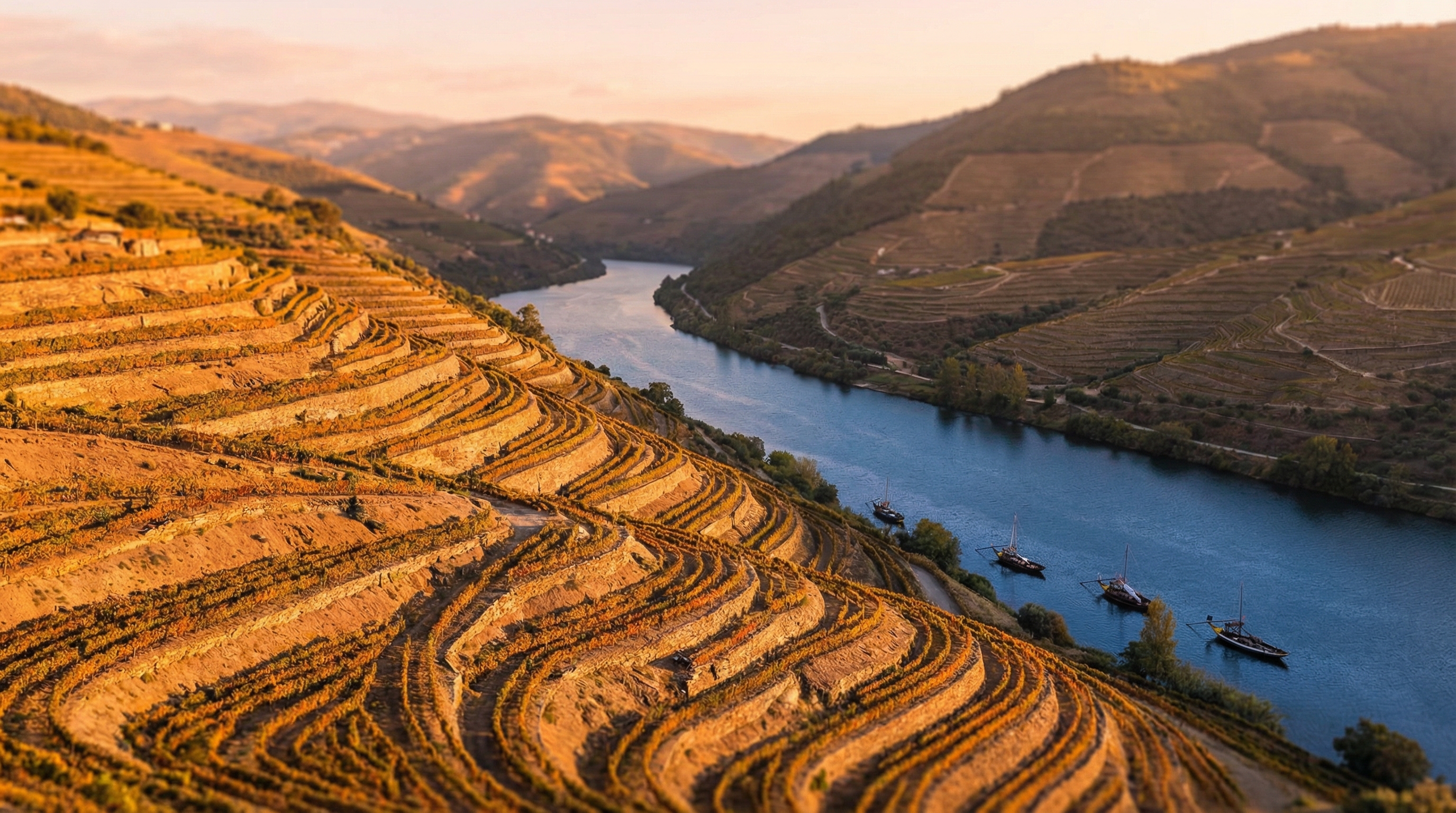
Long before the first vine was planted on its precipitous slopes, the Douro River carved a deep, winding gorge through the schist bedrock of northern Portugal, creating one of the most visually stunning and viticulturally challenging landscapes on earth. The terraced vineyards that cling to the valley walls — many of them maintained by hand for centuries — are a UNESCO World Heritage Site, and rightly so. This is winemaking as an act of sheer determination.
For most of history, the Douro meant one thing: Port wine, the fortified marvel that has warmed British drawing rooms since the 17th century. But over the past three decades, a quiet revolution has transformed the Douro into one of Europe's most exciting sources of unfortified table wine — rich, complex, and hauntingly mineral reds and whites that are redefining Portugal's place in the global wine conversation.
“The Douro is the most beautiful and dramatic vineyard in the world. And its potential for table wine is only now being fully realized — we are at the very beginning.”
— Dirk Niepoort
A Landscape Like No Other
The Douro wine region stretches roughly 100 kilometers inland from the city of Porto along the Douro River and its tributaries. It is divided into three sub-regions, each with distinct character:
Baixo Corgo (Lower Corgo) — The westernmost, coolest, and wettest zone, closest to Porto. Higher rainfall and more fertile soils produce lighter wines, typically destined for less expensive Ports and everyday table wines. Vineyards here are densely planted, and yields are the highest in the region.
Cima Corgo (Upper Corgo) — The heart of the Douro and the source of most premium Port and table wine. The town of Pinhão is the unofficial capital, surrounded by many of the valley's most famous quintas (estates). Summers are hotter, rainfall lower, and the schist soils produce wines of greater concentration and depth.
Douro Superior (Upper Douro) — The easternmost, hottest, and driest zone, stretching toward the Spanish border. Until recently, this area was considered too extreme for quality winemaking, but climate-adapted varieties and higher-altitude plantings are yielding impressive results. Estates like Quinta do Vale Meão are demonstrating the zone's enormous potential.
Port Wine: The Foundation
Understanding the Douro begins with understanding Port — the fortified wine that built the region's economy and international reputation.
How Port is Made
Port's production method is distinctive. Grapes — typically a field blend of indigenous varieties — are crushed and fermented for just 24–48 hours before aguardente (grape spirit at 77% alcohol) is added, halting fermentation and preserving roughly half the grape's natural sugar. The result is a wine of approximately 19–22% alcohol with residual sweetness ranging from off-dry to lusciously sweet.
Historically, grapes were crushed by foot in granite lagares — shallow, open-topped treading tanks. While mechanization has replaced foot-treading at many properties, several top producers — including Taylor's, Fonseca, and Niepoort — still use lagares for their finest wines, believing that the gentle, rhythmic action of human feet extracts color and tannin more evenly than any machine.
Port Styles
| Style | Aging | Character | Serving |
|---|---|---|---|
| Ruby | 2–3 years in large vats | Youthful, fruity, simple | Slightly cool |
| Reserve Ruby | 4–6 years in vats | Richer, more complex | Slightly cool |
| Late Bottled Vintage (LBV) | 4–6 years in barrel | Concentrated, firm | Room temperature |
| Vintage Vintage (Vintage Port) | 2 years in barrel, then bottle | Develops in bottle for decades | Decant, room temp |
| Tawny | Extended wood aging | Nutty, caramel, dried fruit | Slightly cool |
| 10/20/30/40-Year Tawny | Average age in barrel | Increasingly complex, ethereal | Cool |
| Colheita | Single vintage, wood-aged | Refined, specific character | Cool |
| White Port | Short aging | Dry to sweet, herbal | Chilled |
The Great Vintage Port Houses
The declared Vintage Port — made only in exceptional years, perhaps three or four times per decade — represents the pinnacle of the category. The great houses include:
- Taylor's — Perhaps the finest Vintage Port house. Their 1994, 2007, and 2011 are benchmark wines.
- Fonseca — Rich, opulent style. The Guimaraens bottling offers accessible excellence.
- Graham's — Full, sweet, and generous. The Six Grapes Reserve is outstanding value.
- Dow's — The driest, most structured style among the major houses.
- Niepoort — iconoclastic producer bridging tradition and modernity.
The Table Wine Revolution
While Port remains the Douro's economic backbone, the region's transformation into a source of world-class unfortified wine is the story of the past three decades — and one of the most exciting developments in European wine.
The Pioneers
The spark was lit in the late 1980s and early 1990s by a handful of visionaries who recognized that the Douro's ancient vineyards, extraordinary terroir, and wealth of indigenous grape varieties were being underutilized. If these grapes could make great fortified wine, why not great table wine?
Barca Velha, produced by Casa Ferreirinha, had demonstrated this potential as early as 1952, but it remained an isolated anomaly — produced only in exceptional years and commanding cult prices. The real revolution came with figures like:
Dirk Niepoort — A Dutch-born, fifth-generation Port producer who began making table wines in the early 1990s. His Batuta and Charme bottlings, from old vines in the Cima Corgo, were among the first Douro reds to attract serious international attention. Niepoort's restless experimentation — including orange wines, pétillant naturels, and skin-contact whites — has pushed the region's boundaries further than anyone.
“Port is the tradition. But the Douro's unfortified wines are its future. We have 250 grape varieties, schist soils of incredible complexity, and old vines that nobody else in the world possesses. The potential is limitless.”
— Dirk Niepoort
Cristiano van Zeller — At Quinta do Vale Dona Maria, van Zeller demonstrated that single-quinta table wines could rival the best of southern France and northern Italy.
The Symington Family — Owners of some of Port's greatest brands (Graham's, Dow's, Warre's), the Symingtons launched Chryseia in partnership with Bruno Prats (formerly of Château Cos d'Estournel) and created Altano as an accessible entry point to Douro reds.
The Grapes
One of the Douro's greatest assets is its staggering diversity of indigenous grape varieties — over 250 authorized cultivars, many of them found nowhere else. The most important for table wine include:
Red Varieties:
- Touriga Nacional — Portugal's noblest grape. Produces deeply colored, intensely aromatic wines with flavors of dark fruit, violet, and wild herbs. Provides structure and aging potential.
- Touriga Franca — The most widely planted variety in the Douro. Floral, perfumed, and elegant, it is often the aromatic heart of blends.
- Tinta Roriz (Tempranillo) — Adds structure, acidity, and earthy complexity.
- Tinta Barroca — Softer, more fruit-forward, contributing generosity and roundness.
- Sousão — Increasingly valued for its inky color, vibrant acidity, and resistance to heat.
White Varieties:
- Rabigato — High acidity, mineral, citrus. The backbone of many Douro whites.
- Viosinho — Aromatic, with stone fruit and floral notes. Increasingly used as a varietal wine.
- Códega do Larinho — Delicate, with fine texture and subtle complexity.
- Gouveio (Godello) — Rich, textured, capable of extended aging.
The New Douro: Producers to Know
The depth of quality in Douro table wine has expanded enormously. Beyond the pioneers, a wave of producers is crafting distinctive wines:
- Niepoort — The essential Douro producer. Redoma (red and white), Batuta, and Charme are must-try wines. The entry-level Fabelhaft (Rotulo) range offers remarkable value.
- Quinta do Vale Meão — The family estate behind the legendary Barca Velha. The Vale Meão red, from Douro Superior, is consistently one of Portugal's finest wines.
- Quinta do Crasto — Old vines, traditional methods. The Reserva Old Vines is a reliable benchmark.
- Quinta do Vallado — Stunning estate with vineyards dating to 1716. The Adelaide wines (red and white) are superb.
- Wine & Soul — Sandra Tavares da Silva and Jorge Serôdio Borges produce tiny quantities of exquisitely pure, terroir-driven wines. Pintas is the flagship.
- Poeira — Jorge Moreira's project focuses on old-vine field blends of startling delicacy.
For comprehensive Douro information, consult the Wines of Portugal official portal and Port Wine Institute (IVDP).
Douro Whites: The Hidden Treasure
While red wines dominate the Douro conversation, the region's white wines deserve far more attention. The combination of old vines, indigenous varieties, schist soils, and extreme conditions produces whites of remarkable intensity, texture, and longevity.
The best Douro whites — from producers like Niepoort (Redoma Branco, Tiara), Quinta do Vallado (Adelaide Branco), and Wine & Soul (Guru) — are fermented and aged in a combination of oak barrels, granite lagares, and concrete, producing wines of profound complexity. Expect flavors of white peach, almond, beeswax, and a distinctive schist minerality, with textures that can rival fine white Burgundy.
At the more affordable end, the Douro's white wines — often blends of Rabigato, Viosinho, and Códega — offer outstanding freshness and character for $10–20, making them some of Europe's best-value whites.
Visiting the Douro
The Douro Valley is one of Europe's most rewarding wine destinations. The best way to experience it is by car, following the N222 road along the river — regularly voted one of the world's most scenic drives.
When to visit: September and October offer harvest activity and spectacular autumn colors. May and June are ideal for comfortable weather and fewer crowds.
What to expect: Many quintas offer tastings and tours, some with guest accommodations. The town of Pinhão is a perfect base, with train connections to Porto. River cruises offer a more relaxed way to absorb the landscape.
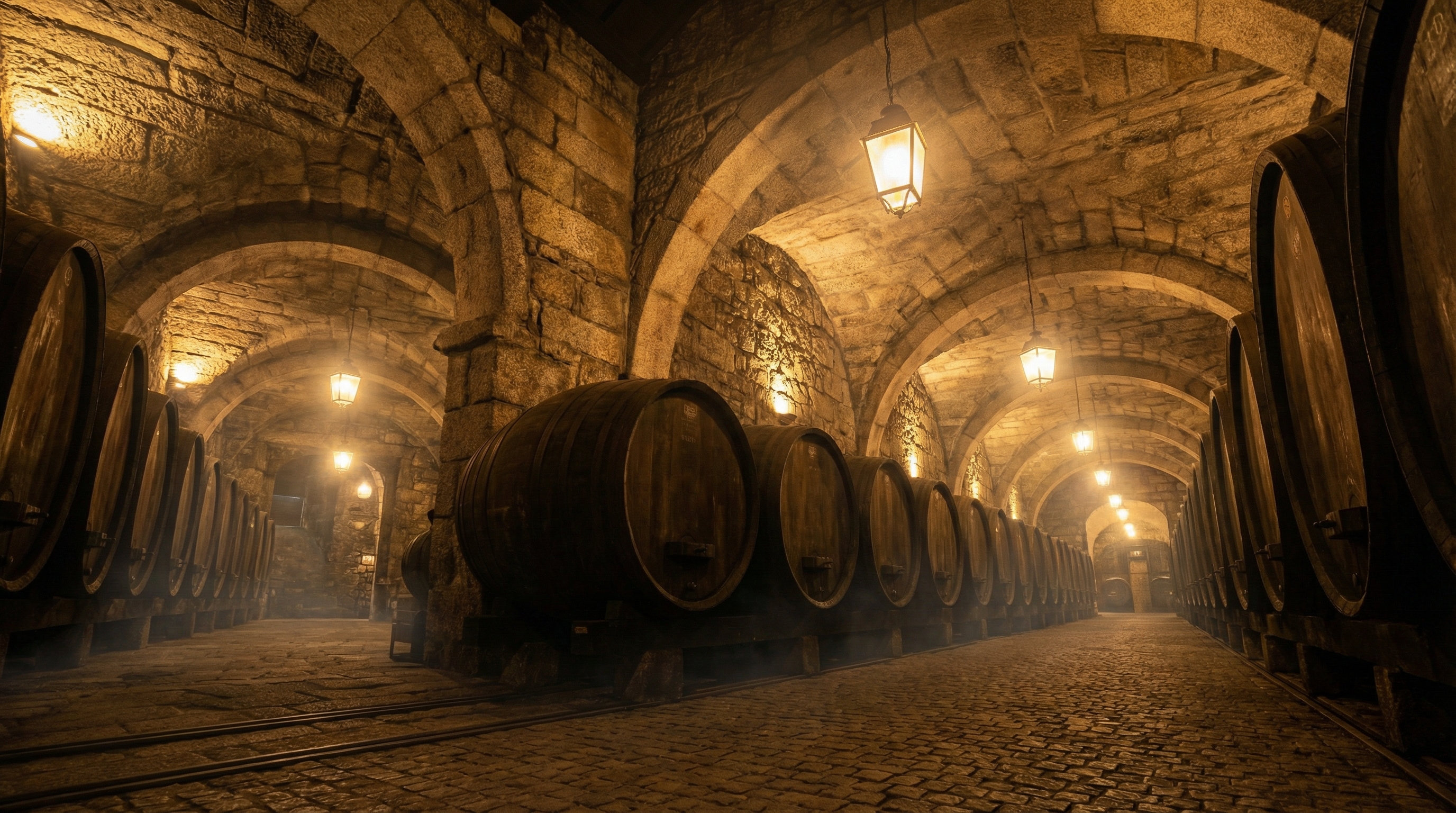
Don't miss: A visit to the historic Port lodges in Vila Nova de Gaia, across the river from Porto, where the great Port houses age their wines. The combination of Douro vineyard visits and Gaia lodge tastings provides a complete picture of the region's extraordinary wine culture.
Conclusion: The Douro's Dual Identity
The Douro's genius is its duality. It is at once one of the most ancient wine regions in the world and one of the most forward-looking. Port remains glorious — a category of wine with no true equal — and the new generation of table wines is proving that the same terroir, grapes, and traditions can produce unfortified wines of equal distinction.
What makes the Douro special is not just the quality of its wines but the character of its landscape and people. These are vineyards maintained at great personal cost, on slopes so steep that mules and human backs remain the only viable means of transport at harvest. The wines carry this effort in their intensity and soul. To taste a great Douro red or a fine Vintage Port is to taste the labor of generations — and to understand why this river of gold continues to flow.


