The World of Bubbles Beyond the Marne Valley
Champagne is not the only region on earth capable of producing transcendent sparkling wine. From the Veneto's sun-drenched hills to the limestone caves of Catalonia, from the chalk-laced slopes of Alsace to the cool ocean-facing vineyards of South Africa's Cape, winemakers on six continents have perfected the craft of capturing carbonation — and with it, complexity, elegance, and joy — in a bottle.
Global sparkling wine production now exceeds 2.8 billion bottles annually. Champagne accounts for roughly 300 million of those, meaning the vast majority of the world's bubbles originate elsewhere. Understanding those alternatives is not merely an exercise in frugality — though the value proposition is often striking — but a genuine expansion of the palate. Each sparkling wine tradition reflects the grapes, soils, and culture of its origin in ways that Champagne, for all its genius, simply cannot replicate.
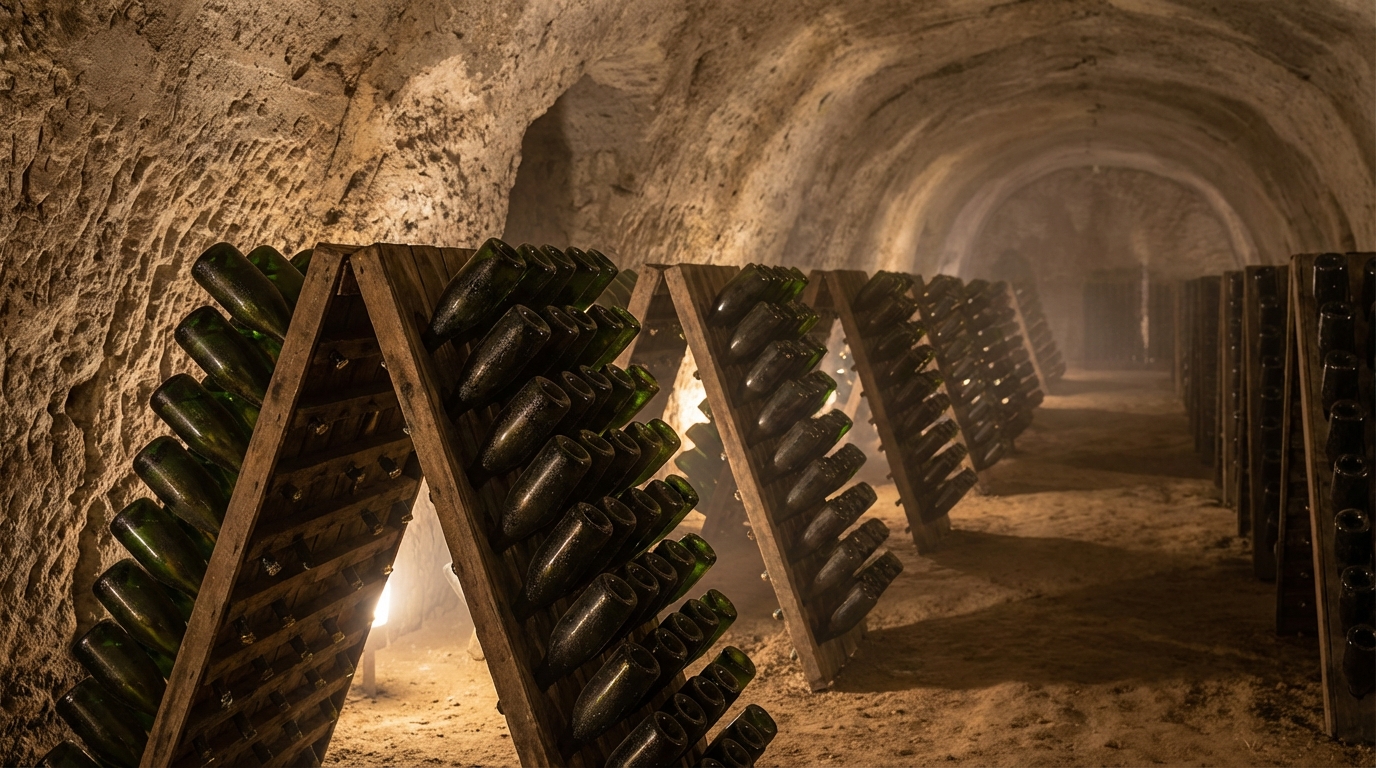
The defining technical distinction is production method. The traditional method (méthode traditionnelle, metodo classico, método tradicional) creates bubbles through a secondary fermentation inside the individual bottle, yielding fine, persistent mousse and the distinctive yeasty complexity that comes from extended contact with spent yeast cells (lees). The Charmat method (also called tank method or autoclave) conducts secondary fermentation in pressurized tanks, preserving primary fruit aromatics at the expense of bready complexity. A third approach — ancestral method (pét-nat) — bottles the wine mid-fermentation and allows it to complete naturally, producing rustic, lightly cloudy wines with minimal pressure. Each method produces a categorically different drinking experience.
Italy: Prosecco, Franciacorta, and the Breadth of Italian Fizz
Italy is the world's largest producer of sparkling wine by volume, driven by the extraordinary commercial success of Prosecco. The Prosecco DOC zone sprawls across the Veneto and Friuli-Venezia Giulia, covering approximately 24,000 hectares and producing over 600 million bottles annually — a figure that has more than doubled in the past decade. The grape behind it is Glera, a crisp, aromatic variety that thrives in the cool hillside vineyards between Treviso and Trieste.
Most Prosecco DOC is made by the Charmat method, which preserves Glera's fresh green apple, white peach, and floral character while keeping costs manageable. Within the broader DOC, two DOCG zones represent the historical and qualitative heart of the denomination. Conegliano Valdobbiadene Prosecco Superiore DOCG occupies the steep slopes of the Dolomite foothills — its Rive wines (from individual communes) and the legendary Cartizze sub-zone (107 hectares of exceptionally steep, free-draining glacial moraine soil) produce the finest expressions. Cartizze, sometimes called "the Grand Cru of Prosecco," fetches premium prices and delivers wines of genuine depth. Asolo Prosecco Superiore DOCG is the newer designation, covering the volcanic-tinged hills around Asolo.
The most prestigious Italian sparkling wine, however, is not Prosecco. Franciacorta DOCG, produced in a compact zone south of Lake Iseo in Lombardy, is Italy's answer to Champagne in every technical and qualitative respect. Made exclusively by the traditional method from Chardonnay, Pinot Nero, and Pinot Bianco, Franciacorta undergoes a minimum of 18 months on lees for non-vintage wines (30 months for Satèn and Rosé, 60 months for Riserva). The result is wine of impressive complexity — brioche, citrus curd, toasted almond — with the taut mineral backbone that the glacial morainic soils of the zone provide so naturally.
Ca' del Bosco, Bellavista, and Berlucchi are the benchmark producers, but smaller estates like Contadi Castaldi and Mosnel have attracted serious attention. Franciacorta covers just 3,000 hectares and produces roughly 16 million bottles per year — an order of magnitude smaller than Prosecco, which contributes to its higher price points and relative scarcity outside Italy.
Italy also offers Trento DOC (traditional method from the Alpine Trentino, with Ferrari as the iconic house), Oltrepò Pavese Metodo Classico (another Lombardy source), and the intriguing Asti DOCG and Moscato d'Asti DOCG — low-alcohol (5.5%), slightly sweet sparklers from Piedmont's Moscato Bianco that are criminally underserved by the serious wine world.
Spain: Cava and the Penedès Tradition
Cava is Spain's most important sparkling wine DO, and one of the world's great underrated categories. Made exclusively by the traditional method with a minimum of nine months on lees (15 months for Reserva, 30 months for Gran Reserva, and 36 months for the newly created Cava de Paraje Calificado — individual estate wines that represent Cava's pinnacle), Cava delivers genuine autolytic complexity at prices that rarely approach Champagne territory.
The traditional Cava grape trinity is Macabeo (locally called Viura), Xarel-lo, and Parellada — all indigenous Catalan varieties grown predominantly in the Alt Penedès region southwest of Barcelona. Macabeo contributes freshness and aromatics, Xarel-lo provides body and structure, and Parellada adds delicacy and acidity. International varieties Chardonnay and Pinot Noir are also permitted and widely used, particularly in premium bottlings.
The DO covers vineyards across eight Spanish regions, though over 95% of production comes from Catalonia, with the town of Sant Sadurní d'Anoia as the undisputed capital — home to the vast cellars of Codorníu (established 1551, making it one of the oldest wine estates in Europe) and Freixenet (whose iconic frosted black bottle, the Carta Nevada, is one of the world's most recognizable sparkling wine labels). Between them, these two houses alone produce hundreds of millions of bottles annually.
For quality-focused exploration, the smaller producers — Gramona (their Celler Batlle Gran Reserva spends a minimum of ten years on lees), Recaredo, Raventós i Blanc, and Mestres — produce Cavas that rival Champagne on any objective assessment of complexity and terroir expression. The Cava de Paraje Calificado designation, introduced in 2016 to elevate single-estate expressions, identifies wines from individual parcels with distinct identities — producers like Can Feixes, Mas Codina, and Torelló are making compelling cases.
Total Cava production approaches 250 million bottles annually, making it the world's largest traditional-method sparkling wine category outside Champagne.
France Beyond Champagne: Crémant and the Ancestral Wines
France produces excellent sparkling wine in regions that have been making bubbles for longer than Champagne's reputation has existed. The umbrella term Crémant covers traditional-method wines from eight French AOCs: Crémant d'Alsace, Crémant de Bourgogne, Crémant de Loire, Crémant du Jura, Crémant de Bordeaux, Crémant de Die, Crémant de Limoux, and Crémant de Savoie. Each is subject to its own local regulations regarding grape varieties and minimum lees aging, but all use the traditional method and all must achieve a minimum of 9 months on lees.
Crémant d'Alsace is the volume leader, accounting for roughly 60 million bottles per year — nearly half of all Crémant production in France. Made primarily from Pinot Blanc, Auxerrois, Pinot Gris, Riesling, and Pinot Noir, Alsatian Crémant tends toward crisp, floral, and precise styles that make excellent aperitif wines. Producers such as Wolfberger, Dopff au Moulin, and Maison Trimbach offer consistent quality, while smaller domaines like Dirler-Cadé push the category toward genuine complexity.
Crémant de Bourgogne draws on Burgundy's greatest grape varieties — Chardonnay and Pinot Noir — making it structurally the closest to Champagne in terms of raw material. The Cave de Bailly cooperative in Auxerre sits within the Yonne limestone plateau, producing wines from the same geological bedrock as Chablis. At their best, Crémant de Bourgogne wines offer a compelling preview of Burgundian terroir at a fraction of the Champagne-adjacent price.
Crémant de Loire is perhaps the most versatile, with estates working across the Loire's remarkable diversity of grapes — Chenin Blanc, Cabernet Franc, Grolleau, Chardonnay — to produce everything from delicately oxidative, Chenin-driven blanc to vivid rosé. Producers like Langlois-Chateau (owned by Bollinger since 1973) and Domaine des Baumard demonstrate the category's quality ceiling.
France also hosts one of the world's oldest sparkling wine traditions: Blanquette de Limoux in the Languedoc, whose monks at the Abbey of Saint-Hilaire are often credited with discovering the secondary fermentation process in 1531 — more than a century before Dom Pérignon's supposed innovation in Champagne. Made from Mauzac (minimum 90%), this appellation remains a historical curiosity worth seeking out.
The Clairette de Die Tradition (Drôme Valley, Rhône) occupies another corner entirely: an ancestral method wine from Muscat Blanc à Petits Grains, lightly sweet, aromatic, and wildly underappreciated. Its neighbor Crémant de Die follows the traditional method with Clairette as the principal grape.
Germany and Austria: Sekt and the Riesling Advantage
Sekt is Germany's term for sparkling wine, and it encompasses an enormous range — from bulk-produced carbonated wine sold in supermarkets to handcrafted traditional-method wines of serious ambition. The German market consumes roughly 450 million bottles of Sekt annually, making Germany one of the world's largest sparkling wine markets, though most of that volume is produced from bulk wine imported from across the EU and re-fermented in Germany.
The category of real interest is Winzersekt (grower Sekt) and its highest designation, Deutscher Sekt b.A. (from a specific quality region). Here, individual estates produce traditional-method sparkling wines from German grapes — and the results, particularly from Riesling, are extraordinary. Riesling's naturally elevated acidity, its piercing mineral character, and its capacity for extended lees aging make it a phenomenal base for sparkling wine, producing wines with laser-fine mousse, explosive aromatics, and exceptional longevity.
Key producers include Sektkellerei Raumland in Rheinhessen (whose Blanc de Blancs Riesling is a benchmark), Reichsrat von Buhl in the Pfalz (owned by a Japanese investor group since 2019, with exceptional Winzersekt from estate Riesling), and the Mosel's Schloss Lieser and Van Volxem. The VDP quality hierarchy has been extended to Sekt, providing a framework for identifying top-tier grower producers.
Austria, meanwhile, produces Sekt Austria under a classification system introduced in 2016: Classic (minimum 9 months lees, traditional or tank method), Reserve (18 months, traditional method only), and Große Reserve (30 months, traditional method, single vintage or vineyard). The Kamptal, Kremstal, and Wagram are producing compelling Grüner Veltliner and Riesling sparklers, with Schlumberger (the historic Vienna house) and Bründlmayer leading the quality conversation.
The Comparison: Major Sparkling Styles at a Glance
| Style | Country | Method | Key Grapes | Min. Lees | Pressure | Typical Price |
|---|---|---|---|---|---|---|
| Prosecco DOC | Italy | Charmat | Glera | 30 days | 3 bar | $ |
| Prosecco Superiore DOCG | Italy | Charmat | Glera | 60 days | 3 bar | $–$$ |
| Franciacorta DOCG | Italy | Traditional | Chardonnay, Pinot Nero | 18 months | 6 bar | $$–$$$ |
| Cava DO | Spain | Traditional | Macabeo, Xarel-lo, Parellada | 9 months | 6 bar | $–$$ |
| Cava Gran Reserva | Spain | Traditional | As above + Chardonnay, PN | 30 months | 6 bar | $$–$$$ |
| Crémant d'Alsace | France | Traditional | Pinot Blanc, Riesling, PN | 9 months | 6 bar | $$ |
| Crémant de Bourgogne | France | Traditional | Chardonnay, Pinot Noir | 9 months | 6 bar | $$ |
| Sekt b.A. / Winzersekt | Germany | Traditional | Riesling, Pinot Noir | 9 months | 6 bar | $$–$$$ |
| Cap Classique | S. Africa | Traditional | Chardonnay, Pinot Noir | 12 months | 6 bar | $$–$$$ |
| English Sparkling | UK | Traditional | Chardonnay, Pinot Noir, PM | 15 months | 6 bar | $$$–$$$$ |
Cap Classique and Other World Sparkling Wines
Méthode Cap Classique (MCC) is South Africa's designation for traditional-method sparkling wine, and it has emerged as one of the world's most exciting sparkling wine categories over the past two decades. The name was coined in 1992 to replace the now-prohibited term "méthode champenoise," and it has become a genuine mark of quality: regulations require a minimum of 12 months on lees (24 months for Prestige cuvées), and producers regularly exceed those thresholds significantly.
The Cape's cool maritime climate in regions like Franschhoek, Robertson, and the Cape Winelands provides natural acidity preservation critical for sparkling wine quality. Chardonnay and Pinot Noir dominate, as in Champagne, but Cap Classique producers also work with Chenin Blanc and occasionally with Pinotage. Graham Beck (whose Blanc de Blancs has been served at two US presidential inaugurations), Simonsig (pioneer of MCC, first release in 1971), Colmant, and Krone represent the category's quality range from accessible to prestige.
South Africa produces roughly 12 million bottles of Cap Classique annually — a small figure globally, but quality consistency has been remarkable, and top examples trade favorably against Champagne at the same price point.
England has emerged as a genuine force, with the chalk and limestone soils of Sussex, Kent, and Hampshire proving remarkably analogous to Champagne's geology. Estates including Nyetimber (first vintage 1992), Ridgeview, Hambledon, and Chapel Down produce traditional-method wines — Chardonnay, Pinot Noir, and Meunier — that have won repeated blind-tasting comparisons against Champagne. The sector has grown to over 3,900 hectares under vine and approximately 14 million bottles of sparkling wine capacity annually.
Australia's sparkling wine tradition includes both tank-method commercial wines and exceptional traditional-method wines from the cool Yarra Valley, Mornington Peninsula, and Tasmania. The latter, with its maritime climate and poor basalt and dolerite soils, produces Chardonnay and Pinot Noir of extraordinary tension. Jansz (Tasmania's oldest sparkling wine producer), Deviation Road (Adelaide Hills), and Domaine Chandon (Yarra Valley) showcase different facets of Australian fizz.
New Zealand (particularly Marlborough and Central Otago), California (Carneros, Anderson Valley — home to French-owned houses like Roederer Estate and Domaine Carneros), and Argentina (the high-altitude vineyards of Mendoza's Luján de Cuyo, where Bodegas Chandon and Zuccardi make excellent pétillant and traditional-method wines) all produce sparkling wines that reward serious attention.
Sweetness Levels and How to Choose
Every major sparkling wine style offers a range of sweetness levels, governed by the amount of dosage (a mixture of wine and sugar, called liqueur d'expédition) added after disgorgement. Understanding these terms applies across Champagne, Cava, Crémant, Franciacorta, and Cap Classique alike:
Brut Nature / Zero Dosage / Pas Dosé: 0–3 g/L residual sugar. The driest style, with no added sugar; any sweetness comes purely from the base wine. Increasingly fashionable, particularly with natural wine enthusiasts.
Extra Brut: 0–6 g/L. Bone dry, with just a whisper of dosage to smooth the finish. Excellent with raw shellfish and sushi.
Brut: 0–12 g/L. The standard dry style that accounts for most sparkling wine production worldwide. Versatile and food-friendly.
Extra Dry / Extra Sec: 12–17 g/L. Counterintuitively, "extra dry" is slightly sweeter than Brut. Popular in Prosecco, where this level of residual sweetness flatters the grape's fruit aromatics.
Sec / Dry: 17–32 g/L. Noticeable sweetness, works well with lighter desserts and fresh fruit.
Demi-Sec: 32–50 g/L. Distinctly sweet — the classic pairing for wedding cake or fruit tarts.
Doux: 50+ g/L. The sweetest category, rarely produced today.
For most occasions, Brut is the safe and versatile choice. For aperitif settings where guests may not be wine-focused, an Extra Dry Prosecco provides a more immediately appealing fruitiness. For serious food pairings — particularly with briny seafood or salt-cured fish — Zero Dosage wines from Franciacorta or Cava Gran Reserva offer a compelling, uncompromising dryness.
When choosing between styles for specific occasions: a classic gathering calls for the value and reliability of Crémant de Bourgogne or a well-aged Cava Reserva; a celebration meriting something genuinely impressive but not Champagne-priced should turn toward Franciacorta Satèn or a Cap Classique Prestige Cuvée; and a summer afternoon aperitif rarely needs anything more than a well-chilled Prosecco Superiore from Valdobbiadene.
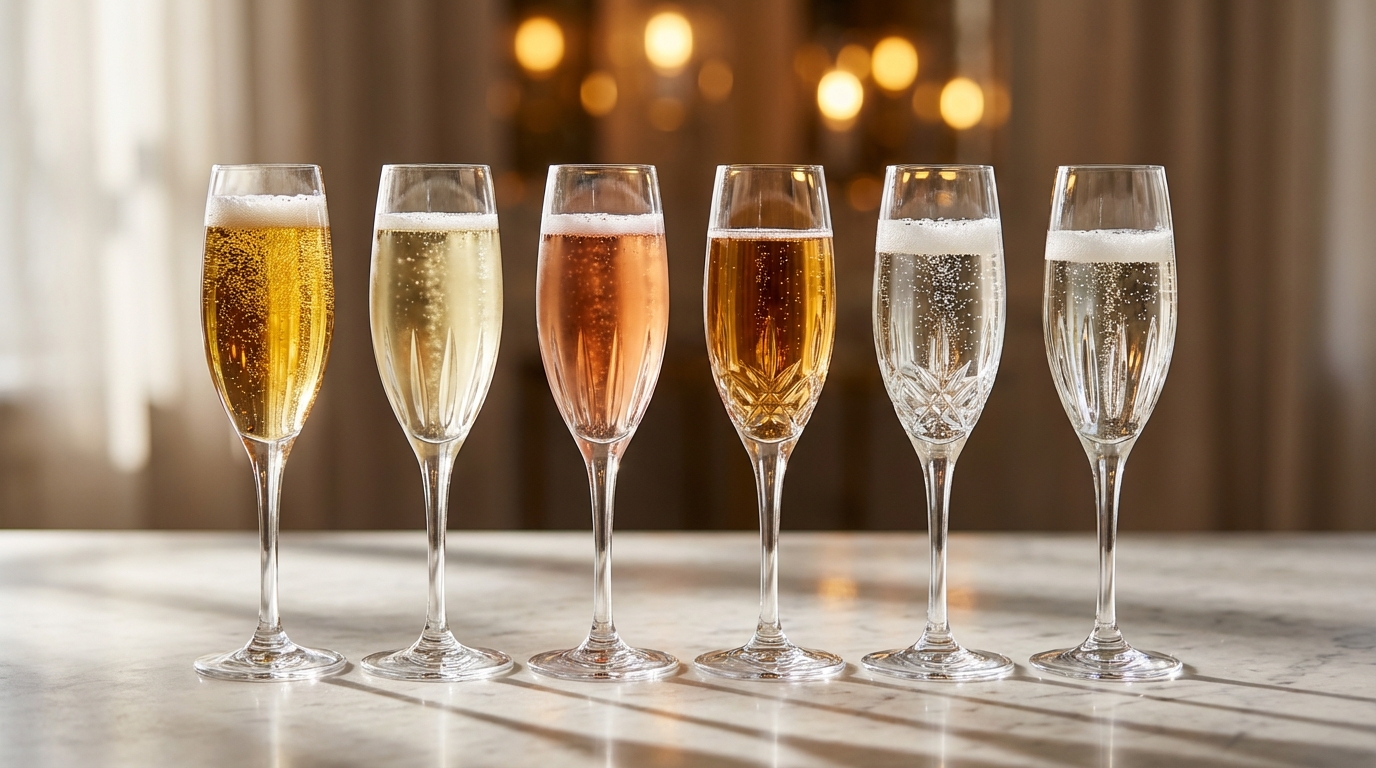
Serve all traditional-method sparkling wines at 8–10°C — colder than many people assume. Tank-method wines like Prosecco can be served slightly colder (6–8°C). Use a tulip-shaped glass rather than a coupe, which dissipates the mousse too quickly; the flute preserves bubbles well but concentrates aromas less effectively than a narrower-topped tulip.
The world of sparkling wine beyond Champagne is vast, varied, and — at every price point — capable of genuine greatness. The most important discovery any sparkling wine drinker can make is that the famous region in northeastern France holds no monopoly on elegance, complexity, or the particular pleasure that only bubbles can provide.


