The Science Behind Wine Aging
Most bottles of wine sold around the world are not meant to age. They are crafted for early enjoyment, and opening them years later will yield flat, faded, or simply diminished wine. Across the global market, only about 10% of wines genuinely improve with extended cellaring — a figure that surprises many collectors. Understanding the chemistry of wine evolution is the foundation of any serious approach to cellaring.
The core actors in wine aging are tannins, acidity, and phenolic compounds. Tannins — extracted from grape skins, seeds, and stems during fermentation, and also contributed by oak barrels — are large, astringent molecules that soften and polymerize over time. As tannins bind together into longer chains, they precipitate out of solution as sediment, and the wine becomes progressively smoother on the palate. A young Barolo that grips the gums like sandpaper may, after fifteen years, reveal a wine of extraordinary silkiness.
Acidity acts as the wine's preservative. High-acid wines resist microbial spoilage, maintain freshness through decades of bottle age, and provide the structural backbone along which flavors evolve. This is why Riesling, with its naturally razor-sharp acidity, can age for 30 or even 50 years without losing vitality. Low-acid wines, by contrast, tire quickly: the freshness that makes them pleasant at two years becomes flat and shapeless at five.
The transformation of phenolic compounds drives the development of tertiary aromas — those complex, non-fruity scents that define a truly aged wine. Primary aromas (fresh fruit) give way to secondary aromas (yeast, butter, toast from fermentation and oak) and finally to tertiary aromas: leather, tobacco, truffle, dried flowers, forest floor, and what Burgundians call sous-bois ("undergrowth"). This evolution is irreversible, which is why opening a great wine before its time is genuinely wasteful.
Oxygen plays a dual role. A tiny amount enters through natural cork over time — roughly 1 milligram per year through a quality cork — enabling the slow oxidative reactions that soften tannins and integrate oak. Too much oxygen, however, causes premature oxidation. This is why proper storage is non-negotiable.
Which Wines Improve with Age
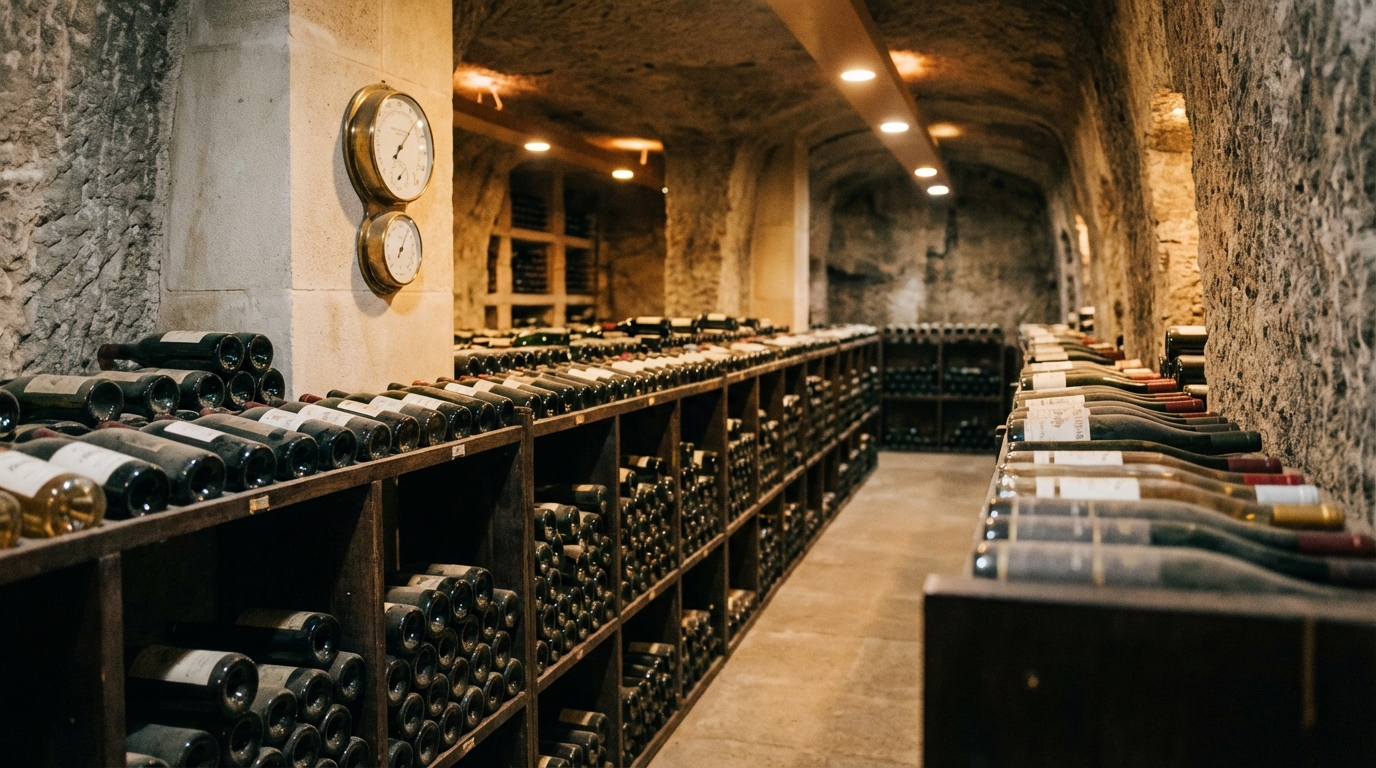
The wines worth cellaring share several structural characteristics: high tannins, high acidity, good sugar levels (in the case of dessert wines), or a combination of these. Beyond chemistry, quality matters enormously — only wines made from excellent raw material in a good vintage will reward patience.
Red wines built for aging typically come from varieties with naturally high tannin and acidity: Cabernet Sauvignon, Nebbiolo, Sangiovese, Syrah, Mourvèdre, and Tempranillo are the canonical examples. A Napa Valley Cabernet Sauvignon from a top producer like Ridge Monte Bello or Caymus Special Selection will comfortably age 20 years. A classified Bordeaux from a good vintage can reach 40–50 years at its peak. The Nebbiolo of Barolo and Barbaresco is arguably the world's most age-worthy red grape variety — wines from Giacomo Conterno, Bruno Giacosa, or Gaja can require a decade of cellaring just to become approachable.
White wines with high acidity and low residual sugar can be astonishing agers. German Riesling Auslese and Spätlese from estates like Egon Müller or Dr. Loosen are legendary in this regard. White Burgundy from premier and grand cru vineyards — Montrachet, Corton-Charlemagne, Meursault Perrières — develops extraordinary complexity over 10–20 years. White Hermitage from the Rhône, dominated by Marsanne and Roussanne, can taste almost ageless at 25 years.
Dessert and fortified wines are perhaps the most durable of all. Port — particularly Vintage Port from houses like Taylor Fladgate, Quinta do Noval, and Graham's — can age for 50 years or more. Sauternes from Château d'Yquem is virtually immortal; bottles from the 1967 vintage remain magnificent today. The combination of residual sugar, acidity, and alcohol creates a preservation trifecta that no dry wine can match.
Aging Windows by Region and Style
The following table provides a practical reference for the most commonly cellared wine styles. "Peak window" reflects when most bottles will show their best character, though exceptional bottles and exceptional vintages may extend well beyond these ranges.
| Wine Style | Minimum Drinking | Peak Window | Maximum Potential |
|---|---|---|---|
| Classified Bordeaux (Red) | 8–10 years | 15–30 years | 40–60+ years |
| Grand Cru Red Burgundy | 7–10 years | 12–25 years | 35–50 years |
| Barolo / Barbaresco | 8–12 years | 15–30 years | 40–50 years |
| Brunello di Montalcino | 8–10 years | 15–25 years | 30–40 years |
| Gran Reserva Rioja | 5–8 years | 10–20 years | 25–35 years |
| Napa Cabernet Sauvignon (top) | 5–8 years | 10–20 years | 25–35 years |
| Northern Rhône Syrah (Hermitage) | 8–12 years | 15–30 years | 40+ years |
| German Riesling Auslese | 5–8 years | 12–25 years | 30–50 years |
| White Burgundy (Grand Cru) | 5–8 years | 10–20 years | 25–30 years |
| Vintage Port | 10–15 years | 20–40 years | 50–70 years |
| Sauternes (top estates) | 5–8 years | 15–30 years | 50–100 years |
| Champagne Prestige Cuvée | 5–8 years | 10–20 years | 25–40 years |
Storage Conditions: The Four Non-Negotiables
Wine is extraordinarily sensitive to its environment. The difference between proper and improper storage can mean the difference between a transcendent bottle and a ruined one. Four variables govern everything.
Temperature is the most critical factor. The ideal storage temperature for wine is 12–14°C (54–57°F), maintained consistently year-round. Fluctuations are more damaging than a slightly elevated steady temperature — repeated expansion and contraction of the liquid causes microscopic leakage past the cork. A dedicated wine refrigerator or temperature-controlled cellar is the gold standard. A north-facing basement that stays cool year-round is an acceptable alternative in many climates.
Humidity should remain between 60–75%. Too dry (below 50%) and corks dry out, shrink, and allow excess oxygen ingress. Too humid (above 80%) and mold thrives, destroying labels and potentially penetrating corks. A simple hygrometer costs very little and can save a collection. If humidity is low, a bowl of water or a dedicated humidifier will help.
Light is wine's enemy, particularly ultraviolet radiation. UV light degrades aromatic compounds through a process called light-struck (goût de lumière), creating sulfur-like, reduced aromas. This is why most quality wine comes in dark green or amber glass bottles. Any cellar or storage space should be kept in darkness when not in use; fluorescent lights are particularly harmful and should be avoided entirely.
Vibration is the most debated variable, but the science is clear: continuous mechanical vibration disrupts the gradual chemical reactions occurring in the bottle and disturbs sediment, potentially accelerating aging in unpredictable ways. Keep wines away from appliance motors, washing machines, or high-traffic areas. A dedicated wine refrigerator with a low-vibration compressor is preferable to a standard refrigerator for this reason.
Bottles should always be stored horizontally (for corked wines) to keep the cork moist, or at a slight angle. Screw-cap wines may be stored upright without issue.
Building a Cellar Collection
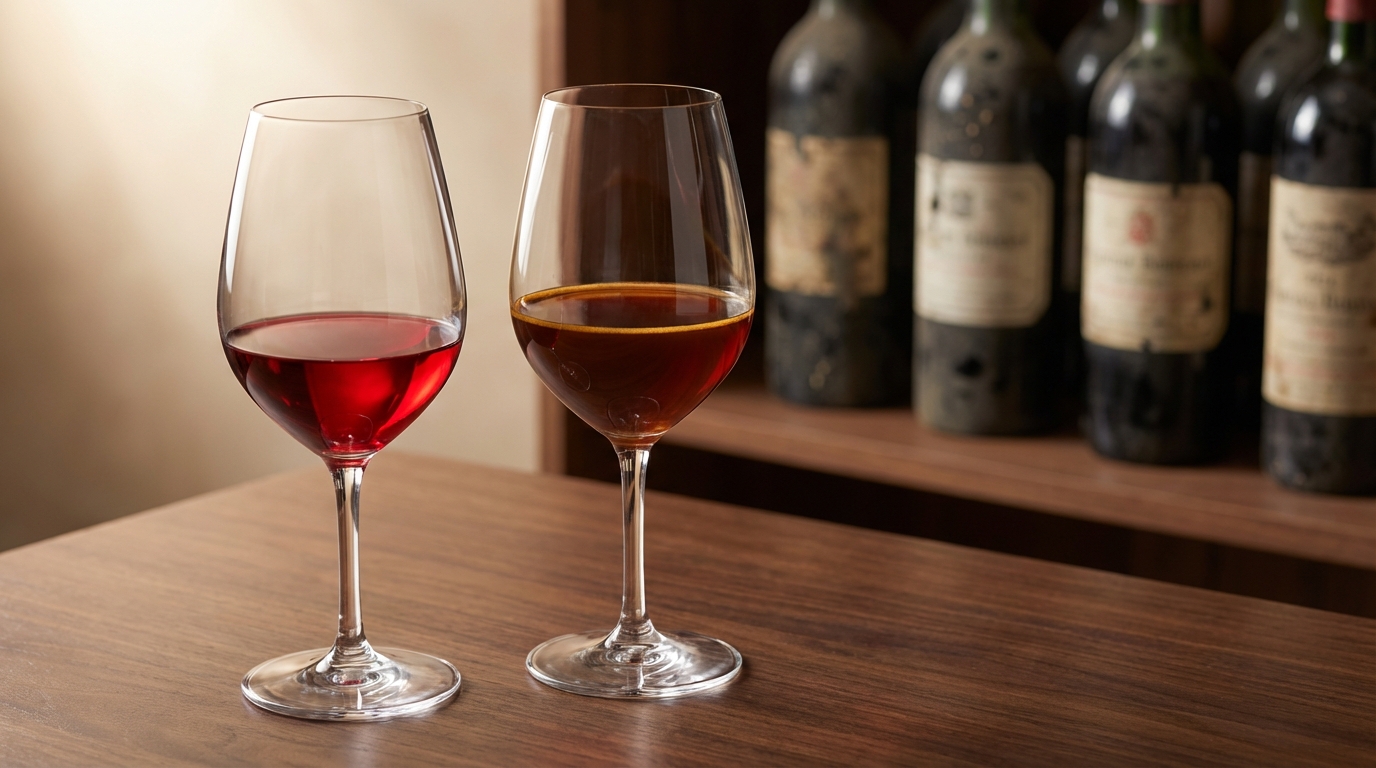
Starting a wine collection does not require a stone cellar or a six-figure budget. It requires a plan, a reliable storage solution, and the discipline to buy wines with a specific aging timeline in mind.
Define your drinking horizon. The most common mistake new collectors make is buying wines for the far future without accounting for near-term consumption. A practical cellar should have wines ready to drink within the next 1–2 years, wines approaching their peak in 3–7 years, and long-term holds for 8+ years. Segmenting purchases across these three windows prevents the common frustration of owning a cellar full of wine that cannot yet be opened.
Diversify across styles and regions. A cellar of only Bordeaux is vulnerable to regional vintage variation. A balanced collection might include Bordeaux and Burgundy for French reds, a section of Italian reds (Barolo, Brunello), some Northern Rhône Syrah, Riesling for whites, and Vintage Port for fortified. This diversity ensures something appropriate for any occasion.
Buy in multiples. The golden rule of cellaring: never buy a single bottle of anything you want to age. Purchase at minimum 3–6 bottles so you can track the wine's evolution by opening one bottle at different stages. Vertical comparisons — opening the same wine across multiple vintages — are among the most educational experiences in wine.
Keep records. Whether in a notebook, a spreadsheet, or a dedicated cellar management app (Cellar Tracker is the most widely used, with over 10 million wine notes from its community), tracking what you own, when you bought it, where it is stored, and your tasting notes is essential. Memory alone cannot manage a serious collection.
Manage your drinking windows. Use cellar software or calendar reminders to flag wines approaching their peak. Many collectors miss optimal drinking windows simply because they forget the wine exists. A well-maintained inventory prevents this waste.
Common Myths About Aging Wine
"All expensive wines improve with age." False. Many premium wines are made for early consumption — most Napa Pinot Noir, most high-end rosé, most expensive natural wine. Price does not guarantee aging potential; structure does.
"Screw caps mean wine can't age." Also false. Screw caps sealed under nitrogen maintain a slightly reductive environment that preserves freshness and allows wines to age gracefully. Some of the world's longest-lived Rieslings from Clare Valley and Eden Valley in Australia now come exclusively under screw cap. The ROTE (reduction/oxidation through the cork) mechanism is simply replaced by a different but equally valid aging pathway.
"The older the wine, the better." Perhaps the most persistent myth. Every wine has a peak and a decline. Most wines, even those with genuine aging potential, will plateau and then fade. A 40-year-old red Burgundy past its prime is a sad experience; the same wine opened at 20 years may have been sublime. Understanding peak windows is as important as knowing aging potential.
"You need a proper wine cellar to age wine." A dedicated cellar is ideal but not mandatory. A consistent environment — cool, dark, humid, vibration-free — achieves the same result. Many collectors keep their finest bottles in a temperature-controlled wine refrigerator with excellent results.
"More oak means a wine will age longer." Oak contributes tannin and structure, both of which support aging, but excessive oak can overwhelm fruit and become drying and bitter with time. Balance is the key — wines where oak is integrated rather than dominant age most gracefully. The best examples of this balance come from the cellars of Burgundy's great négociants and domaines, where oak is always the servant of terroir, never its master.
Buying Wine to Age: A Practical Starting Point
For collectors beginning their journey into aged wine, a few categories offer the best combination of clear aging potential, reliable producers, and manageable prices.
En primeur (buying Bordeaux futures before bottling) offers the lowest prices on the finest wines, but ties up capital for 2–3 years before delivery. The 2020 and 2019 Bordeaux vintages are widely considered among the finest of the century — collectors who purchased en primeur are now holding wines that have appreciated significantly.
For immediate cellaring, Barolo Classico from dependable producers like Vietti, Cavallotto, or Parusso offers 20+ years of aging potential at prices that remain rational. Saint-Émilion Grand Cru Classé offers Bordeaux prestige at lower entry points than the Médoc classified growths. German Riesling Auslese from the Mosel, Nahe, or Rheingau can be acquired for well under €30 per bottle and will age for 20–30 years.
The wines that reward patience most richly are those made with the least intervention and the greatest respect for their raw material. Age reveals the truth about a wine — every compromise made in the vineyard or the cellar becomes visible over time, and no amount of manipulation can substitute for the genuine article.


