The Architecture of Sweetness
Sweet wine is the category most misunderstood by casual wine drinkers and, paradoxically, most beloved by those who truly understand wine. A glass of Château d'Yquem — the greatest Sauternes — is not merely sweet. It is a symphony of honeyed apricot, saffron, caramelized citrus, and mineral tension, balanced by searing acidity that prevents the wine from tasting cloying. A 40-year-old Vintage Port is not syrup; it is a profound meditation on time, tannin, and concentrated fruit.
The world's great dessert wines share one thing: difficulty of production. Botrytis-affected grapes require painstaking hand-harvesting of individual berries. Ice wine grapes must be picked at minus 8°C or colder. Vintage Port requires a fortification decision made in real time during fermentation. Tokaji Aszú demands the collection and separate pressing of individually shriveled berries. No great dessert wine is accidentally great.
Understanding sweetness in wine requires abandoning the assumption that sweetness equals simplicity. The finest sweet wines are among the most complex, most age-worthy, and most food-compatible wines on earth — provided you understand how to serve and pair them.
Port Wine: Ruby, Tawny, and the Majesty of Vintage
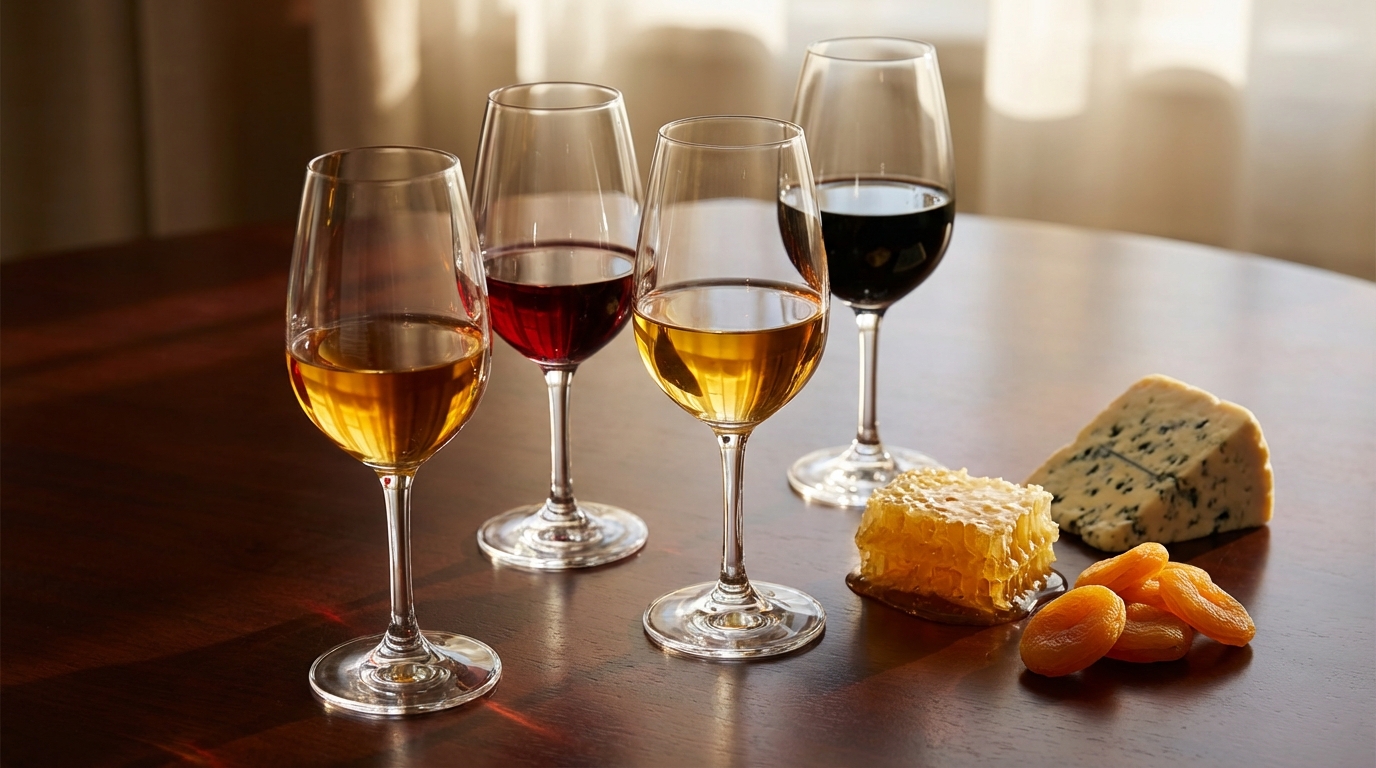
Port is Portugal's greatest contribution to the world's wine canon, and it remains the archetype against which all fortified wines are measured. Produced in the Douro Valley from a blend of indigenous varieties — primarily Touriga Nacional, Touriga Franca, Tinta Roriz (Tempranillo), Tinta Barroca, and Tinto Cão — Port achieves its characteristic sweetness and elevated alcohol (typically 19-22% ABV) through the addition of neutral grape spirit (aguardente) during fermentation. This process, called fortification, halts fermentation before all the natural sugar is consumed, preserving between 80-120 grams of residual sugar per liter in most styles.
Ruby Port is the approachable entry point: young, fruit-forward, and stored in large vats to preserve freshness. Its vivid violet-red color and flavors of black cherry, blackberry, and violet make it the perfect partner for dark chocolate. Tawny Port, by contrast, is aged in small oak pipes, deliberately exposing the wine to gradual oxidation. Over 10, 20, 30, or 40 years (these are averages of the blended wines, not specific vintages), Tawny develops its characteristic amber-orange color and complex flavors of dried apricot, walnut, caramel, and dried fig. An aged Tawny is best served slightly chilled, making it one of wine's most refreshing dessert options.
Vintage Port is declared only in exceptional years — perhaps three or four times per decade — when the shipper's tasting panel determines the harvest's quality is extraordinary. These wines, bottled unfiltered after just two years in cask, then aged in the bottle for decades, develop a sediment (or "crust") that requires decanting. At 30-50 years of age, a great Vintage Port from Taylor's, Fonseca, Graham's, or Quinta do Noval Nacional achieves a complexity that rivals any wine in the world: cedar, tobacco, leather, dried violet, and concentrated plum, all framed by silky, fully integrated tannins.
Late Bottled Vintage (LBV) Port bridges the gap — a single vintage wine aged four to six years before bottling, offering vintage character without the decades of cellaring. Colheita Port is a single-vintage Tawny aged for a minimum of seven years in cask, often for 20 or 30 years.
Sauternes and Botrytized Wines: Liquid Gold
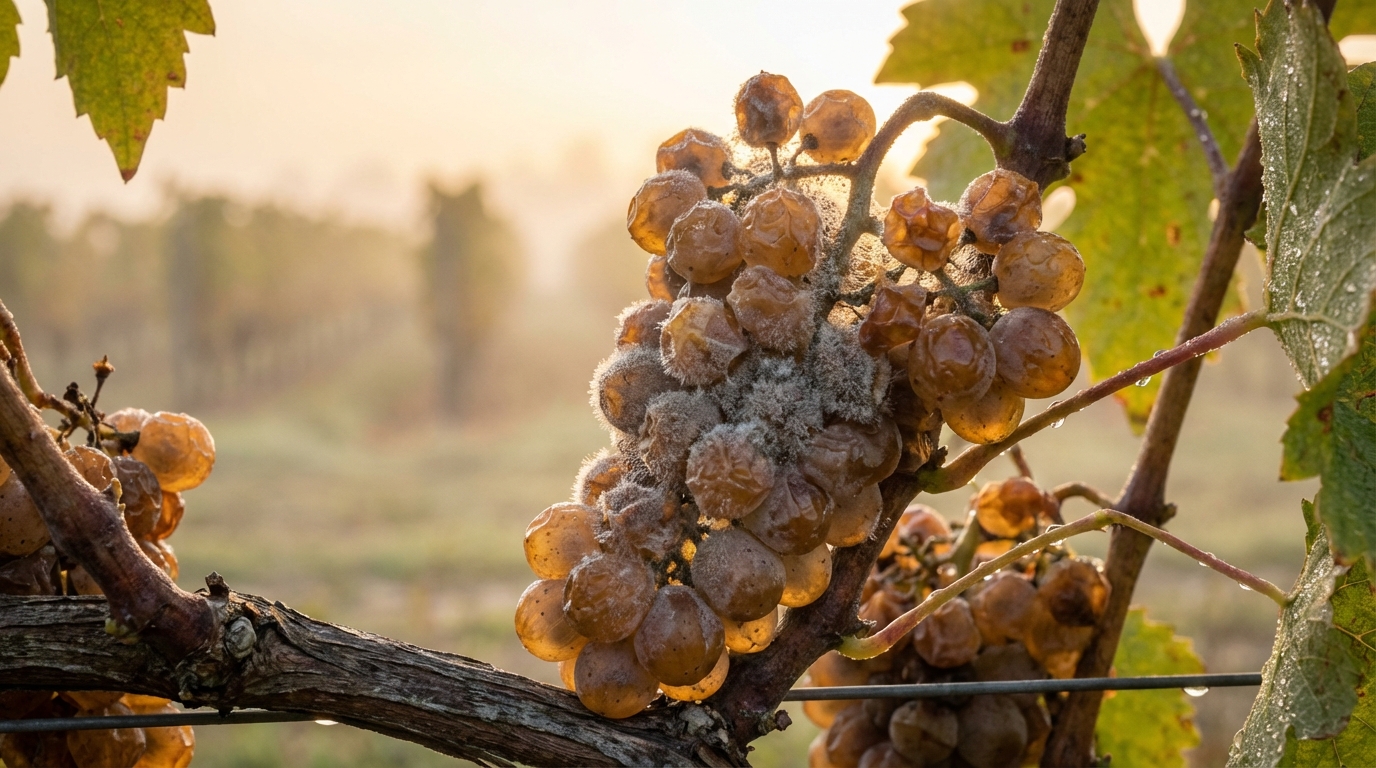
Botrytis cinerea — the "noble rot" — is a fungus that, under the right conditions, transforms grapes into the raw material for some of the world's greatest wines. In the Sauternes appellation of Bordeaux, the Ciron river creates morning mists that encourage botrytis to develop on Sémillon, Sauvignon Blanc, and Muscadelle grapes. The fungus pierces the grape skin, allowing water to evaporate while concentrating sugars, acids, and a range of complex compounds — including glycerol and sotolon — that give botrytized wines their distinctive texture and flavors of honey, apricot marmalade, saffron, and ginger.
Château d'Yquem, the only Premier Cru Supérieur in the Sauternes classification, is the benchmark. A single vine at Yquem produces only one glass of wine, and the pickers may pass through the vineyard up to a dozen times, selecting individual berries at peak botrytization. The wine is then fermented and aged in new oak barrels for approximately three and a half years before bottling. Great vintages of Yquem (1988, 2001, 2009, 2019) can age for a century.
But Sauternes extends beyond Yquem. The Premier Crus — Château Rieussec, Guiraud, Climens (technically Barsac), Suduiraut, and Coutet — produce wines of extraordinary quality at prices that, while not cheap, are far more accessible. The Barsac sub-appellation, with its lighter soils, produces botrytized wines with a slightly drier, more mineral character.
Beyond Bordeaux, botrytized wines appear across the wine world: Trockenbeerenauslese (TBA) from Germany (discussed further below), Selection de Grains Nobles from Alsace (made from Riesling, Gewurztraminer, Pinot Gris, or Muscat), Austrian Beerenauslese and TBA from the Neusiedlersee region, and remarkable examples from Hungary's Tokaj.
Tokaji Aszú: Hungary's 500-Year Treasure
Tokaji (pronounced toh-KAY) is one of wine's oldest and most distinctive categories. Hungary's northeastern wine region, centered on the volcanic slopes of Tokaj-Hegyalja, has been producing its famous Aszú wines since at least the mid-17th century — making it one of the first appellations to formally classify and protect its wines, predating Bordeaux's 1855 Classification by nearly 200 years.
The Tokaji Aszú system is built on puttonyos, a traditional measurement of sweetness and concentration. Aszú grapes are individually selected botrytized berries (aszú means "dried" in Hungarian) from Furmint, Hárslevelű, and Sárga Muskotály vines. These shriveled, intensely concentrated berries are kneaded into a paste and added to a base wine in measured amounts (traditionally in units of a wooden basket called a puttony). Modern regulations require a minimum of 120 grams of residual sugar per liter for the current 5-6 puttonyos standard, with the rare Eszencia — made solely from the free-run juice of aszú berries — reaching an extraordinary 450-900 grams per liter, fermentable only to about 2-4% alcohol.
The wines are aged in Hungary's distinctive underground cellars, carved into volcanic rock, where the local Cladosporium cellare mold keeps humidity extremely high and allows for extremely slow, oxidative aging. The flavors of Tokaji Aszú are unique: dried apricot, orange peel, saffron, honey, walnut, and an almost electric minerality from the volcanic soils. Great examples from Royal Tokaji, Disznókő, Oremus, and Château Pajzos develop extraordinary complexity over 20-50 years.
Ice Wine and Eiswein: Frozen Perfection
Eiswein in Germany and Austria, and Ice Wine in Canada, represent the most extreme form of late-harvest winemaking. The principle is simple and unforgiving: healthy grapes are left on the vine until temperatures drop to minus 8°C (18°F) or below, at which point they freeze solid. The grapes are picked before dawn — often in January or February in Germany — and pressed immediately while still frozen.
Because ice is water, the frozen water crystals are left behind in the press, and only the concentrated, sugar-rich juice flows out. The resulting must can have residual sugar levels of 300-450 grams per liter, balanced by equally intense acidity. The wines are typically low in alcohol (6-9%), pale gold in color, and possessed of laser-sharp fruit flavors — peach, lychee, apricot, and a zingy citrus acidity that prevents sweetness from cloying.
In Germany, Eiswein is classified at the Beerenauslese level in terms of must weight, making it among the rarest and most expensive of all German wines. The risk is enormous: a vintage of warm, healthy grapes intended for Eiswein can be ruined by a frost that arrives too late, or conversely by botrytis that pre-empts the freezing. The great Eiswein producers — Egon Müller, J.J. Prüm, Weingut Robert Weil — produce it only when conditions are perfect, which may be only a few vintages per decade.
Canada's Niagara Peninsula and British Columbia's Okanagan Valley have become major Icewine (legally spelled as one word in Canada) producers, thanks to predictable winter freezes. Inniskillin brought Canadian Icewine to international attention when its 1989 Vidal Icewine won the Grand Prix d'Honneur at Vinexpo in 1991. Vidal Blanc (a hybrid variety) and Riesling are the primary grapes; the wines are rich, fragrant, and intensely sweet.
Moscato d'Asti and Vin Santo: Italy's Sweet Traditions
Italy's contribution to the world of sweet wine is diverse and deeply regional. Moscato d'Asti, from Piedmont's Canelli area in the Langhe hills, is one of the world's most delightful sweet wines — and one of the most misunderstood. Made from the Moscato Bianco grape via the Asti method (the Charmat process retaining natural grape sugars), it is lightly sparkling (frizzante), low in alcohol (typically 5-6.5% ABV), and intensely perfumed with peach, apricot, orange blossom, and honey. With only 100-150 grams of residual sugar per liter and high acidity, it is never heavy or cloying.
The great Moscato d'Asti producers — Braida, La Spinetta, Vietti, and Saracco — produce wines of tremendous freshness and aromatic purity. Best drunk within a year of vintage, Moscato d'Asti is the perfect aperitivo or companion to fresh fruit desserts and almond pastries. It is also, at roughly $15-20 per bottle, one of wine's great values.
Vin Santo ("Holy Wine") is Tuscany's distinctive dried-grape dessert wine, made primarily from Trebbiano Toscano and Malvasia grapes that are dried on bamboo racks or hung from rafters for three to six months after harvest. The dried grapes are pressed, and the resulting concentrated must is fermented and aged in small oak or chestnut barrels called caratelli — often for a minimum of three years, with some Vin Santo Riserva aging for ten or more. The wines range from dry (secco) to medium-sweet to lusciously sweet, with flavors of dried apricot, walnut, caramel, and oxidative complexity. The great estates — Isole e Olena, Avignonesi, Fontodi — produce benchmark examples.
Sweet Sherry and Vin Doux Naturel
Sweet Sherry represents the final transformation of a wine that begins as dry. In Jerez, after the Palomino base wine has undergone its biological aging under flor (for Fino and Manzanilla) or oxidative aging (for Oloroso and Amontillado), sweetness can be added through the addition of Pedro Ximénez (PX) or Moscatel wines. Cream Sherry blends Oloroso with PX; Pedro Ximénez Sherry itself — made from Pedro Ximénez grapes dried under the Andalusian sun until they are raisins — is one of the most intensely sweet wines on earth, with 400-450 grams of residual sugar per liter and flavors of molasses, coffee, dried fig, and dark chocolate. Poured over vanilla ice cream, it is transformative. Gonzalez Byass's Noe (30 years old) and Bodegas Toro Albalá's Don PX Gran Reserva are landmark examples.
Vin Doux Naturel (VDN) is France's category of mutage-sweetened wines, made by adding grape spirit to arrest fermentation at varying stages, similar to Port. Muscat de Beaumes-de-Venise from the Rhône Valley is the best known: golden, fragrant, and lusciously sweet with peach, apricot, and flower notes. Banyuls and Maury from the Roussillon, made from Grenache Noir, are deep, chocolatey, and age-worthy — the natural partners for dark chocolate and walnut tart. Rivesaltes Ambré, from oxidatively aged Grenache Blanc and Grenache Gris, offers extraordinary complexity at modest prices.
| Style | Region | Key Grape(s) | Residual Sugar | ABV | Aging Potential |
|---|---|---|---|---|---|
| Vintage Port | Douro, Portugal | Touriga Nacional blend | 80-100 g/L | 20-21% | 30-60+ years |
| Tawny Port (20yr) | Douro, Portugal | Touriga Nacional blend | 80-110 g/L | 20% | Ready to drink |
| Sauternes (d'Yquem) | Bordeaux, France | Sémillon, Sauvignon Blanc | 120-200 g/L | 13-14% | 50-100 years |
| Tokaji Aszú 6 puttonyos | Tokaj-Hegyalja, Hungary | Furmint, Hárslevelű | 180-250 g/L | 11-14% | 20-50 years |
| Eiswein (Germany) | Mosel/Rheingau | Riesling | 300-450 g/L | 6-9% | 20-40 years |
| Canadian Icewine | Niagara, Ontario | Vidal, Riesling | 180-280 g/L | 7-10% | 10-25 years |
| Moscato d'Asti | Piedmont, Italy | Moscato Bianco | 100-150 g/L | 5-6.5% | 1-3 years |
| Pedro Ximénez Sherry | Jerez, Spain | Pedro Ximénez | 400-450 g/L | 15-17% | Decades (NV blend) |
| Muscat Beaumes-de-Venise | Rhône, France | Muscat à Petits Grains | 100-125 g/L | 15% | 3-10 years |
| Banyuls | Roussillon, France | Grenache Noir | 45-100 g/L | 15-16% | 10-30 years |
How to Serve and Enjoy Dessert Wine
The most common mistake with dessert wine is serving it incorrectly. Temperature is critical: most dessert wines — including Sauternes, Tokaji, German TBA/Eiswein, and Moscato d'Asti — should be served cold, between 6-10°C (43-50°F). At this temperature, the sweetness is balanced and the aromatics are vibrant. Sweet Sherry (PX, Cream) and aged Tawny Port can be served at cellar temperature (around 14-16°C) or very slightly chilled.
Vintage Port requires decanting, both to remove the sediment and to open up the wine. Decant one to four hours before serving, depending on the wine's age — younger Vintage Ports benefit from longer decanting, while a 40-year-old wine may only need 30-60 minutes. Aged Tawny Port and LBV should be poured directly or through a coffee filter to remove any loose sediment.
Glassware matters: use a smaller glass than you would for dry wine, as dessert wines are typically served in smaller pours (75-100ml is standard). A smaller pour also allows the wine to warm slowly in the glass, evolving as you drink. For Port, traditional port glasses (similar to a small tulip) are ideal. For Sauternes and Tokaji, a standard ISO tasting glass or medium-sized white wine glass works well.
Food pairing follows the cardinal rule: the wine should be at least as sweet as the dessert. Pairing a lusciously sweet Sauternes with a dry fruit tart, or a Pedro Ximénez with a crème brûlée, works beautifully because the wine's sweetness complements rather than clashes. Pairing Vintage Port with dark, bitter (72%+) chocolate is a masterclass in contrast and complement — the chocolate's bitterness makes the Port taste sweeter and more fruity, while the Port softens the chocolate's astringency. Tokaji Aszú is spectacular with aged foie gras or a powerful blue cheese like Roquefort.
Storage and service after opening is often overlooked. Unlike dry wines, most dessert wines — particularly fortified styles like Port and Sherry — are robust after opening. A half-bottle of Sauternes can last 3-5 days in the refrigerator. Vintage Port is best consumed within 24-48 hours of decanting. Tawny Port and Sherry, being oxidative by nature, can last 4-6 weeks if refrigerated and recorked. Moscato d'Asti, like all sparkling wines, should be consumed the same day.
The world of dessert wine rewards curiosity and patience in equal measure. A bottle of mature Tokaji Aszú acquired for a special occasion, a half-bottle of Sauternes shared over a long dinner, or a small glass of aged Tawny Port alongside an evening of conversation — these are among wine's most profound pleasures, concentrated by time, terroir, and the extraordinary effort required to produce sweetness of this caliber.


