Where Mediterranean Meets the Southern Ocean
Thirty kilometres south of Adelaide, the Fleurieu Peninsula drops toward the Gulf St Vincent in a landscape that could be mistaken for Tuscany or the Languedoc. Cork oaks line property boundaries. Olive groves share hillsides with ancient, gnarled vines. The scent of wild rosemary drifts across dirt roads between vineyards. This is McLaren Vale -- one of Australia's most storied wine regions and, for many, its most beautiful.
The region sits in a geological corridor between the Mount Lofty Ranges to the east and the Gulf St Vincent to the west. Sea breezes rolling off the Gulf each afternoon act as a natural air conditioning system, moderating what would otherwise be fierce summer heat. The resulting Mediterranean climate -- warm, dry summers, mild winters, reliable sunshine -- is ideal for ripening grapes fully while preserving the acidity and aromatic complexity that distinguish McLaren Vale from its hotter northern neighbour, the Barossa Valley.
Annual rainfall sits around 600mm, falling primarily in winter and spring. This means vineyards are effectively dry-farmed through the growing season, stressing vines just enough to concentrate flavour without shutting them down. The soils are extraordinarily diverse -- over 40 distinct soil types have been mapped across the region's 8,000 hectares of vineyards, ranging from red-brown clay loam on the plains to ironstone gravels and sandy loam in the foothills.
The Old Vine Heritage: A Living Archive
Few wine regions anywhere in the world can match McLaren Vale's patrimony of ancient vines. Because phylloxera -- the root louse that devastated European vineyards from the 1860s onward and eventually wiped out much of the Barossa -- never penetrated McLaren Vale, an astonishing number of pre-phylloxera vines survive on their own rootstocks to this day.
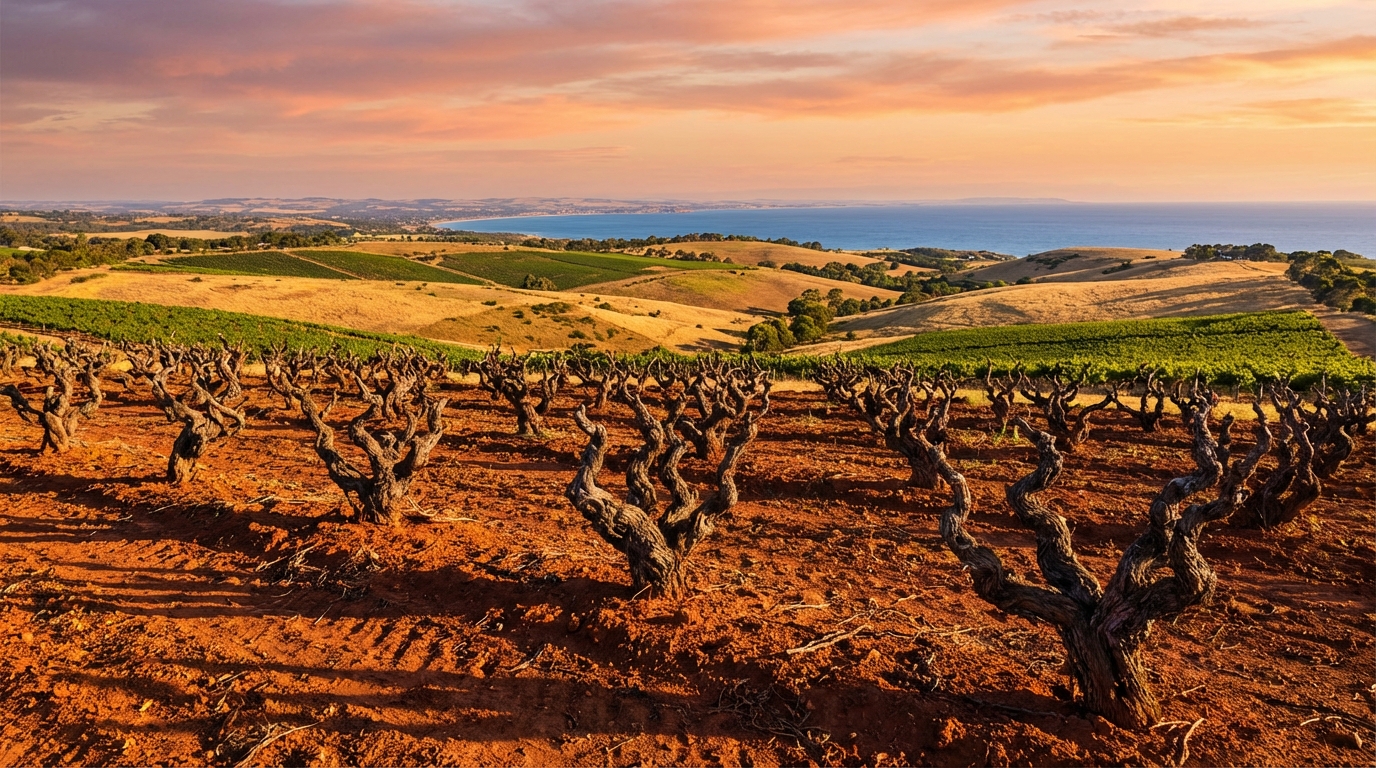
These are not merely old vines in the marketing sense. McLaren Vale hosts Shiraz and Grenache plantings dating to the 1850s and 1860s -- vines now approaching 160 to 170 years of age. Ancient alberello (bush vine) trained plants, their trunks as wide as a man's thigh, push roots metres into subsoil in search of moisture, accessing minerals and water reserves that younger, trellis-trained vines cannot reach. The result is extraordinary fruit concentration from plants producing tiny quantities of intensely flavoured berries.
The McLaren Vale Old Vine Charter formally classifies vines by age category: Survivor Vines (35-70 years), Centenarian Vines (70-100 years), and the extraordinary Ancient Vines (over 100 years). These classifications appear on wine labels and provide consumers with a reliable hierarchy of provenance and rarity.
The old vines have also preserved genetic diversity lost elsewhere. Many blocks contain multiple clonal selections planted over decades, creating complexity within a single vineyard that modern plantings of a single certified clone cannot replicate. Winemakers treasure these field blend plots, often co-fermenting the various selections as the original vignerons intended.
Shiraz: Dark Chocolate and Black Olive Elegance
Shiraz is McLaren Vale's signature grape and its greatest ambassador. But it is a different creature from the Shiraz produced further north in the Barossa Valley -- and understanding the distinction is key to appreciating what McLaren Vale offers.
Barossa Shiraz, grown in a hotter, drier continental climate on deep ancient soils, tends toward massive concentration, very high alcohol (often 14.5-16%), plush jammy fruit, and full, round tannins. It is unashamedly powerful -- a wine of abundance and opulence.
McLaren Vale Shiraz occupies a different register entirely. The Mediterranean sea breeze moderates temperatures during the ripening period, preserving acidity and aromatic lift that would otherwise cook away. The wines typically show:
- Dark chocolate and cocoa powder on the palate
- Blackberry and dark plum rather than jammy confected fruit
- Black olive and dried herb notes that speak directly to the region's garrigue-like landscape
- Fine, silky tannins with genuine structure rather than alcoholic warmth
- More restrained alcohol -- typically 13.5-14.5% -- allowing genuine drinkability
These characteristics have been recognised by international critics as offering a more European-facing style of Australian Shiraz. The finest McLaren Vale Shiraz can age gracefully for 15 to 25 years, developing leather, dried fig, and dark spice complexity while retaining freshness.
The Chocolate Box Factor
Winemakers sometimes speak of the chocolate box character of McLaren Vale Shiraz as a local terroir marker rather than a winemaking imprint. The dark chocolate bitterness -- distinct from the sweetness of overripe fruit -- is believed to derive from the region's ironstone-rich soils, particularly in sub-zones like McLaren Flat and parts of Willunga. It is a reliable regional fingerprint that connoisseurs learn to identify immediately.
Grenache: The Renaissance of an Ancient Grape
If Shiraz is McLaren Vale's crown jewel, Grenache is its emerging passion project. The region hosts some of the oldest Grenache plantings in the world -- ancient, gnarly bush vines that until recently were considered old-fashioned or unsellable by mainstream Australian standards.
The revival of McLaren Vale Grenache represents one of Australian wine's most exciting narratives of the past two decades. A generation of committed producers -- many returning from stints working in Priorat, Chateauneuf-du-Pape, and the Rhone -- recognised the extraordinary potential sitting in neglected old vineyards and began making single-vineyard, whole-bunch, low-intervention Grenache that drew immediate international attention.
McLaren Vale Grenache from ancient vines delivers:
- Vivid red cherry and raspberry fruit with genuine brightness
- Dried herbs and garrigue -- the scrubby Mediterranean shrubland character
- Fine, powdery tannins and naturally moderate alcohol
- Remarkable transparency to site -- different soils express clearly in the glass
Field blends -- traditional co-plantings of Grenache, Shiraz, Mataro (Mourvedre), and Cinsault -- also survive in old McLaren Vale vineyards, and several producers have championed these mixed fermentations as an authentic expression of the historical viticulture.
Sub-Zones: Reading the McLaren Vale Landscape
McLaren Vale is not a monolithic region. The official McLaren Vale Geographical Indication encompasses diverse sub-zones with meaningfully different terroir characteristics:
Blewitt Springs
Arguably the most celebrated sub-zone, Blewitt Springs sits at the northern end of the Vale on ancient, wind-blown sand over ironstone and clay. The sandy soils drain extremely well and warm quickly, but also retain less water, stressing vines and concentrating flavour. Grenache from Blewitt Springs is consistently luminous, fragrant, and fine-boned -- closer to Pinot Noir in texture than the powerful Grenache of some warmer zones.
Willunga
Willunga occupies the southern half of the Vale, where soils shift to heavier clay loams and red-brown earths over limestone. Shiraz from Willunga tends to be fuller-bodied and more structured than Blewitt Springs examples, with more obvious chocolate and earth character. The famous d'Arenberg Dead Arm vineyard sits in this zone.
McLaren Flat
The geographic heart of the region, McLaren Flat is characterised by deep red-brown soils and ironstone gravels. Wines from the Flat tend to be generous and full-flavoured -- classic McLaren Vale Shiraz with chocolate, olive, and blackberry in abundance.
Clarendon: The Cool Foothills
At the eastern edge of the Vale, Clarendon rises into the Mount Lofty Ranges foothills at elevations of 350-450 metres. The cooler temperatures and thinner soils produce the region's most elegant, structured wines -- Shiraz and Cabernet Sauvignon of notable finesse and ageability.
McLaren Vale vs. Barossa Valley: A Study in Contrasts
Understanding McLaren Vale is partly an exercise in contrast with its more famous South Australian neighbour. Both regions produce world-class Shiraz. Both host ancient pre-phylloxera vines. But the similarities end there.
| Characteristic | McLaren Vale | Barossa Valley |
|---|---|---|
| Climate | Mediterranean, maritime influence | Continental, hot and dry |
| Typical Shiraz style | Elegant, dark chocolate, olive | Powerful, plush, jammy |
| Typical alcohol | 13.5-14.5% | 14.5-16% |
| Key sub-zones | Blewitt Springs, Clarendon | Eden Valley, Marananga |
| Grenache role | Major variety, ancient vines | Secondary to Shiraz |
| Distance from Adelaide | 30km south | 60km north |
The difference is felt most clearly in the tannin structure. Barossa Shiraz tends toward soft, plush tannins polished by warmth and extended hang time. McLaren Vale Shiraz retains a fine-grained tannin backbone that provides genuine grip and cellaring structure without relying solely on alcoholic warmth for integration.
Top Producers: The Essential List
d'Arenberg
The most iconic McLaren Vale estate, d'Arenberg under the eccentric stewardship of Chester Osborn has produced some of Australia's most distinctive Shiraz for decades. The Dead Arm Shiraz -- named after the fungal disease that kills individual canes and concentrates fruit in the surviving vine -- is among the most celebrated Australian reds. The surrealist Cube cellar door building is now a McLaren Vale landmark. D'Arenberg also produces exceptional old-vine Grenache, Mourvedre, and white wines from ancient Viognier and Roussanne.
Coriole
One of the region's pioneers of Italian varieties, Coriole planted Sangiovese in the early 1980s and championed a Mediterranean vision for McLaren Vale long before it became fashionable. Their estate Shiraz from old plantings is a benchmark of the region. Their Lloyd Reserve Shiraz is one of the Vale's great single-vineyard wines.
Chapel Hill
Chapel Hill sits at a dramatic viewpoint looking out toward the Gulf. Their Patriarch single-vineyard Shiraz from century-old vines represents the estate's pinnacle. The winery is also notable for its early adoption of screwcaps across their range.
Wirra Wirra
Established in 1894, Wirra Wirra blends commercial success with uncompromising quality. The Church Block red blend has become Australia's most recognisable mid-market wine, but the estate's RSW Shiraz and Angelus Cabernet Sauvignon are serious, age-worthy wines.
Bekkers
Perhaps the most critically acclaimed of the newer generation, Bekkers is a husband-and-wife project (Toby and Emmanuelle Bekkers) producing tiny quantities of site-specific Grenache and Syrah from old-vine fruit. The wines are made with whole-bunch fermentation and minimal sulphur, drawing direct comparisons to the finest Burgundy and Rhone in terms of winemaking philosophy and textural refinement. Allocations are heavily subscribed internationally.
Samuel's Gorge
Samuel's Gorge (Justin McNamee) occupies a historic stone building in the Vale's foothills and specialises in Grenache, Tempranillo, and Shiraz from old-vine sites. The wines are made with traditional techniques -- basket pressing, large old oak casks -- and demonstrate remarkable depth and texture.
Aphelion
A younger producer gaining significant critical attention, Aphelion (Rob Mack) produces minimally interventionist wines from old Grenache, Shiraz, and Mataro with impressive consistency and outstanding value for quality.
Australian Screwcap Adoption: McLaren Vale's Contribution
Australia's near-universal adoption of Linerless Stelvin screwcaps for wine closure has its roots in a landmark 2000 decision by Clare Valley Riesling producers, with McLaren Vale wineries quickly following suit across their ranges. Today, the vast majority of McLaren Vale wines -- including prestige bottlings -- are sealed under screwcap. This has eliminated cork taint (TCA), which previously spoiled a significant percentage of any winery's production, and has demonstrated conclusively that screwcap wines age beautifully over decades without loss of quality.
Wine Tourism: Sea and Vines Festival
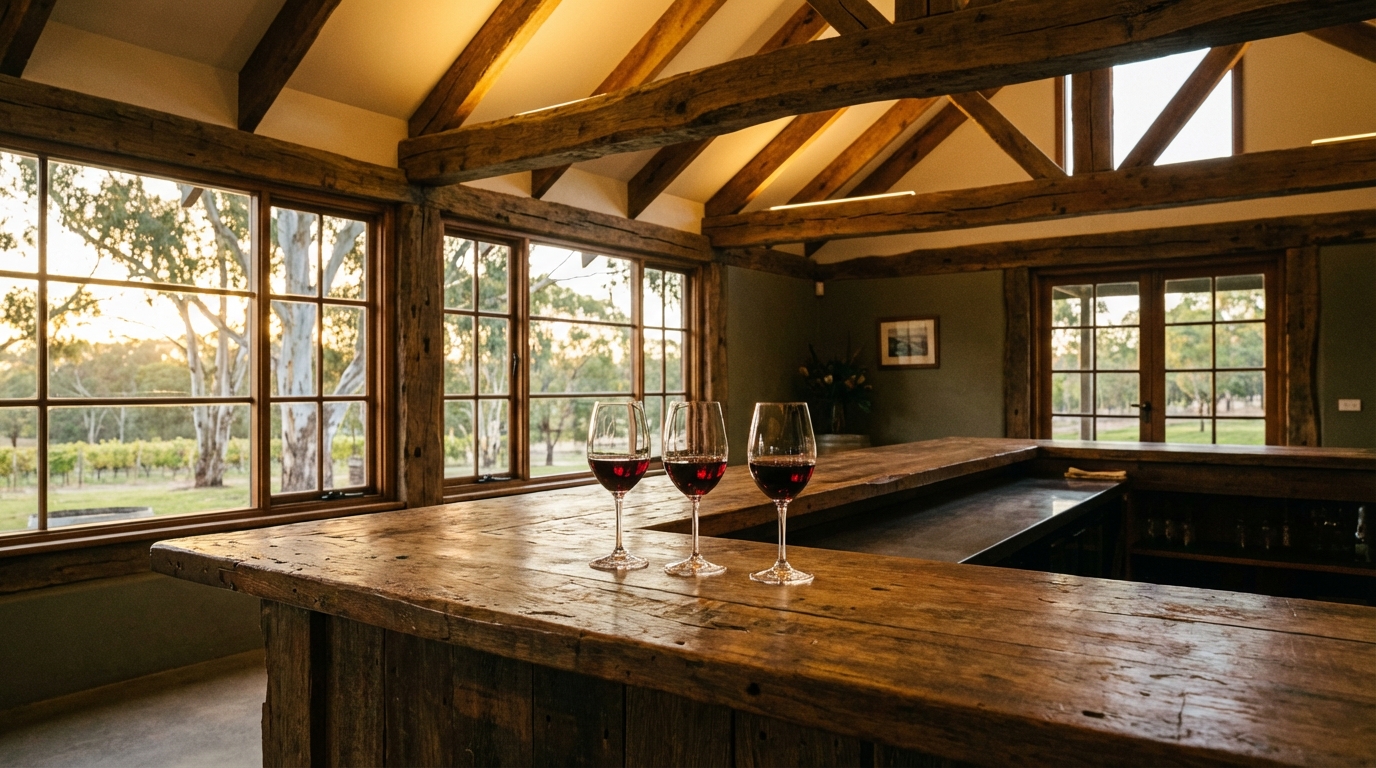
McLaren Vale's proximity to Adelaide -- just 30 minutes by road -- makes it Australia's most accessible premium wine region. Over 60 cellar doors range from casual farm gates to architectural destinations. The annual Sea and Vines Festival, held each June on the Queen's Birthday long weekend, is the region's signature event -- a celebration of local food, wine, and live music staged across vineyards throughout the region.
The Shiraz Trail -- a converted railway track turned cycling and walking path -- connects McLaren Vale township to Willunga through vineyards and past cellar doors, making this one of Australia's most enjoyable wine country cycling experiences. The region's cork oak trees, planted by early settlers who recognised the familiar Mediterranean landscape, now line roadsides throughout the Vale -- a living symbol of the wine culture McLaren Vale has cultivated.
Buying Guide and Practical Notes
McLaren Vale wines offer exceptional value at virtually every price point:
- Entry level (AUD 5-25): Wirra Wirra Church Block, d'Arenberg Stump Jump -- excellent everyday drinking
- Mid-range (AUD 0-60): Coriole Estate Shiraz, Chapel Hill Shiraz, Samuel's Gorge Grenache -- serious wines for cellaring
- Premium (AUD 0-150): d'Arenberg Dead Arm, Wirra Wirra RSW Shiraz, Bekkers Syrah -- world-class expressions
- Icon (AUD 50+): Bekkers Grenache Syrah, d'Arenberg The Coppermine Road -- collector territory
The region pairs beautifully with Mediterranean food -- lamb, olive oil, hard cheeses, grilled vegetables -- but Shiraz and Grenache also complement robust meat dishes, game, and aged hard cheeses. McLaren Vale has arrived as a world-class region that stands comparison not just with Australian peers but with the great Mediterranean wine zones its landscape so closely resembles. The old vines are its conscience, the sea breeze its moderating influence, and the dark chocolate Shiraz its indelible signature.


