Two Countries, Two Philosophies
Separated by 2,000 kilometers of Tasman Sea, Australia and New Zealand represent two profoundly different approaches to winemaking. Australia — vast, sun-drenched, and confident — built its global reputation on bold, fruit-driven Shiraz and Chardonnay. New Zealand — compact, cool, and precise — conquered the world with a single variety: Sauvignon Blanc. Together, they form the twin pillars of Antipodean wine, and both are evolving rapidly.
Understanding these two nations means understanding how geography, climate, and culture shape wine identity — and why the most exciting developments in both countries are now challenging their own stereotypes.
“Australian wine at its best is not about power — it's about sense of place. The diversity of our terroirs, from Margaret River to Tasmania, is only beginning to be understood.”
— James Halliday
Australia: Continent of Contrasts
Australia's wine industry spans a continent, with vineyards stretching from the tropical latitude of Queensland (27°S) to the cool maritime climate of Tasmania (43°S). This vast range encompasses virtually every climate type suitable for viticulture, from hot, arid inland regions to cool, wind-swept coastal zones and high-altitude plateaux.
A Brief History
Vine cuttings arrived with the First Fleet in 1788, but it was the European immigrants of the 19th century — particularly German settlers in the Barossa Valley and Swiss pioneers in the Hunter Valley — who established Australia's viticultural foundations. For most of the 20th century, the industry was dominated by fortified wines (often labeled "sherry" or "port"), and the shift toward table wine accelerated only in the 1960s and 1970s.
The international breakthrough came in the 1980s and 1990s, when brands like Penfolds, Wolf Blass, and Rosemount introduced the world to generous, fruit-forward Australian Shiraz and Chardonnay at compelling prices. The "Aussie Shiraz" formula — ripe, oaky, and powerful — became a global phenomenon.
But the 21st century has brought a dramatic shift. A new generation of winemakers is embracing restraint, championing cool-climate regions, reviving old-vine vineyards, and exploring alternative varieties. The Australian wine scene today is more diverse, experimental, and exciting than at any point in its history.
Key Australian Regions
Barossa Valley, South Australia
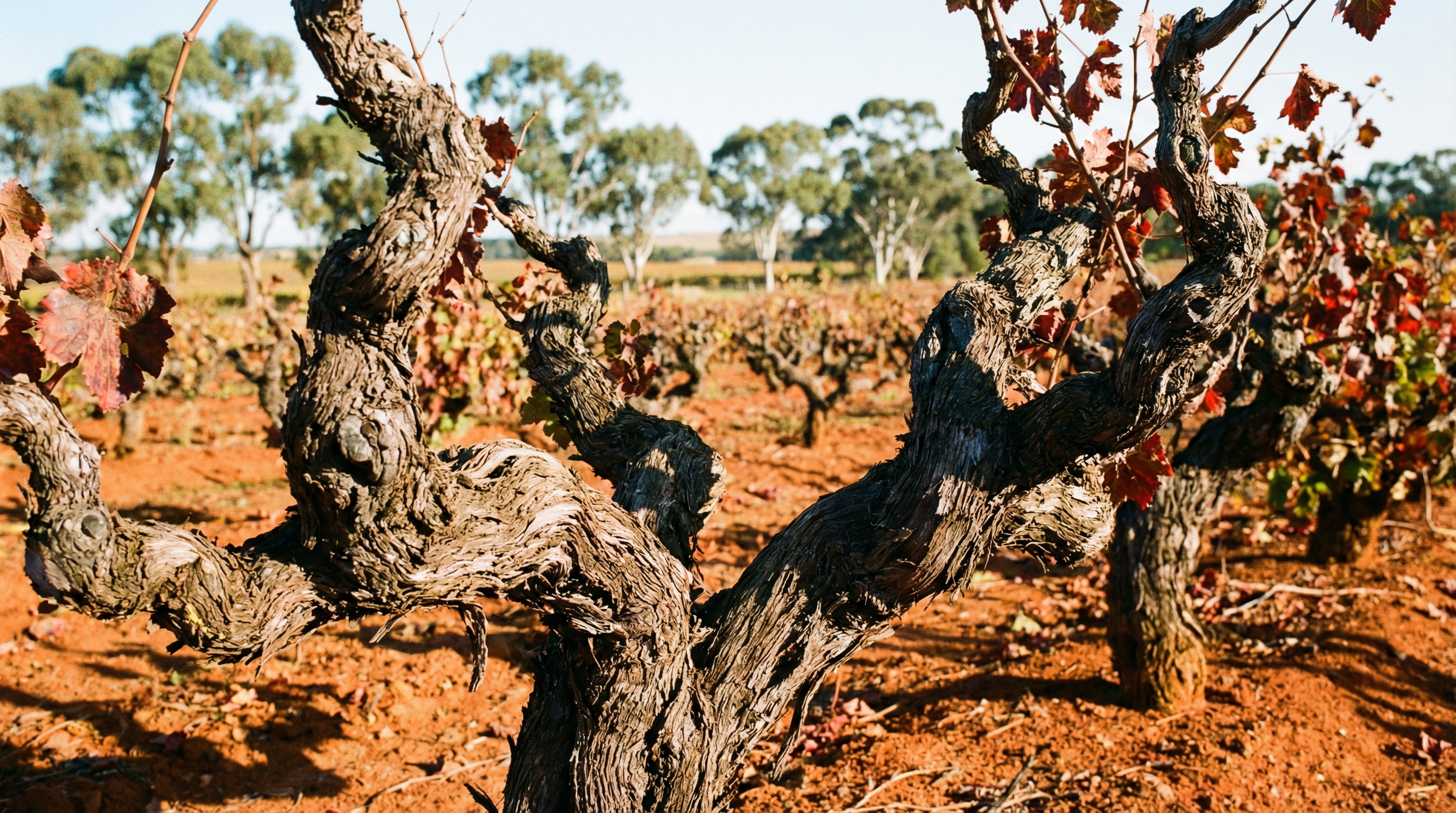
The Barossa is Australia's most iconic wine region and the source of its most celebrated Shiraz. Established by Silesian Lutheran immigrants in the 1840s, the Barossa possesses something almost no other New World region can claim: old vines. Phylloxera never reached South Australia, and pre-prohibition plantings from the 1840s–1900s survive today, producing tiny yields of extraordinarily concentrated fruit.
The region divides into the warmer Barossa Valley floor (producing rich, full-bodied Shiraz) and the cooler, elevated Eden Valley (known for elegant Riesling and more refined Shiraz).
Essential Producers:
- Penfolds — Grange, from multi-regional Shiraz sources, is Australia's most famous wine. But the Bin series (Bin 28, Bin 128, Bin 389) offers accessible excellence.
- Henschke — Hill of Grace, from a single vineyard of pre-phylloxera vines planted in the 1860s, is one of the world's great Shiraz wines.
- Torbreck — Dave Powell's old-vine Barossa Shiraz, particularly RunRig and The Laird, is profoundly concentrated yet graceful.
- Turkey Flat — Rosé, Grenache, and Shiraz from century-old vines in the heart of the Barossa. Outstanding value.
Margaret River, Western Australia
Established only in the late 1960s following a study by agronomist Dr. John Gladstones, Margaret River has rapidly become Australia's most prestigious region for Bordeaux-style blends and Chardonnay. Its maritime climate — moderated by the Indian and Southern Oceans — produces wines of classical structure, elegance, and restraint.
Essential Producers:
- Cullen — Vanya Cullen's biodynamic estate produces Diana Madeline (a Cabernet-dominant blend) of extraordinary purity. Consistently one of Australia's finest wines.
- Leeuwin Estate — Art Series Chardonnay is one of the New World's greatest white wines, rivaling top Burgundy.
- Moss Wood — Benchmark Cabernet Sauvignon and Semillon from this small estate are models of elegance.
- Vasse Felix — The region's founding estate (1967), producing excellent Cabernet and Chardonnay.
Other Key Regions
| Region | State | Strengths | Character |
|---|---|---|---|
| Hunter Valley | NSW | Semillon, Shiraz | Australia's oldest: Semillon ages remarkably |
| McLaren Vale | SA | Grenache, Shiraz | Mediterranean climate, old vines, diverse soils |
| Clare Valley | SA | Riesling | Bone-dry, lime-infused Riesling that ages for decades |
| Yarra Valley | VIC | Pinot Noir, Chardonnay | Cool climate, Burgundian ambition |
| Coonawarra | SA | Cabernet Sauvignon | Famous terra rossa (red soil over limestone) |
| Tasmania | TAS | Sparkling, Pinot Noir, Chardonnay | Australia's coolest region, exceptional sparkling |
| Adelaide Hills | SA | Sauvignon Blanc, Chardonnay, Pinot | Cool, elevated, increasingly fashionable |
New Zealand: Cool Climate Precision
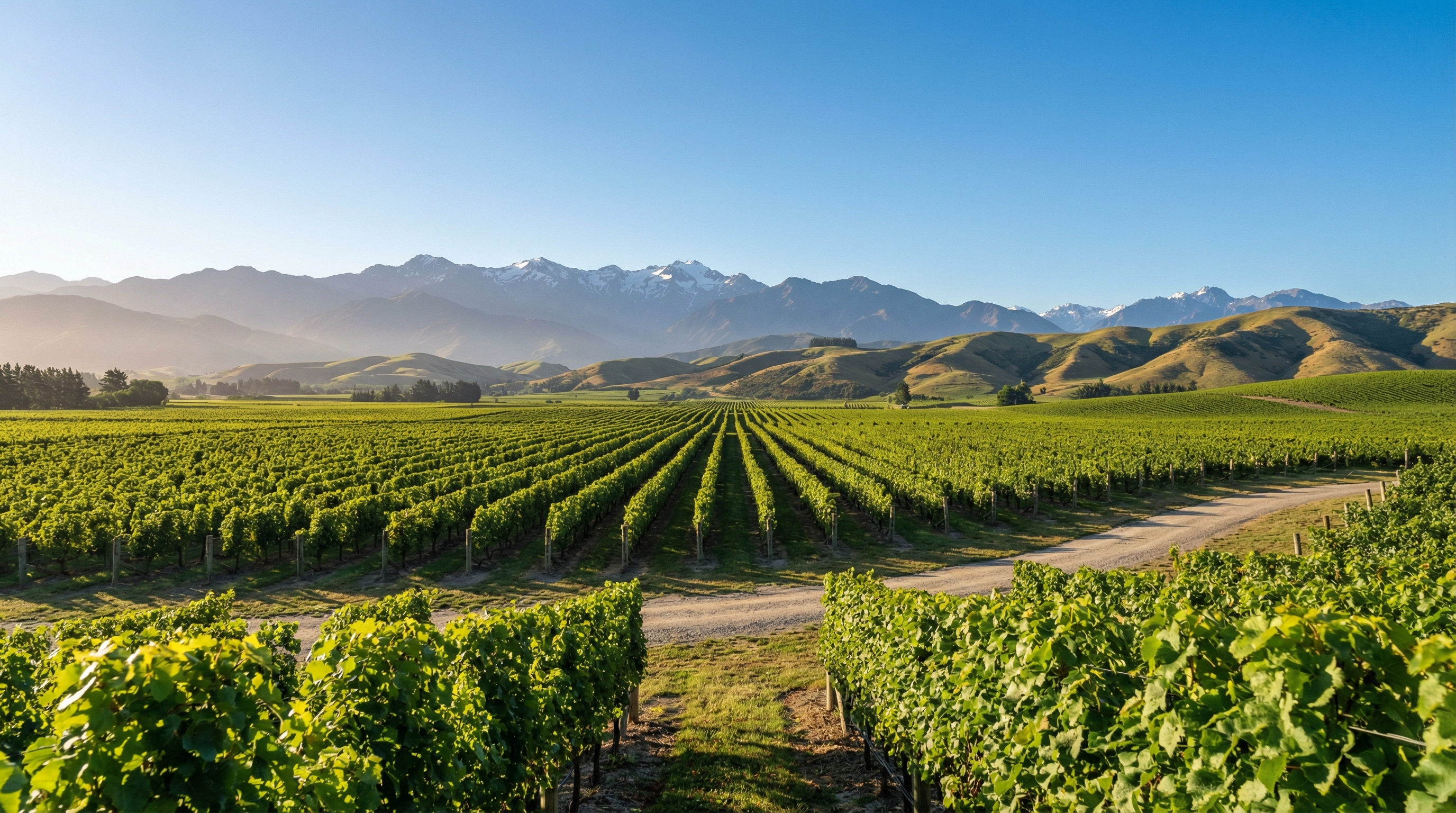
If Australia represents viticultural breadth, New Zealand represents focused intensity. This narrow, maritime nation — stretching from 36°S to 47°S — is ideally positioned for cool-climate viticulture, and its wines have carved a unique niche in the global market.
The Sauvignon Blanc Phenomenon
New Zealand's wine revolution is essentially the story of one grape in one region: Sauvignon Blanc in Marlborough. When Montana (now Brancott Estate) planted the first Sauvignon Blanc in the Wairau Valley in 1973, nobody anticipated that this combination would produce one of the world's most distinctive and commercially successful wine styles.
Marlborough Sauvignon Blanc is unmistakable — pungently aromatic, with electric acidity and flavors of passionfruit, grapefruit, cut grass, and gooseberry. The combination of Marlborough's intense UV light, cool nights, and free-draining stony soils produces grapes of startling aromatic intensity, and the wines quickly became a global sensation.
“Marlborough Sauvignon Blanc didn't copy anyone — it created an entirely new style of wine that the world had never tasted before. That's its genius and its legacy.”
— James Halliday
Cloudy Bay, established in 1985 by David Hohnen (of Cape Mentelle fame), was the wine that broke Marlborough internationally. Today, the region accounts for roughly 77% of New Zealand's total wine production, with Sauvignon Blanc dominating.
Beyond Sauvignon: New Zealand's Evolving Identity
While Sauvignon Blanc built the brand, New Zealand's most ambitious winemakers are now focused on other varieties that may ultimately prove more interesting:
Pinot Noir: The New Frontier
New Zealand Pinot Noir has emerged as one of the world's most exciting expressions of this notoriously difficult grape. The country's cool, maritime climate provides the long, slow ripening season that Pinot demands, and several regions are producing world-class results:
Central Otago — The world's southernmost wine region (45°S) and New Zealand's only true continental wine climate. Warm, dry summers and cold winters in this dramatic mountain-fringed landscape produce Pinot Noir of remarkable intensity, with dark cherry fruit, spice, and a distinctive mineral edge. Felton Road, Rippon, and Mt Difficulty are the stars.
Martinborough — On the southern tip of the North Island, this tiny region was the first in New Zealand to demonstrate that Pinot Noir could achieve true greatness. Ata Rangi, Martinborough Vineyard, and Dry River produce wines of refined, Burgundian elegance.
Marlborough — While best known for Sauvignon, the southern sub-regions of Marlborough — particularly the Southern Valleys and the Awatere Valley — produce increasingly complex Pinot Noir with bright acidity and red-fruit purity.
Key New Zealand Regions
| Region | Island | Key Varieties | Character |
|---|---|---|---|
| Marlborough | South | Sauvignon Blanc, Pinot Noir | Intense aromatics, bright acidity |
| Central Otago | South | Pinot Noir | Continental, concentrated, mineral |
| Hawke's Bay | North | Syrah, Bordeaux blends, Chardonnay | Warmest major region, structured reds |
| Martinborough | North | Pinot Noir | Sheltered, dry, elegant Pinot |
| Waipara/Canterbury | South | Pinot Noir, Riesling | Limestone soils, cool climate |
| Nelson | South | Pinot Noir, Chardonnay, Sauvignon | Maritime, diverse, artisan-focused |
| Gisborne | North | Chardonnay | Warm, generous, early-drinking |
Australia vs New Zealand: A Comparison
| Dimension | Australia | New Zealand |
|---|---|---|
| Vineyard Area | ~146,000 hectares | ~42,000 hectares |
| Climate Range | Hot to cool, continental to maritime | Predominantly cool maritime |
| Signature Red | Shiraz (Barossa, McLaren Vale) | Pinot Noir (Central Otago, Martinborough) |
| Signature White | Chardonnay, Riesling | Sauvignon Blanc |
| Old Vines | Extensive (pre-phylloxera) | Very limited (young industry) |
| Wine Style Tradition | Fruit-forward, generous | Aromatic, precise, high-acid |
| Emerging Trends | Cool-climate focus, alternative varieties, natural wine | Terroir-specific Pinot Noir, Syrah, skin-contact whites |
| Price Range | Very broad ($5–$800+) | Moderate to premium ($12–$200+) |
The New Wave: Trends Shaping Both Countries
Australia's Alternative Variety Movement
A vibrant movement toward Mediterranean and unconventional grape varieties is reshaping Australian wine. Grenache — particularly old-vine Barossa and McLaren Vale Grenache — is experiencing a golden age, with producers like Yangarra, Cirillo, and Ochota Barrels making wines of translucent beauty. Italian varieties (Nebbiolo, Fiano, Vermentino) and Iberian grapes (Tempranillo, Graciano) are thriving, and the natural wine movement has found fertile ground in regions like the Adelaide Hills and Yarra Valley.
New Zealand's Syrah Emergence
Hawke's Bay on the North Island has quietly established itself as a source of world-class Syrah — peppery, elegant, and Northern Rhône-like in character. Producers like Craggy Range (Le Sol), Trinity Hill (Homage), and Te Mata (Bullnose) are producing Syrah that stands alongside the best from outside the Rhône Valley.
Sparkling Wine
Both countries are investing heavily in sparkling wine. Tasmania has emerged as one of the New World's finest sources of traditional-method sparkling, with houses like Jansz and Arras (by House of Arras at Accolade) producing exceptional results. In New Zealand, Marlborough sparkling — led by No.1 Family Estate and Quartz Reef — is gaining recognition.
Essential Producers: A Summary
Australia Top 10
- Penfolds (Multi-regional) — Grange and Bin series
- Henschke (Eden Valley) — Hill of Grace
- Cullen (Margaret River) — Diana Madeline
- Leeuwin Estate (Margaret River) — Art Series Chardonnay
- Torbreck (Barossa) — RunRig
- Grosset (Clare Valley) — Polish Hill Riesling
- Bass Phillip (Gippsland) — Premium Pinot Noir
- Tyrrell's (Hunter Valley) — Vat 1 Semillon
- Jim Barry (Clare Valley) — The Armagh Shiraz
- Yangarra (McLaren Vale) — Old Vine Grenache
New Zealand Top 10
- Felton Road (Central Otago) — Block 5 Pinot Noir
- Ata Rangi (Martinborough) — Pinot Noir
- Cloudy Bay (Marlborough) — Sauvignon Blanc
- Craggy Range (Hawke's Bay/Martinborough) — Le Sol Syrah, Te Muna Pinot
- Dry River (Martinborough) — Pinot Noir, Riesling
- Rippon (Central Otago) — Pinot Noir
- Greywacke (Marlborough) — Kevin Judd's post-Cloudy Bay project
- Kumeu River (Auckland) — Maté's Vineyard Chardonnay
- Te Mata (Hawke's Bay) — Coleraine, Bullnose Syrah
- Dog Point (Marlborough) — Section 94 Sauvignon Blanc
For further reading, explore Wine Australia and New Zealand Winegrowers.
Conclusion: Convergence and Divergence
Australia and New Zealand are both moving toward a more nuanced, terroir-focused future — but from opposite directions. Australia, long associated with power and ripeness, is discovering restraint, cool climates, and site-specificity. New Zealand, having conquered the world with one explosively aromatic variety, is now seeking depth and complexity through Pinot Noir, Syrah, and skin-contact whites.
What unites them is ambition, innovation, and an absence of the hidebound traditions that can sometimes slow progress in Europe. The best wines from both countries are now genuinely world-class — not as imitations of European models, but as distinctive expressions of their own unique terroirs. For any wine lover, the Antipodes are essential territory.


