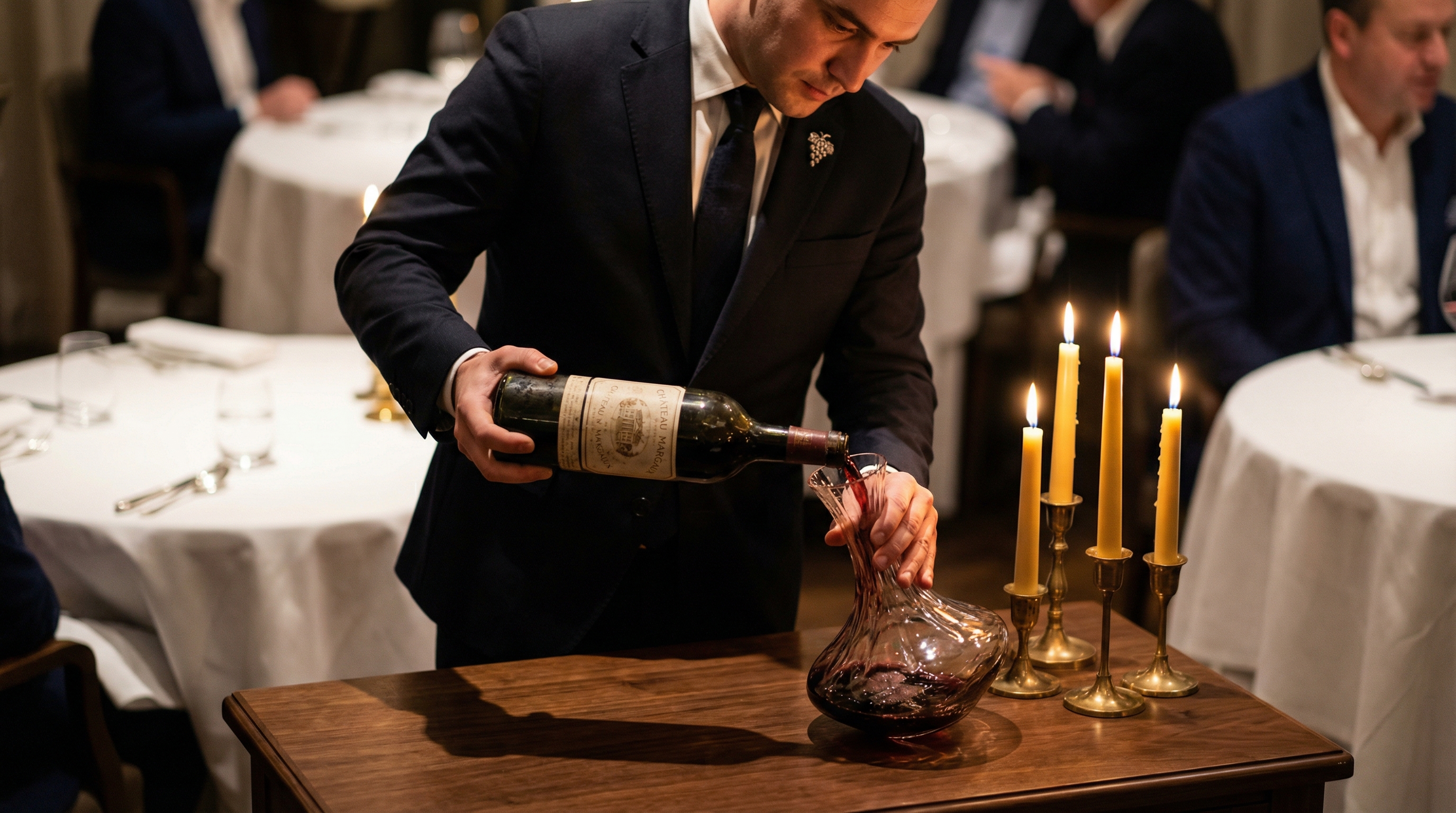
The Most Overlooked Wine Variable
Ask any sommelier what the easiest way to improve your wine experience at home is, and most will give the same answer: get the temperature right. It is not about buying more expensive wine, investing in crystal glasses, or learning arcane vocabulary. The single greatest impact on how a wine tastes comes from the temperature at which it is served — and most people get it wrong.
The common wisdom of "red wine at room temperature, white wine from the fridge" dates from an era when room temperature was 16-18°C in drafty European stone houses, not 22-24°C in modern centrally heated homes. And most refrigerators chill white wine to 3-4°C — far too cold to appreciate its aromas and flavors.
Why Temperature Matters So Much
Temperature affects wine at a chemical and sensory level:
- Aroma perception — Volatile aromatic compounds are released more readily at warmer temperatures. A wine served too cold will seem muted and closed; too warm, and the alcohol dominates, creating a "hot," soupy impression.
- Sweetness perception — Sugar tastes sweeter at higher temperatures. A dessert wine served too warm can taste cloying; properly chilled, the acidity balances the sweetness.
- Acidity perception — Acidity seems more prominent at lower temperatures. This is why crisp whites are refreshing when cool — the acidity is enhanced.
- Tannin perception — Tannins feel harsher and more astringent at lower temperatures. This is why chilling most tannic reds makes them taste uncomfortably grippy.
- Alcohol perception — Alcohol is more noticeable at higher temperatures, creating a burning sensation. Cooling a wine slightly can tame excessive alcohol perception.
- Body and texture — Cooler temperatures make wines feel lighter and more refreshing; warmer temperatures emphasize richness and weight.
Ideal Temperatures by Wine Type
Sparkling Wine and Champagne: 6-8°C (43-46°F) Cold serving is essential for sparkling wines. It preserves the mousse (the fineness of the bubbles), keeps the wine crisp and refreshing, and prevents the CO2 from escaping too quickly. Exception: aged vintage Champagne and prestige cuvées can be served a touch warmer (8-10°C) to reveal their complexity.
Light-Bodied White Wines: 8-10°C (46-50°F) Riesling (dry), Sauvignon Blanc, Pinot Grigio, Muscadet, Vinho Verde, Albariño. These wines thrive on freshness and acidity. A light chill highlights their citrus and mineral character without suppressing their aromatics.
Full-Bodied White Wines: 10-12°C (50-54°F) Oaked Chardonnay (white Burgundy, California), Viognier, Marsanne, white Rhône blends, aged Riesling. These richer whites need slightly more warmth to display their complexity, texture, and oak-derived flavors (butter, toast, vanilla).
Rosé Wines: 8-10°C (46-50°F) Similar to light whites. Serve cold enough to be refreshing but not so cold that the delicate fruit and floral aromas disappear. A good quality rosé served at 10°C will reveal far more nuance than the same wine at 4°C.
Light-Bodied Red Wines: 12-14°C (54-57°F) Beaujolais (Gamay), lighter Pinot Noir, Barbera, young Côtes du Rhône, Valpolicella. These reds have lower tannin and higher acidity — a slight chill enhances their freshness and fruit character. This is the ideal "cellar temperature" that traditional winemakers intended.
Medium-Bodied Red Wines: 14-16°C (57-61°F) Chianti Classico, Rioja Crianza and Reserva, Merlot, Tempranillo, Sangiovese, Grenache, medium-weight Pinot Noir. A touch of cooling below modern room temperature brings out their aromatic complexity while maintaining structure and balance.
Full-Bodied Red Wines: 16-18°C (61-64°F) Cabernet Sauvignon, Barolo, Amarone, Syrah/Shiraz, Malbec, aged Bordeaux, Châteauneuf-du-Pape. These powerful wines need the most warmth to soften their tannins and reveal their full aromatic spectrum. But 18°C is still cooler than most living rooms — even these wines benefit from slight chilling.
Sweet and Fortified Wines: Variable
- Sauternes, TBA: 8-10°C
- Tawny Port: 12-14°C (slightly cool, to show its nutty complexity)
- Vintage/Ruby Port: 16-18°C
- Fino/Manzanilla Sherry: 6-8°C (ice cold!)
- Oloroso Sherry: 12-14°C
Common Mistakes
Mistake 1: Serving Red Wine at Room Temperature Modern room temperature (22-24°C) is far too warm for any wine. At this temperature, alcohol dominates, fruit becomes stewed, and the wine tastes flat and "hot." The solution: put your red wine in the refrigerator for 15-20 minutes before serving. It will be transformatively better.
Mistake 2: Serving White Wine Too Cold Straight from the refrigerator (3-4°C), white wine is essentially aroma-less. All that beautiful complexity you paid for is locked up. Take your whites out of the fridge 10-15 minutes before serving, or hold the glass in your hands to warm it slightly.
Mistake 3: Ignoring Temperature Through the Meal Wine in the glass warms rapidly — especially in warm rooms. A white wine that was perfect when poured may be too warm by the end of the meal. Keep whites in an ice bucket on the table and don't be afraid to briefly re-chill a red that has warmed up too much.
Mistake 4: Using the Freezer Putting wine in the freezer to chill quickly is risky — 30 minutes of distraction and your bottle is frozen and potentially cracked. Use an ice bucket instead (see below).
Practical Tips
The Ice Bucket Method An ice bucket filled with half ice, half water will chill a room-temperature bottle:
- To sparkling-ready (6°C): approximately 20-25 minutes
- To white-ready (10°C): approximately 15 minutes
- To light red-ready (14°C): approximately 10 minutes
Adding salt to the ice water lowers the freezing point and speeds the process by several minutes.
Quick Cooling Trick Wrap the bottle in a wet paper towel and place it in the refrigerator. The evaporative cooling effect chills the wine significantly faster than a dry bottle — roughly twice as fast.
Warming a Too-Cold Wine If your red is too cold from storage, pour it into the glass and cup it in your hands. Body heat will warm the wine in minutes. You can also decant the wine — the larger surface area exposed to room temperature air will warm it faster.
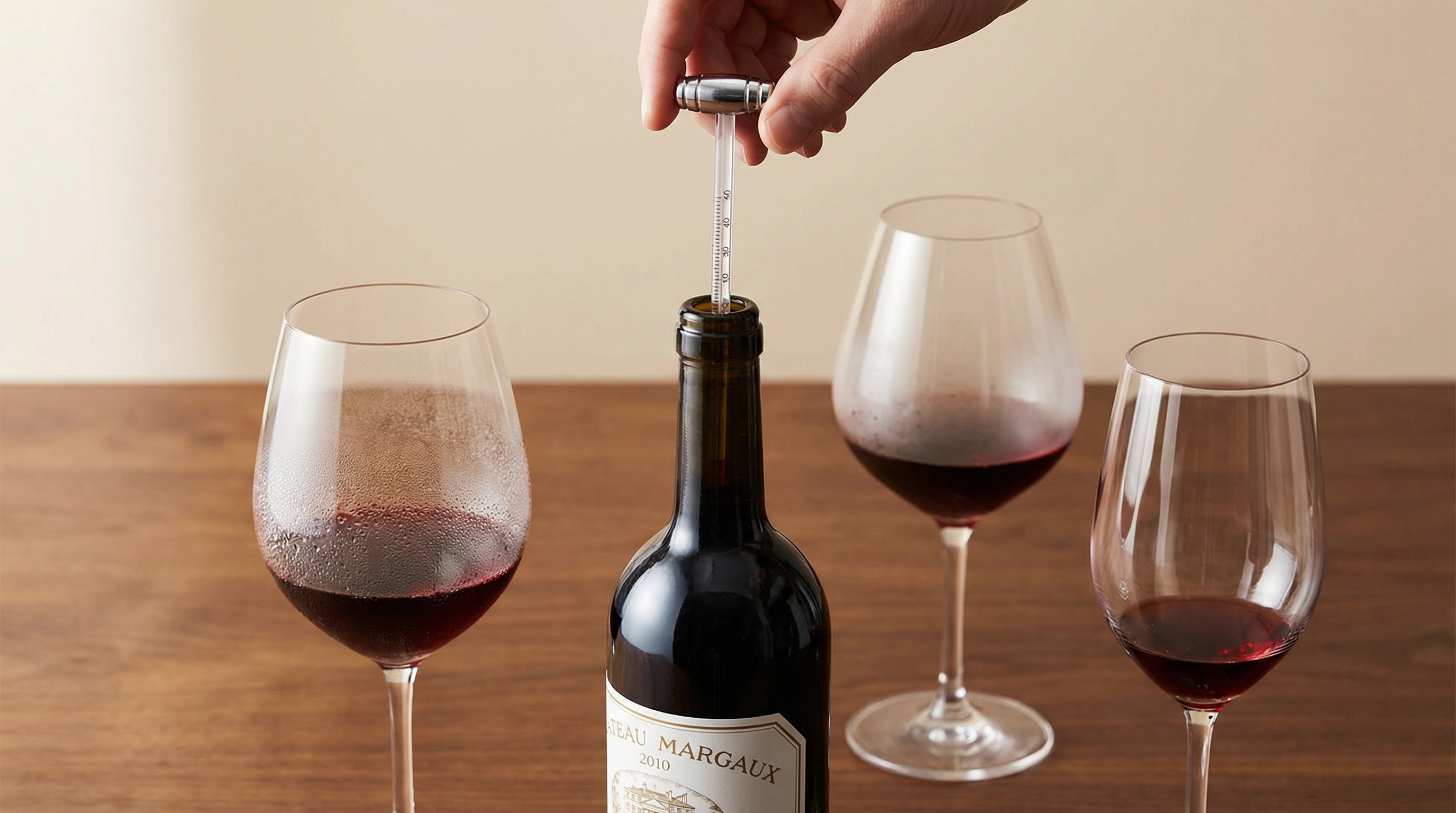
Invest in a Wine Thermometer A simple infrared or clip-on thermometer costs under €15 and takes the guesswork out of serving temperature. Once you start paying attention, you will never go back.
The Transformation
Getting wine temperature right costs nothing and requires no expertise — just a little attention. A €10 Beaujolais served at 13°C will taste better than a €50 Burgundy served at 24°C. It is the single most impactful, most overlooked variable in wine enjoyment. Start paying attention to temperature, and every bottle you open will taste better.
“Sıcaklık en çok göz ardı edilen değişkendir.”
— Madeline Puckette