The Art and Science of Matching Wine with Food
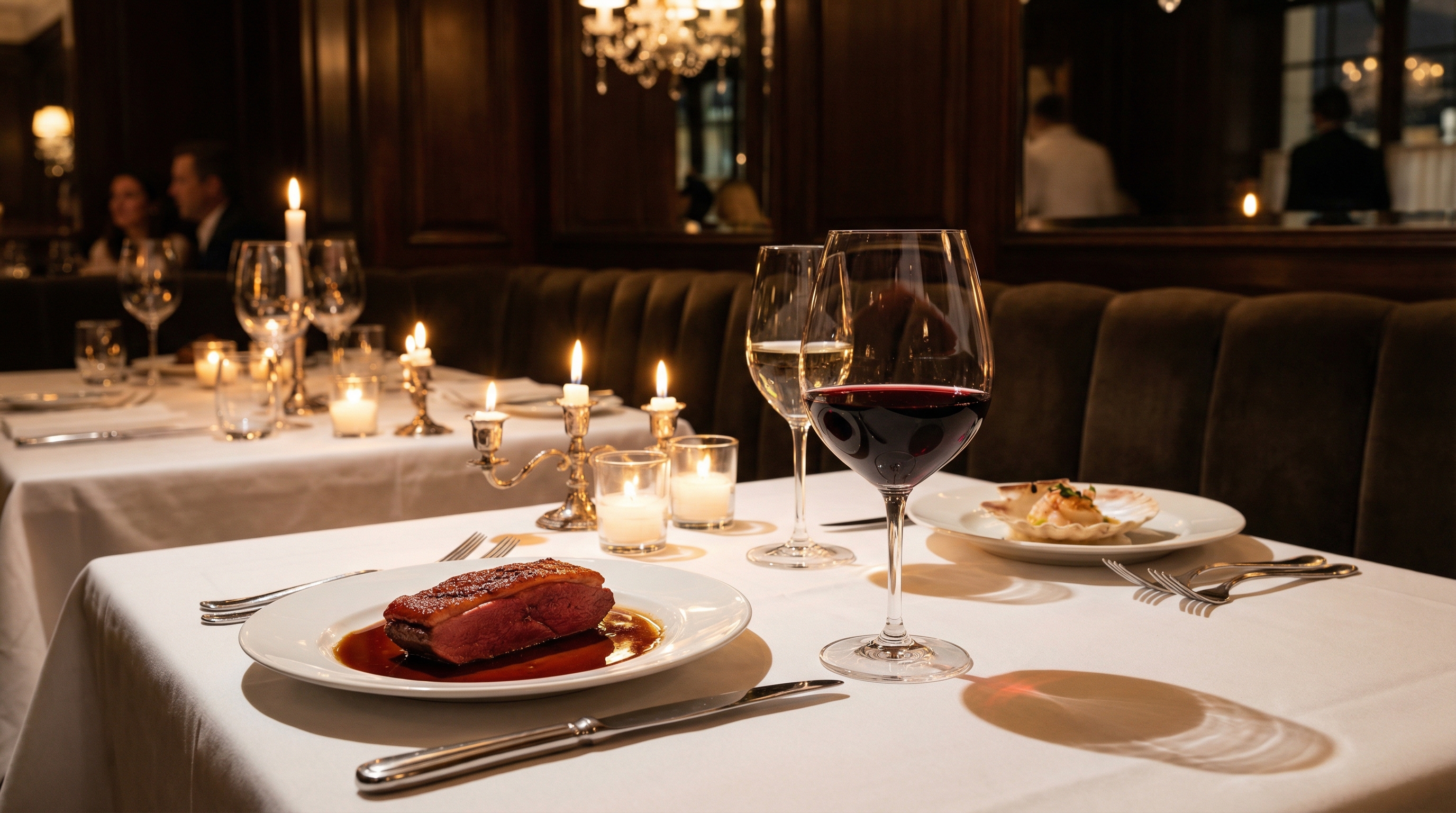
Wine and food pairing is not an exact science — it is an evolving art informed by a few reliable principles. The goal is simple: to create a combination where both the wine and the food taste better together than either would alone. When a pairing clicks, it is genuinely transformative.
The Fundamental Principles
Understanding a few core concepts will guide you through virtually any pairing decision:
1. Match Weight with Weight The most important rule. A light, delicate dish needs a light wine; a rich, heavy dish calls for a full-bodied wine. Pair a Muscadet with steamed mussels, not with a hearty beef stew. Pair an Amarone with braised short ribs, not with a green salad.
2. Acidity Loves Acidity High-acid wines pair brilliantly with acidic foods. A crisp Chianti Classico with tomato-based pasta is the classic example — the acidity in the wine matches the acidity in the sauce, creating harmony. Low-acid wines with high-acid food taste flat and flabby.
3. Tannin Meets Protein and Fat Tannic red wines (Cabernet Sauvignon, Nebbiolo, young Bordeaux) are softened by protein and fat. This is why a well-marbled steak with a tannic Barolo is a legendary combination — the fat in the meat smooths out the tannins, while the tannins cut through the richness.
4. Sweetness and Spice Sweet wines are the answer to spicy food. An off-dry Riesling or Gewürztraminer will tame the heat of Thai or Indian cuisine, while a dry, tannic red will amplify the burn. The sugar in the wine also complements chili-based sauces.
5. The Complement vs Contrast Rule
- Complementary pairing: Matching similar flavors. Oaked Chardonnay with buttery lobster — both rich and creamy.
- Contrasting pairing: Opposing elements that balance each other. Salty blue cheese with sweet Sauternes — the salt and sweetness play off each other beautifully.
Pairing by Cuisine
Italian Cuisine
- Pasta with red sauce — Chianti Classico, Barbera d'Asti, Montepulciano d'Abruzzo
- Carbonara / creamy pasta — Verdicchio, Soave, Gavi di Gavi
- Pizza — Lambrusco (sparkling red), young Sangiovese, Nero d'Avola
- Risotto — Match the risotto: mushroom risotto with Barolo; seafood risotto with Vermentino
- Osso buco — Nebbiolo d'Alba, aged Barbaresco
French Cuisine
- Duck confit — Red Burgundy, Cahors (Malbec), Madiran
- Coq au vin — Bourgogne Rouge, Côtes du Rhône
- Bouillabaisse — Provence Rosé, Cassis Blanc, Bandol Blanc
- Cheese soufflé — Champagne Blanc de Blancs, Chablis
- Foie gras — Sauternes, Gewürztraminer Vendange Tardive, Demi-Sec Champagne
Japanese Cuisine
- Sushi and sashimi — Champagne (Brut NV), Muscadet, Koshu, dry Riesling
- Tempura — Sparkling wine, Grüner Veltliner, crisp Chablis
- Yakitori — Beaujolais (Gamay), light Pinot Noir, sake
- Ramen — Off-dry Riesling, Lambrusco, Beaujolais
Indian Cuisine
- Butter chicken / tikka masala — Off-dry Riesling, Gewürztraminer, Viognier
- Vindaloo / spicy curries — Sparkling Shiraz, off-dry Chenin Blanc, Moscato d'Asti
- Tandoori meats — Zinfandel, GSM blends (Grenache-Syrah-Mourvèdre), Malbec
- Vegetable biryani — Albariño, Torrontés, Rosé
Mexican Cuisine
- Tacos al pastor — Rosé, Tempranillo, Grenache
- Mole — Zinfandel, aged Malbec, Monastrell
- Ceviche — Albariño, Vinho Verde, Sauvignon Blanc
- Guacamole and chips — Sparkling wine, Grüner Veltliner, dry Riesling
Thai Cuisine
- Pad Thai — Off-dry Riesling, Chenin Blanc, Prosecco
- Green curry — Gewürztraminer, Moscato, Torrontés
- Tom Yum soup — Sparkling wine, Sauvignon Blanc, Verdejo
Pairing by Protein
- Beef (grilled or roasted) — Cabernet Sauvignon, Malbec, Barolo, Ribera del Duero
- Lamb — Rioja Reserva, Châteauneuf-du-Pape, Bordeaux, Syrah
- Pork — Pinot Noir, Riesling (dry or off-dry), Côtes du Rhône, Barbera
- Chicken / Turkey — White Burgundy, Viognier, Grenache, Champagne
- Salmon — Pinot Noir, Rosé, white Burgundy, Oregon Chardonnay
- White fish — Chablis, Sancerre, Vermentino, Albariño
- Shellfish — Muscadet, Champagne, Picpoul de Pinet, Txakolina
- Vegetarian / Plant-based — Depends on preparation, but generally: Grüner Veltliner, Gamay, lighter Pinot Noir, Vermentino, Rosé
Common Pairing Mistakes
- Serving red wine too warm — Overly warm reds taste alcoholic and soupy, overpowering food
- Ignoring sauces — Pair with the sauce, not just the protein. Chicken in a red wine sauce needs red wine, not white
- Over-thinking it — Regional pairings (local food with local wine) almost always work
- Tannic reds with spicy food — Tannin amplifies heat. Use off-dry whites instead
- Sweet food with dry wine — The wine will taste thin and bitter. Match sweetness levels
Easy Rules to Remember
- If it grows together, it goes together — Regional food and wine have evolved side by side for centuries
- When in doubt, choose Champagne — Bubbles and acidity pair with almost anything
- Rosé is a universal food wine — It bridges the gap between white and red
- Match the sauce, not the protein — The dominant flavor dictates the pairing
- Salty food loves acidity and sweetness — Think Sancerre with feta, or Port with Stilton
“Şarap her yemeği özel bir ana dönüştürür.”
— André Simon