Beyond the Glass: Wine as a Financial Asset
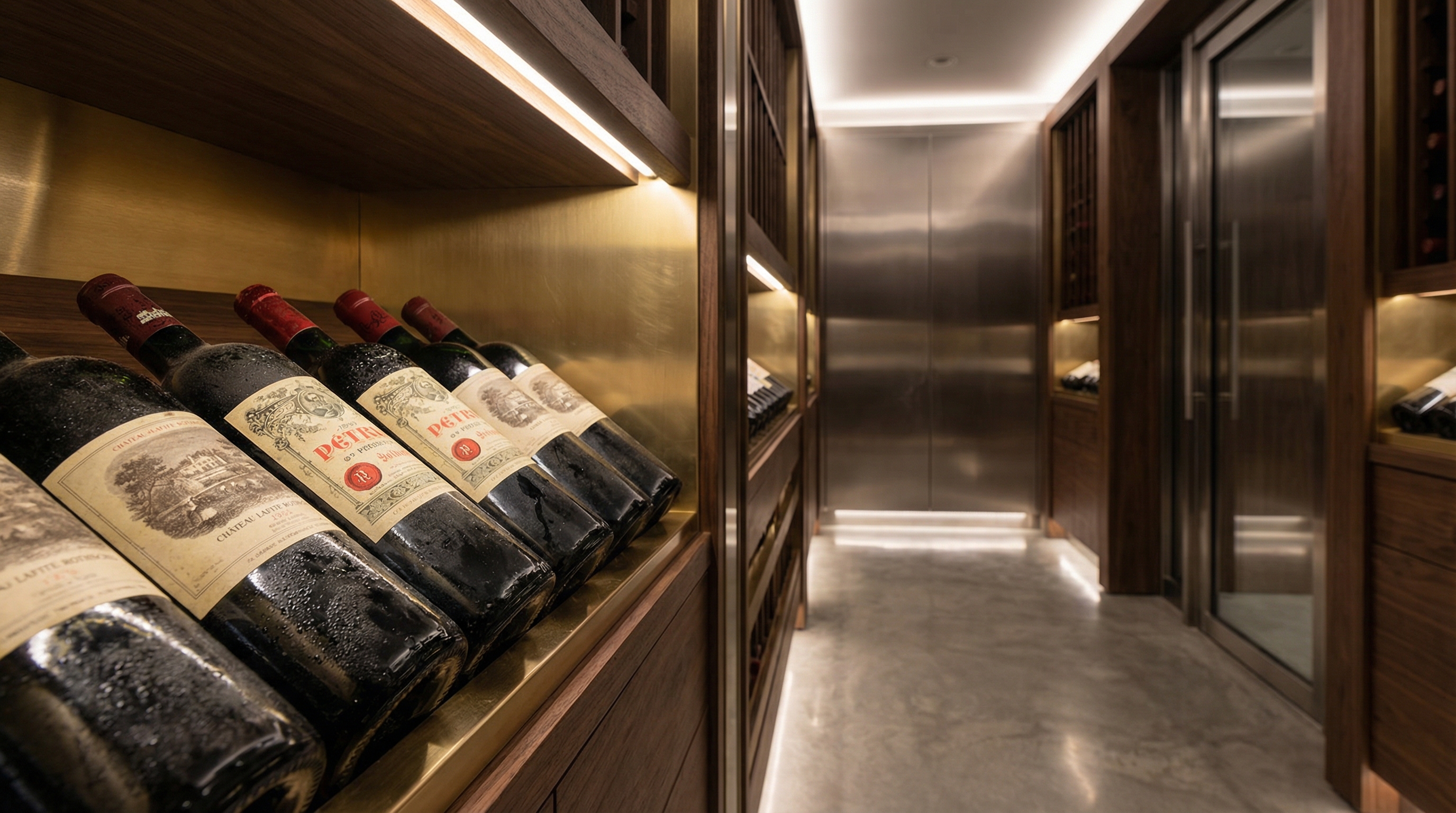
Fine wine has been a store of value for centuries — long before modern investment funds existed, wealthy families were building cellars that appreciated over generations. Today, wine investment has become increasingly accessible, with dedicated platforms, indices, and funds making it possible for a broader audience to participate.
The Liv-ex Fine Wine 100 index — the industry benchmark — has outperformed many traditional asset classes over the past 20 years, with average annual returns of 8-10%. But wine investment is not without risk, and understanding the fundamentals is crucial before committing capital.
Why Wine Appreciates in Value
Several factors drive wine's investment potential:
- Finite supply — Each vintage is a fixed quantity that can never be reproduced. As bottles are consumed, the remaining supply decreases, driving up prices for the best wines.
- Increasing demand — Global wealth creation, particularly in Asia, has dramatically expanded the collector base for fine wine.
- Improving quality with age — Unlike most consumer goods, certain wines genuinely improve over time, making older bottles more desirable.
- Scarcity of top wines — Domaine de la Romanée-Conti produces only ~5,000 bottles of Romanée-Conti per year. Screaming Eagle produces ~500 cases of Cabernet. Demand vastly exceeds supply.
- Low correlation with traditional assets — Wine prices don't closely track stock markets, making wine a useful portfolio diversifier.
- Tangible asset — In worst-case scenarios, you can always drink your investment.
Which Wines to Invest In
Not all wines are investable. The vast majority of wines produced globally are meant for short-term consumption and have zero investment potential. Investable wines share specific characteristics:
Bordeaux First Growths (and Equivalents) The backbone of the investment wine market. The five First Growths — Lafite Rothschild, Latour, Mouton Rothschild, Margaux, and Haut-Brion — have the longest track record of price appreciation. Pétrus, Le Pin, and Cheval Blanc are equally investable Right Bank icons. Best vintages for investment: 2000, 2005, 2009, 2010, 2015, 2016, 2018, 2019, 2020.
Burgundy Grand Crus Burgundy has become the most dynamic sector of the investment market. Tiny production volumes and global demand have driven extraordinary price increases. Domaine de la Romanée-Conti (all wines), Leroy, Rousseau, Roumier, and Coche-Dury are the most investable names. Returns have been exceptional — DRC Romanée-Conti has appreciated over 500% in the past 15 years.
Champagne (Prestige Cuvées) Vintage Champagne and prestige cuvées — Dom Pérignon, Krug, Salon, Cristal — are increasingly recognized as investable. Champagne has been one of the best-performing categories in recent years.
Italian Icons Sassicaia, Ornellaia, Masseto, Giacomo Conterno Barolo Monfortino, and Biondi-Santi Brunello Riserva have strong investment track records.
Cult Wines (California) Screaming Eagle, Harlan Estate, Scarecrow, and Opus One command high prices and have loyal collector followings. However, California wines generally have less established secondary market liquidity than Bordeaux or Burgundy.
Sweet Wines The greatest Sauternes (Château d'Yquem) and top German TBAs can be exceptional long-term investments due to near-infinite aging potential.
How to Buy Investment Wine
En Primeur (Bordeaux Futures) Buying wine before it is bottled, typically 18-24 months before delivery. This system allows buyers to lock in prices for the latest vintage. It can be advantageous in great vintages but doesn't always offer savings.
Wine Merchants / Négociants Established merchants like Berry Bros. & Rudd (UK), Millesima (France), and Zachys (US) buy and sell fine wine with provenance guarantees.
Auction Houses Christie's, Sotheby's, Acker Merrall & Condit, and Hart Davis Hart host regular wine auctions. Auctions are the primary secondary market for rare and mature wines. Online platforms like Liv-ex provide a global trading exchange for the trade.
Wine Investment Platforms Newer platforms like Vinovest, Cult Wines, and Wine Owners offer managed wine investment portfolios with professional storage and advisory services. These lower the barrier to entry for new investors.
Storage Requirements for Investment Wine
Provenance is everything in the investment wine market. Wine that cannot demonstrate proper storage history is worth significantly less:
- Wine must be stored in professional, bonded, climate-controlled warehousing
- Temperature must be maintained at 12-14°C with 65-75% humidity
- Bottles must be stored on their sides
- A full chain of custody must be documented
- Many investors use London City Bond (LCB), Octavian, or similar bonded warehouses
- UK bonded storage also offers tax advantages (no VAT or duty until withdrawal)
Risks and Considerations
- Illiquidity — Wine is not as easily sold as stocks. Finding a buyer at the right price may take time.
- Storage costs — Professional storage typically costs £10-15 per case per year
- Insurance — Your collection needs adequate insurance coverage
- Counterfeiting — Fake fine wine is a real problem, especially for older vintages. Only buy from reputable sources with provenance documentation.
- Market volatility — While wine has historically been stable, individual wines or regions can experience significant price corrections
- Long time horizon — Wine investment typically requires patience of 5-10+ years for optimal returns
- Tax implications — Vary significantly by country. In the UK, wine is classified as a "wasting asset" and is exempt from capital gains tax. In other jurisdictions, different rules apply.
Returns vs Traditional Investments
Over the past 20 years, the Liv-ex Fine Wine 100 has delivered annualized returns of approximately 8-10%, with significantly lower volatility than equities. During the 2008 financial crisis, fine wine fell less than stocks and recovered more quickly. However, past performance is no guarantee of future results, and wine should be viewed as a component of a diversified portfolio — not a standalone strategy.
Getting Started
- Educate yourself — Understand the wines you are buying, not just the potential returns
- Start with Bordeaux — It has the deepest, most liquid market
- Buy from reputable sources with provenance guarantees
- Store professionally from day one
- Think long-term — The best returns come from patience
- Diversify — Across regions, vintages, and producers
- Enjoy the journey — Wine investment is more rewarding when you genuinely love the product
“İçebileceğiniz bir yatırım.”
— Berry Bros. & Rudd