The World's Most Celebrated Sparkling Wine
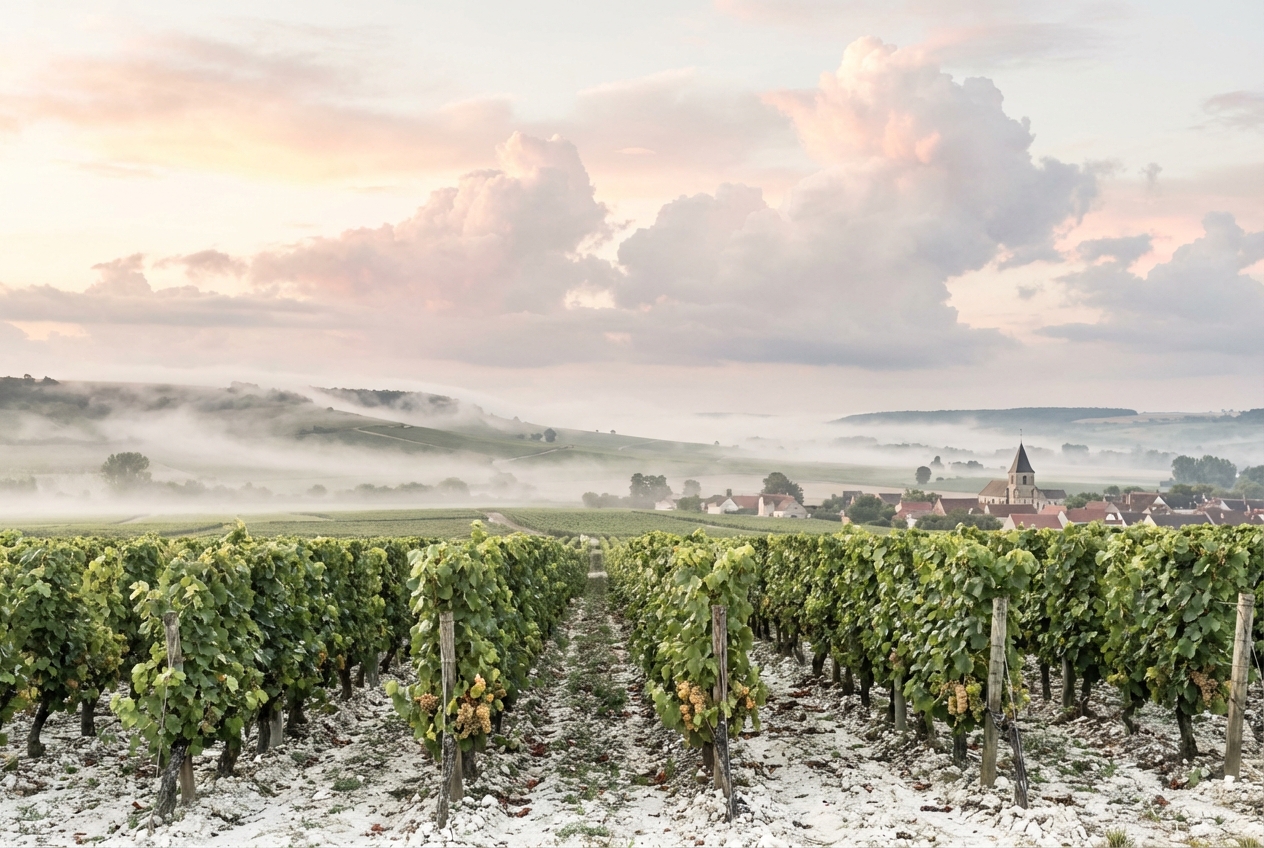
Champagne is more than a wine — it is a symbol of celebration, luxury, and human ingenuity. Produced exclusively in the Champagne region of northeastern France, roughly 150 kilometers east of Paris, this sparkling wine has captivated drinkers for centuries. Yet beyond the popping corks and golden bubbles lies a wine of extraordinary complexity, crafted through one of the most labor-intensive processes in all of winemaking.
The Three Grapes of Champagne
Only three grape varieties dominate Champagne production, each contributing distinct characteristics to the final blend:
- Pinot Noir — The most widely planted grape in Champagne (38% of vineyard area). It brings body, structure, and red fruit character. The finest Pinot Noir comes from the Montagne de Reims, particularly the Grand Cru villages of Ambonnay, Bouzy, and Verzenay.
- Chardonnay — Accounting for roughly 28% of plantings, Chardonnay contributes elegance, finesse, citrus notes, and exceptional aging potential. The Côte des Blancs — especially the Grand Cru villages of Le Mesnil-sur-Oger, Cramant, and Avize — is its spiritual home.
- Pinot Meunier — Often overlooked but essential, Meunier (34% of plantings) adds fruitiness, roundness, and approachability. It thrives in the cooler Vallée de la Marne, where it ripens reliably even in difficult vintages.
How Champagne Is Made: Méthode Traditionnelle
The magic of Champagne lies in its production method, which involves a second fermentation inside the bottle:
- Base wine production — Grapes are pressed gently and fermented into still wine, just like any other white wine.
- Assemblage (blending) — The chef de cave blends wines from different vineyards, grape varieties, and vintages to create a consistent house style. Reserve wines from previous years add depth and complexity.
- Tirage — A mixture of yeast and sugar (liqueur de tirage) is added, and the wine is sealed with a crown cap.
- Second fermentation — Yeast consumes the sugar, producing carbon dioxide (the bubbles) and increasing the alcohol by about 1.5%.
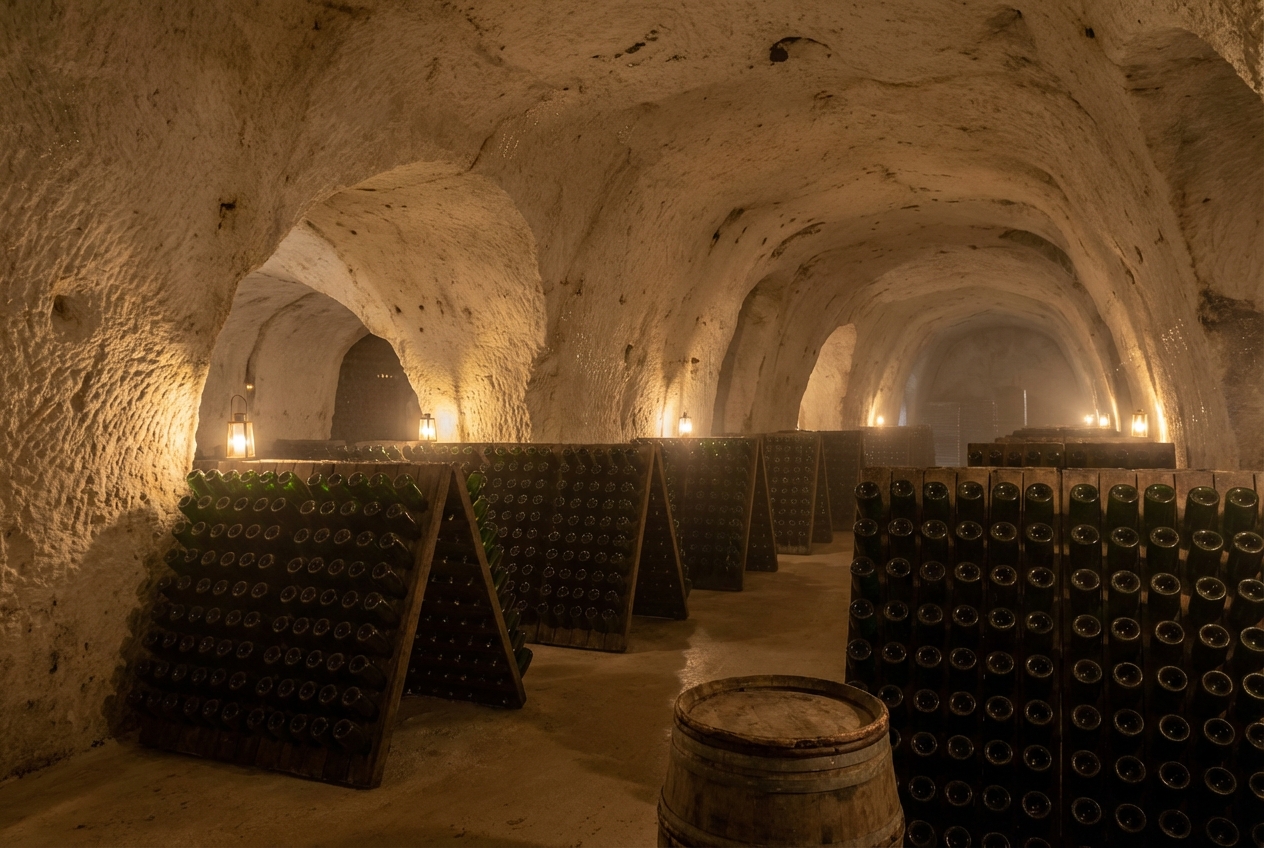
- Aging on lees — The wine rests on the spent yeast cells (lees) for a minimum of 15 months for non-vintage and 36 months for vintage Champagne. Many top producers age for far longer — sometimes 7 to 10 years.
- Riddling (remuage) — Bottles are gradually rotated and tilted to collect the lees sediment in the neck.
- Disgorgement (dégorgement) — The neck is frozen, the crown cap removed, and the plug of frozen sediment shoots out.
- Dosage — A small amount of sugar dissolved in wine (liqueur d'expédition) is added to determine the final sweetness level.
Champagne Styles
By sweetness level:
- Brut Nature / Zero Dosage — No added sugar. Bone-dry and intensely mineral.
- Extra Brut — 0–6 g/L sugar. Very dry.
- Brut — 0–12 g/L sugar. The most common style. Dry but balanced.
- Extra Dry / Extra Sec — 12–17 g/L. Slightly off-dry. Confusingly, sweeter than Brut.
- Demi-Sec — 32–50 g/L. Noticeably sweet. Excellent with desserts.
By grape composition:
- Blanc de Blancs — 100% Chardonnay. Elegant, mineral, citrusy, and age-worthy. Benchmark: Salon Le Mesnil.
- Blanc de Noirs — 100% Pinot Noir and/or Meunier. Fuller-bodied, with red fruit and bread dough notes. Benchmark: Bollinger Vieilles Vignes Françaises.
- Rosé — Made by blending a small amount of still Pinot Noir red wine, or (rarely) by brief skin contact. Laurent-Perrier Cuvée Rosé and Billecart-Salmon Rosé are iconic.
By vintage designation:
- Non-Vintage (NV) — A blend of multiple years. The backbone of every house, showcasing consistency.
- Vintage — From a single exceptional year. More complex and age-worthy. Recent outstanding vintages: 2002, 2008, 2012, 2013.
- Prestige Cuvée — The house's flagship wine, representing the pinnacle of quality.
The Great Champagne Houses
- Krug — Often called the Rolls-Royce of Champagne. Grande Cuvée is a multi-vintage masterpiece blended from over 120 wines across 10+ vintages. Krug Clos du Mesnil and Clos d'Ambonnay are single-vineyard rarities.
- Dom Pérignon — Moët & Chandon's prestige cuvée, only produced in vintage years. The P2 and P3 extended-aging releases are extraordinary.
- Bollinger — Known for powerful, Pinot Noir-dominated wines with extended aging. The Special Cuvée is perhaps the finest NV Champagne available. La Grande Année is their flagship vintage.
- Pol Roger — Winston Churchill's favorite Champagne, and the house named a cuvée after him. Elegant, balanced, and impeccably made.
- Ruinart — The oldest established Champagne house (1729). Dom Ruinart Blanc de Blancs is stunning.
- Louis Roederer — Cristal is one of the most sought-after prestige cuvées, but their Brut Premier NV offers remarkable quality.
- Taittinger — The Comtes de Champagne Blanc de Blancs is one of Champagne's greatest wines.
The Grower Champagne Revolution
For decades, the big houses dominated. But a revolution is underway: grower Champagnes (identified by "RM" on the label — Récoltant-Manipulant) are produced by the same farmers who tend the vines. These wines offer terroir expression, individuality, and often extraordinary value.
Essential grower producers to discover:
- Egly-Ouriet — Powerful, vinous Champagnes from Ambonnay Grand Cru
- Jacques Selosse — The godfather of the grower movement. Radical, oxidative, divisive, and brilliant
- Pierre Gimonnet — Elegant Blanc de Blancs from the Côte des Blancs
- Laherte Frères — Innovative, terroir-focused wines from multiple villages
- Jérôme Prévost — La Closerie, a single-vineyard Meunier of cult status
- Agrapart — Stunning mineral Blanc de Blancs from Avize Grand Cru
Food Pairing with Champagne
Champagne is one of the most versatile food wines in existence:
- Brut NV — Oysters, sushi, fried chicken, popcorn, potato chips
- Blanc de Blancs — Ceviche, scallops, goat cheese, lobster
- Rosé — Salmon, tuna tartare, duck, strawberry desserts
- Vintage / Prestige Cuvée — Truffle dishes, aged Comté, roasted poultry
- Demi-Sec — Fruit tarts, foie gras, blue cheese
Visiting Champagne
The Champagne region is easily accessible from Paris (45 minutes by TGV to Reims). Reims offers the grand houses (Veuve Clicquot, Taittinger, Pommery) with impressive chalk cellars (crayères). Épernay is home to the Avenue de Champagne, arguably the most valuable street in the world, lined with houses including Moët & Chandon, Perrier-Jouët, and Pol Roger. For grower visits, head to the villages of the Côte des Blancs or the Montagne de Reims — book ahead, as most are small family operations.
“Şampanya kutlamak ve teselli bulmak içindir.”
— Napolyon Bonapart