What Is a Négociant?
A négociant (from the French négocier, to negotiate) is a wine merchant who purchases grapes, grape must, or finished wine from growers and then blends, ages, bottles, and sells the final product under their own label. The négociant model is one of the oldest commercial structures in the wine world, and it remains a dominant force in French wine production today — particularly in Burgundy, Bordeaux, and the Rhône Valley.
The négociant's role varies considerably depending on the region and the individual firm. In Burgundy, traditional négociants buy finished wine or grape must from dozens or even hundreds of small growers whose vineyard holdings may be too tiny to justify independent bottling. A Burgundy négociant like Louis Jadot might source fruit from over 200 different vineyard parcels across the Côte d'Or, assembling a portfolio that spans village wines, Premier Crus, and Grand Crus. Some modern négociants have also acquired their own vineyards, blurring the line between négociant and domaine.
In Bordeaux, the négoce system operates differently. Historically, the great châteaux sold their wine through a network of courtiers (brokers) and négociants who handled distribution to markets worldwide. The Place de Bordeaux — the traditional exchange system — still channels the majority of classified-growth Bordeaux through négociant houses, though the châteaux themselves control winemaking entirely. Here the négociant is primarily a distributor rather than a producer.
The Rhône Valley presents yet another variation. Large négociant houses like Guigal and Chapoutier purchase grapes from contract growers throughout the valley, vinifying and blending them to express a house style rather than a single terroir. These firms often produce both négociant and estate wines simultaneously.
At its best, the négociant system offers consistency, accessibility, and scale. A skilled négociant can blend fruit from multiple sources to create a wine that is more complete than any single grower's production. At its worst, the system can prioritize volume over character, producing homogenized wines that lack individuality.
What Is a Domaine?
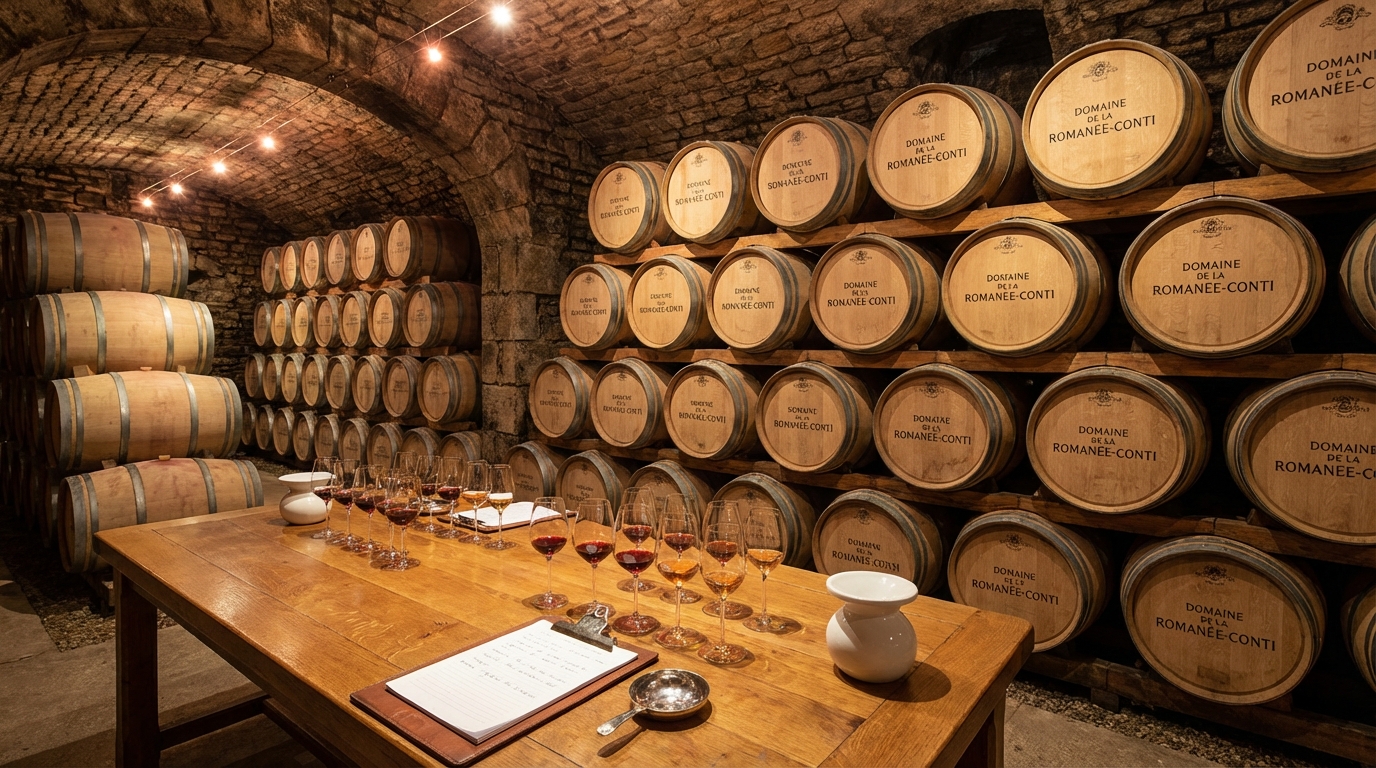
A domaine (or château in Bordeaux) represents the opposite philosophical pole: a wine estate that grows its own grapes, vinifies them on the property, and bottles the finished wine under its own name. The French term mise en bouteille au domaine — estate-bottled — guarantees that every step from vine to bottle occurred under a single producer's control.
The domaine model is rooted in the concept of terroir — the belief that a specific vineyard site, with its unique combination of soil, exposure, altitude, and microclimate, imparts a distinctive character to the wine that cannot be replicated elsewhere. A domaine's entire purpose is to capture and express that terroir with minimal interference. When you buy a bottle from Domaine de la Romanée-Conti, Domaine Leflaive, or Domaine Raveneau, you are purchasing a direct translation of a place into a glass.
Estate bottling demands that the producer owns or controls (through long-term lease) the vineyards from which the grapes are harvested. The winemaker oversees every decision: pruning intensity, canopy management, harvest date, fermentation protocols, barrel selection, and aging duration. This vertical integration gives the domaine unmatched control over quality, but production is limited by the size of the estate's holdings — a domaine with two hectares of Chablis Grand Cru can only produce a finite number of bottles each year, regardless of demand.
The financial risk falls entirely on the domaine owner. A devastating frost or hailstorm cannot be compensated by purchasing grapes from an unaffected area — what the vineyard yields is all there is. This vulnerability explains why many small growers historically sold their grapes to négociants rather than bottling independently.
Historical Context
The négoce system dominated French wine production for centuries. Most vignerons were peasant farmers who lacked the capital, equipment, and commercial networks to bottle and sell wine independently. They sold grapes — or the resulting wine in barrel — to négociant houses in trading cities like Beaune, Nuits-Saint-Georges, and Bordeaux.
In Burgundy, this arrangement was reinforced by extreme vineyard fragmentation. The French Revolution and Napoleonic inheritance laws divided the great monastic and aristocratic estates into tiny parcels among hundreds of families. A grower might own just a few rows of vines in a Grand Cru vineyard — far too little to justify the expense of a cellar, barrels, and a sales force. The négociants filled that gap, and by the early 20th century they controlled the vast majority of Burgundy's wine trade.
The domaine bottling revolution began during the 1950s and 1960s, driven by pioneers who believed the négociant system was obscuring the true character of Burgundy's great vineyards. Henri Jayer, often called the father of modern Burgundy winemaking, championed low-yield viticulture and meticulous cellar work, demonstrating that a grower's own bottling could surpass even the most respected négociant blends. The influential American importer Frank Schoonmaker further accelerated the movement by seeking out domaine-bottled wines for the U.S. market, lending them credibility and commercial viability.
By the 1970s and 1980s, domaine bottling had become the prestige standard in Burgundy. Producers like Domaine Dujac, Domaine Ponsot, and Domaine Comte Georges de Vogüé proved that estate-bottled wines commanded higher prices and deeper critical admiration. The négociants responded by raising their own quality standards — many acquiring prime vineyard land of their own — creating the dynamic tension between the two systems that persists today.
Key Differences Between Négociant and Domaine Wines
Understanding the structural differences helps explain the character of the wine in your glass.
Grape sourcing is the most fundamental distinction. A domaine uses exclusively its own fruit; a négociant assembles fruit from multiple growers and sites. This means a domaine wine is a single-origin expression, while a négociant wine may be a multi-source blend designed for a target style.
Winemaking control differs accordingly. The domaine winemaker controls every variable from pruning to bottling. The négociant winemaker may receive grapes harvested at different ripeness levels, farmed with different philosophies, and transported from different locations — introducing variables that must be managed through blending skill.
Consistency versus terroir expression is the philosophical divide. A great négociant delivers reliable quality year after year, smoothing out vintage variation through blending. A great domaine delivers terroir transparency, meaning the wine will vary more from vintage to vintage but will always reflect its specific place of origin.
Pricing tends to follow predictable patterns. Négociant village-level and regional wines generally offer better value than equivalent domaine bottlings because the négociant's larger production scale reduces per-bottle costs. At the Premier Cru and Grand Cru level, however, domaine wines typically command significant premiums because collectors prize single-estate provenance.
Brand identity operates differently as well. Négociants build their reputation on the house name — you trust Joseph Drouhin across their entire range. Domaines build their reputation on the specific vineyards they own — you trust Domaine Roulot because of their particular holdings in Meursault.
Great Négociants Worth Knowing
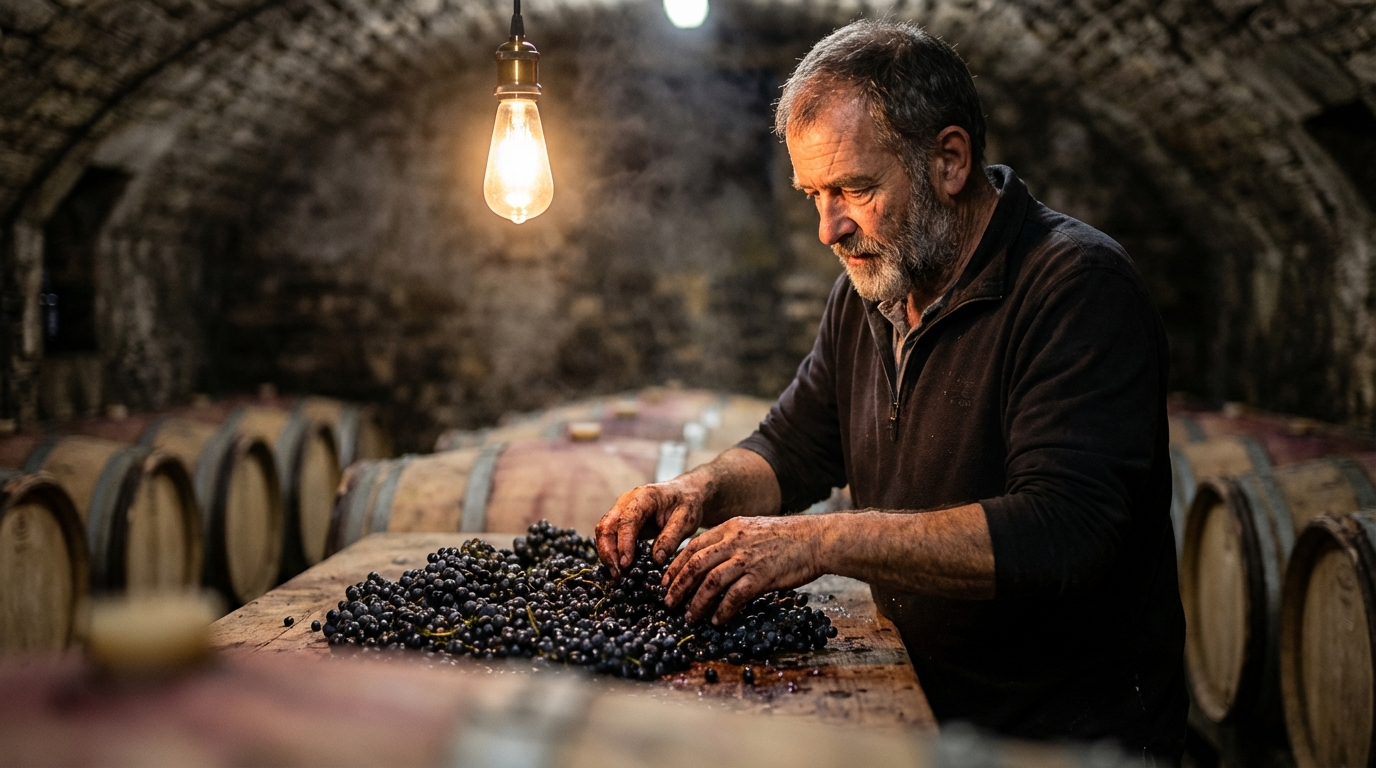
Several négociant houses have achieved quality levels that rival or equal the finest domaines, proving that the model itself is not inherently inferior.
Louis Jadot is arguably Burgundy's most important négociant, producing wines from over 200 appellations while also owning approximately 270 hectares of prime vineyard across the Côte d'Or, Beaujolais, and Mâconnais. Their top wines — particularly the Clos de Vougeot, Chambertin Clos de Bèze, and Corton-Charlemagne from their own domaine holdings — compete with the region's greatest estate bottlings.
Joseph Drouhin, founded in 1880 in Beaune, combines a significant négociant operation with roughly 90 hectares of owned vineyards, including parcels in Musigny, Clos de Vougeot, and Montrachet. The house has been certified organic and biodynamic across its entire estate holdings since the early 2000s, demonstrating that large-scale négociants can embrace sustainable practices.
Bouchard Père & Fils, one of Burgundy's oldest houses (established 1731), owns approximately 130 hectares in the Côte d'Or — one of the largest domaine holdings in the region. Under the ownership of the Henriot family since 1995, Bouchard has dramatically improved quality, with their top cuvées now rivaling the finest grower producers.
Louis Latour, dating to 1797, is notable for its pioneering role in white Burgundy, particularly Corton-Charlemagne, where the house owns significant holdings.
M. Chapoutier in the northern Rhône has transformed from a conventional négociant into one of France's most ambitious producers. Under Michel Chapoutier's leadership since 1990, the house adopted biodynamic viticulture across its estate vineyards and raised quality standards for purchased-fruit wines. Their single-vineyard Hermitage bottlings — Le Méal, L'Ermite, Le Pavillon — are among the most celebrated wines in France.
Reading French Wine Labels
The label is your primary tool for distinguishing négociant from domaine wines, though the terminology requires careful attention.
Mise en bouteille au domaine (or au château in Bordeaux) is the gold standard for estate bottling. It certifies that the producer grew the grapes, made the wine, and bottled it on the property. This phrase appears only on genuine domaine wines.
Mise en bouteille par followed by a company name typically indicates a négociant bottling. Variations include mise en bouteille dans nos caves (bottled in our cellars) and mise en bouteille dans la région de production (bottled in the region of production) — both signals that the wine passed through intermediary hands.
In Champagne, the distinction is encoded in small initials on the label. RM (Récoltant-Manipulant) indicates a grower-producer who makes Champagne exclusively from their own grapes — the equivalent of a domaine. NM (Négociant-Manipulant) indicates a house that purchases grapes or base wines to supplement or replace its own production. The great Champagne houses — Moët & Chandon, Veuve Clicquot, Krug — are all NM producers, while the burgeoning grower Champagne movement has elevated RM producers like Egly-Ouriet, Jacques Selosse, and Pierre Gimonnet to cult status.
Additional label terms include récoltant (grower/harvester), propriétaire (owner), viticulteur (vine grower), and élevé par (raised/aged by — sometimes used by négociants who purchase young wine and age it in their own cellars).
Which Should You Buy?
The honest answer is that both systems produce outstanding wine — and both produce mediocre wine. The question is which model best serves your needs in a given context.
Choose a négociant when you want reliable quality at the regional or village level. A Louis Jadot Bourgogne Rouge or a Drouhin Côtes de Beaune-Villages will consistently deliver well-made wine at a fair price — typically 15 to 30 euros. Négociants also excel at appellations where blending improves the wine, such as broad regional Burgundy, Côtes du Rhône, and non-vintage Champagne.
Choose a domaine when you want to experience a specific terroir or vintage in its purest form. The thrill of a great domaine wine is its individuality — the sense that you are tasting a particular place in a particular year, unmediated by blending or commercial calculation. This matters most at the Premier Cru and Grand Cru level, where the differences between vineyard sites are profound and the winemaker's goal is transparency rather than consistency.
For value, look to négociants for wines under 25 euros and to domaines in undervalued appellations like Mercurey, Saint-Véran, Côtes du Rhône-Villages, and Crozes-Hermitage, where estate-bottled wines remain reasonably priced. The worst value proposition is typically a négociant Grand Cru lacking terroir specificity, or an obscure domaine charging premiums without the track record to justify them.
For cellaring, domaine wines generally age more interestingly because their single-origin character evolves in distinctive ways. Négociant wines, blended for balance, often reach their peak earlier — which is not a flaw if you plan to drink within five to ten years.
Ultimately, the label matters less than the name behind it. A great négociant like Drouhin or Jadot will outperform a careless domaine every time. Conversely, a meticulous grower like Coche-Dury or Georges Roumier produces wines no négociant blend can replicate. The informed buyer trusts producers, not categories — and appreciates what each system does best.


