Twenty Centuries of Vine and Civilization
The ancient Greeks called it Oenotria — the land of wine. When Hellenic colonists arrived on the southern Italian coast in the eighth century BC, they found wild grapevines already flourishing in the volcanic soils of what is now Calabria and Sicily. The Romans, with their characteristic ambition, transformed these scattered plantings into a continental viticultural enterprise, planting vineyards from the Alps to the Strait of Messina, codifying winemaking techniques, and establishing trade routes that carried Italian wine to every corner of the known world. Pliny the Elder, writing in the first century AD, catalogued dozens of Italian wine styles and grape varieties, many of which have identifiable descendants growing in the same regions today.
This continuity — this unbroken thread connecting ancient amphora to modern bottle — is one of the extraordinary things about Italian wine. But it is also what makes Italy the most complex, bewildering, and ultimately rewarding wine country on Earth. With 20 administrative regions, all of which produce wine; over 500 officially recognized native grape varieties (and perhaps twice that number if you include synonyms and local strains); 77 DOCG designations and 334 DOC designations; and a culture that treats wine as an inseparable component of daily life rather than a luxury commodity — Italy presents a landscape of dizzying diversity.
This guide cannot pretend to be comprehensive. Entire books have been written about single Italian wine regions. What it can offer is a framework — a map of the essential territories, grape varieties, and styles that will allow you to navigate Italy's vinous abundance with confidence and curiosity.
Understanding the Italian Classification System
Before exploring the regions, a brief note on Italy's wine classification hierarchy, which functions similarly to France's AOC system:
- Vino da Tavola — Table wine, the most basic category. Ironically, some of Italy's most famous and expensive wines (the original "Super Tuscans") were classified as vino da tavola because they used grape varieties or techniques not permitted by their local DOC regulations.
- IGT (Indicazione Geografica Tipica) — A broader geographic designation that allows greater flexibility in grape varieties and winemaking. Many innovative producers work within the IGT framework.
- DOC (Denominazione di Origine Controllata) — Controlled designation of origin, specifying permitted grape varieties, yields, aging requirements, and geographic boundaries. There are 334 DOC zones across Italy.
- DOCG (Denominazione di Origine Controllata e Garantita) — The highest classification tier, with stricter production standards and mandatory government tasting panels before release. The 77 DOCG wines include Italy's greatest: Barolo, Barbaresco, Brunello di Montalcino, Chianti Classico, and Amarone della Valpolicella, among others.
The system has its critics — some argue it prioritizes tradition over innovation, and the political process of granting DOCG status does not always correspond to quality. But as a consumer's roadmap, it is more reliable than its detractors suggest. A DOCG wine has, at minimum, met legally defined production standards and passed a tasting evaluation. That is no guarantee of greatness, but it is a meaningful quality floor.
Piedmont: The Kingdom of Nebbiolo
If you could visit only one Italian wine region, Piedmont would be the choice. Tucked into the northwestern corner of the country, sheltered by the Alps to the north and west, Piedmont — literally "at the foot of the mountains" — produces Italy's most aristocratic and age-worthy wines, its most celebrated white truffles, and some of its finest cuisine.
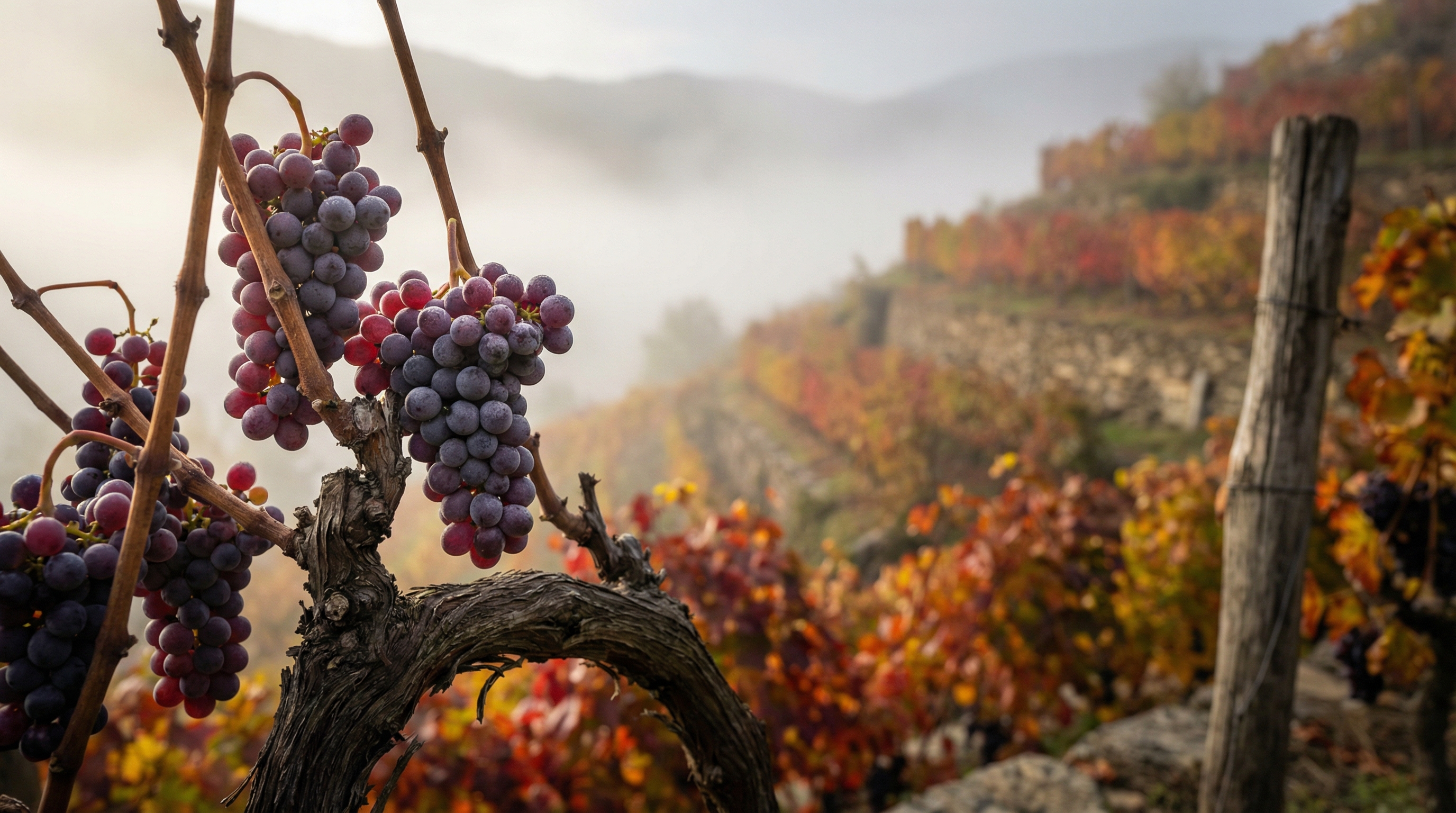
The crown jewel is Nebbiolo, a grape of extraordinary nobility and maddening difficulty. Named for the nebbia (fog) that blankets the Langhe hills during harvest, Nebbiolo produces wines that are pale in color — often a translucent garnet — but monumental in structure, with soaring acidity, formidable tannins, and aromas of astonishing complexity: tar, roses, dried cherry, licorice, earth, leather, truffle, and an ethereal perfume that defies precise description.
Barolo DOCG and Barbaresco DOCG are Nebbiolo's twin summits. Both are located in the Langhe hills south of Alba, separated by about 10 miles and distinguished by subtle differences in soil, exposure, and elevation.
Barolo is the larger and more diverse zone, with 11 officially designated communes and a kaleidoscope of soil types — from the calcareous marl of La Morra and Barolo (producing more aromatic, earlier-maturing wines) to the sandstone-rich soils of Serralunga d'Alba and Monforte d'Alba (yielding more powerful, structured, long-lived wines). Great Barolo demands patience — even in ripe vintages, a top cru may need 10 to 15 years of cellaring before its tannins soften sufficiently to reveal the extraordinary complexity within.
“Wine is the poetry of the earth. Every vineyard, every hill, every vintage writes a different verse. In Barolo, the poem is always long, always complex, and always worth reading to the end.”
— Angelo Gaja
Barbaresco, though smaller and traditionally considered Barolo's slightly softer sibling, has undergone a quality revolution in recent decades. Producers like Angelo Gaja (whose single-vineyard Barbarescos — Sorì Tildìn, Sorì San Lorenzo, and Costa Russi — are among Italy's most celebrated wines), Bruno Giacosa, and Produttori del Barbaresco (a cooperative of exceptional quality) have demonstrated that Barbaresco can rival Barolo in complexity and surpass it in elegance.
Beyond Nebbiolo, Piedmont offers remarkable depth:
- Barbera d'Asti and Barbera d'Alba — Barbera is Piedmont's workhorse grape, producing vibrant, high-acid reds with juicy cherry and plum fruit. Once dismissed as a humble quaffer, Barbera has been elevated by producers like Braida (whose "Bricco dell'Uccellone" pioneered barrique-aged Barbera) and Vietti.
- Dolcetto — The everyday red of the Langhe, soft, fruity, and meant for immediate drinking. Think of it as Piedmont's answer to Beaujolais.
- Gavi DOCG — Crisp, mineral white wine from the Cortese grape, produced south of Alessandria. La Scolca is the benchmark producer.
- Moscato d'Asti DOCG — Gently sparkling, low-alcohol (5–5.5%), lusciously sweet wine from Muscat Blanc à Petits Grains. One of the world's finest dessert wines and absurdly underpriced. Paolo Saracco and Vajra produce exceptional examples.
Tuscany: The Heart of Italian Wine Culture
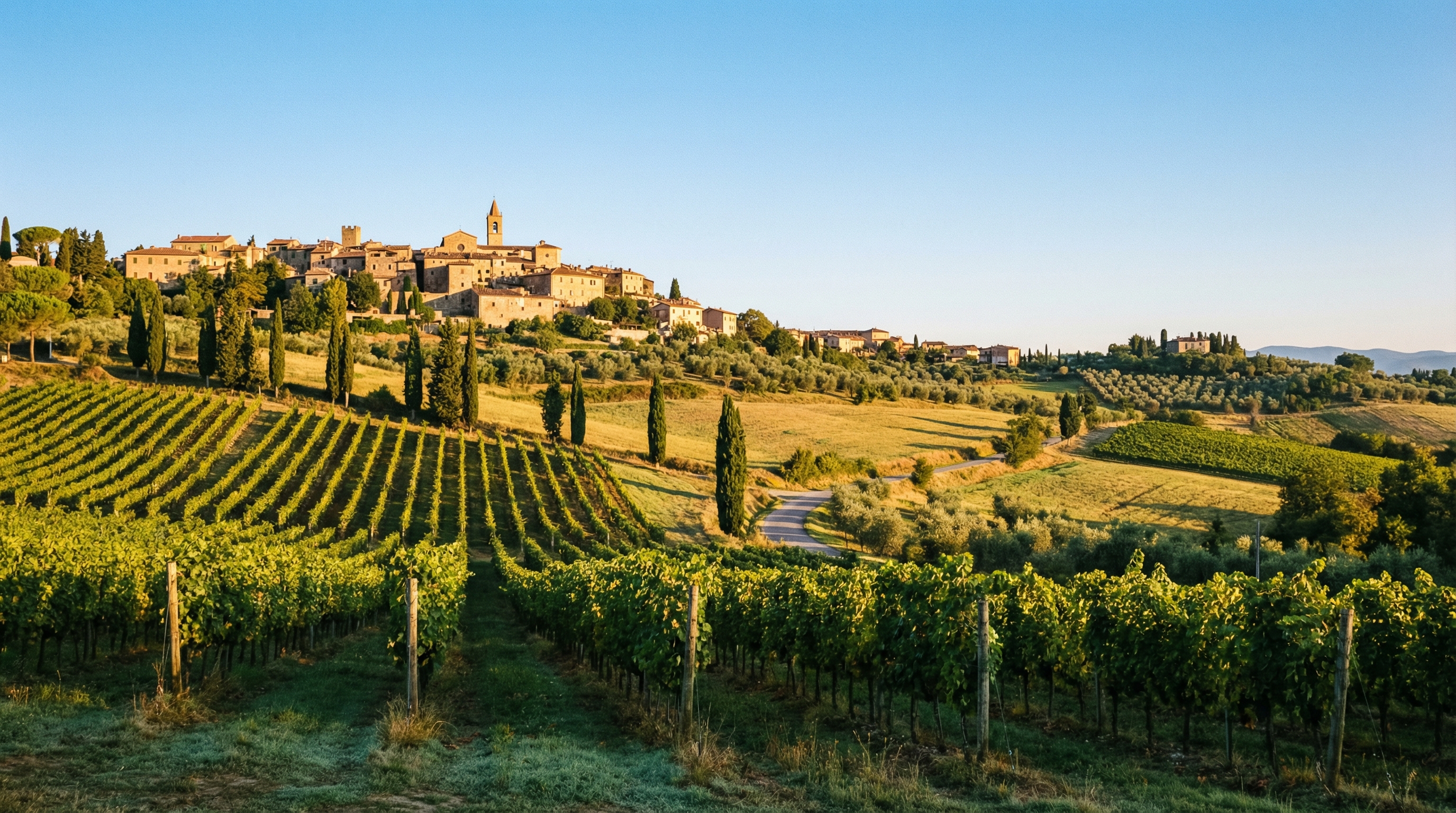
If Piedmont is Italy's aristocracy, Tuscany is its beating heart — the region that, more than any other, defines Italian wine in the global imagination. The cypress-lined roads, the ochre hilltop towns, the olive groves interspersed with vineyards — this is wine country as landscape art, and it has been drawing visitors since the Grand Tour.
Sangiovese is Tuscany's defining grape, a variety of enormous versatility and variable quality. At its best — in the great vineyards of Montalcino, Chianti Classico, and Montepulciano — Sangiovese produces wines of vivid cherry fruit, firm acidity, earthy complexity, and remarkable aging potential. At its worst, from high-yielding vineyards on undistinguished sites, it can be thin, sour, and harsh. Site selection and yield control make all the difference.
Chianti Classico DOCG — The historic heart of Chianti, between Florence and Siena, is a world apart from the generic "Chianti" (without "Classico") that once filled straw-wrapped fiaschi on Italian restaurant tables. Modern Chianti Classico, driven by producers like Fontodi, Isole e Olena, Fèlsina, and Castello di Ama, is serious wine — complex, age-worthy, and expressive of its specific terroir. The introduction of the "Gran Selezione" tier in 2014 created a pinnacle category for single-vineyard or estate-selection wines.
Brunello di Montalcino DOCG — Italy's answer to top Bordeaux, Brunello is 100% Sangiovese (here called Sangiovese Grosso or Brunello) from the sun-drenched hilltown of Montalcino, south of Siena. The DOCG mandates a minimum of four years aging before release (five for Riserva), and the best wines can evolve for 30 years or more. Biondi-Santi, the estate that essentially invented Brunello in the late nineteenth century, remains the traditionalist benchmark. Il Poggione, Casanova di Neri, and Salvioni are also exceptional. For a more affordable entry point, Rosso di Montalcino uses the same vineyards and grape but with shorter aging requirements and a friendlier price.
Vino Nobile di Montepulciano DOCG — Often overlooked between Chianti Classico and Brunello, Montepulciano (not to be confused with the Montepulciano grape of Abruzzo) offers some of Tuscany's best value. Avignonesi and Poliziano are leading producers.
Bolgheri and the Super Tuscan Legacy — The story of Super Tuscans is one of the most dramatic chapters in modern wine history. In the 1970s, a handful of Tuscan aristocrats — most famously Marchese Mario Incisa della Rocchetta at Tenuta San Guido — began planting Cabernet Sauvignon and Merlot (Bordeaux varieties with no tradition in Tuscany) and aging the wines in French oak barriques (rather than traditional large Slavonian oak casks). The resulting wines — Sassicaia, Ornellaia, Tignanello — were brilliant but technically illegal under existing DOC rules, so they were declassified to humble vino da tavola. Their extraordinary quality and astronomical prices eventually forced a regulatory rethinking, leading to the creation of the Bolgheri DOC and broader IGT Toscana classification.
Veneto: From Amarone to Prosecco
The Veneto, in northeastern Italy, is the country's largest wine-producing region by volume and home to an extraordinary range of styles.
Amarone della Valpolicella DOCG is the Veneto's most majestic wine — and one of the most unusual in the world. The process begins with the appassimento technique: selected bunches of Corvina, Corvinone, and Rondinella grapes are dried on racks for three to four months after harvest, losing up to 40 percent of their weight and concentrating sugars, acids, and flavors. The resulting wine is rich, powerful, complex, and typically 15 to 16 percent alcohol, with flavors of dried cherry, dark chocolate, tobacco, and warm spice. Amarone from top producers like Quintarelli, Allegrini, Bertani, and Dal Forno Romano can age for decades. Its sibling wines — Valpolicella Classico (fresh, light, cherry-fruited) and Ripasso (Valpolicella re-fermented on Amarone lees for added body and complexity) — offer more accessible price points.
Prosecco has become the world's most popular sparkling wine, surpassing Champagne in volume. Made from the Glera grape using the Charmat (tank) method rather than Champagne's traditional bottle fermentation, Prosecco at its best — particularly from the steep hillside vineyards of Conegliano Valdobbiadene DOCG and the single-vineyard Cartizze — offers delightful freshness, delicate floral and green-apple aromas, and a gently creamy mousse. It is not trying to be Champagne, and judging it by Champagne's standards misses the point. Bisol, Nino Franco, and Adami are reliable producers.
Soave DOCG — Produced from Garganega grapes on volcanic soils near Verona, good Soave is one of Italy's most underrated white wines: mineral, almond-scented, and refreshingly crisp. Pieropan and Inama are the standard-bearers.
The Italian Wine Regions at a Glance
| Region | Key Grapes | Flagship Wine(s) | Style Profile | Price Range |
|---|---|---|---|---|
| Piedmont | Nebbiolo, Barbera, Dolcetto | Barolo, Barbaresco | Powerful, tannic, aromatic | EUR 15–500+ |
| Tuscany | Sangiovese, Cab. Sauvignon | Brunello, Chianti Classico, Sassicaia | Medium to full-bodied, firm acidity | EUR 10–400+ |
| Veneto | Corvina, Glera, Garganega | Amarone, Prosecco, Soave | Diverse — rich to delicate | EUR 8–200+ |
| Friuli-Venezia Giulia | Friulano, Ribolla Gialla, Pinot Grigio | Collio whites, Ramandolo | Aromatic, textured whites | EUR 10–80 |
| Trentino-Alto Adige | Pinot Grigio, Gewürztraminer, Lagrein | Alto Adige Pinot Grigio, Teroldego | Alpine freshness, precision | EUR 10–60 |
| Campania | Aglianico, Fiano, Greco | Taurasi, Fiano di Avellino | Bold reds, mineral whites | EUR 8–80 |
| Sicily | Nero d'Avola, Nerello Mascalese, Carricante | Etna Rosso, Etna Bianco | Volcanic, elegant, increasingly refined | EUR 10–150 |
| Sardinia | Cannonau, Vermentino | Cannonau di Sardegna | Robust reds, saline whites | EUR 8–50 |
| Abruzzo | Montepulciano, Trebbiano | Montepulciano d'Abruzzo | Generous, fruit-forward reds | EUR 6–40 |
| Puglia | Primitivo, Negroamaro | Primitivo di Manduria | Rich, sun-drenched reds | EUR 6–35 |
Southern Italy and the Islands: The New Frontier
For decades, southern Italy was the bulk-wine engine of the country — vast quantities of anonymous red shipped north to bolster thin Piedmontese and Tuscan blends, or distilled into industrial alcohol. That era is emphatically over. Today, the Mezzogiorno (southern Italy) and the islands of Sicily and Sardinia represent the most dynamic and exciting frontier in Italian wine.
Campania is the south's most distinguished region. Taurasi DOCG, made from Aglianico — sometimes called "the Nebbiolo of the South" for its high acidity, firm tannins, and extraordinary aging potential — is a wine of genuine profundity. Mastroberardino and Feudi di San Gregorio are the leading producers, but a wave of smaller estates (Pietracupa, Ciro Picariello, Quintodecimo) is pushing quality ever higher. The white wines are equally compelling: Fiano di Avellino offers honeyed, nutty richness with vibrant acidity, while Greco di Tufo delivers citrus and mineral purity.
Sicily has undergone the most dramatic transformation of any Italian wine region in the past 25 years. The catalyst has been Mount Etna, Europe's tallest active volcano, whose high-altitude vineyards (up to 1,000 meters) planted on ancient lava flows produce wines of startling finesse and minerality. Etna Rosso, made primarily from Nerello Mascalese, is sometimes compared to Burgundian Pinot Noir for its translucent color, silky tannins, and aromatic complexity — though it has a distinctly volcanic, smoky personality all its own. Passopisciaro (Andrea Franchetti), Benanti, Graci, and Girolamo Ferreri are essential producers. Etna Bianco, from the indigenous Carricante grape, is one of Italy's most exciting white wines — taut, saline, mineral, and utterly unique.
Puglia, the heel of the boot, produces more wine than any other southern region and has moved from bulk to quality with remarkable speed. Primitivo di Manduria (genetically identical to California's Zinfandel) produces rich, warmly fruited reds that offer outstanding value. Negroamaro, the other great Puglian red grape, yields wines of darker, more brooding character, especially in the Salice Salentino DOC.
Sardinia remains one of Italy's most underexplored wine territories. Cannonau (the local name for Grenache) produces generous, herby reds with a distinctly wild character. Vermentino di Gallura DOCG, from the island's granite-soiled northeast, is a white wine of real distinction — saline, herbal, and perfectly suited to the island's extraordinary seafood.
Emerging Regions and Trends
Several developments are reshaping the Italian wine landscape:
Alto Piemonte — North of the traditional Langhe heartland, a cluster of Nebbiolo-based appellations (Gattinara, Ghemme, Boca, Lessona, Bramaterra) is experiencing a dramatic renaissance. These wines, from volcanic and glacial soils at higher altitudes, offer a cooler, more mineral, and often more affordable alternative to Barolo and Barbaresco. Producers like Colombera & Garella, Antoniolo, and Nervi are leading the revival.
Orange wine from Friuli — The northeastern region of Friuli-Venezia Giulia has become the epicenter of Italy's skin-contact white wine movement, inspired by the pioneering work of Josko Gravner and Stanko Radikon. These textured, amber-hued wines, made from Ribolla Gialla, Friulano, and Pinot Grigio fermented on their skins for weeks or months, have influenced winemakers worldwide.
Volcanic wines — Beyond Etna, Italy's volcanic heritage is increasingly recognized as a source of distinctive terroir. Wines from Soave (volcanic tuff), the Colli Euganei (trachyte), Vesuvius (Lacryma Christi del Vesuvio), and the island of Pantelleria (home to the extraordinary Passito di Pantelleria from Zibibbo grapes) are gaining attention for their mineral complexity and sense of place.
Navigating the Italian Wine List
Italian wine can be intimidating, particularly because many wines are named after their place of origin (Barolo, Chianti, Soave) rather than their grape variety. Here are practical strategies for ordering with confidence:
- Learn the big five grapes: Nebbiolo, Sangiovese, Barbera, Corvina, and Aglianico for reds; Garganega, Trebbiano, Vermentino, Fiano, and Cortese for whites. These varieties account for the majority of Italy's important wines.
- Look for DOCG when in doubt. While not infallible, the DOCG designation signals wines that have met meaningful production standards and passed a tasting evaluation.
- Seek out vintages. Italian wines, particularly Barolo, Brunello, and Amarone, are profoundly vintage-dependent. A basic internet search for "best Italian wine vintages" will help you identify the strongest years.
- Ask for regional pairings. Italian wine and food evolved together, and the most satisfying combinations are usually regional: Barolo with braised beef and truffle, Chianti with bistecca alla fiorentina, Etna Rosso with grilled swordfish, Vermentino with seafood and pesto. If you are eating Italian food, drink Italian wine — the synergies are built into the culture.
- Explore the south for value. For everyday drinking, southern Italian wines offer the best quality-to-price ratio in the country. A well-made Montepulciano d'Abruzzo, Nero d'Avola, or Primitivo at EUR 8–15 will outperform most comparably priced wines from anywhere in the world.
For comprehensive coverage of Italian wine, the Gambero Rosso guide (published annually) is the most authoritative Italian-language reference. In English, Decanter and Vinous provide excellent ongoing coverage. The Italian Trade Agency also offers useful regional overviews and event information.
“Italy does not have a wine culture. Italy has twenty wine cultures — one for each region, each with its own grapes, its own traditions, its own relationship between the vine and the table. To understand Italian wine, you must understand that this diversity is not a complication to be simplified. It is the point.”
— Angelo Gaja
A Lifetime of Discovery
I have been studying and drinking Italian wine for over two decades, and I am still regularly astonished by a new grape variety, an unfamiliar appellation, or a producer whose wines challenge my assumptions. That is the gift of Italian wine: it never runs out of surprises. You will never exhaust it, never master it completely, never reach a point where there is nothing left to discover. And that, for anyone who loves wine, is not frustrating — it is exhilarating.
Start with what excites you. If you love bold, powerful reds, begin with Barolo and Amarone. If you prefer elegance and finesse, explore Etna Rosso and Barbaresco. If white wine is your passion, the aromatic whites of Alto Adige and the mineral Vermentinos of Sardinia will captivate you. If value is your priority, the south — Puglia, Campania, Sicily, Abruzzo — offers treasures at prices that make the rest of the wine world look expensive.
Wherever you begin, you are embarking on a journey through twenty centuries of vine and civilization — a journey with no final destination, only the next extraordinary glass.


