What If Everything We Knew About Wine Was Wrong?
Consider a thought experiment. For centuries, winemaking was simple: you grew grapes, you crushed them, the ambient yeasts on the skins fermented the juice into wine, and you drank it — or, if you were lucky, stored it in an amphora or barrel to drink later. There were no cultured yeasts, no commercial enzymes, no reverse osmosis machines, no spinning cones, no micro-oxygenation units. There was just fruit, fermentation, and time. The wine tasted like the place it came from, for better or worse. Then, over the course of the twentieth century, winemaking was industrialized, standardized, and — its critics would argue — sanitized into something predictable, consistent, and increasingly disconnected from the vineyards that produced it.
Now imagine a movement that asks: what if we went back? What if, instead of adding dozens of approved additives and applying sophisticated technological interventions, we trusted the grape and the cellar to do the work? What if the flaws we were taught to avoid — a slight haze, a touch of volatile acidity, the funky tang of Brettanomyces — were not defects at all, but signatures of authenticity?
That is the premise of natural wine. And over the past two decades, it has grown from a fringe ideology embraced by a handful of eccentric French vignerons into a global phenomenon that is reshaping how we produce, sell, think about, and drink wine.
Defining the Undefinable
The first challenge in discussing natural wine is defining it. Unlike "organic" or "biodynamic," the term "natural wine" has no universally accepted legal definition, no certifying body, and no agreed-upon set of production standards. This ambiguity is by design — many natural wine proponents resist codification, arguing that the movement is about philosophy and intention rather than checkboxes and bureaucracy. But it is also a source of legitimate confusion and criticism.
That said, most practitioners and advocates would broadly agree on these principles:
In the vineyard:
- Grapes are farmed organically or biodynamically — no synthetic pesticides, herbicides, or fertilizers
- Yields are kept low through careful canopy management and often severe pruning
- Harvesting is done by hand, allowing for selection of healthy, ripe fruit
- Biodiversity is encouraged — cover crops, insects, and wild plants are seen as allies, not competitors
In the cellar:
- Fermentation is initiated by indigenous (wild) yeasts — no commercial yeast strains
- No additives are used (or very few): no commercial enzymes, acid adjustments, added tannins, coloring agents, or fining agents
- Sulfur dioxide (SO2) is either avoided entirely or used in minimal quantities at bottling — typically below 30 mg/L total, compared to the legal maximum of 150 mg/L for conventional reds and 200 mg/L for whites in the EU
- No filtration or only light filtration
- No technological manipulations such as reverse osmosis, cryoextraction, or micro-oxygenation
“Natural wine is wine made with nothing added and nothing taken away. It is simply fermented grape juice, made from grapes grown without chemicals in the vineyard and without intervention in the cellar.”
— Isabelle Legeron, MW
In 2020, France took a notable step by establishing the Vin Méthode Nature label, a voluntary certification that requires organic viticulture, indigenous yeast fermentation, no additives other than minimal sulfites (below 30 mg/L), and no filtration or "brutal" processing. While not universally adopted, it represents the first formal attempt by a major wine-producing country to define the category.
The Case For: Terroir Without a Filter
The most compelling argument for natural wine is philosophical. If wine is, at its essence, an expression of a specific place — the French concept of terroir — then the fewer interventions imposed between vineyard and bottle, the more truthfully the wine speaks of its origin. Every addition to the cellar, every manipulation of the must, potentially masks or homogenizes the unique character that a particular site, vintage, and grape variety impart.
Natural wine proponents argue that conventional winemaking, at its most industrial, reduces wine to a manufactured product — consistent, predictable, and stripped of identity. When you inoculate with a commercial yeast selected to produce specific flavor compounds, when you add tartaric acid to boost acidity or sugar to raise alcohol, when you use fining agents to strip out color and texture, you are constructing a wine rather than revealing one. The result may be technically flawless, but it can also be anonymous — a wine that could have come from anywhere.
The environmental argument is equally powerful. Natural wine, by requiring organic or biodynamic viticulture, promotes healthier soils, greater biodiversity, and reduced chemical runoff into waterways. In a world facing accelerating climate change and biodiversity loss, farming practices that work with ecosystems rather than against them carry genuine moral weight.
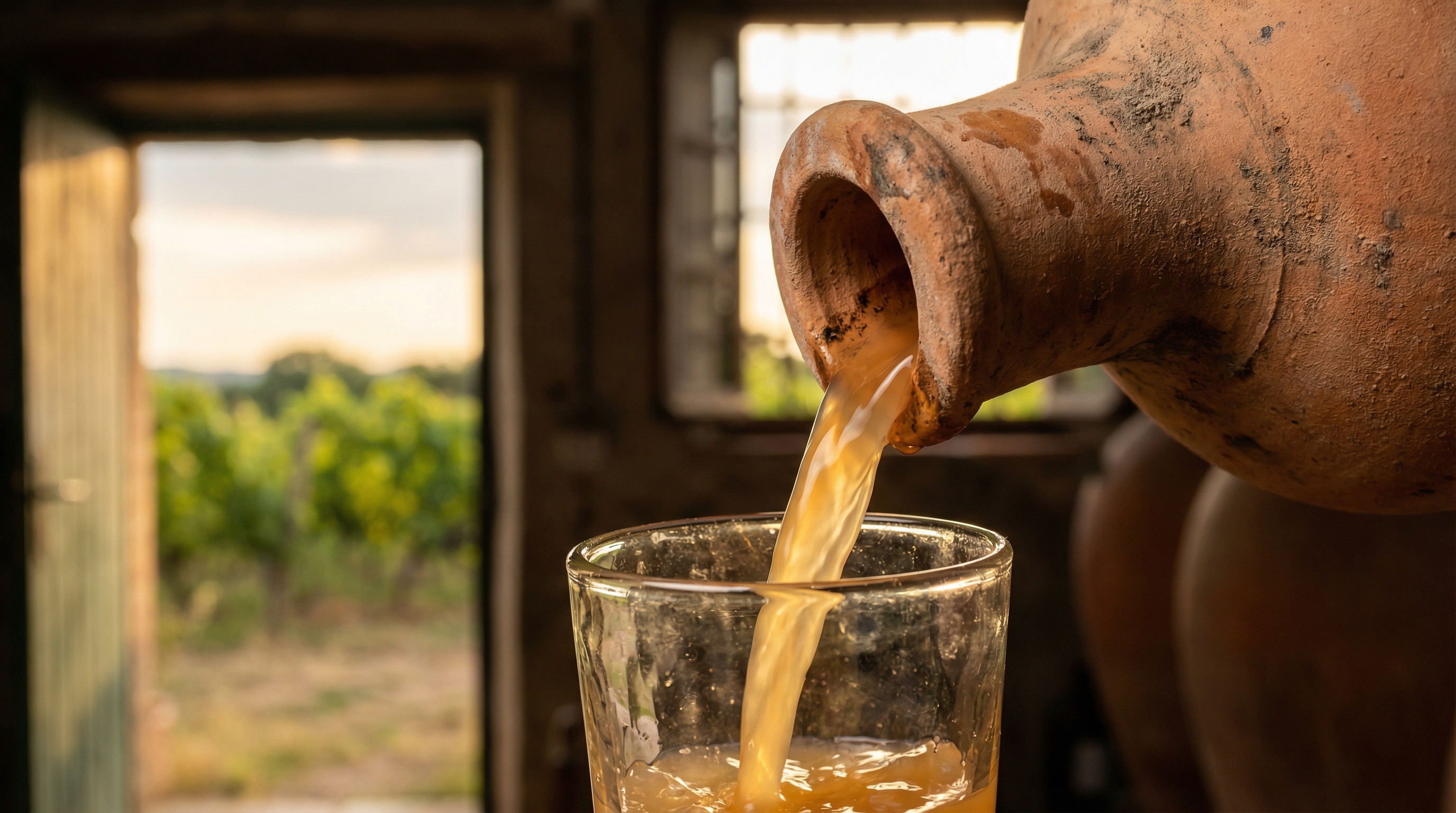
And then there is the simple matter of taste. At their best, natural wines offer a vitality, freshness, and directness that can be startlingly beautiful. A well-made natural Gamay from Beaujolais — crunchy-fruited, slightly chilled, singing with minerals — has an energy that no amount of winemaking technology can replicate. An orange wine from Friuli, where white grapes are fermented on their skins for weeks or months in ancient clay vessels, offers textures and flavors — honeyed, tannic, saline, herbal — that conventional white winemaking cannot produce.
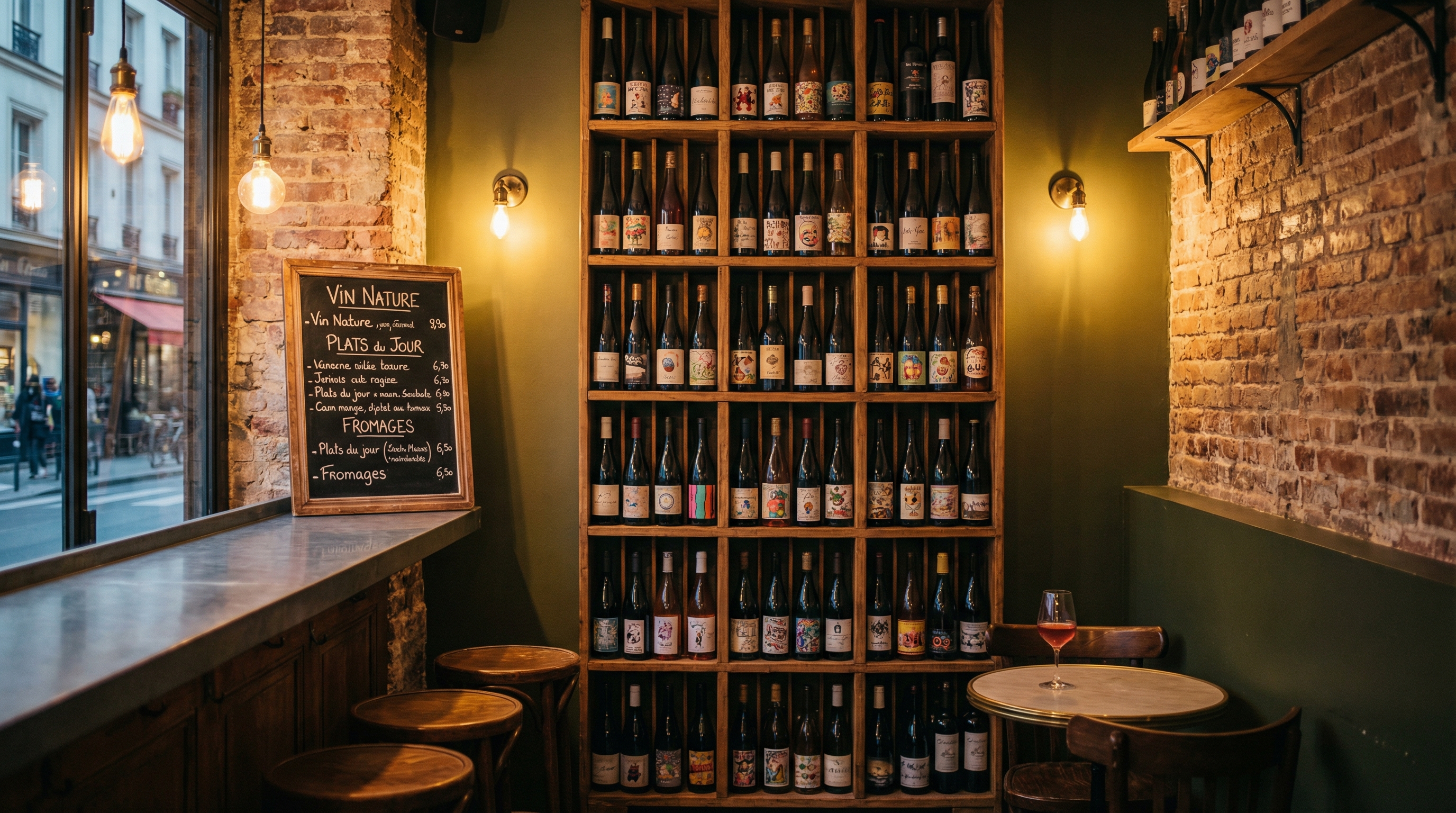
The market has responded. According to data from IWSR, the natural wine segment grew at approximately 10 to 15 percent annually between 2019 and 2024, vastly outpacing the broader wine market. In Paris, London, New York, Tokyo, and Melbourne, natural wine bars have multiplied from a handful of pioneering establishments to hundreds. Major retailers — including Whole Foods and independent merchants worldwide — now maintain dedicated natural wine sections. This is no longer a fringe movement.
The Case Against: When Philosophy Meets the Glass
Critics of natural wine are neither uninformed nor motivated solely by conservatism. Their concerns deserve serious engagement.
The most common criticism is inconsistency. Without the stabilizing tools of conventional winemaking — sulfur dioxide to prevent oxidation and microbial spoilage, filtration to remove haze-causing compounds, commercial yeast to ensure a reliable fermentation — natural wines are inherently more variable. A bottle opened today may taste different from an identical bottle opened next month. Worse, some natural wines are simply faulty: mousiness (a persistent, unpleasant aftertaste caused by certain lactic acid bacteria), excessive volatile acidity (a vinegary sharpness), and premature oxidation are more common in natural wines than in their conventional counterparts.
“I have tasted natural wines that were among the most exciting things I have ever put in my mouth. I have also tasted natural wines that I would have poured down the sink. The problem is not the philosophy — it is the execution, and the ideology that sometimes prevents practitioners from acknowledging when a wine has failed.”
— Alice Feiring
There is also the question of sulfur dioxide. SO2 has been used in winemaking since at least the Roman era, and its antimicrobial and antioxidant properties are well understood. Most winemakers, including many who farm organically and ferment with indigenous yeasts, regard a small addition of sulfur at bottling as a prudent safeguard — not a betrayal of terroir. The zero-sulfur purists counter that any SO2 addition compromises the wine's naturalness, but this position can feel doctrinaire.
The marketing problem is real, too. "Natural wine" has become a powerful brand identifier, and not everyone using the term shares the same commitment. A producer who farms conventionally and then makes minimal interventions in the cellar is not the same as one who has spent decades building soil health through biodynamic practices. Without a clear legal definition, consumers must rely on trust, research, and specialized merchants — which works for dedicated enthusiasts but creates barriers for casual wine drinkers seeking reliable quality.
The Spectrum, Not the Binary
The most productive way to think about natural wine is not as a binary — natural versus conventional — but as a spectrum. At one end sit the industrial wineries processing thousands of tons of machine-harvested grapes with a full arsenal of additives and technology. At the other end sit the zero-sulfur, zero-intervention purists farming two hectares by hand. Between these poles lies the vast majority of the world's interesting wine, produced by people who care deeply about their vineyards and make thoughtful choices about when to intervene and when to stand back.
Many of the world's greatest winemakers occupy this middle ground. Lalou Bize-Leroy farms biodynamically and uses indigenous yeasts but does not call herself a natural winemaker. Domaine de la Romanée-Conti has used organic and biodynamic practices for decades. In Barolo, producers like Bartolo Mascarello and Giuseppe Rinaldi made wine with minimal intervention long before the natural wine movement had a name. In the Jura, the late Pierre Overnoy's wines — made without sulfur, from meticulously farmed Ploussard and Savagnin — are among the most sought-after bottles on Earth, yet Overnoy never cared about labels or movements. He was simply making wine the way his grandfather taught him.
Key Producers and Regions to Explore
The geography of natural wine is global, but certain regions have become epicenters:
Beaujolais, France — The spiritual homeland of modern natural wine, thanks to the influence of Marcel Lapierre, Jean Foillard, Guy Breton, and Jean-Paul Thévenet — the so-called "Gang of Four" who, under the mentorship of chemist Jules Chauvet, pioneered carbonic maceration, wild-yeast fermentation, and zero-sulfur bottling in the 1980s. Today, the next generation — Yvon Métras, Rémi Dufaitre, and Julien Sunier — continues this tradition. For a comprehensive introduction, the writings of Alice Feiring are indispensable.
The Loire Valley, France — The Loire's cool climate and diverse soils are ideally suited to low-intervention winemaking. Chenin Blanc, in particular, produces spectacular natural wines, from the honeyed richness of Savennières to the sparkling vivacity of Vouvray. Richard Leroy, Domaine de la Coulée de Serrant (Joly), and Catherine & Pierre Breton are essential producers.
The Jura, France — This small, mountainous region near the Swiss border has become a cult destination for natural wine lovers. The indigenous Savagnin grape, left to age under a veil of flor yeast in the vin jaune style, produces wines of extraordinary complexity — nutty, saline, and unlike anything else in the wine world. Domaine Ganevat, Domaine des Miroirs, and the aforementioned Overnoy (now continued by Emmanuel Houillon) are touchstones.
Georgia — Georgia claims 8,000 years of continuous winemaking tradition, making it arguably the oldest wine culture on Earth. The traditional method — fermenting white grapes on their skins in buried clay vessels called qvevri — is the template for the modern orange wine movement. Producers like Pheasant's Tears and Iago's Wine offer an authentic window into this ancient practice.
Italy — Italian natural wine is a broad church, ranging from Josko Gravner's skin-contact whites in Friuli to Frank Cornelissen's volcanic reds on Mount Etna to Elisabetta Foradori's Teroldego in Trentino. The diversity of Italy's native grape varieties (over 500) provides an enormous canvas for natural winemaking exploration.
Australia — Australia's natural wine scene, centered on Adelaide Hills, McLaren Vale, and the Yarra Valley, is among the most dynamic in the New World. Producers like Lucy Margaux, Jauma, and BK Wines combine Australian fruit intensity with minimal-intervention winemaking to produce wines of genuine originality.
How to Navigate the Natural Wine World
For those new to natural wine, a few practical suggestions:
- Find a good merchant. A knowledgeable wine shop with a dedicated natural wine section is invaluable. Staff who taste widely and buy carefully will steer you toward well-made bottles and away from flawed ones. In the United States, shops like Chambers Street Wines (New York), Ordinaire (Oakland), and Verve Wine (multiple locations) are excellent starting points.
- Start with the classics. Begin with producers who have long track records — Lapierre, Foillard, and Breton in France; Gravner and Foradori in Italy; Gut Oggau and Meinklang in Austria. These wines will demonstrate what natural winemaking can achieve at its best.
- Keep an open mind but trust your palate. Not every funky, cloudy bottle is a masterpiece. If a wine smells like Band-Aids, cider vinegar, or wet cardboard, it may be faulty — regardless of how natural it is. Conversely, if a wine is hazy but tastes vibrant and alive, the cloudiness is not a defect.
- Serve slightly cool. Many natural wines, especially reds, benefit from a slight chill (15–16°C / 59–61°F). This preserves freshness and reins in any volatile aromas.
- Give wines time to breathe. Natural wines, particularly those bottled without sulfur, can show reductive aromas (struck match, cabbage) on opening. A vigorous decant or 30 minutes in the glass usually resolves this.
For ongoing education and reviews, RAW WINE, founded by Isabelle Legeron MW, hosts fairs worldwide and maintains a comprehensive producer directory. The Feiring Line, Alice Feiring's newsletter, offers passionate and knowledgeable coverage of the natural wine world.
The Future Is Fermented
The natural wine movement has already achieved something remarkable: it has forced the entire wine industry to reconsider its relationship with technology, additives, and transparency. Even producers who reject the "natural" label have, in many cases, reduced their sulfur use, adopted organic practices, and moved toward indigenous yeast fermentation — influenced, whether they acknowledge it or not, by the philosophical challenge that natural wine poses.
The next frontier is transparency. Consumers increasingly want to know not just what is in their wine, but how it was made. The EU's requirement for ingredient labeling on wine, implemented in 2023, is a step in the right direction but does not capture the full picture of winemaking interventions. As information becomes more accessible, the distinction between natural and conventional will likely give way to a more nuanced, label-by-label understanding of individual producers' practices.
Natural wine is not perfect. It is sometimes inconsistent, occasionally faulty, and frequently overpriced relative to its conventional peers. But it has asked the right questions — about authenticity, about ecology, about what wine fundamentally is — and in doing so, it has made the entire wine world more interesting. Whether you become a devoted convert or a selective admirer, engaging with natural wine will expand your palate and sharpen your thinking about what you want from every glass you drink.
“Drinking natural wine is like listening to live music versus a studio recording. It is not always perfect, but it is alive — and that aliveness is irreplaceable.”
— Isabelle Legeron, MW


