History and Overview of Loire Valley Wine
The Loire Valley stretches over 1,000 kilometers from the volcanic highlands of the Massif Central to the Atlantic coast at Nantes, making it the longest wine river in France and one of the most geographically diverse wine regions on Earth. With more than 70 appellations and approximately 70,000 hectares under vine, the Loire produces an astonishing range of styles — bone-dry whites, lush sweet wines, silky reds, crisp rosés, and some of France's finest sparkling wines outside Champagne.
Viticulture in the Loire dates to Roman times, with evidence of organized vineyard cultivation by the 1st century AD along the river's middle reaches. The region's wine culture accelerated dramatically during the medieval period, when Benedictine and Cistercian monasteries established vineyards that still produce today. The Loire's navigable waterway provided a natural trade route to the ports of Nantes and onward to England, the Low Countries, and Scandinavia — making Loire wines among the most widely exported in medieval Europe.
The valley's association with French royalty cemented its prestige. From the 15th century onward, kings and nobles built the famous châteaux — Chambord, Chenonceau, Amboise — and planted vineyards to supply their courts. François I championed the wines of Touraine, while the Dutch trade networks of the 17th and 18th centuries transformed the Pays Nantais and Anjou into major production zones, encouraging the cultivation of Melon de Bourgogne and the production of sweet Chenin Blanc for export. Today the Loire remains France's third-largest wine region by volume, producing roughly 4 million hectoliters annually across a mosaic of terroirs that stretches from oceanic to semi-continental climates.
The Four Sub-Regions
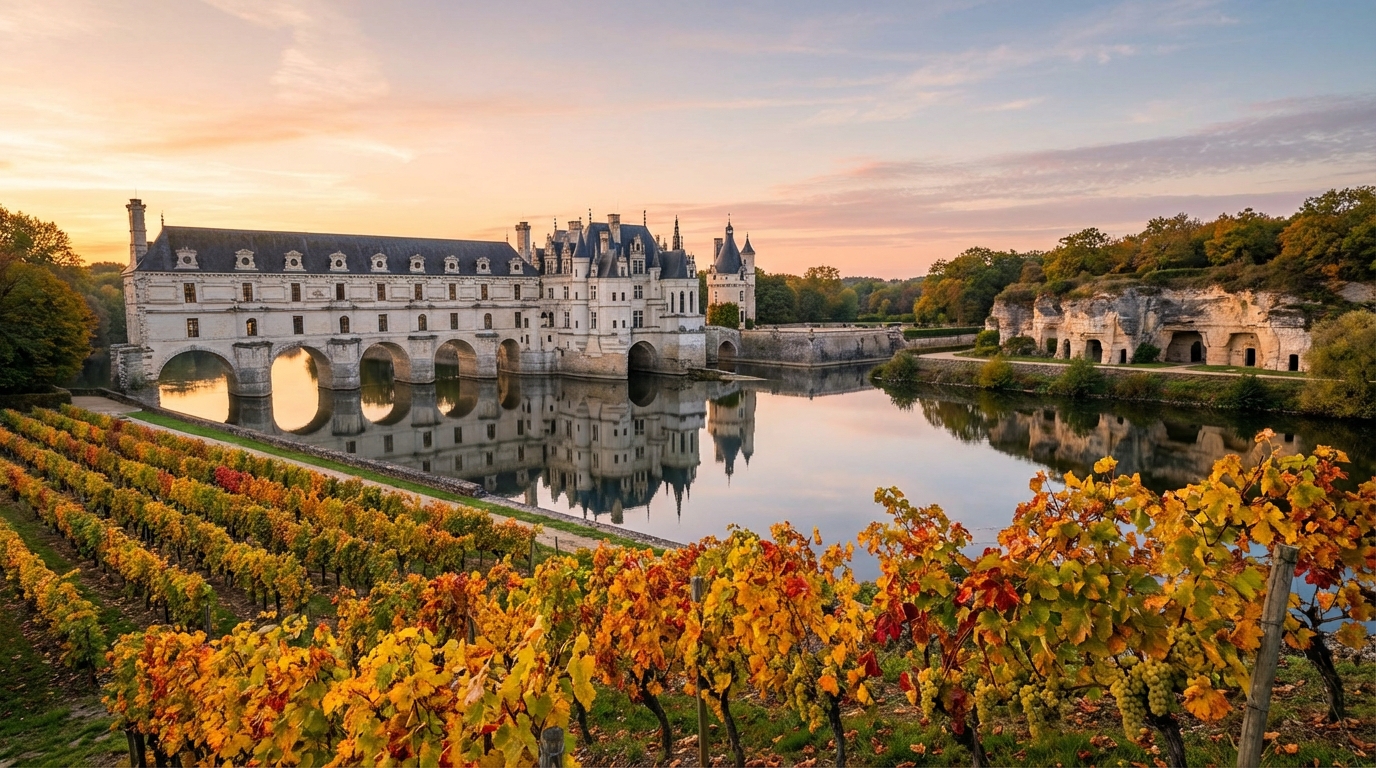
The Loire Valley is conventionally divided into four major sub-regions, each with a distinct climate, soil profile, and varietal identity.
Pays Nantais occupies the western end of the valley, influenced heavily by the Atlantic Ocean. The maritime climate — mild, humid, and moderated by sea breezes — produces the region's lightest, most refreshing whites. This is the exclusive home of Muscadet, made from Melon de Bourgogne. Soils are predominantly gneiss, granite, and volcanic schist, contributing a pronounced mineral character to the wines. The best vineyards sit on the gentle slopes above the Sèvre and Maine rivers.
Anjou-Saumur extends eastward along the Loire from Angers to Saumur, transitioning from oceanic to semi-continental influence. The landscape is dominated by tuffeau — the soft, creamy limestone that was quarried to build the great châteaux and that now provides natural cellars for aging wine. Anjou is the heartland of Chenin Blanc, producing everything from bone-dry Savennières to the luscious botrytized sweet wines of Coteaux du Layon, Quarts de Chaume, and Bonnezeaux. Saumur contributes excellent sparkling wines and increasingly serious Cabernet Franc reds.
Touraine centers on the historic city of Tours and encompasses the vineyards of Chinon, Bourgueil, and Saint-Nicolas-de-Bourgueil — the Loire's premier red-wine appellations. The climate here is distinctly semi-continental, with warmer summers and colder winters than the western reaches. Soils alternate between gravel terraces, tuffeau limestone, and clay-over-limestone slopes, producing Cabernet Franc of remarkable elegance and complexity. Touraine also produces notable dry whites from Sauvignon Blanc, particularly in the appellation of Touraine-Oisly.
Centre (or Centre-Loire) at the eastern extremity of the region includes the celebrated appellations of Sancerre and Pouilly-Fumé, sitting on opposite banks of the Loire near the town of Pouilly-sur-Loire. The climate is fully continental, and the soils — Kimmeridgian limestone, flint (silex), and clay-limestone (terres blanches) — produce Sauvignon Blanc of extraordinary mineral precision. This is also the home of Menetou-Salon, Quincy, and Reuilly, which offer similar styles at more accessible prices.
Key Grape Varieties
The Loire's range of grape varieties reflects its climatic diversity, but five dominate the region's identity.
Chenin Blanc is the Loire's most versatile and age-worthy white grape, planted extensively from Anjou through Touraine. It produces an extraordinary spectrum of styles: razor-sharp dry wines in Savennières, off-dry to lusciously sweet wines in Vouvray and Coteaux du Layon, and fine sparkling wines in Saumur and across the Crémant de Loire appellation. Great Chenin Blanc is defined by piercing acidity, flavors of quince, honey, chamomile, and wet wool, and a capacity to age for decades — top Vouvray and Savennières from the best vintages can improve for 50 years or more.
Sauvignon Blanc reigns in the eastern Loire, where it produces some of the most benchmarked expressions of the variety in the world. Sancerre and Pouilly-Fumé set the global standard for mineral-driven, citrus-and-herb Sauvignon, with a style that emphasizes terroir over tropical fruit. The variety also appears throughout Touraine, where it delivers more immediate, fruit-forward wines at friendlier prices.
Melon de Bourgogne is found almost exclusively in the Pays Nantais, where it is the sole grape behind Muscadet. Brought to the Loire from Burgundy after the devastating frost of 1709, Melon produces lean, saline, low-alcohol whites that gain texture and complexity through extended lees aging (sur lie). The best Muscadet Sèvre-et-Maine sur Lie bottles show remarkable savory depth.
Cabernet Franc is the Loire's most important red variety, producing wines of finesse and aromatic complexity that stand apart from the richer, more tannic Cabernet Franc of Bordeaux's Right Bank. In Chinon, Bourgueil, and Saint-Nicolas-de-Bourgueil, the grape yields medium-bodied reds with notes of raspberry, violet, graphite, and green bell pepper (in cooler years). Top cuvées from old-vine parcels on tuffeau limestone age beautifully for 15 to 25 years.
Gamay plays a supporting but significant role, particularly in Touraine, where it produces juicy, refreshing reds often compared to Beaujolais. Pinot Noir appears in Sancerre Rouge and Menetou-Salon Rouge, producing delicate, Burgundy-inflected reds that are gaining critical attention as climate warming improves ripeness.
Major Appellations
Muscadet Sèvre-et-Maine is the largest and most important Muscadet appellation, accounting for roughly 80% of all Muscadet production. The sur lie designation indicates the wine was aged on its fine lees until bottling, adding texture, subtle yeasty complexity, and a characteristic slight spritz. The recent introduction of Crus Communaux — village-level designations such as Clisson, Gorges, and Le Pallet — has elevated the appellation's ambition, requiring extended aging of 18 to 24 months on lees.
Savennières is a tiny appellation of roughly 150 hectares producing exclusively dry Chenin Blanc of extraordinary concentration and longevity. Within its borders lie two Grand Cru-level monopoles: Coulée de Serrant (owned by Nicolas Joly) and La Roche aux Moines. These wines are austere in youth, demanding 5 to 10 years of cellaring before revealing their full honeyed, mineral complexity.
Vouvray is the most famous Chenin Blanc appellation in the Loire, producing wines across the full sweetness spectrum — sec (dry), demi-sec (off-dry), moelleux (sweet), and pétillant/mousseux (sparkling). The appellation's tuffeau caves provide ideal conditions for aging, and the best dry and sweet Vouvrays from producers like Domaine Huet are among the most long-lived white wines in France.
Chinon is the flagship red appellation, spread across 2,350 hectares of vineyards on both banks of the Vienne River. Three soil types produce distinct styles: gravel and sand near the river yield light, fruity wines for early drinking; tuffeau slopes produce structured, aromatic mid-weight reds; and clay-over-limestone plateau sites deliver concentrated, tannic wines built for aging. The appellation is virtually 100% Cabernet Franc.
Sancerre covers approximately 3,000 hectares on the left bank of the Loire, producing white, red, and rosé wines. White Sancerre — from Sauvignon Blanc — represents about 80% of production and remains the global reference point for the variety. The three principal soil types — silex (flint), terres blanches (Kimmeridgian clay-limestone), and caillottes (stony limestone) — each contribute a recognizable signature. Silex gives smoky, flinty intensity; terres blanches produce fuller, rounder wines; caillottes yield lighter, more aromatic expressions.
Pouilly-Fumé sits directly across the river from Sancerre and shares many of the same soil types, producing Sauvignon Blanc of comparable quality with a slightly different character — often described as smokier and more gunflint-driven, which gave the appellation its name (fumé meaning "smoked"). Bourgueil and Saint-Nicolas-de-Bourgueil complement Chinon as the Loire's other top Cabernet Franc appellations, with Bourgueil tending toward slightly more structure and Saint-Nicolas toward approachable fruit.
Sparkling Loire
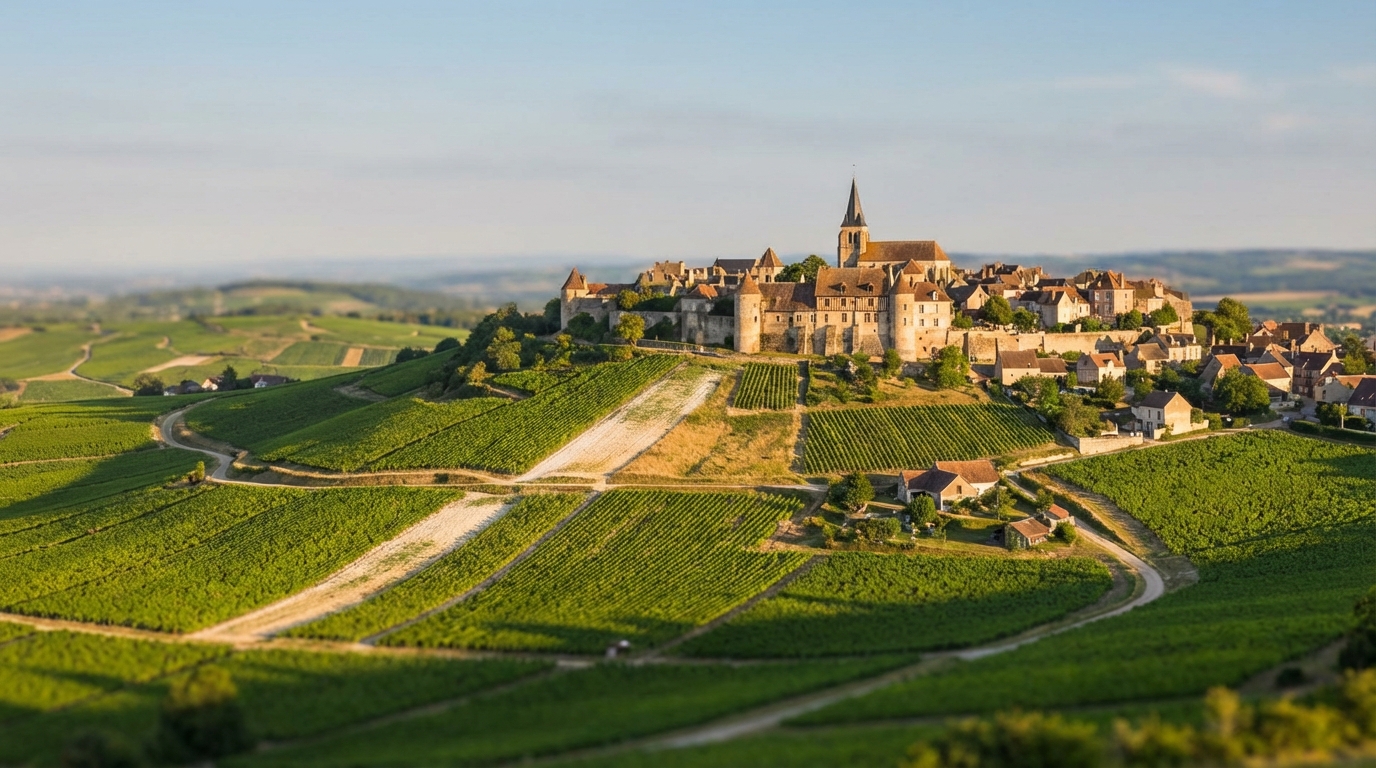
The Loire Valley is France's second-largest producer of traditional-method sparkling wine after Champagne, with annual production exceeding 20 million bottles. Three appellations dominate Loire sparkling production.
Crémant de Loire is the most important, drawing from vineyards across Anjou, Saumur, and Touraine. It permits a wide range of grape varieties — primarily Chenin Blanc, along with Chardonnay, Cabernet Franc (for rosé), and Pinot Noir. Minimum aging on lees is 12 months, though many quality producers age their wines for 24 to 36 months, developing the toasty, brioche-like complexity associated with fine traditional-method sparkling wine. For its quality, Crémant de Loire remains among the best-value sparkling wines in the world, typically priced at a fraction of Champagne.
Saumur Mousseux predates Crémant de Loire and was historically the region's most prestigious sparkling appellation. Made predominantly from Chenin Blanc grown on tuffeau limestone, the best examples combine citrus freshness with chalky minerality. The town of Saumur's extensive tuffeau caves — some stretching for kilometers underground — provide naturally cool, humid conditions ideal for the slow secondary fermentation and extended lees aging that produce the finest bubbles.
Vouvray Mousseux and Vouvray Pétillant are sparkling expressions of Vouvray's Chenin Blanc, produced by the traditional method. Vouvray mousseux is fully sparkling, while pétillant is gently fizzy, with lower atmospheric pressure. Both can be remarkable — the high natural acidity and apple-quince fruit profile of Chenin Blanc make it an ideal base for sparkling wine, and aged examples develop a honeyed, biscuity richness that can rival good Champagne.
Sweet Wines of the Loire
The Loire's great sweet wines, almost exclusively from Chenin Blanc, rank among the finest dessert wines in the world, yet remain dramatically undervalued compared to Sauternes or top German Trockenbeerenauslese.
Coteaux du Layon is the largest sweet-wine appellation, stretching along the Layon River in Anjou. Autumn mists rising from the river encourage the development of Botrytis cinerea (noble rot), which concentrates the grapes' sugars and adds exotic flavors of dried apricot, saffron, ginger, and marmalade. Within Coteaux du Layon, two smaller appellations represent the pinnacle of quality.
Quarts de Chaume — elevated to Grand Cru status in 2011, the first in the Loire — covers just 40 hectares of south-facing schist slopes that trap heat and funnel morning mists. Yields are restricted to a minuscule 15 hectoliters per hectare, producing wines of extraordinary concentration and longevity. Great Quarts de Chaume can age for a century.
Bonnezeaux occupies approximately 100 hectares of steep schist hillsides, producing similarly concentrated botrytized Chenin Blanc with flavors of candied citrus, honey, and exotic spice. Both appellations demand hand-harvesting in multiple passes (tries successives) to select only botrytis-affected berries.
Vouvray moelleux (sweet Vouvray) is produced in warm vintages when Chenin Blanc achieves high natural sugar levels, with or without noble rot. The best examples balance intense sweetness with Vouvray's hallmark acidity, creating wines that feel vibrant rather than cloying. Domaine Huet's sweet Vouvrays from Le Haut-Lieu, Le Mont, and Clos du Bourg are benchmarks of the style.
Food Pairing and Travel
The Loire Valley's culinary identity mirrors its wines — light, elegant, and deeply rooted in local ingredients. The region's cuisine emphasizes river fish (pike, perch, shad), goat cheese (the famous Crottin de Chavignol from the Sancerre area, Sainte-Maure de Touraine, Valençay), charcuterie (rillettes de Tours, rillauds d'Anjou), and seasonal produce.
Muscadet is the definitive match for Atlantic seafood — oysters, mussels, langoustines, and grilled sardines. The wine's saline minerality and low alcohol create a seamless pairing that amplifies the ocean's flavors. Sancerre and Pouilly-Fumé pair brilliantly with fresh goat cheese — the classic Sancerre-et-Crottin combination is one of France's greatest regional pairings. The herbal, grassy notes in the wine echo the tang of the cheese.
Chinon and Bourgueil Cabernet Franc partner naturally with rillettes, roasted pork, grilled lamb chops, and earthy mushroom dishes. Serve them slightly cool at 14 to 16°C to highlight their aromatic freshness. Sweet wines from the Layon and Vouvray pair exquisitely with tarte Tatin, blue cheese (especially Roquefort), foie gras, and spiced fruit desserts.
For visitors, the Loire Valley is a UNESCO World Heritage Site from Sully-sur-Loire to Chalonnes-sur-Loire, encompassing the most spectacular concentration of Renaissance châteaux in France. The wine route weaves through the towns of Nantes, Angers, Saumur, Tours, Amboise, and Sancerre, each with a distinct character and viticultural heritage. Many producers welcome visitors for tastings, and the troglodyte caves of Saumur and Vouvray — carved directly into the tuffeau cliffs — offer an unforgettable setting for discovering the region's wines underground.
Top Producers
Nicolas Joly (Savennières) is the world's most famous advocate of biodynamic viticulture and the owner of Coulée de Serrant, a 7-hectare monopole that has been cultivated continuously since Cistercian monks planted it in 1130. Joly's wines are polarizing — austere, oxidative in youth, and requiring years of patience — but mature Coulée de Serrant is among the most profound dry white wines produced anywhere. His influence on natural winemaking philosophy extends far beyond the Loire.
Didier Dagueneau (Pouilly-Fumé) revolutionized the appellation before his untimely death in a plane crash in 2008. His obsessive attention to viticulture — including extremely low yields, hand-harvesting, and barrel fermentation in Burgundian oak — produced Sauvignon Blanc of unprecedented concentration and complexity. His cuvées Silex, Pur Sang, and Asteroïde remain among the most sought-after white wines in France. The estate is now run by his children, Louis-Benjamin and Charlotte Dagueneau, who have maintained the exacting standards.
Domaine Huet (Vouvray) is widely regarded as the greatest estate in Vouvray and one of the finest producers of Chenin Blanc in the world. Farmed biodynamically since 1990 under the direction of Noël Pinguet (and now managed by the Hwang family following its acquisition by a wine-loving benefactor), the domaine produces three single-vineyard wines — Le Haut-Lieu, Le Mont, and Clos du Bourg — in dry, demi-sec, and moelleux styles depending on the vintage. The sweet wines are legendary, capable of improving for half a century or more.
Olga Raffault (Chinon) set the standard for Chinon Cabernet Franc across decades of meticulous winemaking. The domaine's cuvée Les Picasses, from old vines on tuffeau slopes, is a benchmark for the appellation — structured, aromatic, and built for long aging. The estate continues under the stewardship of Sylvie Raffault, maintaining the family's tradition of site-specific, terroir-driven Chinon.
Other producers of outstanding quality include Domaine François Chidaine (Vouvray/Montlouis), Domaine des Baumard (Savennières/Quarts de Chaume), Alphonse Mellot (Sancerre), Domaine Vacheron (Sancerre), Domaine de la Taille aux Loups (Montlouis/Vouvray), Château de Villeneuve (Saumur-Champigny), Domaine Catherine et Pierre Breton (Bourgueil), and Domaine Philippe Alliet (Chinon). The Loire's remarkable depth of quality at every price level makes it one of the most rewarding French wine regions for exploration.


