A 2,600-Year Winemaking Heritage: The Oldest Wine Region in France
Provence is not merely France's oldest wine region — it is the birthplace of French winemaking itself. Around 600 BCE, Phocaean Greeks from Asia Minor founded Massalia (modern Marseille) and planted the first vines on the limestone hillsides above the Mediterranean coast. Six centuries before Romans carried viticulture north to Burgundy and Bordeaux, Provençal vineyards were already producing wine for trade across the ancient world.
The Romans expanded what the Greeks began. Under Augustus, Provence became part of the Provincia Romana — the origin of the region's name — and Roman veterans planted vineyards across the southern coast. By the first century CE, Provençal wines were exported as far as Britannia. The medieval period saw monastic orders, particularly the Cistercians and Knights Templar, maintain viticultural knowledge through centuries of upheaval.
Yet for most of the modern era, Provence labored under an identity problem. While Bordeaux, Burgundy, and Champagne built global luxury brands, Provence was perceived as a producer of pleasant but forgettable holiday wine. That perception has undergone a radical transformation. Today, Provence sits at the center of a global rosé revolution, and its best reds — particularly from Bandol — rank among the most age-worthy wines produced anywhere in France.
Terroir and Climate: Where the Mistral Meets the Mediterranean
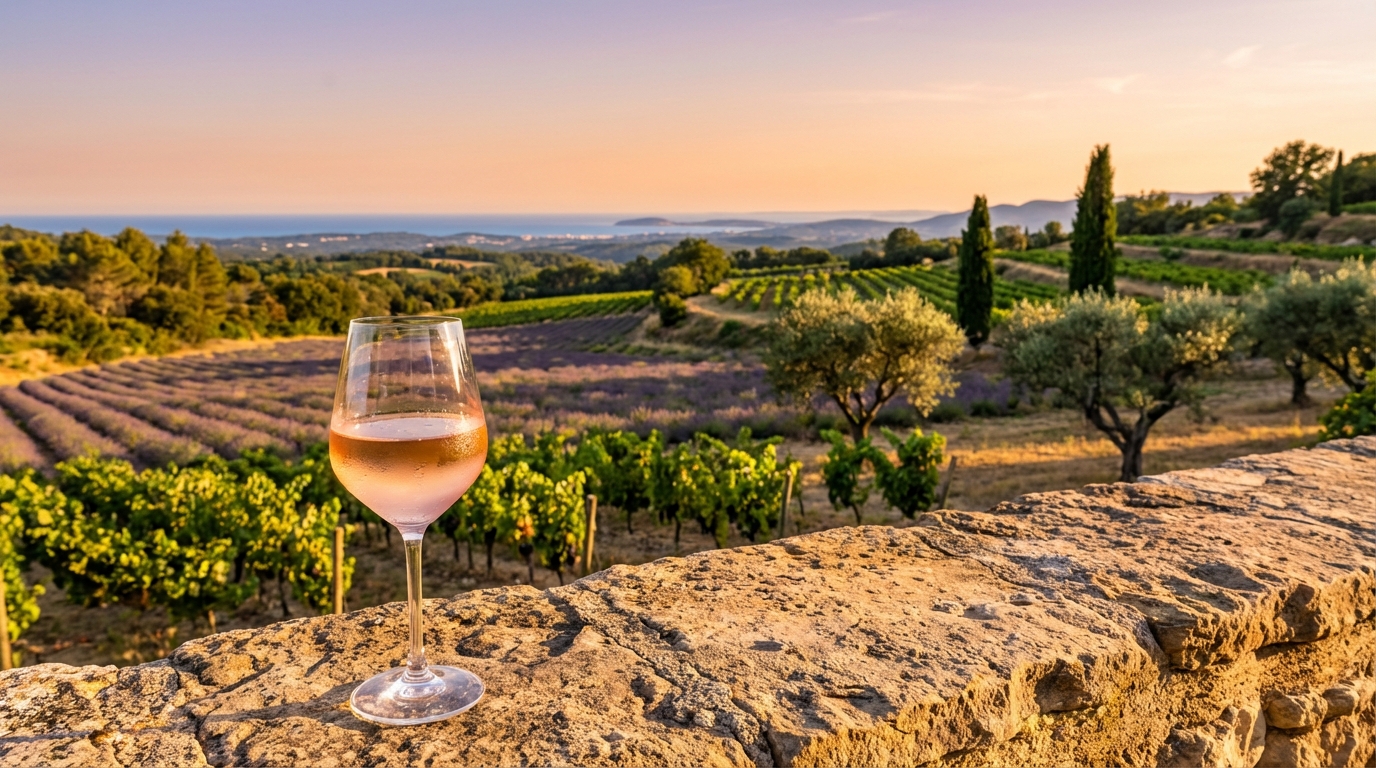
The Provençal terroir is shaped by three powerful forces: the Mediterranean Sea, the Mistral wind, and an ancient, fractured geological substrate that creates extraordinary soil diversity within short distances.
The climate is classically Mediterranean — hot, dry summers with over 2,800 hours of sunshine annually and mild, wet winters. Rainfall averages just 600–700 mm per year, mostly falling outside the growing season, meaning fungal disease pressure is low and many estates farm organically or biodynamically with relative ease.
The Mistral — that cold, dry wind funneling down the Rhône Valley — is both blessing and hazard. It desiccates vineyards, reducing rot risk and concentrating flavors, but at speeds exceeding 100 km/h, it damages young shoots. Eastern Provence, sheltered by the Maures and Esterel massifs, feels less of the Mistral's force.
Soils vary dramatically. The western appellations around Les Baux-de-Provence sit on Cretaceous limestone and bauxite-rich clay. The central Côtes de Provence stretches across crystalline schist, volcanic porphyry, and sandstone. The coastal appellations — Bandol, Cassis, Bellet — benefit from calcareous clay soils and maritime influence that moderates afternoon heat.
The total vineyard area spans approximately 27,000 hectares under AOC classification, making Provence a medium-sized French region — smaller than Bordeaux but larger than Alsace or Champagne.
The Rosé Revolution: How Provence Conquered the World
No wine story of the 21st century is more dramatic than the rise of Provençal rosé. In 1990, rosé was an afterthought — a category for summer picnics, rarely commanding serious prices. Today, Provence produces approximately 88% of its total output as rosé, accounting for roughly 40% of all French rosé production and dominating the global premium rosé market.
The transformation was driven by a deliberate shift in winemaking philosophy. Traditional Provençal rosé had been dark, rustic, and often oxidized. Beginning in the 1980s, a new generation adopted direct pressing (pressurage direct) instead of the saignée method. Grapes are pressed immediately after harvest with minimal skin contact — often just two to four hours — producing juice of extraordinary paleness. Cold fermentation in stainless steel preserves delicate fruit aromatics, yielding the now-iconic pale salmon-pink color synonymous with the region.
The market responded with astonishing enthusiasm. The Côtes de Provence appellation alone produces over 140 million bottles of rosé annually. Celebrity-backed estates have proliferated — the purchase of Château Miraval in 2012 was the highest-profile example, but investments from LVMH and Champagne houses followed. Whispering Angel, launched by Sacha Lichine at Château d'Esclans in 2006, arguably did more than any single wine to globalize Provençal rosé, turning it from a seasonal curiosity into a year-round lifestyle choice.
Key Appellations: A Map of Diversity
Provence contains nine AOCs, each with distinct character. Understanding the hierarchy unlocks the full range of what this region produces.
Côtes de Provence is the largest appellation, covering over 20,000 hectares across a vast arc from Toulon to Nice. It produces the bulk of Provence's rosé output and encompasses enormous stylistic diversity. Four named sub-zones — Sainte-Victoire, Fréjus, La Londe, and Pierrefeu — carry specific terroir identities within the broader appellation. Sainte-Victoire, in the shadow of Cézanne's mountain, produces some of the most elegant rosés in the region from high-altitude limestone vineyards.
Bandol AOC is the region's most prestigious appellation for red wine. Tucked into a natural amphitheater of limestone terraces facing the Mediterranean near the town of Bandol, this small appellation (roughly 1,600 hectares) produces structured, age-worthy reds based on a minimum of 50% Mourvèdre — a grape that reaches its pinnacle here. Bandol reds must spend a minimum of 18 months in oak before release. The best examples age for 20–30 years.
Cassis AOC — one of the first appellations established in France (1936) — is renowned for its white wines from Marsanne, Clairette, and Ugni Blanc. The tiny appellation of just 215 hectares nestled between dramatic limestone cliffs and the sea produces minerally, saline whites ideally suited to the local bouillabaisse.
Palette AOC is one of France's smallest appellations at barely 40 hectares, virtually dominated by the legendary Château Simone, whose wines — red, white, and rosé — demonstrate what extended aging can bring to Provençal varieties.
Bellet AOC, perched in the hills above Nice at up to 400 meters altitude, produces distinctive wines from rare local grapes: Braquet (Brachetto) for rosé, Folle Noire for red, and Rolle (Vermentino) for white. With only 50 hectares under vine, Bellet wines are among the rarest in France.
Les Baux-de-Provence AOC and Coteaux d'Aix-en-Provence AOC round out the western part of the region. Les Baux, dominated by organic and biodynamic estates, produces some of the region's most ambitious reds — notably from the iconic Domaine de Trévallon, which famously left the appellation system rather than reduce its Cabernet Sauvignon percentage below AOC limits.
Grape Varieties: The Mediterranean Palette
Provence's varietal mix reflects its Mediterranean position and long history of trade with other coastal wine cultures.
Grenache is the backbone of most rosé blends, contributing red fruit, body, and the pale color that defines the regional style. Its thin skins and tendency toward early oxidation make it ideal for direct-press rosé production, where minimal extraction is the goal.
Cinsault is the elegance grape of Provençal rosé — lighter and more aromatic than Grenache, with floral notes and a silky texture. The finest rosé cuvées often feature a high proportion of Cinsault, which contributes the delicate peach-blossom and strawberry aromatics that collectors prize.
Mourvèdre (also known as Monastrell in Spain) is the king of Bandol. This late-ripening, thick-skinned variety demands heat, limestone soils, and proximity to the sea — conditions that Bandol provides perfectly. Mourvèdre produces deeply colored, powerfully tannic reds with aromas of blackberry, leather, game, and garrigue herbs. It is also increasingly used as a minority blending component in rosé, adding structure and complexity.
Syrah brings spice, pepper, and color intensity to both red and rosé blends. It is often blended with Grenache and Mourvèdre in the classic GSM (Grenache-Syrah-Mourvèdre) assemblage that dominates southern French winemaking.
Rolle (known as Vermentino in Italy and Corsica) has emerged as the premier white grape of Provence. It thrives in the warm, dry climate, producing wines of crisp acidity, citrus and white-flower aromatics, and a distinctive saline finish that speaks of Mediterranean proximity. It is the primary white variety in Bellet and increasingly dominant in Côtes de Provence blanc.
Other varieties of note include Tibouren — an ancient, rare Provençal grape used for rosé with distinctive herbal and spice character — and Clairette, a traditional white variety contributing softness and floral notes to blends across the region.
Bandol: The Mourvèdre Powerhouse
Bandol merits its own discussion because it stands apart from everything else in Provence — a red wine appellation of genuine grandeur in a region defined by pink.
The appellation's amphitheater topography — terraced vineyards descending from 400 meters to near sea level — creates a microclimate of exceptional warmth and protection. The restanques (dry-stone terraces) that define the landscape date back centuries, built to retain thin soils on steep slopes. Mourvèdre, which needs a long, warm growing season to fully ripen, reaches physiological maturity here with a consistency unmatched anywhere else in France.
Domaine Tempier is the estate most responsible for Bandol's modern reputation. Under the stewardship of Lucien Peyraud in the mid-20th century, Tempier championed Mourvèdre at a time when the grape was being abandoned across southern France in favor of higher-yielding varieties. Today, Tempier's single-vineyard bottlings — La Tourtine, La Migoua, Cabassaou — are benchmarks of the appellation, combining power and perfume in wines that age magnificently for decades.
Château Pradeaux, even more traditional in approach, produces Bandol reds of extraordinary tannic density, aged in large old foudres for extended periods before release. These are wines that demand patience — often a decade or more in bottle before they begin to unfurl.
Other essential Bandol producers include Domaine de Terrebrune, Château de Pibarnon (the highest estate in the appellation, at 300 meters), and Domaine La Suffrène.
Top Producers Across Provence
Beyond Bandol's specialists, several estates define Provençal excellence across all three colors.
Domaines Ott — founded in 1912 — operates three estates (Château de Selle, Clos Mireille, Château Romassan) and is widely credited with pioneering quality-focused Provençal rosé. Château d'Esclans produces a range from the accessible Whispering Angel to the ultra-premium Garrus, a barrel-fermented rosé commanding over 100 euros that redefined what rosé can be.
Château Simone in Palette AOC has been in the same family since 1830, producing wines aged in underground limestone cellars. The white, from a field blend of ancient varieties, is one of the most singular wines in France. Domaine de Trévallon, technically declassified to IGP Alpilles for its high Cabernet Sauvignon content, produces one of the finest reds in all of southern France — a Cabernet-Syrah blend of extraordinary ageability.
Other estates of note: Château Revelette (Coteaux d'Aix), Clos Cibonne (Tibouren-based rosé of rare complexity), Domaine Hauvette (biodynamic pioneer in Les Baux), and Château de Bellet above Nice.
Food Pairing and the Mediterranean Table
Provençal wine and Provençal food evolved together over millennia, and the pairings remain instinctive.
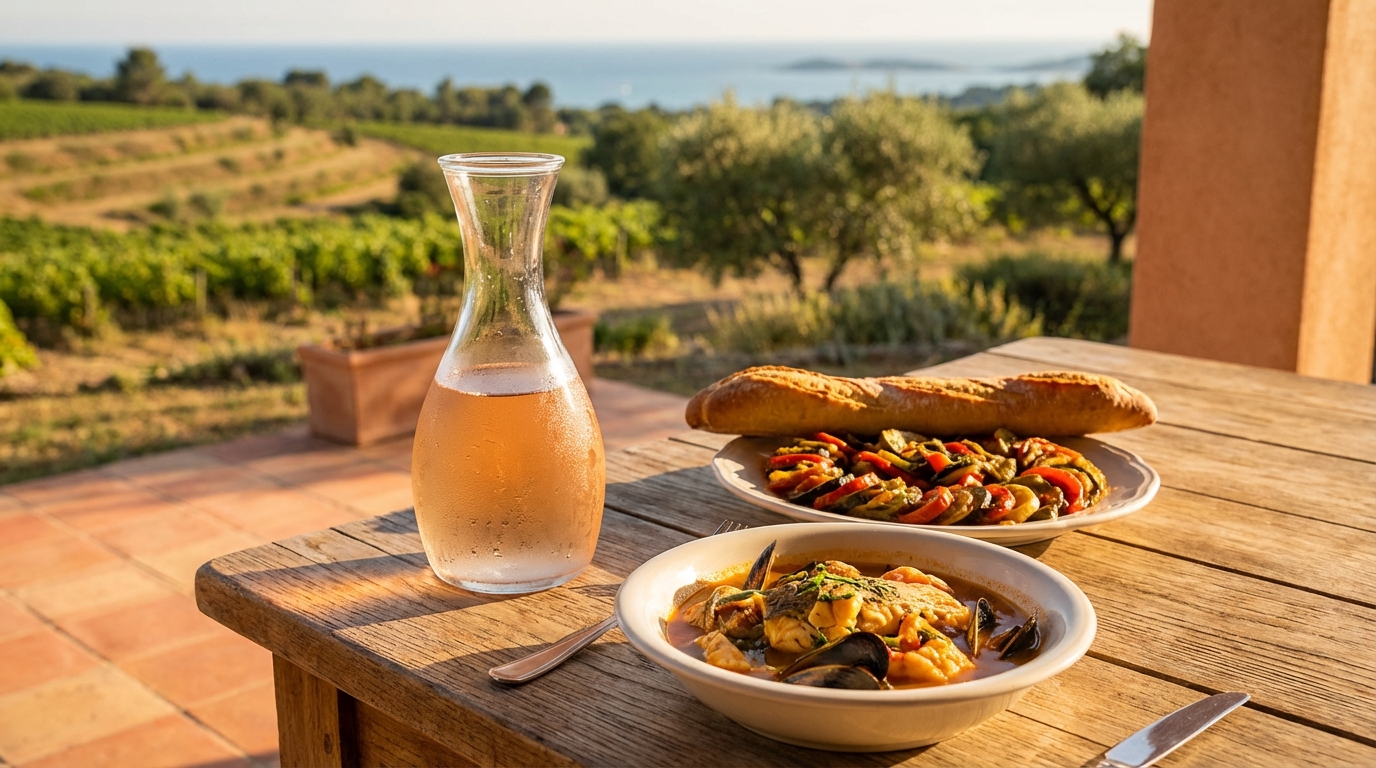
Rosé is the universal table wine of the south. Its combination of crisp acidity, light body, and subtle fruit makes it the natural partner for salade niçoise, tapenade, grilled sardines, ratatouille, and the whole repertoire of olive-oil-and-herb-driven Mediterranean cooking. Chilled rosé with aïoli — the garlic mayonnaise served with salt cod, boiled vegetables, and snails — is one of the great food-and-wine combinations of France.
Bandol reds, with their tannic structure and game-meat aromatics, demand heartier fare: daube provençale (slow-braised beef with olives and orange peel), roast lamb with herbes de Provence, grilled venison, or aged hard cheeses like Tomme de Provence.
Cassis whites and Rolle-based Côtes de Provence blancs are tailor-made for seafood. The saline minerality of a good Cassis blanc alongside bouillabaisse — the iconic saffron-and-fennel fish stew of Marseille — is a pairing that cannot be improved upon. Grilled sea bass with fennel, oysters, and brandade de morue (salt cod purée) are equally successful partners.
Visiting Provence Wine Country
Provence is one of the world's most naturally beautiful wine regions. The Route des Vins de Provence is a network of marked itineraries covering the major appellations, and the Maison des Vins des Côtes de Provence in Les Arcs-sur-Argens offers tastings of over 70 estate wines under one roof.
The Bandol appellation is compact enough to visit thoroughly in a day. Domaine Tempier welcomes visitors by appointment, and tasting their single-vineyard Mourvèdres overlooking the sea is unforgettable. The best time to visit is May through June or September through October — after the tourist crush of July and August, when the light takes on the golden quality that drew Cézanne, Van Gogh, and Matisse to this landscape.
For those combining wine with culture, the proximity to Aix-en-Provence, Marseille, and the hilltop villages of the Luberon means a wine-focused itinerary easily incorporates world-class art, architecture, and gastronomy — all under the luminous Mediterranean sky that has drawn visitors to this coast for twenty-six centuries.


