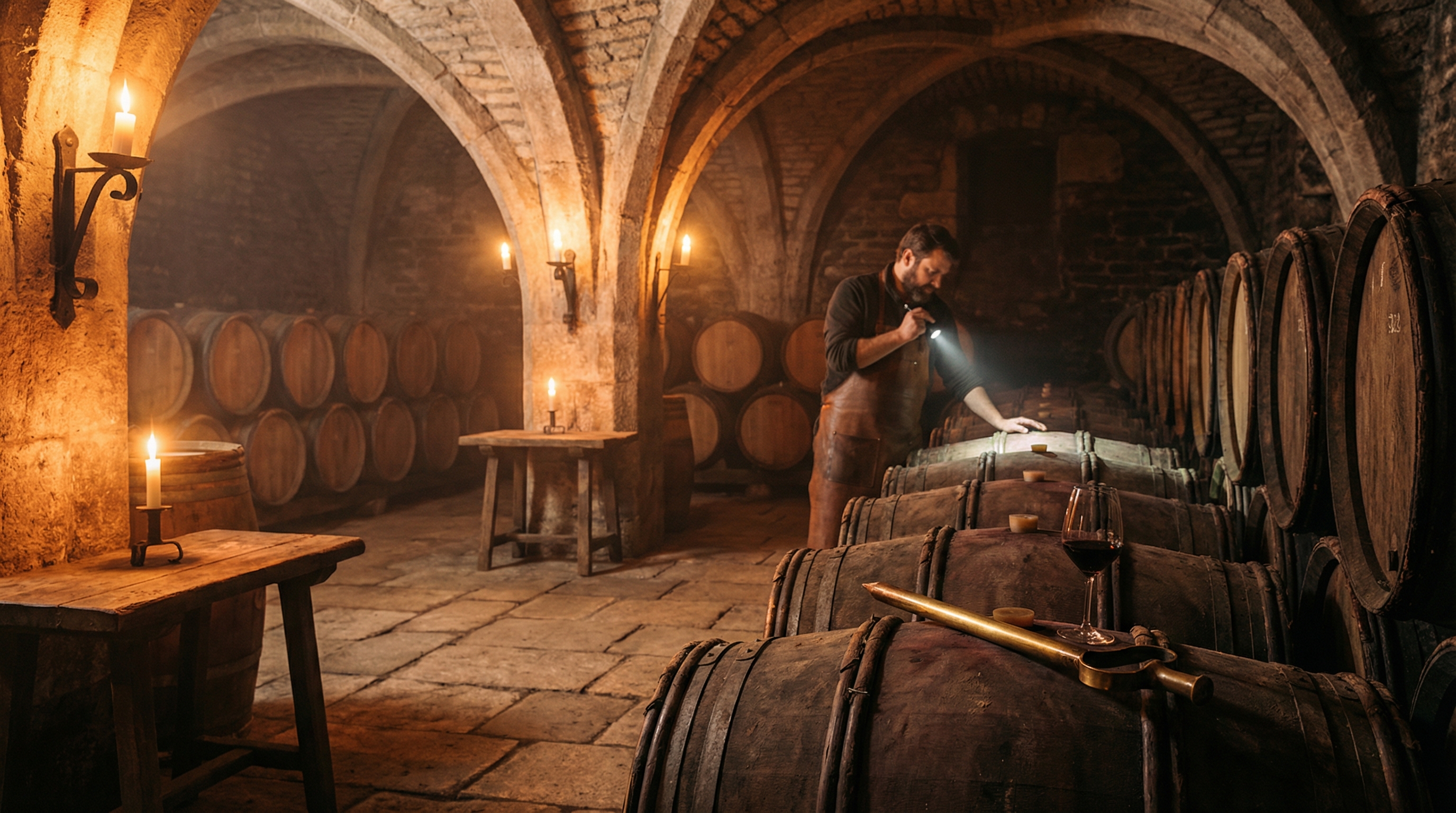
Wine's Holy Grail
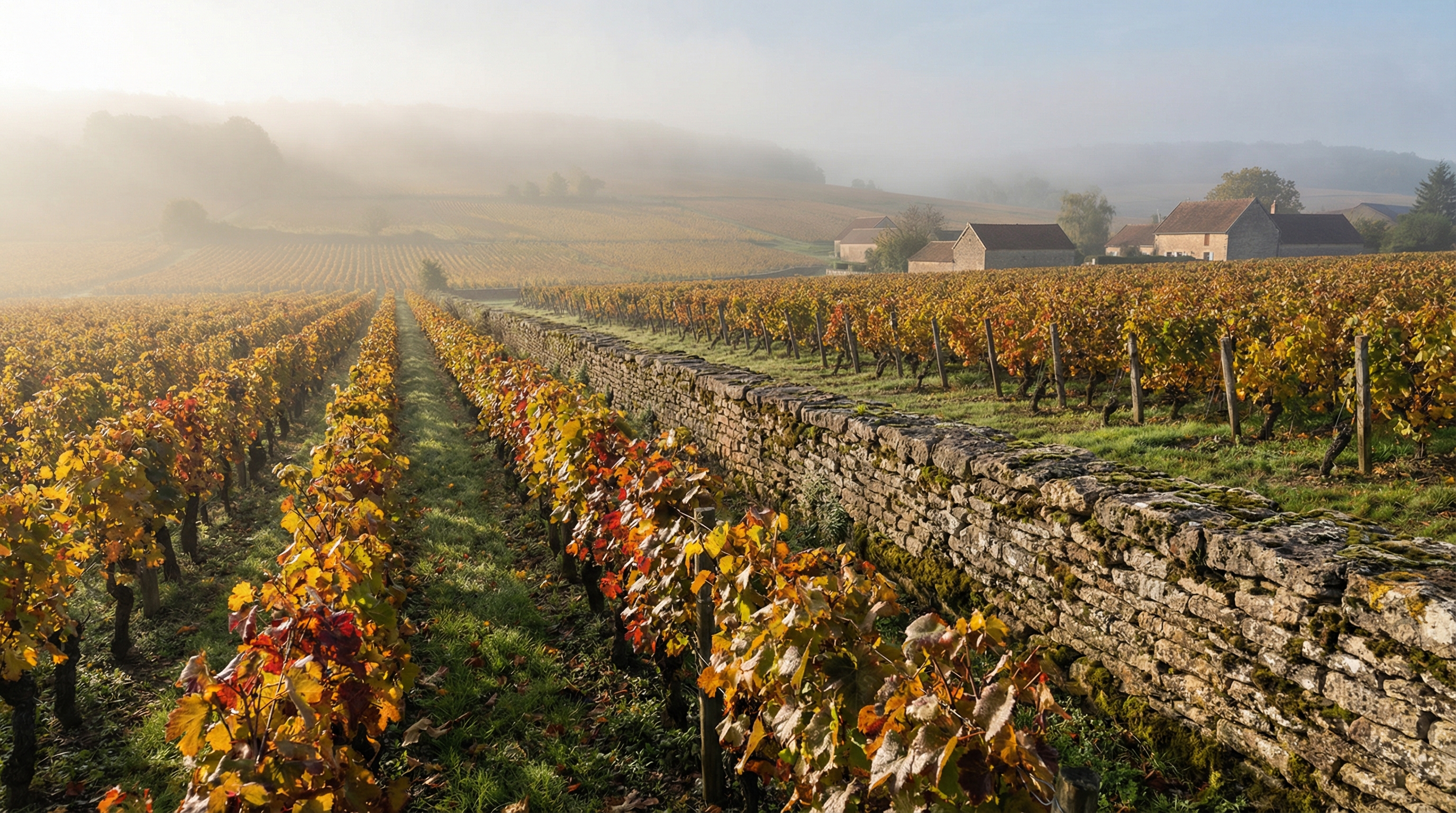
Burgundy — or Bourgogne, as the French call it — is simultaneously the most revered, most complex, and most frustrating wine region on earth. It is a place where a single vineyard wall can separate a €30 wine from a €3,000 one, where the same grape variety produces radically different wines just 50 meters apart, and where the concept of terroir reaches its purest, most obsessive expression.
Understanding Burgundy's Classification Hierarchy
Burgundy's genius — and its maddening complexity — lies in a four-tier vineyard classification system developed over centuries by Cistercian monks who meticulously mapped the soil:
- Grand Cru — The pinnacle. Only 33 vineyards (covering just 1.5% of total production) carry this designation. These wines are labeled by vineyard name alone — Chambertin, Musigny, Montrachet. They represent the absolute summit of Pinot Noir and Chardonnay expression.
- Premier Cru (1er Cru) — Over 600 named vineyards producing exceptional wines. Labeled with both village and vineyard name (e.g., Gevrey-Chambertin 1er Cru Clos Saint-Jacques). Many rival Grand Cru quality.
- Village — Wines from a specific commune, blending fruit from multiple parcels within that village. Examples: Volnay, Meursault, Chambolle-Musigny.
- Régionale (Regional) — The broadest designation. Bourgogne Rouge or Bourgogne Blanc can come from anywhere in the region. Entry-level, but from good producers, these can be outstanding.
Côte de Nuits: The Kingdom of Pinot Noir
The northern half of the Côte d'Or is a narrow strip of east-facing limestone slopes that produces the world's greatest Pinot Noir. Each village has a distinct personality:
- Gevrey-Chambertin — The most powerful and structured wines of the Côte de Nuits. Nine Grand Crus, including the legendary Chambertin itself (Napoleon's favorite wine). Look for: Armand Rousseau, Claude Dugat, Denis Mortet.
- Morey-Saint-Denis — Often overlooked and therefore great value. Five Grand Crus including Clos de Tart (a monopole owned by Pinault family) and Clos des Lambrays. Try: Domaine Dujac, Hubert Lignier.
- Chambolle-Musigny — The most elegant and perfumed village. Musigny Grand Cru is considered Burgundy's most ethereal red. Grand Crus: Musigny, Bonnes-Mares. Producers: Roumier, Mugnier, Comte Georges de Vogüé.
- Vougeot — Dominated by the walled Clos de Vougeot Grand Cru (50 hectares, over 80 owners — quality varies enormously). Seek out Méo-Camuzet and Gros Frère et Soeur.
- Vosne-Romanée — The crown jewel. Home to Romanée-Conti, La Tâche, Richebourg, La Romanée, and Romanée-Saint-Vivant — the most expensive and coveted vineyards in the world. Beyond DRC, look for Leroy, Méo-Camuzet, Sylvain Cathiard, and Bizot.
- Nuits-Saint-Georges — No Grand Crus, but superb Premier Crus with an earthier, more muscular character. Robert Chevillon and Thibault Liger-Belair are standout producers.
Côte de Beaune: Chardonnay's Throne
The southern Côte d'Or is where Chardonnay reaches its zenith, though some excellent reds are made too:
- Meursault — Rich, nutty, buttery Chardonnay with great depth. No Grand Crus, but Premier Crus like Perrières, Charmes, and Genevrières are world-class. Producers: Coche-Dury (cult status, impossible to find), Roulot, Comtes Lafon.
- Puligny-Montrachet — The most mineral and elegant white Burgundy. Home to part of Le Montrachet and Chevalier-Montrachet Grand Cru. Domaine Leflaive is the benchmark, along with Étienne Sauzet.
- Chassagne-Montrachet — Richer, more opulent style. Shares part of Le Montrachet. Ramonet and Blain-Gagnard are top names.
- Corton-Charlemagne — A Grand Cru on the hill of Corton producing powerful, long-lived whites. Bonneau du Martray and Coche-Dury lead here.
- Volnay — The most delicate reds of the Côte de Beaune. Perfumed, silky Pinot Noir. Marquis d'Angerville and Domaine de la Pousse d'Or are excellent.
- Pommard — More structured and tannic than Volnay. Comte Armand's Clos des Epeneaux (a monopole Premier Cru) is outstanding.
The Legendary Producers
- Domaine de la Romanée-Conti (DRC) — The most famous wine estate on earth. Their monopole, Romanée-Conti (1.81 hectares), produces roughly 5,000 bottles per year. Prices start at €15,000+ per bottle. La Tâche, Richebourg, and their Montrachet are equally mythical.
- Domaine Leroy — Lalou Bize-Leroy's biodynamic estate produces wines of almost supernatural concentration and purity. Among the most expensive Burgundies after DRC.
- Domaine Leflaive — The gold standard for white Burgundy. Their Chevalier-Montrachet and Bâtard-Montrachet are transcendent.
- Coche-Dury — Jean-François Coche-Dury's Meursault and Corton-Charlemagne are cult wines with decades-long waiting lists.
- Domaine Armand Rousseau — The reference point for Gevrey-Chambertin. Their Chambertin and Clos de Bèze are majestic.
Chablis: Burgundy's Northern Outpost
Often forgotten as part of Burgundy, Chablis (150 km northwest of Beaune) produces Chardonnay of piercing minerality, steely acidity, and oyster-shell character. No malolactic fermentation, minimal or no oak — pure limestone expression.
- Grand Cru Chablis — Seven vineyards: Les Clos, Vaudésir, Blanchot, Bougros, Grenouilles, Preuses, Valmur. Raveneau and Dauvissat are the supreme producers.
- Premier Cru — Outstanding value. Montée de Tonnerre and Fourchaume are the best-known sites.
Tips for Visiting Burgundy
- Beaune is the ideal base — a charming medieval town with wine shops, restaurants, and the Hospices de Beaune charity auction every November
- The Route des Grands Crus from Gevrey to Santenay is a must-drive (or cycle)
- Book domaine visits well in advance — many are tiny family operations
- Don't miss the Saturday morning market in Beaune
- Budget for meals at restaurants like Le Charlemagne (Pernand-Vergelesses) or Ma Cuisine (Beaune)
“Toprak şarap yapımcısından daha yüksek sesle konuşur.”
— Aubert de Villaine