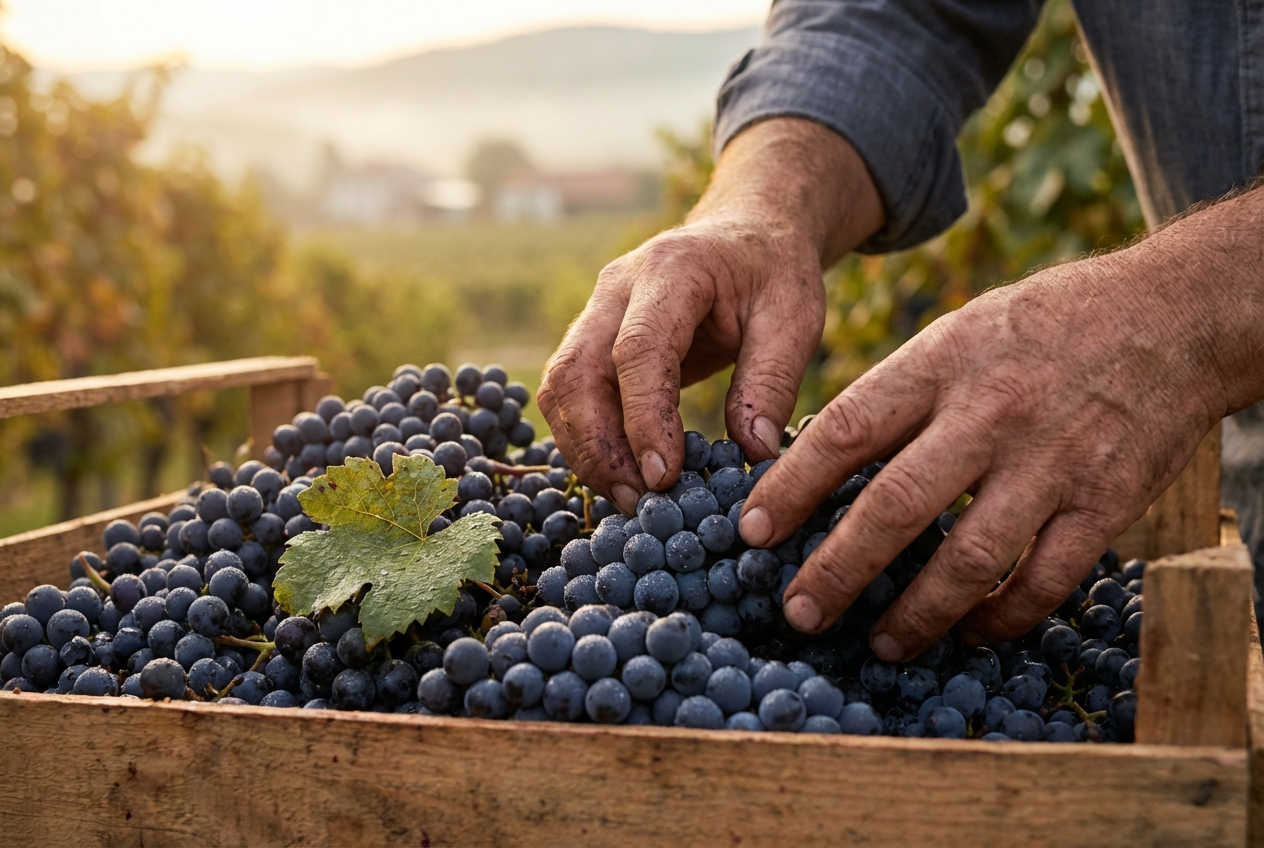
The Burgundy of the New World
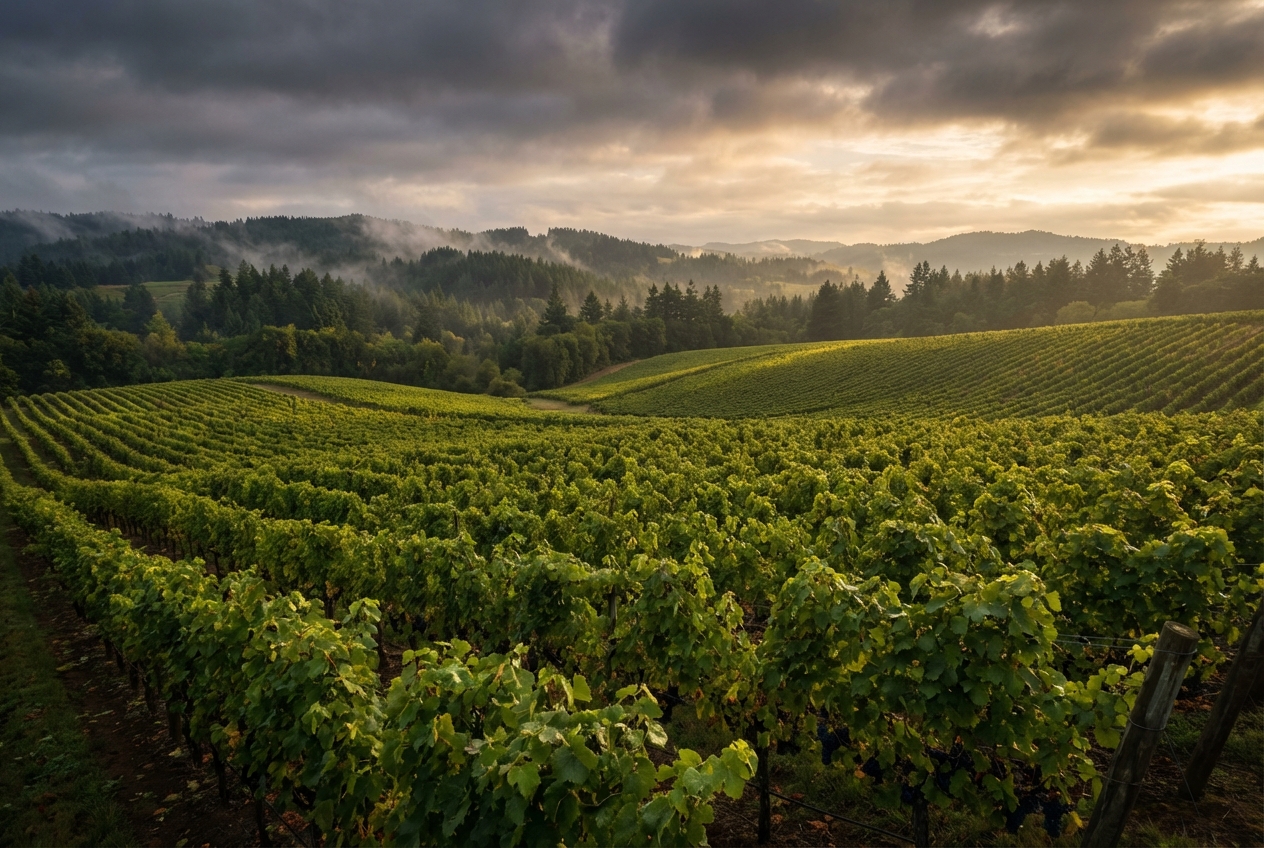
When David Lett planted Pinot Noir in Oregon's Willamette Valley in 1965, many thought he was crazy. Burgundy producers, winemaking professors, and fellow Californians told him the region was too cold, too wet, and too unknown. But Lett — a visionary viticulturist and founder of Eyrie Vineyards — saw what others didn't: a climate eerily similar to Burgundy's, with the same marginal conditions that force Pinot Noir to reveal its greatest potential.
Six decades later, Oregon is recognized as one of the world's premier Pinot Noir regions. The ultimate validation came in 1979, when Eyrie's 1975 South Block Pinot Noir finished in the top three at a tasting organized by Robert Drouhin in Beaune — prompting Drouhin himself to establish a winery in Oregon.
Understanding the Willamette Valley
The Willamette Valley (pronounced "wil-LAM-it") is a broad, 150-mile-long valley running south from Portland. Its climate is defined by cool, wet winters and warm, dry summers — a maritime influence moderated by the Pacific Ocean 60 miles to the west. The long, gentle growing season allows Pinot Noir to develop extraordinary aromatic complexity while retaining bright natural acidity.
The Sub-AVAs: Where Terroir Gets Specific
The Willamette Valley contains 11 recognized sub-AVAs, each with distinct soil types, elevations, and microclimates. The most important include:
Dundee Hills The original heart of Oregon Pinot Noir. Red volcanic Jory soil (iron-rich basalt) gives wines structure, depth, and a distinctive iron-minerality. Wines tend to be rich, earthy, and generous.
- Domaine Drouhin Oregon — Joseph Drouhin's daughter Véronique produces Pinot Noir of Burgundian elegance. Laurène is the flagship.
- Domaine Serene — Bold, concentrated wines that have won numerous blind tastings against top Burgundy
- Sokol Blosser — One of the valley's pioneers, now certified B Corp and organic
Eola-Amity Hills Exposed to the Van Duzer Corridor — a gap in the Coast Range that funnels cool Pacific air directly into the vineyards. This wind produces thick-skinned grapes and wines of remarkable structure, spice, and tension.
- Evening Land — Dominique Lafon (of Meursault fame) consults here. Seven Springs Vineyard is iconic.
- Bethel Heights — Family-owned estate producing elegant, terroir-driven wines since 1984
- Cristom — Steve Doerner (previously at Calera in California) makes some of Oregon's most Burgundian Pinot Noir. Single-vineyard bottlings Jessie, Marjorie, Eileen, and Louise are named after family matriarchs.
Ribbon Ridge The smallest sub-AVA, with distinctive marine sedimentary soils that produce Pinot Noir of exceptional finesse and silky texture. Only 500 acres under vine.
- Beaux Frères — Co-founded by wine critic Robert Parker's brother-in-law. Upper Terrace Pinot Noir is among Oregon's finest.
- Patricia Green Cellars — Producing an impressive array of single-vineyard wines that showcase terroir differences brilliantly.
Chehalem Mountains Diverse geology (volcanic, wind-blown loess, and marine sedimentary soils) creates an unusually wide range of Pinot Noir styles from a single AVA.
- Ponzi Vineyards — One of Oregon's founding families. Aurora Vineyard Pinot Noir is exceptional.
- Adelsheim Vineyard — A pioneer since 1971, producing reliably excellent wines with terroir transparency.
McMinnville The warmest sub-AVA, with ancient marine sedimentary soils and higher elevation sites that produce structured, age-worthy Pinot Noir with dark fruit character.
- Maysara — Biodynamic estate producing powerful, concentrated wines
The Oregon Style
Oregon Pinot Noir occupies a distinctive middle ground between Burgundy and California:
- More structure and acidity than most California Pinot Noir
- More fruit purity and richness than most Burgundy
- Moderate alcohol (typically 13-13.5%)
- Flavors of dark cherry, raspberry, forest floor, mushroom, baking spice, and often a distinctive floral lift
- With age, the best develop a complexity rivaling great Côte de Nuits
Beyond Pinot Noir
While Pinot Noir is the star, Oregon also excels with:
- Chardonnay — Increasingly impressive, with producers like Roco, Walter Scott, and Evening Land making world-class examples
- Pinot Gris — Oregon's signature white, ranging from crisp and mineral to rich and textured
- Riesling — Brooks and Trisaetum produce outstanding examples
- Gamay Noir — Emerging variety making charming, vibrant wines (Division Winemaking Company, Bow & Arrow)
The Portland Wine Scene
Portland has become one of America's most vibrant wine cities. The city's urban wineries (SE Wine Collective, Division Winemaking Company), natural wine bars (Tusk, Enoteca Nostrana), and farm-to-table restaurants create a perfect launching pad for Willamette Valley exploration. The combination of world-class wine, exceptional food, and an unpretentious culture makes Portland-Willamette Valley one of the most rewarding wine destinations in the world.
Visiting Tips
- Best time to visit: July-October (harvest in September-October)
- Most wineries require reservations, especially on weekends
- The valley is an easy one-hour drive south of Portland
- Carlton and McMinnville are charming towns with great tasting rooms and restaurants
- Many wineries offer vineyard tours during harvest — book early
- Don't miss the International Pinot Noir Celebration (IPNC) in McMinnville each July
“Oregon Pinot Noir'ın kendi sesi var.”
— David Lett