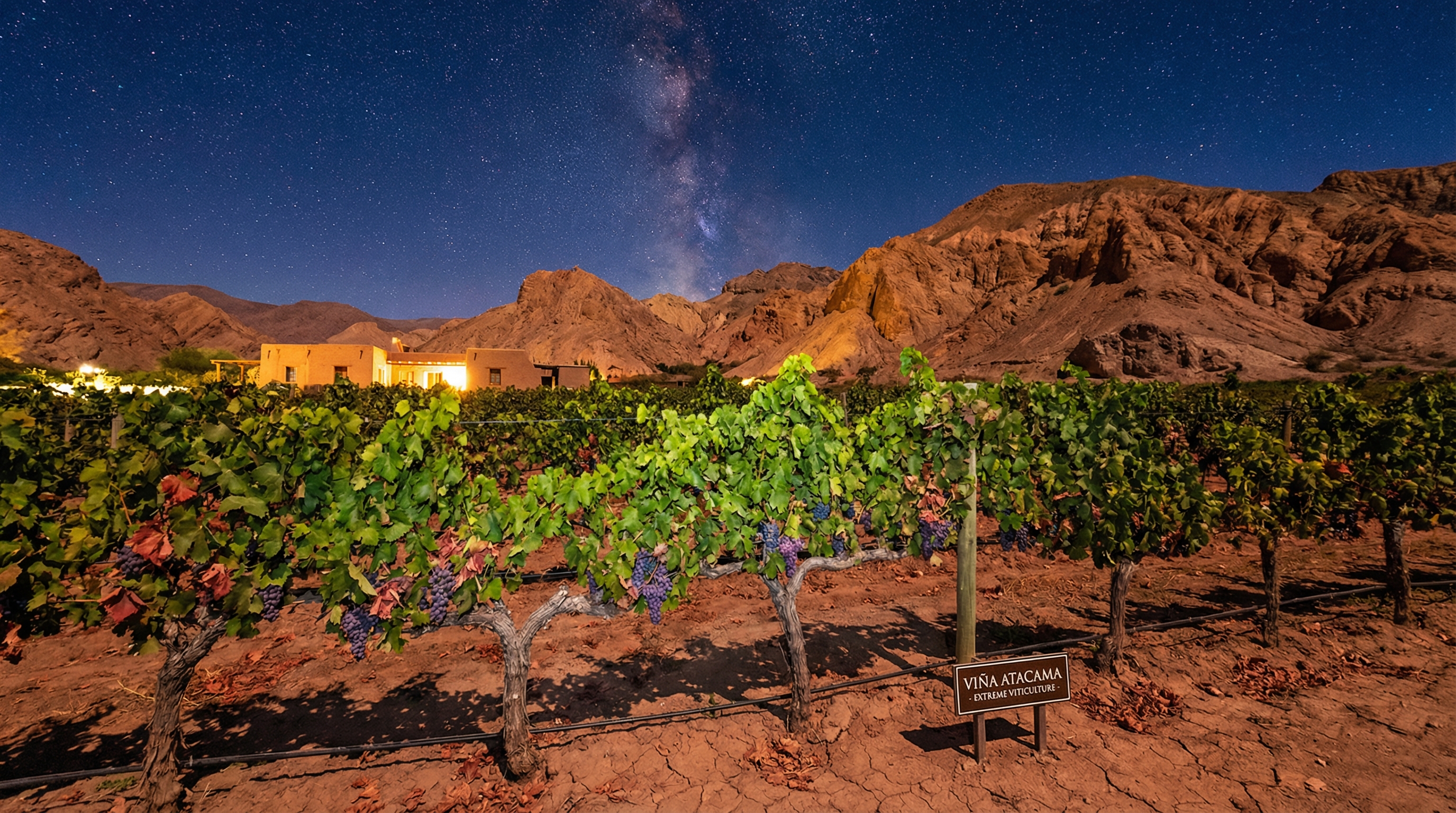
A Land of Extremes
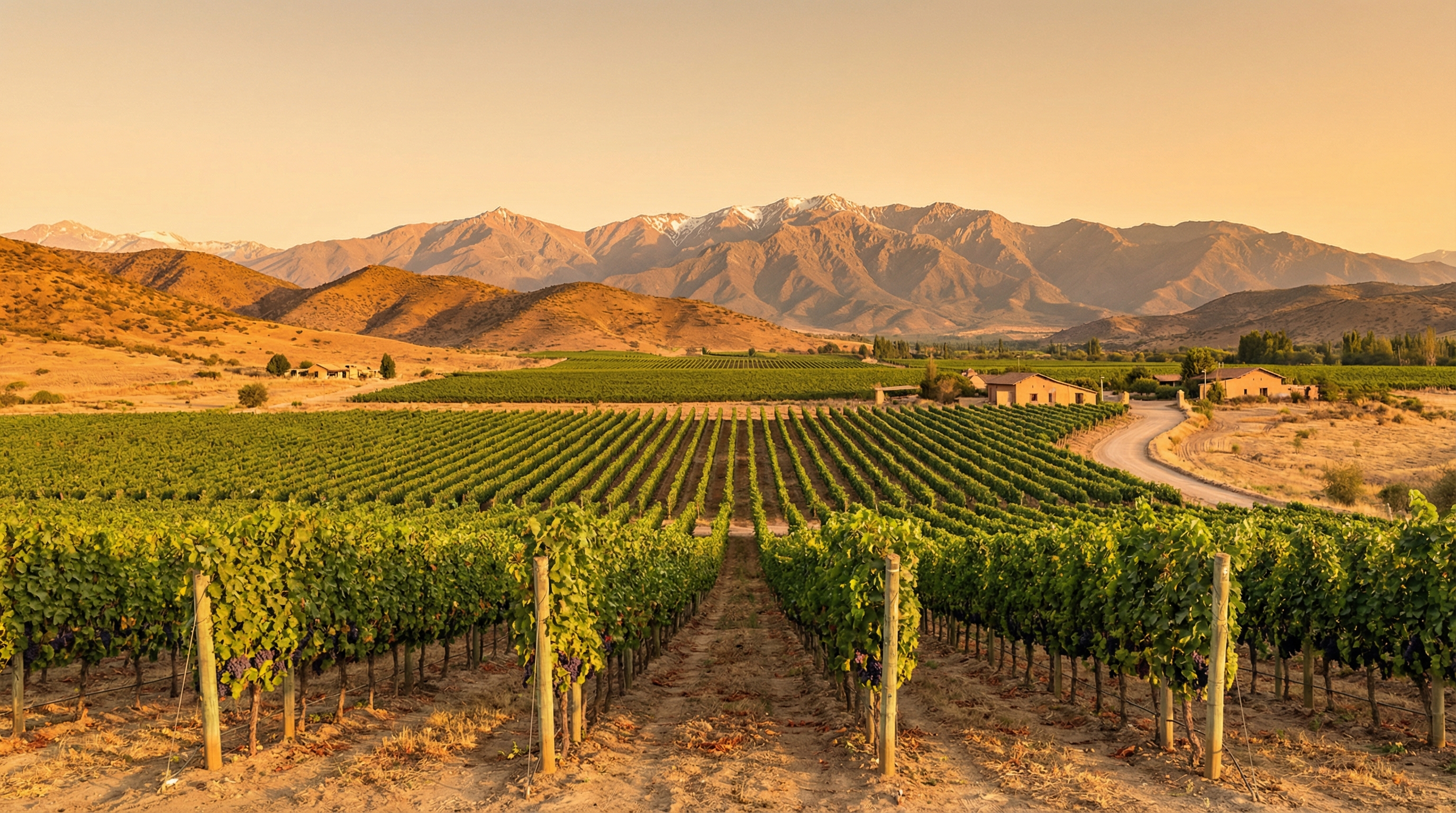
Chile is one of the most geographically extraordinary wine countries on earth. Stretching 4,300 km from north to south but rarely more than 180 km wide, it is hemmed in by the Andes to the east, the Pacific Ocean to the west, the Atacama Desert to the north, and Patagonian ice to the south. This natural isolation has blessed Chile with phylloxera-free vineyards (one of the few countries in the world where this devastating pest never arrived), meaning many vines grow on their own rootstock — a rarity in the wine world.
A Brief History
Wine arrived in Chile with Spanish conquistadors in the 16th century, and for centuries the country produced simple wines for domestic consumption. The modern era began in the 1980s, when foreign investment and flying winemakers helped transform Chile into a major exporter. The 21st century has seen a dramatic quality revolution, with Chilean producers now making wines that compete with the best in the world.
Carménère: Chile's Signature Grape
Carménère is Chile's calling card — a grape with a remarkable backstory. Originally from Bordeaux, where it was widely planted before phylloxera destroyed European vineyards in the 1860s, Carménère was long thought to be extinct. In 1994, French ampelographer Jean-Michel Boursiquot identified that much of what Chile had been labeling as Merlot was in fact Carménère.
When properly ripened (it requires a long growing season), Carménère produces deeply colored wines with flavors of ripe red fruit, dark chocolate, green pepper (when underripe), coffee, and spice. It has softer tannins than Cabernet and a distinctive herbal, smoky character.
Top Carménère producers:
- Concha y Toro — Terrunyo Carménère from Peumo is a benchmark
- Montes — Purple Angel (Carménère with a splash of Petit Verdot) is world-class
- Casa Silva — Microterroir Carménère from Colchagua
- De Martino — Vigno old-vine Carignan/Carménère blends from Maule
Key Wine Regions
Maipo Valley Chile's most prestigious red wine region, situated just south of Santiago. The combination of warm days, cool Andean nights, and well-drained alluvial soils produces Cabernet Sauvignon of exceptional structure and elegance. The sub-region of Alto Maipo (higher elevation, closer to the Andes) is the finest zone.
- Almaviva — A joint venture between Concha y Toro and Château Mouton Rothschild. One of South America's most prestigious wines.
- Don Melchor (Concha y Toro) — Consistently one of Chile's greatest Cabernets
- Viña Errázuriz — Chadwick — Eduardo Chadwick's flagship, which famously beat top Bordeaux in the "Berlin Tasting" of 2004
Colchagua Valley Warmer and more Mediterranean than Maipo, Colchagua produces generous, fruit-driven reds with power and charm. Carménère thrives here, alongside Syrah, Cabernet, and Malbec. The Apalta sub-region is particularly acclaimed.
- Clos Apalta (Lapostolle) — A gravity-flow winery producing one of Chile's most iconic wines
- Montes — Folly (Syrah) and Alpha M (Bordeaux blend) are outstanding
- Casa Lapostolle — French-owned estate with biodynamic certification
Casablanca Valley Chile's cool-climate revolution began here. Maritime fog from the Pacific cools the valley, creating ideal conditions for Chardonnay, Sauvignon Blanc, and Pinot Noir. It shattered Chile's reputation as purely a red wine country.
- Viña Casas del Bosque — Excellent Sauvignon Blanc and Pinot Noir
- Kingston Family Vineyards — Small-production, terroir-driven wines
- Emiliana — Organic and biodynamic pioneer
Leyda Valley Even cooler than Casablanca, Leyda sits just 14 km from the Pacific Ocean. Its Sauvignon Blanc, Pinot Noir, and cool-climate Syrah are among Chile's most exciting wines — mineral, precise, and vibrant.
- Amayna — Stunning coastal Sauvignon Blanc and Pinot Noir
- Viña Leyda — The pioneer of the valley
Bio-Bio and Itata Chile's exciting southern frontier. These regions, with their old-vine País (Mission grape) and Cinsault, ancient granite soils, and rainy climate, are producing some of the country's most distinctive and terroir-driven wines.
- Pedro Parra — Volcanic soil specialist making wines of startling minerality
- A Los Viñateros Bravos — Natural wine producer in Itata
The Value Proposition
Chile remains one of the world's greatest wine values. The combination of low land costs, favorable climate, phylloxera-free vines, and lower labor costs means that Chilean wines frequently over-deliver for their price. A €10-15 Chilean wine often rivals €25-30 bottles from established European regions.
Visiting Chile's Wine Country
- Maipo Valley is easily accessible from Santiago (45 minutes by car)
- Colchagua offers the best wine tourism infrastructure, with the Colchagua Valley Wine Route and the excellent Museo de Colchagua
- Casablanca is a popular day trip en route to the coast (Valparaíso)
- Many wineries offer excellent restaurants — Lapostolle's Clos Apalta Restaurant has stunning views
- Best time to visit: March-May (harvest) for vineyard activity, or September-November (spring) for pleasant weather
- Santiago itself has an outstanding wine bar and restaurant scene
“Şili'nin terroir çeşitliliği şaşırtıcıdır.”
— Eduardo Chadwick