Where Wine Began
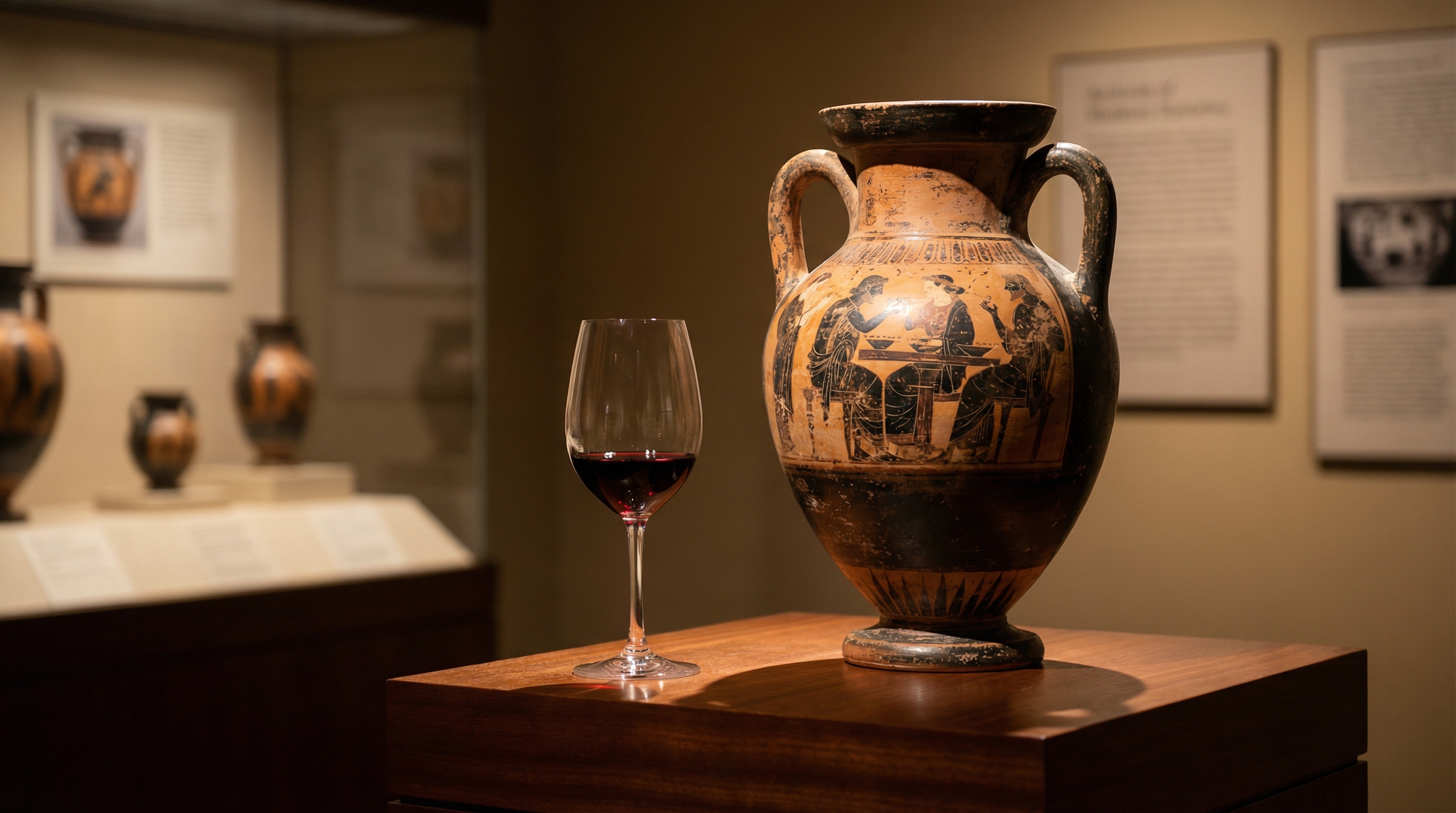
Greece is one of the oldest wine-producing regions in the world — archaeological evidence suggests winemaking here dates back at least 6,500 years. The ancient Greeks spread viticulture throughout the Mediterranean, and wine was central to their civilization — from Dionysian rituals to symposia (philosophical drinking parties) to the earliest wine trade routes.
Yet for most of the 20th century, Greek wine was defined by retsina (pine-resinated wine) and mass-produced, forgettable bottles. That era is emphatically over. Today, Greece is experiencing a genuine renaissance, driven by young, internationally trained winemakers who are rediscovering the extraordinary potential of the country's indigenous grape varieties and unique terroirs.
The Indigenous Grapes
Greece's greatest asset is its treasure trove of indigenous grape varieties — over 300 identified, with many found nowhere else on earth. These grapes, adapted over millennia to Greece's varied microclimates and soils, produce wines of distinctive character.
White Grapes:
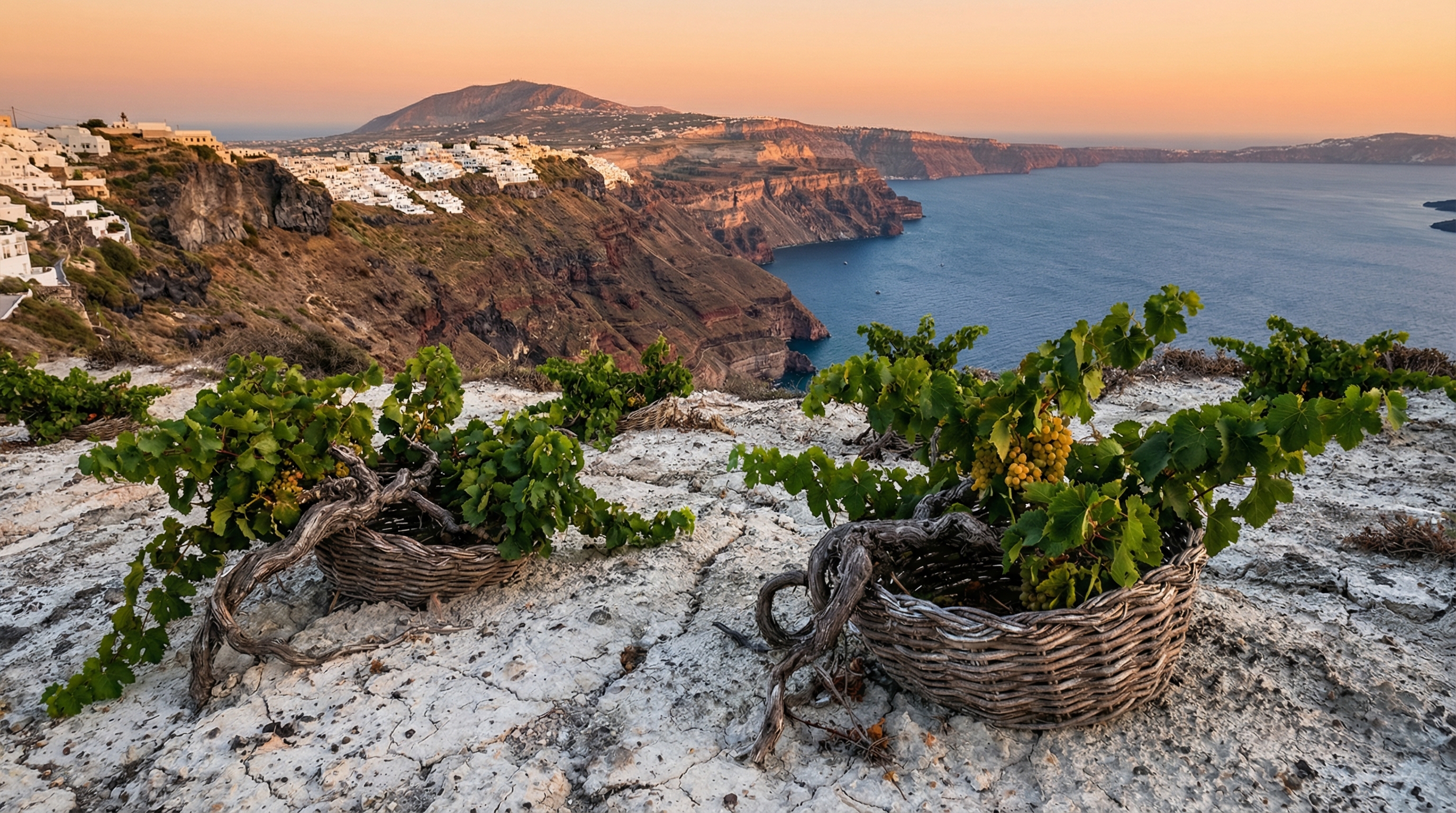
- Assyrtiko — Greece's most celebrated white grape, reaching its apotheosis on the volcanic island of Santorini. Assyrtiko produces wines of extraordinary mineral intensity, bracing acidity, and citrus-saline character. On Santorini, ungrafted bush vines (some over 200 years old) are trained into basket shapes (kouloura) to protect from fierce winds. Assyrtiko has the rare ability to maintain razor-sharp acidity even in hot climates, making it one of the world's great food wines.
- Moschofilero — An aromatic, pink-skinned grape from the high-altitude plateau of Mantinia in the Peloponnese. Produces fragrant, floral whites with notes of rose petal, lychee, and citrus. Refreshing and perfect as an aperitif.
- Malagousia — Nearly extinct until Evangelos Gerovassiliou rescued it in the 1970s from a single surviving vineyard. Produces aromatic, full-bodied whites with stone fruit and jasmine character. Now widely planted across northern Greece.
- Vidiano — A Cretan variety producing rich, textured whites that are gaining international attention.
Red Grapes:
- Xinomavro — Literally "acid-black," this is Greece's noblest red grape, often compared to Nebbiolo for its high acidity, firm tannins, and aromatic complexity (tomato, olive, red fruit, spice). The best Xinomavro from Naoussa can age for decades, developing truffle, leather, and dried herb notes. It is truly one of Europe's underrated great grapes.
- Agiorgitiko — The "St. George" grape, dominant in Nemea in the Peloponnese. Produces softer, more approachable reds with plum, cherry, and spice flavors. Versatile — from light, fruity wines to concentrated, age-worthy bottlings.
- Mavrodaphne — Traditionally used for sweet, fortified wines in Patras, but increasingly vinified as a dry red with dark fruit and chocolate notes.
Key Wine Regions
Santorini This spectacular volcanic island in the Aegean Sea is Greece's most renowned wine region. The volcanic ash and pumice soils, combined with constant sea winds, scarce rainfall, and ancient ungrafted vines, produce Assyrtiko of unmatched mineral intensity. The wines taste of the sea, the wind, and the volcanic earth.
Two key styles:
- Santorini PDO — Dry, mineral, and electric. The benchmark style.
- Nykteri — Barrel-aged Assyrtiko, richer and more complex. Traditionally made from grapes harvested at night (nykteri means "of the night").
Naoussa (Macedonia) The spiritual home of Xinomavro, in the foothills of Mount Vermion in northern Greece. Wines are structured, tannic, and age-worthy — Greece's answer to Barolo. The best producers are making wines that can stand alongside the great reds of Europe.
Nemea (Peloponnese) Greece's largest red wine appellation, producing Agiorgitiko in a range of styles. The Asprokampos sub-zone, at higher altitude, produces the most elegant examples. Nemea is one of Greece's best-value wine regions.
Crete Greece's largest island has a growing wine scene, with indigenous varieties like Vidiano, Vilana (white), and Kotsifali (red) producing increasingly impressive wines. The mountainous terrain and varied microclimates offer exciting terroir diversity.
Drama (Macedonia) A newer wine region in northeastern Greece, producing excellent international and indigenous varieties. The continental climate and diverse soils are yielding wines of real distinction.
Top Producers
- Domaine Sigalas — Paris Sigalas is the benchmark producer on Santorini. His Assyrtiko is crystalline and electric, and his Kavalieros single-vineyard wine is extraordinary.
- Hatzidakis — The late Haridimos Hatzidakis was a Santorini visionary. His Nykteri and Aidani are hauntingly beautiful. The estate continues under his family's stewardship.
- Gaia Wines — Founded by agronomist Yiannis Paraskevopoulos, Gaia produces outstanding Thalassitis (Santorini Assyrtiko) and a superb Agiorgitiko from Nemea called Gaia Estate.
- Alpha Estate — In Amyndeon, northwestern Greece, Angelos Iatridis produces exceptional Xinomavro (including a stunning single-vineyard Hedgehog bottling) and one of Greece's finest Sauvignon Blancs.
- Kir-Yianni — The Boutari family's estate in Naoussa, producing excellent Xinomavro across multiple tiers. Ramnista is the flagship.
- Domaine Gerovassiliou — Near Thessaloniki, Evangelos Gerovassiliou's estate is a Greek wine landmark. The Malagousia and Viognier are exceptional, and his private wine museum is worth visiting.
- Domaine Skouras — George Skouras produces outstanding wines in Nemea and has helped elevate the entire Peloponnese.
- Lyrarakis — A Cretan estate leading the revival of rare indigenous varieties like Dafni and Plyto.
Visiting Greek Wine Country
- Santorini — Visit wineries at sunset for an unforgettable experience. Sigalas and Santo Wines offer stunning caldera views. The island is small and easily explored.
- Naoussa — Combine wine visits with the spectacular Vergina archaeological site (tomb of Philip II of Macedon). Visit Boutari's original winery and Kir-Yianni.
- Nemea — The ancient site of the Nemean Games is nearby. Skouras and Gaia offer excellent winery experiences.
- Athens — The city's wine bar scene (Oinoscent, Heteroclito, By the Glass) offers superb introductions to Greek wine diversity.
- Best time to visit: May-June or September-October to avoid peak summer heat and tourist crowds
“Yunanistan: şarabın doğduğu yer.”
— Yiannis Boutaris