The Ancient Wine Reborn
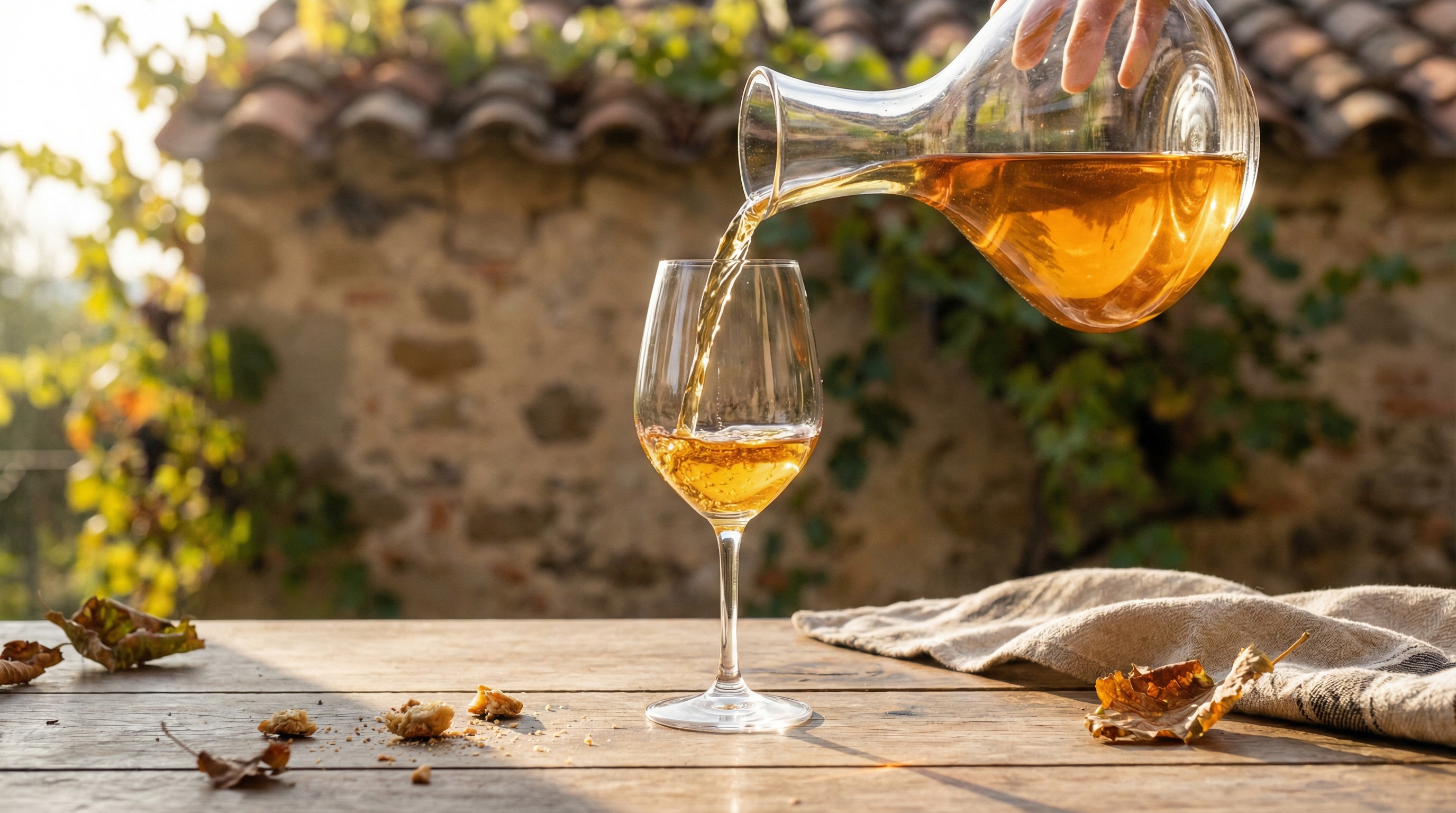
For most of wine's history, there were three colors: red, white, and rosé. Now a fourth has entered the conversation — orange wine, also called amber wine or skin-contact white wine. It is not made from oranges. It is white wine made like red wine — with extended skin contact that gives it an amber, golden, or copper hue and a texture and complexity unlike anything else in the wine world.
Orange wine is simultaneously the oldest and the newest style of wine. It dates back 8,000 years to the cradle of winemaking in the Republic of Georgia, yet it only began appearing on Western wine lists in the early 2000s. Today, it is one of the most dynamic and talked-about categories in wine.
What Exactly Is Orange Wine?
The concept is simple: take white wine grapes, but instead of pressing them and fermenting the juice alone (as you would for white wine), leave the juice in contact with the grape skins, seeds, and sometimes stems for an extended period — anywhere from a few days to several months, or even over a year.
This skin contact extracts:
- Color — Amber, golden, orange, or copper tones from the grape skins
- Tannin — A grippy, textured mouthfeel unusual in white wines
- Phenolic compounds — Giving complexity, body, and structure
- Deeper flavors — Dried apricot, honey, nuts, tea, tangerine peel, saffron, and earthy, savory notes
The result is a wine that sits in a unique category — fuller-bodied than most whites, often tannic like a light red, but with the aromatic profile of white grapes. It defies easy categorization, which is precisely what makes it so exciting.
The Georgian Tradition: 8,000 Years of Qvevri
Georgia (the country, not the US state) is the birthplace of wine — and the spiritual home of orange wine. Archaeological evidence from the village of Gadachrili Gora dates winemaking here to approximately 6000 BC.
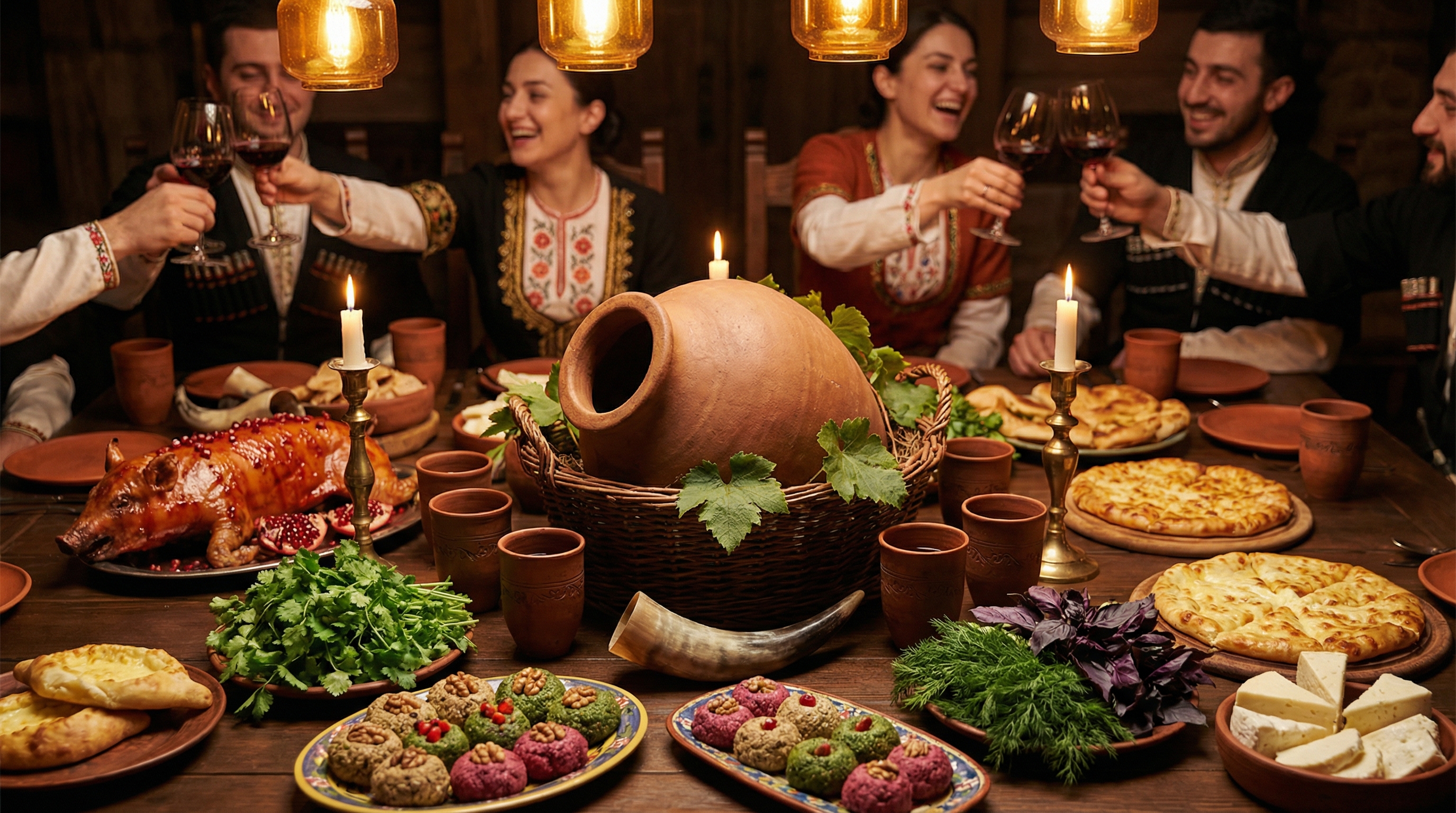
The traditional Georgian method uses qvevri (also spelled kvevri) — large, egg-shaped clay vessels lined with beeswax and buried underground. Crushed white grapes — including skins, seeds, and sometimes stems — are placed inside the qvevri, which is then sealed and left to ferment and macerate for 5-6 months. The underground temperature provides natural climate control.
The resulting wines are deeply amber-colored, texturally rich, tannic, and complex — with flavors of dried fruit, honey, walnut, herbs, and tea. In 2013, UNESCO recognized the qvevri winemaking tradition as part of humanity's Intangible Cultural Heritage.
Key Georgian producers:
- Pheasant's Tears — John Wurdeman's estate in Kakheti is the most internationally recognized Georgian producer. His Rkatsiteli and Mtsvane are excellent introductions.
- Iago's Wine — Iago Bitarishvili produces one of the world's great natural white/amber wines from the Chinuri grape in Kartli.
- Zurab Topuridze — Working in the Guria region with rare indigenous varieties
- Our Wine (Soliko Tsaishvili) — Pioneering natural winemaker in Kakheti
The Italian Masters: Friuli-Venezia Giulia
In the 1990s, a group of radical winemakers in northeastern Italy's Friuli region — along the Slovenian border — rediscovered skin-contact winemaking and launched the modern orange wine movement.
- Josko Gravner — The godfather of modern orange wine. In 1997, after a career making conventional white wines, Gravner traveled to Georgia, acquired qvevri, and began producing amber-hued, skin-macerated wines from Ribolla Gialla. His wines spend 5-7 months on skins in buried qvevri, followed by years of aging. They are monumental, challenging, and deeply rewarding.
- Stanko Radikon — Gravner's neighbor and fellow pioneer. Radikon's Ribolla Gialla, Oslavje (a blend), and Jakot (Tocai Friulano) spend 3-4 months on skins in large oak casks. More approachable than Gravner but equally profound.
- Dario Prinčič — Producing textural, aromatic orange wines with less maceration time than Gravner or Radikon. More immediately accessible.
- La Castellada — Another Friulian estate making powerful, long-lived skin-contact whites
Other Key Regions
Slovenia Just across the border from Friuli, Slovenian producers in the Goriška Brda (Collio) region make outstanding orange wines. Movia (with their radical "Lunar" unfiltered wines) and Klinec are noteworthy.
Alsace, France Several Alsatian producers have begun experimenting with skin-contact Gewürztraminer, Pinot Gris, and Riesling. Domaine Marcel Deiss and Christian Binner produce remarkable examples.
Austria Sepp Muster in Styria and Gut Oggau in Burgenland make excellent orange wines that are increasingly finding international audiences.
Spain Escoda-Sanahuja in Catalonia and Envínate in the Canary Islands produce striking skin-contact whites.
The New World Orange wine is now made everywhere from California (Scholium Project, Donkey & Goat) to Australia (Lucy Margaux, Patrick Sullivan) to South Africa (Testalonga, Intellego).
How to Approach Orange Wine
Orange wine can be polarizing — its tannic texture and unconventional flavors may surprise those expecting a standard white wine. Here is how to approach it:
- Start with lighter examples — Wines with shorter maceration (3-7 days) are gentler introductions. Try a Dario Prinčič or a Georgian Pheasant's Tears Rkatsiteli.
- Serve slightly cool but not cold — 12-14°C (54-57°F) is ideal. Too cold and the texture and aromatics are muted.
- Decant if needed — Longer-macerated orange wines can benefit from 30-60 minutes of aeration
- Pair with food — This is where orange wine truly shines
Food Pairing
Orange wine's tannic structure, savory character, and aromatic depth make it one of the most food-versatile wines:
- Middle Eastern and North African cuisine — Tagine, falafel, hummus, shawarma, grilled halloumi
- Korean cuisine — Kimchi jjigae, bibimbap, Korean fried chicken
- Indian cuisine — The tannin and spice of orange wine stands up to complex curries
- Japanese cuisine — Particularly yakitori, tempura, and ramen
- Cheese — Hard, aged cheeses (Comté, Gruyère, Pecorino) and washed-rind cheeses
- Charcuterie and cured meats — The tannin and acidity cut through richness beautifully
- Mushroom dishes — The earthy, savory character of orange wine is a natural match
“En eski şarap yapım yöntemi, yeniden keşfedildi.”
— Joško Gravner